The uncommon business scholar with a passion for leadership and growth

“As a friend’s dad often says, ‘With every close of a season in life, there’s a lot of sadness. You kind of grieve that moment. But each new season gets better if you look for it.’”


For Mikayla Sells (’26), graduating with a bachelor’s degree in business management, a minor in marketing and an MBA through the Business Scholars program, postgraduation life feels bittersweet. Over the past four years, she intentionally shaped her experience to grow as a leader and build her professional network.

Through campus involvement, internships, and faculty mentorship, she built a strong portfolio of experience and connections.

“Each year, I learned how to prioritize so I could do everything well instead of overextending myself,” Sells said. “I’m excited to take what I’ve learned and bring it into the professional world.”

Sells recently completed an internship with Robert W. Baird, an employee-owned financial services firm. As part of its conference team, she assisted with event planning, supported client experiences, and contributed to business operations.

Looking ahead, she is exploring careers in event management and marketing coordination.

“I have been blessed with a few opportunities for postgrad,” Sells said. “I am looking forward to all that God has in store.”

She will begin full-time this May as an event manager at Tripoli Country Club—a path chosen with clarity and purpose, shaped by the lessons she carried with her each year at Concordia.


Growing as a leader

Sells’ time at CUW has played a meaningful role in shaping her future aspirations. She began her involvement with the Student Government Association during her freshman year as a senator. As a sophomore, she led SGA’s PR and social programming committee. By her junior year, she stepped into the role of chief administrative officer, culminating in her service this year as the SGA president.

Sells said her time in SGA has had a lasting impact.

“Student Government has been a blessing throughout my time at Concordia,” she said. “It has shaped me as a leader, connected me with students and faculty across disciplines, and opened doors to serve others. More importantly, it has given me the opportunity to lead with purpose and be a light for the Lord.”


Learning through experience

Her path to Concordia was also influenced early on by the Business Scholars program, which she first learned about through a cousin who previously attended CUW. The program initially drew her to CUW and quickly became a defining part of her college experience.

“I think God really worked things out very beautifully, because Concordia just kind of fell into place exactly when I needed it to,” said Sells. “God really was faithful in that season.”

Sells continues to give back to the program that first drew her in. She serves on the Business Scholars board and previously held the role of president for two and a half years, beginning in just her second semester as a freshman.

In that role, she learned from working with faculty members such as Dr. Scott Niederjohn, dean of the Batterman School of Business, to plan events such as an etiquette dinner and a personal branding dinner—both designed to prepare students for professional settings.

“It was really impactful for a lot of students,” she said. “It also helped grow my interest in event planning.”

Niederjohn said Sells has taken full advantage of every opportunity CUW has offered and has emerged as a campus leader.

“She is not only respected by her fellow students, but also by faculty and staff in the Batterman School of Business for her dedication and strong work ethic,” he said.

“I’ve been especially proud to watch her grow from a quiet freshman in my microeconomics class into a leader in SGA, a student who has studied abroad, and someone who is at the center of so much happening on campus.”


A voice for campus

As for her experience in marketing and communications, Sells was involved in CUW’s marketing department for three years and also spent two years on the staff of the student newspaper, the Beacon.

“Sells immediately stood out as a natural leader and effective communicator, skills she has developed and honed while serving in the many roles she’s held on campus—from working alongside me on the student newspaper to her current position as SGA president,” said Dr. Marnie Lawler McDonough, assistant professor of communications. “She leads with confidence, generosity, and a true servant spirit. Her compassionate and perceptive nature allows her to understand the needs of others. She is a committed student and professional, as well as a dedicated friend and colleague. I am so proud of her many accomplishments, and I know she will continue to excel wherever her path leads after graduation.”


Ready for the next step

three girls hugging
From left to right: Ellie, Mikayla and Lauren, sisters.

With experience across business, marketing, and event planning, Sells has positioned herself for a range of job opportunities.

“It’s been really fun to be in lots of these different positions,” Sells said. “I do think it’s true of many Concordia students that we tend to overwork ourselves a little bit, but in the long run, I think it works out in our favor. Over the years, it does sound like a lot that I have done, and there were certain years when it was too much.”

She added that she has had strong support, especially from her parents and her younger sister, Ellie, whom she calls a younger version of herself.

Sells is also grounded in her faith and calls her church, StoryHill, one of her favorite places. It’s where she has built a strong sense of community.

“It’s one of my favorite parts of my week. I make the drive every Sunday to be with fellow believers and to enjoy time with the Lord,” she said.

With strong prioritization skills, Sells is ready to enter the workforce, though there is a particular sadness that accompanies any major life transition.

She chose the word “bittersweet.”

“I’ve loved my time here. I’ve loved the people I get to meet and the routine that I’ve kind of set for myself,” she said. “It’s going to be very different entering adulthood in the working world.”


At a glance

  1. Who has made the biggest impact on your college journey? My friends Mya and Brigid
  2. What does graduation mean to you in one word or phrase? Tenacity 
  3. If your life had a theme song right now, what would it be? “Happy & Sad” (Kacy Musgraves)
  4. What’s your go-to comfort food when you need a pick-me-up? Sushi 
  5. If you could teleport anywhere for a weekend getaway, where would you go? New Zealand
  6. What’s something small that never fails to make you laugh or smile? Catching a sunset

Editor’s note: This is one in a series of stories highlighting a few Concordia’s uncommon graduates. Faculty and staff submit candidates for consideration. Stories are posted in the days leading up to or after commencement. View more uncommon graduates here. 


Want in?

Concordia University Wisconsin is a Lutheran higher education community committed to helping students develop in mind, body and spirit for service to Christ in the Church and the world.


The uncommon nurse practitioner who rose against the odds

Heather Kelley (’26) is graduating with her master’s degree in nursing, supported by her professors, faith and family.


Shortly after Heather Kelley began the Master of Science in Nursing program in March 2023, her son Kaleb—4 years old at the time—was diagnosed with acute lymphoblastic leukemia. The question quickly became unavoidable: How could she manage life’s challenges while pursuing a demanding academic program?

“God answered my prayer,” Kelley said. “It hit me kind of out of nowhere. If I quit now, what am I showing my 4-year-old son?”

She knew, deep down, that this was a defining moment—not only for her, but for him.

“It was literally life or death for him, so I stuck with it, and now I’m glad I did,” Kelley said.


Facing unexpected challenges

This was not the only challenge her family faced. Her 15-year-old, Kameron, began experiencing mental health issues and attempted suicide. Her husband was also diagnosed with skin cancer, and Kelley herself discovered she was carrying a breast cancer gene.

Through it all, she stayed in close communication with her professors. “They were just like, oh my gosh, what else could you be going through?” she said. She continued forward with God’s grace, meeting each challenge as it came. Still, there were decisions she had to make.

“I can’t hear the word cancer in this house again right now, so I elected to undergo a double mastectomy and experienced complications. What was supposed to be two pretty easy surgeries turned into four,” Kelley said.

Looking back on this time, Kelley says she can finally breathe. It was a difficult season, one that tested her in new ways, but she never felt alone. Her professors remained in touch. “I felt very supported at Concordia throughout this whole experience,” Kelley said.

Jennifer Nicpon, DNP, FNP-BC, DCNP, APNP, assistant professor in the School of Nursing, said, “Despite facing significant challenges, Kelley remained steadfast in her dedication and focus, never wavering from her calling to become an advanced practice nurse. Guided by her faith and commitment to serving others, she continually listened for God’s direction. She is both knowledgeable and compassionate, and her future patients will be truly blessed to have her on their care team. Her strength is an inspiration to those around her.”


As a caregiver

Even in the midst of her own challenges, Kelley remained grounded in her faith and her commitment to others.

As a mother of four, she is no stranger to caring for others, especially during difficult times. She has also been a registered nurse since graduating with her RN in 2017, followed by her BSN in 2020. Kelley believes in lifelong learning. She was originally premed when she met her husband.

With her husband in the military, however, she chose a slightly different educational path. She knew it would be difficult to attend medical school where he was stationed or secure a nearby residency, short of joining the military. So she chose to go for her RN and then become a nurse practitioner, which was kind of the plan all along. “It’s just taken me a while to get there.”

Kelley’s passion for caregiving stems from an experience she had in high school when her grandpa was sick with lung cancer.

With a variety of problems occurring because of the cancer, he needed around-the-clock care. “As a family, we took shifts,” Kelley said. She was only 17 at the time. “I would stay the night at the hospital and go to school the next day. I fell in love with caring for him.”

Kelley saw how the nurses treated him like family. “It was pretty inspiring, and I could see myself doing this for the rest of my life.”


God’s gifts

From earning her master’s degree with the encouragement of her professors to seeing improvements in her family’s health and the care she received at home, the gifts kept coming.

“My husband, my children, my in-laws and my parents have been extremely supportive,” Kelley said. “I think God just kind of took care of it from all angles.”

Kelley experienced God’s grace in both large and small ways.

“My in-laws and my parents watched our family falling apart from afar, and they felt kind of helpless, but they showed up for us every day. They were texting and checking in on us,” she said. “Their support meant everything to me. I’m very blessed, and I’m very loved.”

Today, Kelley is grateful that her sons are doing better and her husband is healthy.

“I am forever grateful that God guided me each day, turning a difficult situation into a lesson that shaped my perspective as a future provider,” she said. “It reminded me of the importance of compassion, individualized care and showing up for others during life’s most difficult moments, while never forgetting the family behind the patient.”

Editor’s note: Today, her son is 7 years old and doing fantastic. He has been off chemotherapy for nearly a year and now undergoes regular lab work, which will continue for five years to monitor for any signs of the cancer returning.


At a glance

  1. Who has made the biggest impact on your college journey? My husband and children, through their endless support
  2. What does graduation mean to you in one word or phrase? Rewarded perseverance! 
  3. If your life had a theme song right now, what would it be? “Fight Song” (Rachel Platten)
  4. What’s your go-to comfort food when you need a pick-me-up? Broccoli and cheese soup
  5. If you could teleport anywhere for a weekend getaway, where would you go? A cozy cabin in Alaska under the Northern Lights
  6. What’s something small that never fails to make you laugh or smile? My kid’s laughter 

This is one in a series of stories highlighting a few Concordia’s uncommon graduates. Faculty and staff submit candidates for consideration. Stories are posted in the days leading up to or after commencement. View more uncommon graduates here. 


Want in?

Concordia University Wisconsin is a Lutheran higher education community committed to helping students develop in mind, body and spirit for service to Christ in the Church and the world.

From the ground up: Leah Dvorak leaves lasting impact on Concordia’s academic excellence

As CUW’s first female vice president of Academics, she plans to step back and hand the role to the next leader.


“I’ve helped stabilize the ‘ship,’ so to speak; now it’s time for the next leader to decide where we should sail next,” said Vice President of Academics Dr. Leah Dvorak. Dvorak is approaching five years in her current role; however, she has been in higher education since 1994. From 1994 to 2007, she served as a faculty member at CUW, helping to establish the PT and OT programs from the ground up.

“When I interviewed, what’s now the Health Sciences Building was literally a hole in the ground,” Dvorak said. A lifelong educator, she remained at CUW until 2007, deeply influenced by the university’s Christian mission. “It’s strengthened my faith tremendously.”

She left CUW from 2007 to 2011 to work at the University of Wisconsin–Milwaukee, where she helped launch its PT program. After four years, she returned to Concordia to work in the Academic Office in a variety of roles.


A season of leadership

Dvorak said five years as vice president is a good run and it’s time for a new perspective. Along the way, she helped establish the Center for Excellence in Learning and Teaching, or CELT, which supports faculty development and excellence.

Dr. William Cario (front) will serve as Provost and Chief Academic Officer with three Vice Provosts—(from left) Dr. Bernard Bull, Dr. Leah Dvorak, and Dr. Michael Uden—under him.
Dvorak was named Interim Provost the summer of 2021.

“That’s been one of my favorite parts, along with teaching itself,” she said. “Before I became chief academic officer, I was able to both teach and lead, and that combination was really fulfilling.”

Chair of the Department of Physical Therapy Dr. Dale Gerke (’00), PT, MPT, ScD, was a former student of Dvorak’s. He recalls her enthusiasm and dedication to teaching, which inspired genuine excitement in her students.

“Her passion for anatomy was evident and contagious,” Gerke said. “I remember that Dr. Dvorak encouraged us to explore anatomy beyond our investigations in the lab or the classroom. I will never forget being given the freedom to open several elbow joints independently in the cadaver lab.”

Dvorak was among the “most impactful and effective instructors” Gerke learned from. “Her dynamic teaching style and unforgettable anatomy drawings made anatomical structures difficult to forget,” he said.


Leading through change

“Academics is really the heart of what we do.”

Dvorak has been instrumental in launching several strong new programs and building a talented leadership team composed of six deans and two associate vice presidents.

woman with two men, one is President Bush
Dvorak stands to the right of President Bush at the May 2004 Commencement where she received Faculty Laureate award.

Her current role involves overseeing all academic functions of the university—faculty, curriculum, research and grants, along with the library, registrar and international education offices—and it has come with challenges.

“Higher education is contracting, not expanding, and that’s led to some hard decisions—downsizing, closing programs, restructuring,” she said. “None of those choices were mine originally, but I had to implement them. It’s been challenging, but those tough calls have helped put Concordia in a much more stable financial position today.”

As she looks toward retirement, Dvorak hopes she has helped shift CUW’s culture toward data-informed decision-making. “We now use evidence to guide choices about programs, hiring and budgeting—something we didn’t always do.”

Dvorak also strived for excellence and accountability among faculty. “Our students deserve the best education possible,” she said. “That’s what keeps me up at night—the idea that any student might not be getting a great learning experience.”

On the horizon, she is planning a sabbatical, a possible study abroad experience as a Fulbright scholar, some special projects for President Erik Ankerberg’s office, and, of course, more time with her five grandchildren.

“Maybe even reading all those books I haven’t gotten to yet,” she said.


Want in?

Concordia University Wisconsin is a Lutheran higher education community committed to helping students develop in mind, body and spirit for service to Christ in the Church and the world.

Future Data Intelligence Specialist finds her path in the Computer Science Scholars program

Abigail Barnhardt paired artificial intelligence with business data applications throughout her time at Concordia. She shaped her experience around the intersection of technology and real-world problem-solving.


Abigail Barnhardt followed in her older sister’s footsteps when she began her educational journey at Concordia. Her sister, Janelle, entered the Doctor of Pharmacy program, and the two will graduate together this May.

Barnhardt will earn both a Bachelor of Science in Computer Science with a concentration in artificial intelligence and a Master of Science in Computer Science with a concentration in business data applications.

During her time at CUW, Barnhardt developed a data-driven mindset and an interdisciplinary skill set that position her to take on larger projects with greater societal impact. She has accepted a full-time position with Region 1 Planning Council, a government agency that develops long-range plans for Northern Illinois. She will begin her career on strong footing.

The transition, however, feels bittersweet.

“I love school,” she said. “I love going to class, talking to professors, and spending time with friends.” As she looks ahead to full-time adulthood, she knows she will also miss giving college tours to prospective students.

“I always tell a story on tours,” Barnhardt said, noting that most guides do. They often describe a “wedding dress moment,” when they knew CUW was the right fit. Barnhardt did not have that experience. Instead, she built her sense of belonging over time and found it affirmed in moments like these.

“Last year we could see the northern lights over the lake,” she said. “Everyone was outside taking pictures. People were rollerblading, there was a bonfire, people were making hot dogs, and the Packers game was on a projector.”

She paused before adding, “That was my moment when I thought, ‘Yes, this was the right choice.’ It felt like a Disney movie.”


Capstone to calling

girl on award

How many Disney movies feature a “princess” who graduates at the top of her class with an award in one hand and a signed job contract in the other? Not enough.

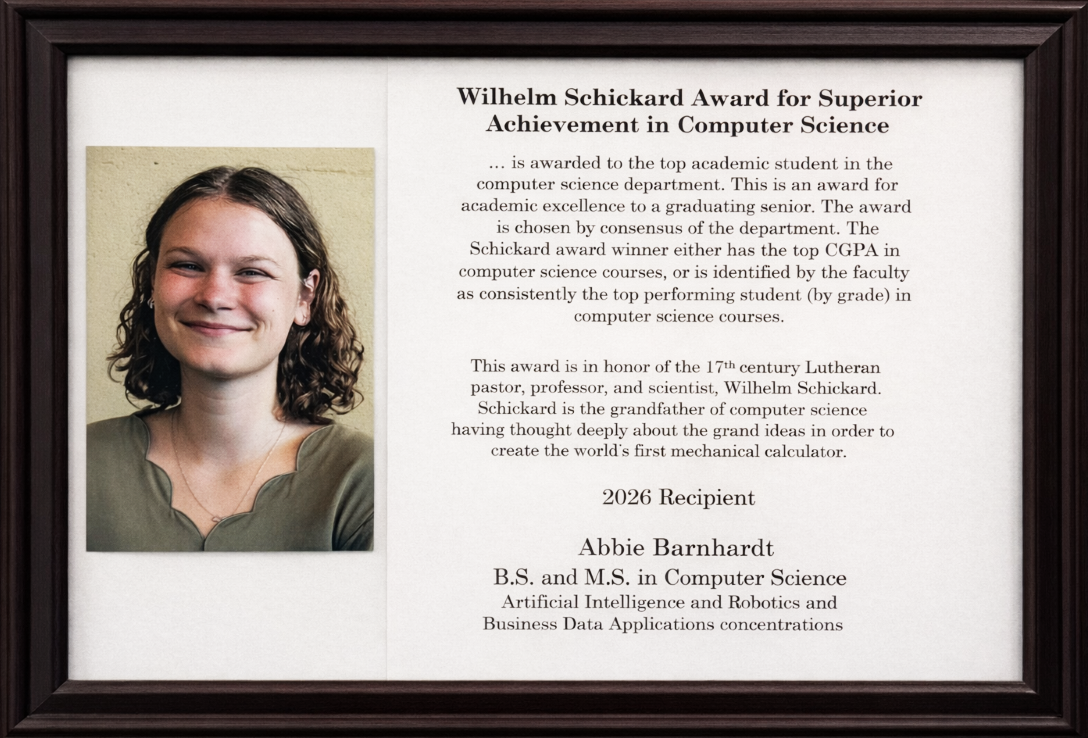
After creating one of the strongest senior capstone projects, Barnhardt received the Wilhelm Schickard Award for Superior Achievement in Computer Science. Dr. Michael Litman, professor and chair of the Department of Computer Science, said he has not seen a project like it in the 15 years he has taught the course.

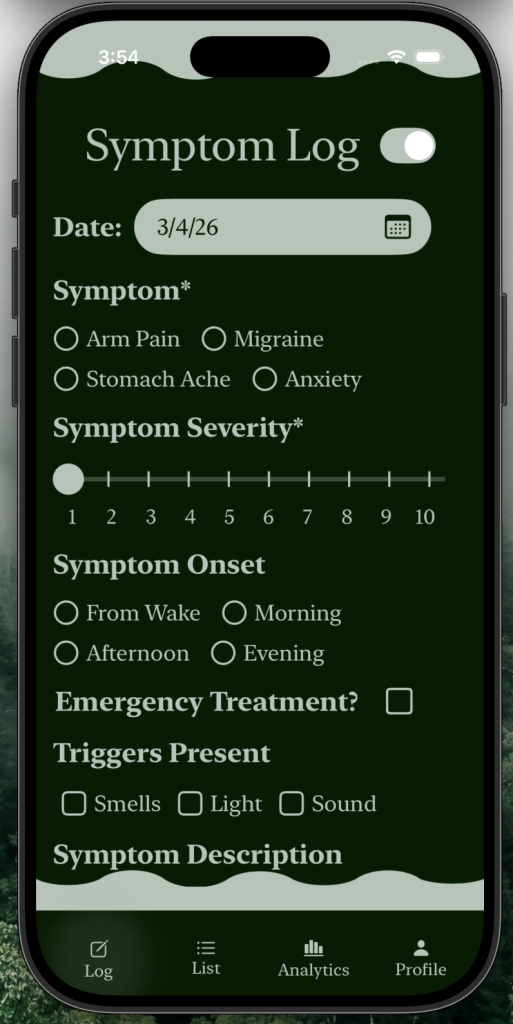
As a chronic migraine sufferer, Barnhardt developed an app for chronic illness tracking and management and received strong feedback from Litman. “That was the moment,” she said, “It really clicked for me that I was good at this.”

black app screen with text

More than just good, Litman said Barnhardt reminded him why he became an educator in Christian higher education.

“That is not a small thing!” said Litman. “Her personal drive, her passion to learn, and her dedication to quality are unique among students today.”

Although the app still has a few bugs to resolve before it can be widely available, Barnhardt identified a weakness in existing platforms. She set out to create her own, combining coding with data visualizations that reveal patterns in symptoms.

“Abbie is a reminder that our current and future generations are still worth investing in,” Litman said. The computer science faculty unanimously selected her from a strong graduating class in a field historically dominated by men.


Coding a career path

At Region 1 Planning Council, Barnhardt will create data visualizations for grants and foundations and contribute to coding projects. She will primarily use her AI concentration along with skills from her Business Data Applications coursework.

“This role does not rely heavily on the hard skills taught in the Business Data Applications concentration, but it does require strong soft skills,” Barnhardt said. “Since we create visuals for other organizations, a business mindset helps analysts understand what clients need and produce stronger results. Understanding the audience is an important step in the process.”

Barnhardt became more interested in coding after taking Litman’s classes during her freshman year. At the time, she was enrolled in a double major in professional communication and data science and applied analytics. After discussing her academic path with Litman, she decided to switch majors before her sophomore year.

“Financially and academically, it made more sense,” Barnhardt said. “I really love coding, so this path allowed me to keep all the data science classes while adding more computer science courses.”

Before she received the job offer, Barnhardt interned with the organization. She helped create a machine learning model that predicted which census tracts in the region were most susceptible to climate events based on socioeconomic and related data.

“This required extensive coding, math, and a clear understanding of which variables might be related,” she said.

She shared another example from her internship in which she worked on a grant application for a hospital planning to expand its emergency room.

“Using a business mindset, we determined what would be most convincing to the board and created visuals around that,” Barnhardt said. “This involved understanding the decision-making process, motivating factors, and basic business and economic principles.”


Visualizing impact

Blending artificial intelligence with business data applications has opened doors for Barnhardt. She now pursues work that connects technical precision with community needs.

She brings a passion for charts, data visualization and coding, along with a strong business mindset. Barnhardt is ready to make an impact that extends beyond the classroom.


Fun facts

  • She was featured in The College Tour
  • She started the Data Science and Applied Mathematics Club

Check it out. “New Concordia program promises Computer Science bachelor’s and master’s in just four years.”


“The School of &” blog series highlights the distinctive identity of Concordia University Wisconsin’s School of Arts & Sciences, where interdisciplinary connections shape learning and purpose. Each month, the series features Concordia students and alumni who have paired majors, minors and certificates in thoughtful and creative ways, showing how this approach influences both their education and their sense of calling.

These stories reveal how students connect their studies, develop their gifts, and live out their callings in service to the Church and the world.


Want in?

Concordia University Wisconsin is a Lutheran higher education community committed to developing students in mind, body and spirit for service to Christ in the Church and the world.

Concordia’s Computer Science Scholars program combines undergraduate and graduate study. Students can earn both a bachelor’s and a master’s degree in as little as four years. Those who finish in four years pay undergraduate tuition and complete their master’s at no additional cost. Contact an admissions counselor to learn more.


Nursing student crowned Miss Milwaukee 2026

Undergrad Briana Schram shares her passion for pediatric nursing, along with her secrets to success.


On Saturday, Feb. 21, Concordian Briana Schram was crowned Miss Milwaukee 2026. With a smile on her face and a heart for service, she carried a lesson to the stage that reaches far beyond the classroom: leave the baggage at the door.

Today, still in awe of her recent win, Schram recalled a teaching moment that has stayed with her.

“A professor taught us that when you are going into a patient’s room, you should always walk in with a smile and leave your baggage at the door,” she said. “You might be having the worst day, but when you’re caring for a patient, it’s about them, not you.”

Winning the pageant for her was more than a dream come true—it is an opportunity to serve in the year ahead.

With just a few months to prepare, she will return to the stage alongside contestants from across Wisconsin to compete for the state title June 14-20 in New Berlin. The winner will serve as Miss Wisconsin 2026.

With the competition approaching, Schram remains grounded in what led her to the role. “It’s not about me,” she said. “It’s about how I can best serve and impact the city.”


A network of support

She recalled seeing her grandmother in the crowd. With tears in her eyes, Schram said, “Grandma, I did it!”

This was not Schram’s first pageant. With the support and encouragement of her grandmother, she has participated in several and enjoys each one.

She values the sense of community and sisterhood the pageants offer. “It’s really about girls supporting girls,” she said, noting it may not be what some expect from a pageant. “Everyone is so nice and supportive. There is no stereotypical ‘big hair’ or ‘crazy moms.’”

Schram said she felt grateful to compete alongside 13 other contestants and that reaching the top three felt “crazy.” When her name was announced as the winner, a longtime dream became reality.

“It’s just incredible that I get to represent Milwaukee—competing there was surreal,” Schram said.


Leading by example

girls together in elevator

Schram’s life as a CUW nursing student centers on service and campus involvement, including her role as a resident assistant, where she continues to grow as a leader while supporting a community she values deeply.

“You are the leader of your hall, so you’re setting an example for the other girls,” Schram said.

She stepped into the role during her sophomore year, serving as a mentor to first-year students—an experience that pushed her beyond her comfort zone. “I believe all of those out-of-comfort-zone experiences have taught me a lot about myself and how I can lead,” Schram said. “I’m able to visibly impact these girls through the conversations I have with them.”

After witnessing the challenges some students face, including anxiety about classes or feeling like they do not fit in, she has become passionate about women’s mental health.

“It is crazy how often that happens,” she said. “A girl will come to me with a concern, and then someone else from the same room shares the same struggle. A lot could change if they felt more comfortable talking to each other.”

To help address this, Schram organizes activities that encourage residents to connect, communicate and spend time together.

Resident Director Joshua Warlick said he has been blessed to watch Briana invest in her residents over the past two years.

“She’s someone others can truly depend on—whether she’s cheering on the women on her floor or walking alongside them through difficult moments,” he said. “Bri understands how to be a friend while also encouraging growth where it’s needed most.”

Warlick said he has mixed feelings about Schram graduating soon and added, “She will be an incredible nurse, but her presence through her programming and the way she connects with both RAs and residents will be deeply missed. Wherever she goes, I know she will continue to lead with compassion for everyone she meets.”


A true passion behind the crown

girl with blond hair and RA black shirt

Schram received a scholarship through the Miss America organization, which supports young women as they pursue their goals. As the organization describes it, Miss America serves as “the nation’s most iconic platform for women to rise, lead and inspire.”

As she looks ahead to her year of service, Schram plans to expand her platform, Little Champions: Building Positive Self-Image in Kids. Her goal is to bring the program into schools and develop a curriculum that introduces children to age-appropriate mental health strategies.

By focusing on confidence and self-worth early in life, she hopes to help students build habits that support long-term well-being and a healthy sense of identity.

As the oldest of five, Schram has watched her siblings navigate difficult moments. “Comparison is hard, and friendships can be hard,” she said. After volunteering on a field trip with her youngest brother, she noticed a girl crying because her friends were not including her.

“It’s things like that,” Schram said. “Not knowing how to navigate those feelings or what to do with them can be really tough.”


Purpose beyond the classroom

woman in scrubs in chapel

Since high school, Schram has felt called to become a nurse.

“The opportunities are endless in nursing—nurses are needed everywhere,” she said. “I want to help and serve people, and I feel God has called me to this path.”

Passionate about working with children, she feels specifically drawn to pediatric nursing—a calling that aligns closely with her Miss Milwaukee platform.

As she develops her rhythm in clinicals, Schram says the example set by her professors has meant the most in her CUW nursing experience.

“They are good reminders of what servant-heartedness looks like. Just seeing the passion they have as they teach—sharing what they do in practice, how they care for patients, communicate with them and show love—it is really impactful,” Schram said.

Giannina Vernon, DNP, RN, assistant professor of nursing and one of Schram’s professors and mentors, said she demonstrates a genuine passion for patient-centered care.

“She listens attentively, offers comfort and advocates for her patients, maintaining a calm and reassuring presence. Her commitment to learning and her support for both patients and the health care team reflect the heart of what it means to be a nurse,” Vernon said.

For students considering nursing school, which can be challenging, Schram encourages them not to give up or compare themselves with others.

“God has a plan for everyone,” she said. “When you compare yourself with the person next to you—like, ‘they’re one step ahead of me,’ or, ‘this person achieved this big goal, but I’m stuck in this place in my life’—it’s all subjective. It doesn’t help to compare yourself with others, because your journey is unique.”

That perspective continues to shape her daily presence. Her personal motto is simple: “I want to walk into every room with a smile on my face.”


Get involved

To stay connected and support Schram’s efforts, follow her on Instagram or contribute to her fundraising campaign below:


Want in?

Concordia University Wisconsin is a Lutheran higher education community committed to helping students develop in mind, body and spirit for service to Christ in the Church and the world.


Confronting today’s opioid crisis through science

At Concordia University Wisconsin, Dr. Hina Andleeb is advancing pain treatments designed to restore function and dignity.


Chronic pain is something humans have sought to relieve for centuries, with research revealing pain management attempts as early as 1500 B.C. in Egypt. A brief look at the timeline shows that in the 1600s, opium was explored; in the 1800s, early narcotics were developed along with anesthesia using ether and chloroform; in the mid-to-late 1800s, cocaine was introduced; and by the 1900s, morphine and heroin were being used to manage pain. Today, opioids like Oxycodone and Fentanyl are being widely distributed and misused.

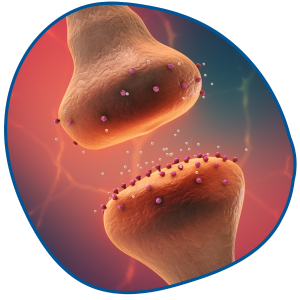
brain receptor graphic
Opioid binding to brain receptors reduces pain perception while increasing the risk of addiction.

What most of these pain management drugs have in common is their overwhelming potential for addiction, which has contributed to today’s opioid crisis. According to the Centers for Disease Control and Prevention, as of 2023, roughly 24% of adults experience chronic pain, and 8.5% experience high-impact pain that limits life or work activities. That same year, the CDC reported approximately 105,000 people died from drug overdoses, with nearly 80,000 of those deaths involving opioids — an average of about 217 opioid-related deaths per day.

Pain is a fact of life. It lets us know we are alive and, at times, protects us from further harm — yet it can drastically alter our ability to live fully. A double-edged sword. Researchers at Concordia are searching for innovative approaches that address pain without creating additional long-term harm to the mind, body and spirit.

As Romans 12:2 reminds us, “Do not be conformed to this world, but be transformed by the renewal of your mind, that by testing you may discern what is the will of God, what is good and acceptable and perfect.” In that spirit of renewal, there is hope that the way we approach pain — and the opioid crisis — can also be transformed. No more meaningless deaths in a time when faith and science together can help restore the whole person.

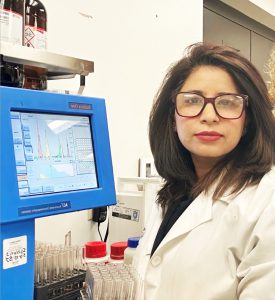
The following Q&A with Dr. Hina Andleeb, senior research scientist in CUW’s School of Pharmacy, addresses a global public health crisis. At Concordia, currently working alongside Christopher Cunningham, Ph.D., associate professor of pharmacy science, she continues her research on advancing safer therapeutic strategies for individuals living with persistent pain.


Q&A with Dr. Hina Andleeb

1. What first drew you to pain research, and what keeps you committed to it today?

I was drawn to pain research because so many patients still rely on opioids despite profound risks: dependence, tolerance, respiratory depression, cognitive and sedative effects, and hormonal disruption with long-term use. These harms are not abstract. In 2023 alone, drug overdoses claimed more than 100,000 American lives, the majority involving opioids, and misuse remains widespread — affecting nearly 9 million people age 12 and older each year. Clinically, opioids suppress breathing and are linked to opioid-induced endocrinopathies, reinforcing the urgency for alternative therapies.

That urgency shaped my path at the University of Florida and Northeastern University, where we pursued nicotinic acetylcholine receptor (nAChR)-based strategies. Our team discovered the first-in-class small-molecule a9 nAChR selective agonists for chronic and neuropathic pain, highlighted by compound 3h. That work continues to guide my research as I focus on advancing safer alternatives for patients living with persistent pain.

2. Was there a moment when you realized this work could truly change lives?

Yes. When I first saw the biological data showing our newly developed α9-selective agonist was highly potent and acting as we hoped, I realized we had created something unprecedented. Until then, only large, toxic peptide antagonists like conotoxins and bungarotoxins existed for this receptor. No small-molecule a9 nAChR selective agonist had ever been reported.

The emotional shift came when I spoke with individuals living with chronic and neuropathic pain who had exhausted treatments and feared opioid dependence yet still had no relief. I understood then that this discovery could one day offer a safer alternative.

3. How do you stay connected to the human side of technical laboratory work?

I remember that every scientific decision affects a real patient’s quality of life. Working on a novel drug target like the α9 receptor — where almost no small-molecule literature existed — keeps that responsibility clear.

I don’t define success only by potency or a clean assay. I ask: Will this be safe? Will it avoid off-target effects? Will it preserve function rather than introduce new risks?

Conversations with clinicians and patients living with chronic pain also keep the science grounded. The goal is not only effective compounds, but ones that are safe, selective and meaningful for patients.

4. How would you describe chronic and neuropathic pain?

Chronic pain is a constant burden that drains energy, disrupts sleep and makes simple tasks overwhelming. Neuropathic pain adds burning, tingling, stabbing or electric shock sensations that can flare without warning. Even gentle touch or temperature changes can trigger discomfort. Together, they create physical suffering and emotional exhaustion, often leaving patients feeling isolated because their pain is invisible yet relentless.

5. Why are these conditions so difficult to treat?

They involve deeper nervous system changes that traditional medications were never designed to fix. Pain pathways become hypersensitive, and damaged nerves fire abnormally. NSAIDs and opioids target inflammation or broad pathways but do not address faulty nerve signaling or long-term neural rewiring. Once circuits become entrenched, pain can persist for months or years.

6. What sparked your interest in the α9 receptor?

It grew from a simple question: Can we deliver potent pain relief without opioids? The α9 nAChR sits at the crossroads of pain signaling and inflammation. For years, only toxic peptide antagonists existed — no small-molecule agonists.

Seeing our first clean selectivity data — especially APA-diEPP emerging as a lead — signaled a new therapeutic path aimed at effective, nonsedating analgesia.

7. When did you realize you were onto something new?

When our early compounds showed strong, clean α9 selectivity — greater potency, lower toxicity and minimal α7 activation — I knew we were breaking new ground. Developing the first highly potent, small-molecule α9 agonists opened a new therapeutic direction for chronic and neuropathic pain.

8. Why is avoiding motor impairment meaningful?

Many current treatments cause sedation, dizziness or impaired movement, limiting independence. Our α9-selective agonists produced strong, long-lasting pain relief in animal models without disrupting motor control. That suggests targeted action rather than broad nervous system depression — allowing the possibility of functional pain relief.

9. How hopeful are you about nonaddictive options?

Very hopeful. Our α9-selective agonists do not act on addiction-related reward pathways and show analgesic effects without sedation or motor impairment. The data suggest we are moving toward therapies that are effective and non-habit-forming.

10. How are pain, stress and inflammation connected?

Chronic pain, stress and anxiety share overlapping biological pathways. Long-lasting pain activates the stress response, raising cortisol and increasing nervous system sensitivity. Stress and anxiety amplify pain signals, creating a feedback loop.

Inflammation plays a central role. Chronic pain sensitizes nerves, and chronic stress elevates inflammatory mediators. The cholinergic anti-inflammatory pathway regulates this response, and α9-containing receptors participate in immune modulation. Targeting them may influence both pain signaling and inflammation.

Safer, nonsedating therapies are essential because treating pain without addressing emotional well-being leaves patients struggling.


Impacting lives tomorrow

After receiving a U.S. patent and earning a Best Podium Presentation Award for her novel research work, Andleeb feels hopeful that her work will one day make a profound difference.

“The opportunity to advance innovative approaches to pain and stress disorders in a collaborative, mission-driven environment excites me,” Andleeb said. “The Cunningham Laboratory’s expertise in neuropharmacology and endocannabinoid pharmacology creates a platform to explore new therapeutic mechanisms.”

For Andleeb, working within Concordia’s faith-centered environment strengthens her commitment to developing treatments that honor both scientific excellence and human dignity. With the future of pain management at the forefront of her research, she hopes to see significant progress in how chronic pain is treated over the next five to 10 years. She anticipates seeing therapies that restore function and dignity for individuals and families living with chronic pain — free from the risk of addiction.

“I see science as one of the ways God equips us to care for others. Developing new therapies allows us to live out that purpose by bringing hope and healing to those who suffer,” she said. “It would be the most meaningful impact.”


Want in?

Concordia University Wisconsin is a Lutheran higher education community committed to helping students develop in mind, body and spirit for service to Christ in the Church and the world.


5 tips for loving your neighbor in today’s world

A faith-filled reset as the Lenten season draws near.


As children of God, we strive to be good people — but what does it mean to be a better neighbor?

“Thou shalt love the Lord thy God with all thy heart, and with all thy soul, and with all thy mind. This is the first and great commandment. And the second is like unto it, Thou shalt love thy neighbour as thyself.” — Matthew 22:37–39

As the month of February approaches, why not challenge yourself to be a better neighbor, coworker, student, roommate, sibling or friend? The 40-day Lenten season is right around the corner and is a deeply contemplative time as we reflect and focus inward on repenting for our sins.

cups of ashes for Ash Wednesday

Traditionally, many people choose to give up something of value for Lent as a spiritual reminder of Christ’s journey to the cross.

Remembering Jesus’ suffering, death and resurrection, it feels fitting that we, as Christians, think of our neighbors and how we can be of service.

Here’s a simple list of five ways you can love your neighbor at Concordia or anywhere.


No. 1: Answer the call

students volunteering for Feed My Starving Children event

As followers of Christ, we are called to serve our neighbors. In doing so, we may honor leaders such as the Rev. Dr. Martin Luther King Jr. on specific days, or we may choose to serve through local nonprofit organizations during certain seasons. Consider where God has placed you today and how you might best use your gifts to serve your neighbor.

“For you were called to freedom, brothers and sisters; only do not use your freedom as an opportunity for self-indulgence, but through love become slaves to one another.” — Galatians 5:13

Upcoming event: On Friday, Jan. 23, at 9:30 a.m., come to the Chapel of Christ Triumphant for a service and service event honoring Rev. Dr. Martin Luther King Jr.

“Service is part of how students grow in faith, vocation and compassion,” said Elizabeth Polzin, EdD, vice president of Student Success. “We celebrate Dr. King’s call to serve others and the joy that comes from loving our neighbor in meaningful, everyday ways.”

Through simple acts of kindness, words of affirmation, notes of appreciation and being present, we can answer the call. Student Success invites everyone to gather in the chapel to hear God’s Word, sing together and serve together. Following the chapel service, and in partnership with the Milwaukee Rescue Mission, participants are invited to write notes of encouragement for those served by the mission and learn about future service opportunities. Attendees may then head to the library to take part in additional activities.

“Freed by the Gospel of Christ, we are sent into our vocations to love and serve our neighbors through simple acts of care and mercy,” Polzin said.

There are always local service opportunities available. Reach out to your local church, animal shelter, food pantry or nursing home. The need for volunteers is ongoing and global in scope.

Note: Feed My Starving Children will take place March 18–20. Donations are still needed, and volunteer registration opens Feb. 18. To donate, visit give.fmsc.org/cuw.


No. 2: Reflect Christ’s love

Giving gifts is not only one of Gary Chapman’s The Five Love Languages; it is also a symbol of thoughtfulness and care. A gift does not have to be large or expensive to be meaningful. It may be tangible or intangible — a handwritten note, an act of service, a small token of appreciation or simply showing up when someone needs you.

“Each of you should give what you have decided in your heart to give, not reluctantly or under compulsion, for God loves a cheerful giver.” — 2 Corinthians 9:7

On campus or off campus, opportunities to reflect Christ’s love through generosity often appear in simple ways.

Flower Bouquet Making Night
On Wednesday, Feb. 11, at 4 p.m. in the Albrecht Lounge, students are invited to participate in Flower Bouquet Making Night, hosted by CAB. Create a bouquet for a neighbor, friend or anyone you feel called to encourage.

“As CAB, we give students the opportunity to make bouquets for themselves or, if they choose, to give them to someone else,” said Alayna Schroeder, CAB scheduling coordinator. “This is one of our major events that has become a staple — it’s been around for more than three years.”

Blood Drive
Donating blood is one way to give the gift of life. On Wednesday, Feb. 18, from 9 a.m. to 1:30 p.m. in the Terrace Room, students, faculty and staff are invited to donate. Appointments are preferred, though walk-ins are welcome.


No. 3: Extend your hand

students lending a hand in Guatemala

We are sometimes called into unfamiliar territory, outside our comfort zones, to help and serve others. God’s love knows no bounds of land or sea, and we should extend that love beyond the walls of our familiarity. Doing things that are new can be scary, but the benefits of personal growth as part of a society far outweigh the immediate discomfort.

“Go from your country and your kindred and your father’s house to the land that I will show you.” — Genesis 12:1

There is an upcoming international mission trip opportunity to Belize that welcomes participants to explore what it truly means to be a missionary and experience a new culture firsthand. You will see the challenges, the relationships, and the meaning behind the work. It is an opportunity to grow personally and explore a global vocation. Learn more and register here: https://cuwaa.via-trm.com/program_brochure/33322

All-inclusive cost: $1,800
Deadline: Jan. 31
Trip dates: Feb. 28–March 7

CUW offers mission trips for students to engage in. Churches are another source for these opportunities, as well as national organizations such as The Lutheran Church — Missouri Synod. It is never too late to spread the Gospel or help your neighbor.


No. 4: Lead with humility

Martin Luther statue in front of college

Over the next two months, key servant leadership positions for students will be available, including RAs, Crew, CAB and Faith Associates, to name a few. There are other roles around campus as well, all of which have a significant impact on students, said Pastor Bakker.

The campus theme verse for the year explains this beautifully.

“For you were called to freedom, brothers. Only do not use your freedom as an opportunity for the flesh, but through love serve one another. For the whole law is fulfilled in one word: ‘You shall love your neighbor as yourself.’” — Galatians 5:13–14

“At CUW, we love creating opportunities for students to step into leadership roles, and we find great joy in supporting their growth as leaders,” said Kara Janowski, director of Student Engagement.

Recently, Janowski explained that student leader training programs were revitalized, bringing more intentional collaboration to various leadership roles, including resident assistants, faith associates and crew leaders.

“Our student leaders were excited to connect, learn from one another, and grow together,” she said. “This initiative not only helped students better understand each other’s roles, but also embrace the idea that campus culture at CUW is co-created by our entire student body, with student leaders playing a vital role in sparking ideas and shaping meaningful experiences that bring our campus culture to life.”


No. 5: Be present

students at football game

Your presence is a nonverbal way of showing love. It can say much without using words at all. There are many events on campus you can participate in, from Campus Ministry to CAB to attending a basketball game and cheering on your peers. Attending chapel is a simple yet powerful way to be more present with God.

“This is the day that the LORD has made; let us rejoice and be glad in it.” — Psalm 118:24

With the constant on-the-go mentality and our existence in a fast-paced society, we often forget to pause and reflect on what is truly important to us: our relationships with family, friends, coworkers, peers, neighbors, ourselves, and first and foremost, God. A world without relationships is a lonely place. God created us in His likeness. He created Eve for Adam, and He created you for others — the foundation of humanity.


Want in?

Concordia University Wisconsin is a Lutheran higher education community committed to helping students develop in mind, body and spirit for service to Christ in the Church and the world.


Grant expands service-learning opportunities for students in Mexico

CUW’s School of Nursing program is honored to travel alongside occupational therapy, physical therapy and pharmacy students this spring in Ensenada, Mexico.


Over the next two years, in partnership with Agua Viva Ministries, CUW’s School of Nursing will establish three clinics to provide health care and advocate for the health of individuals living in extreme poverty.

A grant of $119,800 was approved by the Theodore W. Batterman Family Foundation in November 2025. The foundation has supported this mission trip since 2005. This year, however, it has extended the grant to include occupational therapy, physical therapy and pharmacy programs, providing even more Concordia students with a global service opportunity. The generosity of CUW friends and alumni plays a vital role in making mission trips and other Christ-centered outreach opportunities possible for our students.

Jill Krell, ’94, MSN ’10, DNP ’14, associate professor in the School of Nursing, has spearheaded this trip since the 2012–13 academic year. This year marks her 11th year leading the experience, but her first time working with students from four disciplines: nursing, occupational therapy, physical therapy and pharmacy. She is excited for students to have this opportunity, noting the importance of interprofessional education for both students and the patients they serve.

These clinical mission trips often provide the only form of health care for many who live in the area. Students, along with accompanying faculty, care for roughly 150 to 300 patients from the time clinic doors open until they close three days later.

students working with local patients

Having included occupational therapy and physical therapy students on previous trips — and knowing the expertise they bring — Krell said it is equally important to have pharmacy students present, as medications are dispensed on-site.

“We’ve always said it would be ideal to have pharmacy students with us,” Krell said. “Their presence strengthens our care. They help evaluate medications, consult on treatment plans and coordinate with a local physician, who knows what is available locally for ongoing care.”

The communities served by Agua Viva Ministries are deeply faith-centered, typically identifying as Christian. In addition to daily devotionals, students pray with patients and offer blessings — and, in return, are blessed by the people they serve, a reminder that God is present in all situations.

“For many nursing students, this breaks down the fear of incorporating faith into practice,” Krell said. “In the U.S., they may feel they’ll offend someone or cross a line. In Mexico, people openly ask for prayer, and students see how natural the integration of faith and health can be.”


Experiential learning and serving with Agua Viva Ministries

five students at a table

Within a short period, students are exposed to patients with a wide range of health needs and concerns, including:

  • Musculoskeletal conditions, such as muscle aches, headaches and back pain — particularly among migrant workers and farmers
  • Parasitic and intestinal conditions
  • Scabies
  • Wound and skin conditions in homeless populations, including cellulitis and abscesses
  • Pregnancy uncertainty, with pregnancy tests provided because affordable options are not readily accessible
  • Newborn checkups: In more remote areas, women often deliver at home and bring newborns to the clinics for reassurance and basic exams.
group photo in front of building

Krell said the mission program stretches family nurse practitioners’ scope in a positive way. “For undergraduate students, they gain a strong sense of autonomy. One faculty member oversees them as they perform blood sugar checks, take vital signs and complete initial assessments, so they realize how much they actually know.”

Students often return from the experience with renewed confidence, saying, “I knew all this stuff!” It is an affirmation, Krell said, that classroom learning stays with them — even when students feel they have forgotten it after exams.

“I also see that ‘aha’ moment on their faces in the clinic when they realize how much they enjoy serving and how rewarding it is,” she said. “That’s one of the clearest signs the program is achieving its goals.”


A student’s global perspective

Anytime there are extra spots available for this mission trip, Krell loves to bring students with that have gone previously. “They become leaders,” she said. “When everyone looks to me, asking where we set up, it’s helpful to have students who’ve ‘lived it once’ and can help guide their peers.”

girl letting boy listen to her heart
Jenna Mundt, last year during the 2025 Mexico mission trip.

Jenna Mundt, a senior in the nursing program graduating this May, will return to Ensenada for the second time. She enjoys sharing the love of Jesus through service to others. Throughout her time at Concordia, Mundt has participated in various local service opportunities. She feels blessed to be able to return to Mexico this spring.

“Last year, I was amazed at the impact of health care ministry in Mexico,” she said. Mundt, who was part of a group that provided pop-up clinics at three locations in the area, said the people were very grateful.

“As Christians, we are called to share the Gospel and love of Christ with all people,” Mundt said. “Several times throughout the mission, we were able to pray with the people we were serving, and I was in awe of the work the Lord was doing.”

Krell said the grant is truly a blessing. “Many students come to Concordia with a servant heart and a desire to serve on mission trips, but when tuition bills pile up, paying an additional $1,200 can feel impossible. The Batterman Family Foundation removes that barrier.”

students huddled praying

Students who go on the trip will have their travel, transportation, lodging and meals covered. They are primarily responsible for their passport, study abroad health insurance and meals on travel days.

For more information, read “Concordia Nursing Faculty Combines Love of Teaching with Service.”


Supporting our students

To learn more about opportunities to support CUW students through philanthropy, contact Advancement at 262-243-2130 or click here to make a donation.


Want in?

Concordia University Wisconsin is a Lutheran higher education community committed to helping students develop in mind, body and spirit for service to Christ in the Church and the world.


The uncommon professor: Her next act begins with a doctorate

From teaching her lined-up dolls as a child to instructing college students today, meet La Tasha Fields (’25), a graduate of the Leadership in Innovation and Continuous Improvement (LICI) program at Concordia University Wisconsin.


No two educational journeys are the same. La Tasha Fields’ path was no exception. As a Marquette University undergrad with a degree in elementary education and social science, she began her career as a district-level teacher leader for Milwaukee Public Schools.

When she noticed her students were struggling with literacy, she decided to pursue CUW’s Master of Science in Education — Literacy. “I didn’t truly know how to teach reading in a way that helped students engage and grow,” Fields said.

After receiving her master’s degree, not only was she better prepared to help students, but she also became an adjunct professor at Concordia in addition to her work with MPS.

Perseverance pays off

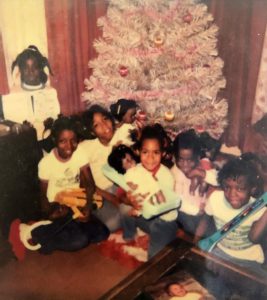
girls under tree holding dolls

Fields first began her doctoral work in the language and literacy program at Cardinal Stritch University and was devastated when the university closed. Newly married at the time, she had already paused and restarted her educational journey once. Determined to finish, she eventually found her way back to Concordia.

Over the last 10 years of her roughly 21 years of service at MPS, she continued to pursue higher education. Today, she proudly holds a Doctor of Philosophy in Leadership in Innovation and Continuous Improvement (LICI).

“I really believe I was called to teach,” Fields said. “Even as a little girl I played school with my cousins, bossed them around, and when they wouldn’t listen, I lined my dolls up and taught them instead. My mom even bought me a chalkboard — I was that kid.”

Dr. Steven Witt, professor of education and director of the graduate literacy program — and her former Concordia supervisor — agreed to serve as her chair. “He helped me reestablish a committee and essentially start fresh,” Fields said.

“Concordia’s LICI program is very structured, and that structure set me up for success,” she said. “At Concordia, I always knew the next step, and that helped me finally finish this past summer.”


A dissertation of purpose

Fields’ dissertation examined how Black teen girls navigated the literacy challenges embedded in their educational environments. Rather than labeling them as “struggling readers,” she found that many demonstrated proficiency in some areas but not in others — a clear indication of systemic gaps in the support and instruction they were provided.

“One of the most disheartening findings was how many of them suffered in silence,” Fields explained. “They didn’t know how to ask for help or were ashamed to.”

Yet there were uplifting examples. Fields found that some girls received meaningful support from churches, families and tutors. “One young woman, for instance, was given a leadership role in her church, where she read Bible stories to children — even though she wasn’t considered the ‘best’ reader at school.”

Witt, who served as Fields’ dissertation chair, expressed deep admiration for her work, noting the meaningful insights it offered. “Her dissertation is profoundly impactful, reflecting her commitment to elevating voices that too often go unheard,” he said.

Fields also worked closely with Dr. Kathleen Kannass, LICI professor. “She was instrumental in helping me recruit participants for my study,” Fields said. “She went out of her way to connect me with others, which ultimately led me to a third of my participants. This really helped me stay on track with my completion timeline.”

Deeply moved by Fields’ dissertation, Kannass described it as a strong example of Fields’ concern for justice and compassion for people. “LaTasha is an outstanding individual. She has a strong faith, is community-minded and service-oriented. We are proud to have her as a LICI alum,” she said.

As for what comes next, Fields remains open — and hopeful. “If we build an educational system capable of effectively serving Black girls — seeing them, hearing them, meeting them where they are — everyone will benefit, because those are things all students need.”


A devoted network

Fields’ mother, Denise, was one of her greatest supporters. No one else in her immediate family had ever reached this level of education. “That meant nobody could help me with the academic side of the doctoral journey, but they poured into me with encouragement, prayer and practical support,” Fields said. “My mom would say, ‘I know I can’t help you write, but I can pray, or bring you lunch.’”

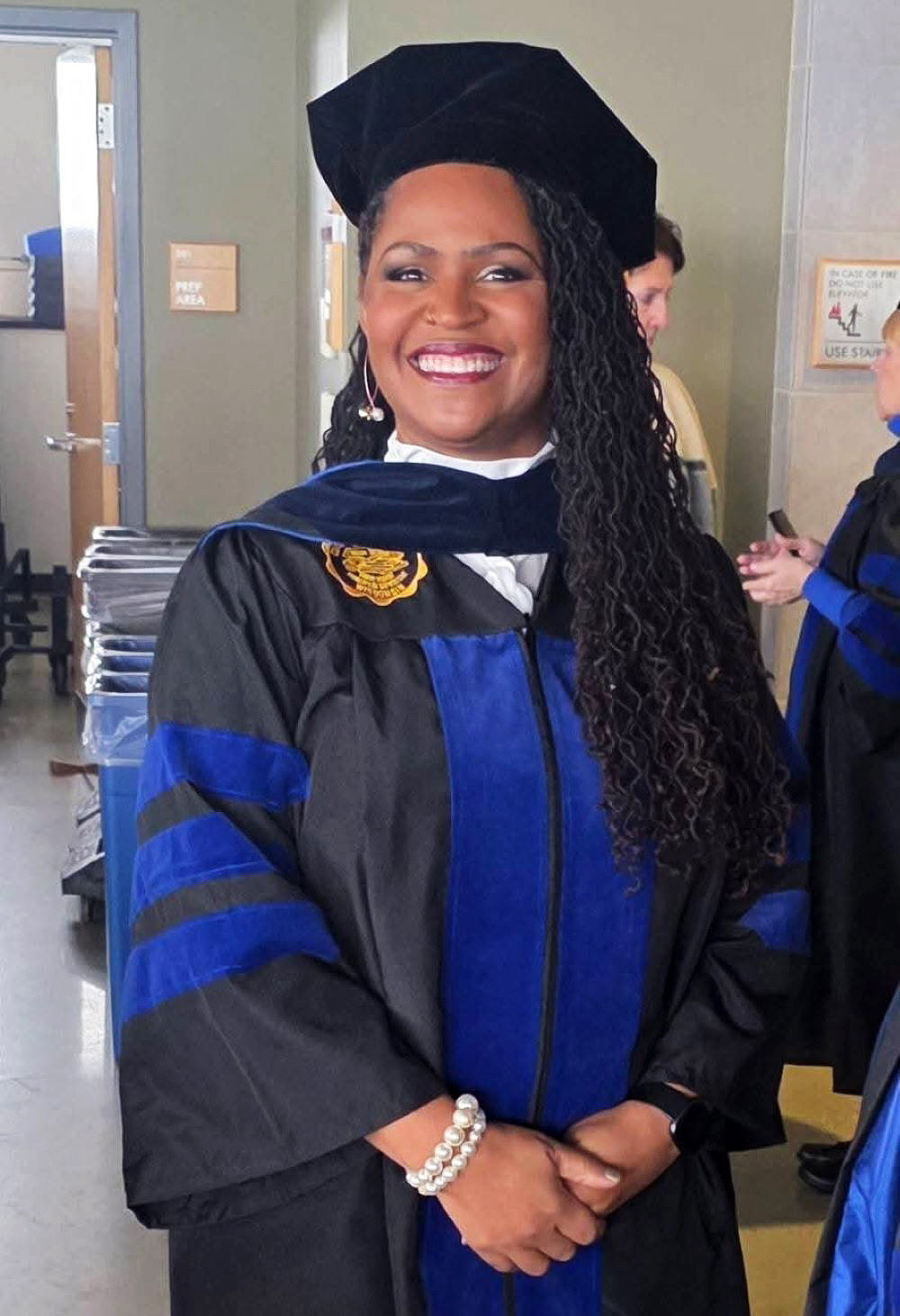
woman in gown and cap with long black hair

Support from her mother and her husband made a significant difference. “Being the first in the family to earn a doctorate feels like something I did not just for me, but also for my family — something that adds to our collective story and opens doors for the next generation.”

Jason Fields, her husband of eight years, walked alongside her throughout the journey. “La Tasha’s pursuit of her doctorate, something I had the opportunity to watch, was a case study on discipline, dedication and leadership,” he said. “She never missed a beat. After watching her, I learned firsthand what needed to be done if I wanted to follow in her footsteps. It was amazing to see.”

Coincidentally, Jason is also pursuing his doctorate at Concordia in the same program. Reaching the stage first, Fields laughed that he was not thrilled — in a playful way. “Early on, he told me, ‘You’re not going to be the only doctor in the house.’ So when he enrolled, that actually motivated me even more,” Fields said with a smile. “I’m a little competitive. I wanted to finish before him, and I did.”

Undoubtedly, Fields believes God placed her in the right place at the right time. “I’m honestly asking God what’s next,” she said. “I was so focused on finishing that I didn’t let myself think too far ahead about the next big move. My doctoral journey didn’t follow my usual pattern of ‘set a goal, accomplish it.’ It was more like ‘set a goal, pause, restart, life happens.’”

One thing Fields is certain about is her life’s purpose.

“My deeper calling is service,” Fields said. “Literacy is just the area where I’ve developed expertise so I can serve children, youth and now adults more effectively — particularly those who have been overlooked or who are suffering in silence.”


At a glance

  1. Who has made the biggest impact on your college journey? “I am forever grateful for my husband, whose steady support made it possible for me to keep going. He stepped in and took care of things at home when I was exhausted and had nothing left to give. He also gave me space to write. Additionally, my mother’s unwavering encouragement and belief in me — especially in the moments when my own faith wavered — kept me grounded and moving forward. Their love and support made this journey possible.”
  2. What does graduation mean to you in one word or phrase? “Freedom”
  3. If your life had a theme song right now, what would it be? “A Beautiful Day” (India Arie)
  4. What’s your go-to comfort food when you need a pick-me-up? Blueberry Pie Smoothie Bowl
  5. If you could teleport anywhere for a weekend getaway, where would you go? A luxury spa in Ghana 
  6. What’s something small that never fails to make you laugh or smile? Receiving random phone calls or texts from my nieces and nephews.

Fun fact

Fields owns Onyx Educational Consulting, which she started roughly four years ago. Through Onyx, she offers professional development for K–12 schools and teachers.

“I haven’t poured a lot of energy into growing it yet because I was so focused on finishing my dissertation,” Fields said. “Now that school is done, I plan to revisit what’s already happening in Madison — particularly programs for Black girls — and see where there might be gaps I can help fill through my work.”


Editor’s note: This is one in a series of stories highlighting a few Concordia’s uncommon graduates. Faculty and staff submit candidates for consideration. Stories are posted in the days leading up to or after commencement. View more uncommon graduates here. 


Want in?

Inspired by a Christian worldview, stewardship, and service, the mission of the cross-disciplinary LICI doctoral program is to prepare and equip individuals to be lifelong learners and exceptional leaders who will make a positive impact and add value to their vocations and communities.


The uncommon pre-med graduate with rural medicine in her heart

From her dairy farm roots to beginning medical school at MCW–Central Wisconsin in July 2026, Amber Moser, ’25, graduated with a Bachelor of Science in Biomedical Sciences from Concordia University Wisconsin.


Growing up in Manawa, Wis., Amber (Fietzer) Moser was accustomed to small-town life and a tight-knit community. She spent her adolescent years working on her family’s dairy farm, where she was exposed to animal husbandry and learned about cattle genetics.

girl with cow
Amber (Fietzer) Moser

One of her fondest childhood memories comes from a third-grade science fair project. Her dad taught her about animals and their genetics, sparking a new interest. When he later explained that human beings also have genetics, her curiosity grew even more — ultimately setting her on a meaningful path toward medicine.

Realizing how everything connected, Moser said, “It was a snowball effect.” Her passion continued to grow — somewhat under the radar — as she reached adolescence.

In high school, however, like many teenagers, Moser struggled with deciding which college degree to pursue. She was originally planning to come to Concordia for the interior design major. “I knew CUW had a partnership with a college in Milwaukee for that. At the same time, I was very interested in medicine, but I didn’t think I could do it. I thought, ‘You have to be really cool and really smart to be a doctor,’” Moser said.


All answers lead to yes

By her senior year, however, Moser was closer to recognizing the calling that had first sparked in childhood. “I decided: ‘I’m doing biomedical sciences. I want to be a doctor. I can do this,’” she said.

Taking a leap of faith, Moser now excitedly and confidently awaits the next phase of her educational journey. With her undergraduate degree completed, she will begin medical school in July 2026, having been accepted into the Medical College of Wisconsin-Central Wisconsin.

“The person who really solidified my path for me was Dr. Joe Fisher. I met him on my visit day,” Moser said. “He was my faculty advisor and was so encouraging. He said Concordia could definitely prepare me for medical school. I trusted him, and did research with him all four years.”

“Amber is a top-notch student and an even better human being,” said Dr. Joe Fisher, associate professor of life and earth sciences. “I have no doubt she will make an excellent physician and continue to carry the mission of CUW into her future career.”


Time well spent

Her mom was instrumental in her choosing CUW. As an alumna, Moser’s mom took her to tour Concordia in eighth grade and in her junior year of high school.

“She kind of got the ball rolling toward Concordia, and then everything just kept building from there. I’ve loved it ever since,” Moser said.

During college, she pursued a wide range of activities — from track to student government — culminating in her final year as vice president of the CUW Pre-Med Club.

Looking ahead to the accelerated program at MCW, she faces three years of medical school followed by three to four years of residency before becoming a medical doctor. “I’m excited to get into the nitty-gritty of medicine,” Moser said.

Realizing the path ahead will be both challenging and costly, she added, “You really don’t go into medicine for the money — you do it because of the passion.”

As for the kind of doctor she will become, that’s ultimately where faith plays a role. “I’m the kind of person who wants to do everything, and I struggle with picking just one thing. That’s why family medicine, especially rural family medicine, is calling my name. It lets me do a bit of everything,” she said.

As for the kind of doctor she plans to become, she is certain about a few things. “I want to be the kind of doctor who’s not just in the clinic — you’ll also see me coaching middle school track or serving on the school board,” she said.


Preparation leads to opportunity

Balancing all of her commitments has certainly been a struggle, but it has also been refining for Moser. “I like the phrase ‘iron sharpens iron.’ It’s hard because you need to become strong, smart, quick-thinking, and also emotionally intelligent — all qualities you need as a physician.”

She continued, “Now that I’m on the other side of one of the hardest parts in my journey, I can say it was worth it. Getting that acceptance letter was euphoric.”

Note: Amber Moser would like to thank the Concordia faculty for the experiences, the mentoring, and the additional opportunities — such as being featured in “The College Tour.” “I know they’re in my corner, and that I can reach out and they’ll respond. That’s the beauty of Concordia: community and family.”


At a Glance

back of grad cap
  1. Who has made the biggest impact on your college journey? “I ultimately committed to Concordia because of Dr. Fisher. His passion for the Biomedical Sciences program, his encouragement to join his research, and his openness to mentoring me provided a sense of support and motivation that made Concordia feel like the right place to complete my degree.”
  2. What does graduation mean to you in one word or phrase? “Success”
  3. If your life had a theme song right now, what would it be? “Long Live” (Taylor Swift)
  4. What’s your go-to comfort food when you need a pick-me-up? Popcorn
  5. If you could teleport anywhere for a weekend getaway, where would you go? Cocoa Beach, Florida 
  6. What’s something small that never fails to make you laugh or smile? My husband

In the News


Editor’s note: This is one in a series of stories highlighting a few Concordia’s uncommon graduates. Faculty and staff submit candidates for consideration. Stories are posted in the days leading up to or after commencement. View more uncommon graduates here. 


Want in?

Concordia University Wisconsin is a Lutheran higher education community committed to helping students develop in mind, body, and spirit for service to Christ in the Church and the world.