The Perfect Pairing: Philosophy, Politics and Economics for Tomorrow’s Leaders

Students who know they want to be business leaders, CEOs, or simply more ‘supple of mind’ — this one’s for you.


Having multiple majors, minors, certificates and credentials can advance a person’s career. But what about a person’s humanity?

A Bachelor of Arts in Philosophy, Politics, and Economics (PPE) brings together interdisciplinary studies that prepare students to navigate complex real-world challenges. It’s essential for students seeking answers to the timeless questions that have shaped civilizations for centuries: What does it mean to live a good life? What rights should all people have? What makes a society fair?

These questions lie at the heart of what it means to be human. Basic human rights — what are they, and who decides? As a Christian university, CUW roots students in their faith and service to Christ. Through the development of mind, body and spirit, CUW students are morally and ethically prepared to meet the world where it is.

Dr. Michael Munger: PPE has a timeless purpose

Michael Munger, Ph.D., professor of political science and director of the PPE certificate program at Duke University, has helped launch more than 40 PPE programs nationwide over the last decade.

PPE gives students a “suppleness of mind,” as Munger put it — one that helps them not only attract future employers but also make meaningful contributions in a world where societies seek to flourish.

“PPE is an elite leadership curriculum, and it’s generally a way of thinking about three interdisciplinary focuses — one that has now stood the test of time,” Munger said. “It’s been exactly 100 years that PPE in the U.K. has been the source of many prime ministers, members of Parliament and business leaders.”


A booming niche major for all leaders

In January 2024, Forbes published an article titled “Philosophy, Politics and Economics: A Booming College Major,” in which the author, Dr. Marlena Corcoran, stated that more than 75 universities in the United States offer this program. She also noted that in 2024 more than 600 students at Oxford University were studying philosophy, politics and economics — the birthplace of PPE programs, which began in the 1920s.

PPE is becoming a more prominent degree

While it remains a niche major, interest in Philosophy, Politics, and Economics is steadily rising as more U.S. institutions adopt the program — and with good reason. Several influential figures have earned PPE degrees and gone on to prominence in their fields, including former U.S. President Bill Clinton, former Pakistani Prime Minister Benazir Bhutto, media executive Rupert Murdoch, and others.

PPE is a powerful major, Munger said: “You do your major for your first job, and you do PPE for your career.”

Munger notes that every generation believes its challenges are unprecedented — and in many ways, they are. “Each generation faces a new set of difficulties, but there are some permanent, important things — questions that have plagued philosophers for 3,000 years, and that people of faith for 2,000 years now have worked to try to understand.”

That tension between enduring questions and modern realities is where PPE shines most. “PPE is one of the only fields that combines a reverence for culture and learning from the past with applying that knowledge in a setting where we have to worry about things like AI,” Munger continued. “What does it mean to be a human being? How will people find work and create communities of meaning in a setting where we’re increasingly isolated?”

According to Munger, PPE doesn’t provide answers per se; it reminds people of the enduring questions that never change — the ones each generation may try to answer differently.

Makayla Runyon: Thinking like a leader

Current PPE student Makayla Runyon is enrolled in the Pre-Law Pathway at Concordia. She entered the PPE program with some hesitation, admitting she’s not a “math person”— in fact, she detests it. “At first, I didn’t understand why it was so important to combine all three areas — philosophy, politics and economics. I thought economics was just a small piece. But I’ve learned it’s deeply integrated into political decisions. And philosophy is just as important,” Runyon said.

“I’ve realized how vital it is to have all these different perspectives, even if you end up working primarily in one of the fields,” she continued. Even though PPE is a new major at CUW, Runyon sees how valuable the combination is and how it will serve her in the future. “It’s not just three random things squished together. It’s intentionally designed to give us a broad, interconnected view of how the world works — ethically, politically and economically.”

Runyon, along with several other students, is currently forming a law-focused organization on campus. “It’s for anyone interested in law — future lawyers, law enforcement, politicians, people interested in public service,” she said. “We’re looking at mock trials, exploring different areas of law, and talking about what it looks like for police officers, firefighters, people working for the State Department, and more.”

After graduation, Runyon plans to attend Marquette Law School. Grounded by her faith and her experience with Youth With A Mission (YWAM), she feels called to help change the laws related to how the United States combats human trafficking.

“At YWAM, we talked a lot about hearing God’s voice, and that’s been a big part of my life,” Runyon said. “Sometimes it’s an instinct — like the undeniable urge I felt to come to Concordia. Other times it’s more like a clear thought in my mind. I felt God telling me to leave the missions field and go back to college.”


Open the mind, tear down the walls

To educate students in a world as complicated as the one they live in today makes PPE an essential pursuit for future leaders because they can’t just hide behind the usual disciplinary boundaries, Munger explained.

“We need our students to be better than the faculty,” he said. “Many faculty are still going to be narrow and teach within their specialty — which is fine. We need students to be comfortable dealing with experts so they can take leadership roles in government and business.”

Munger continued: “The reason to do PPE is that by the time you’re 30, you have a broad view of what constitutes your place in the world and the possibilities you have.”

College students should let go of their preconceived narratives for the future and embrace the journey, exploring these disciplines and celebrating the “I don’t know,” as Munger called it.

“The problem is that many students got into college because they had this sort of planning mentality. But you’re in. You’re there now. So take advantage of it. Take more advantage of the IDK.”

“Life is long. If you start doing something, and you do something else, it’s fine. In fact, it’s probably better.” —Michael Munger


More about their journey

man smiling with suit on
Dr. Michael Munger

Michael Munger’s first job out of graduate school was at the Federal Trade Commission. He then taught economics at Dartmouth College, followed by political science at the University of Texas. After that, he became a dean at the University of North Carolina at Chapel Hill, where he worked in public administration and trained city and county managers. At Duke University, he served as chair of the political science department and now directs the PPE program. He is also one of the editors of the Oxford PPE Anthology.

Munger’s must reads:

  • The Wealth of Nations by Adam Smith
  • The Theory of Moral Sentiments by Adam Smith

woman with short red hair
Makayla Runyon

Makayla Runyon is also a published author. Her book, Blood Bound, began as a writing project that helped her cope with difficult periods in her life. After high school, she joined YWAM for several years, where she witnessed the devastation caused by human trafficking.

“We worked in the red-light districts, walking around and praying. You see traffickers, you see victims behind the windows. To many tourists, it just looks like ‘their job,’ but when you dig deeper into why they’re there, you see the reality,” Runyon said.

To read more about CUW’s PPE program, click here.


Want in?

Concordia University Wisconsin is a Lutheran higher education community committed to helping students develop in mind, body, and spirit for service to Christ in the Church and the world.

The Philosophy, Politics, and Economics (PPE) major offers an integrated approach to understanding the ideas and institutions that shape our world. Graduates will be prepared to engage thoughtfully with the challenges of public life and to lead with insight and integrity.

This interdisciplinary program fosters critical thinking about the foundations of ordered liberty, the principles of constitutional governance, and the dynamics of free markets — all in service of human flourishing. You’ll learn to assess whether a policy or action is politically and economically viable, morally justifiable, and how to navigate the complex tradeoffs among competing social goods. The PPE major is grounded in the rich tradition of great thinkers — Aristotle, John Locke, Adam Smith, Alexis de Tocqueville, Friedrich Hayek, James Buchanan, Elinor Ostrom, and others — whose enduring insights continue to shape our understanding of freedom, justice, and the common good.


Shape the Future With Our Master’s of Public Health

Prepare to lead, innovate and make a lasting impact on communities.


Love collaborating with a variety of people — from clients with low health literacy to government officials and CEOs — to promote healthier communities and drive meaningful change? Concordia University Wisconsin is launching a new online MPH in Applied Community and Population Health in fall 2026.

The American Public Health Association states, “Public health promotes and protects the health of all people and their communities. This science-based, evidence-backed field strives to give everyone a safe place to live, learn, work and play.”  

A degree that transforms lives

woman and man looking at chart

An MPH degree is extremely versatile; graduates are poised to make an impact in a variety of areas, including governmental, nonprofit, healthcare and private sectors. Growth in public health jobs is expected to be strong, at rates faster than average. For example, health education specialists are expected to grow by 4%, epidemiologists by 16%, and health services managers by 23% in the next 10 years, according to the U.S. Bureau of Labor Statistics. These are just a few examples of jobs you may consider with a degree in public health.

“The public health infrastructure is undergoing revitalization and expansion. The field provides many exciting opportunities for new graduates to be at the forefront of change in this profession,” says Sandy Slater, PhD, MS, professor and MPH director.

black man in pink suit
Joshua Liston-Zawadi

Junior Joshua Liston-Zawadi has already been making a significant impact in the world of public health and will graduate with his bachelor’s degree in December 2026. Zawadi currently owns three businesses in the public health sector: Dad Doula University, Life Redefined MKE and Conscious Community Curators. He has also been ministering for the last five years.

Not wanting to feel like just a number, Liston-Zawadi chose to attend CUW because the people here made him feel seen and valued.

“They saw me and that’s a big deal for me,” Liston-Zawadi says. “At Concordia, you can feel that people actually care about you. For example, I was in the hospital for a week and missed class, and my professors called me every day to make sure I understood the assignments. You don’t get that at a regular college.”

He continues, “Public health is the one arena where everything I do can be used.” Zawadi is a minister, a father, a doula, a community health worker — and soon a CUW alumnus. The master’s program is appealing to him because he eventually plans to pursue a doctorate, which he hopes will help him work in policy.

Heart of a servant, mindset of a leader

vaccine clinic event with children

“We are looking for thought leaders — students who are creative, committed to public health, and ready to challenge the way things have always been done,” says Audrey Kostrzewa, PharmD, MPH, BCPS, professor and MPH assistant director.

CUW’s MPH program will nurture a servant’s heart and equip students with the skills to develop effective, evidence-based strategies that improve population health. Courses are intentionally designed to teach evidence-based practice, management and servant leadership, research methods, systems thinking, and informatics. These courses provide students with practical tools to address real public health problems.

One of the unique courses students will take, “Leadership and Advocacy in Public Health,” will focus on servant leadership development within the context of public health, and its relation to meeting the needs of others, and advancing the profession of public health through advocacy.  

A degree that opens doors — and hearts

people at farmer's market

“Public health’s goal is to ensure people can achieve the healthiest lives possible,” Slater says. “That means meeting people where they are, working with them and caring for them — values that align deeply with faith and what it means to be a Christian.”

Graduates of this program will be capable of:

  • Demonstrating strong knowledge and communication skills
  • Leading and collaborating effectively
  • Exhibiting technological and digital fluency
  • Advocating for public health
  • Applying creative, out-of-the-box thinking to drive change

There are many pressing health challenges throughout the country and around the world.

“Public health needs people who can think outside the box and advocate for positive change,” Kostrzewa says.


Choose your path — purposefully

Driven to serve others and strengthen communities? Public health could be the right fit for you.

As a multifaceted field, career opportunities exist in:

  • Health systems
  • Insurance companies
  • Nonprofits such as the American Heart Association or the American Cancer Society
  • Digital health organizations

With these versatile career possibilities, CUW’s public health program offers an exceptional path for people from a variety of undergraduate backgrounds. Take that bachelor’s degree to the next level.


Want in?

Concordia University Wisconsin is a Lutheran higher education community committed to helping students develop in mind, body and spirit for service to Christ in the church and the world. Public health professionals are on the front lines of creating healthier, stronger and more resilient communities. CUW’s Master of Public Health in applied community and population health equips students with the knowledge, skills and evidence-based perspective to promote health, prevent disease and serve others.

Rooted in Concordia’s mission to prepare students to serve “Christ in the church and the world,” the MPH program integrates science, service and stewardship. Students gain practical tools to address today’s complex public health challenges while grounding their work in compassion, ethics and faith.


Beyond the hype: Safe and ethical AI use for nurses

Understanding when—and when not—to trust AI in nursing is becoming a core competency.


Nursing students must use critical thinking, communication and clinical judgment. When a nurse cares for a patient, that patient doesn’t want their nurse staring at a screen or asking AI every question. Patients can do this at home, which can lead to misdiagnosis. Nursing graduates must be able to safeguard accuracy and use AI correctly, as well as function without it.

Balancing humanity and technology

“AI can help with many components of medicine, but humans care for the mind and spirit,” says Jessica Leiberg, PhD, DNP, dean of the School of Nursing. AI is advancing quickly, but comforting a patient and showing compassion are uniquely human.

Julie Parve, DNP, APNP, director of graduate nursing, is also a family nurse practitioner who works in a clinic one day a week. She is learning how AI is being used in the field and is excited to show students how it can help in practice.

One example is Epic Systems’ electronic health record (EHR) software, which has existed for several years. This platform uses AI assistants and ambient-listening technology (DAX) to help reduce charting time and improve documentation. DAX Copilot (Dragon Ambient eXperience) is an AI-powered tool that supplements note-taking by acting as an AI scribe for nurses. These tools work together.

“It’s coming out very quickly,” says Dawn Kuerschner, chair of undergraduate nursing. “For students, especially undergrads, I want them to understand how it can help patients—but also that it can give wrong or incomplete information. So they need to be careful and prudent in how they use and interpret AI.”

AI assistance should help you, not replace you

AI-powered tools such as DAX are not designed to replace the human brain—just assist it by reducing documentation burden, streamlining workflow and improving a nurse’s efficiency.

“There are multiple spaces for AI in nursing: clinical practice, the classroom, leadership, scholarship and how faculty use it to inform their teaching,” says Leiberg. Conversations are underway within the School of Nursing to set consistent parameters.

“We’re working to ensure faculty and students use it appropriately. AI isn’t good or bad—it’s a tool. It’s how the human uses it.”

Overall, AI may help reduce burnout and administrative burdens for future nurses since charting takes a considerable time. AI summarizes charts, assists with documentation and can help inform diagnoses as well.

AI pitfalls you must be aware of

Whether using AI or not, nurses must focus on being present and communicating properly with their patients. For those using the tools, they must also be aware of inaccurate information.

Kuerschner says, “I have students ask AI about a medication, then check it in a verified drug resource. Sometimes it’s accurate, but sometimes not.”

The goal is for nurses to learn to use AI as a tool while still thinking critically. For example, Parve explains, “AI might tell you how to insert an IV but skip aseptic technique—which is critical for infection prevention.”

HIPAA is also a major concern because nurses cannot enter patient information into a noncompliant platform. Leiberg says, “We have to teach students how to use the technology safely to protect patients.”

Embracing AI responsibly

It’s impossible to predict where AI will be even one month from now. Concordia nursing graduates will be equipped to use this tool ethically and effectively. Rooted in Christ, they will learn to serve their patients first—focusing on accuracy, healing, humanity and compassion.

“Let AI handle the charts; let nurses handle the humans,” Kuerschner says.

Additional reading

For a more in-depth feature on nursing read, “DE-MSN: A beacon of hope for the future of nursing.”


Want in?

Concordia University Wisconsin is a Lutheran higher education community committed to helping students develop in mind, body and spirit for service to Christ in the Church and the world. Whether you’re just beginning your journey or looking to advance your nursing career, CUW is here to support you every step of the way. With flexible programs, faith-integrated learning, and a community that truly cares, you can become the kind of nurse the world needs. Explore our nursing programs today and discover how CUW can help you lead with compassion and purpose.


Many hands, one mission: Bringing Beautiful Feet to life

Worship, service and spiritual renewal take center stage as the Beautiful Feet Missions Conference circles back to Concordia University Wisconsin.


Do you live missionally? Are you a kind neighbor? Do you go out of your way to brighten someone’s day? Whether you are verbally sharing the Gospel or quietly living it out through daily acts of devotion, God is at work. The Beautiful Feet Missions Conference brings these actions to life, giving students a space for fellowship, service and spreading His word.

“Scripture calls us to serve,” says James Schultz (’25), a senior majoring in Lutheran secondary education and Service to the World coordinator for CUW’s Campus Ministry Leadership Team.

This annual conference hosts students, pastors and campus ministry leaders from Concordia universities across the nation—roughly 195 people are expected to attend this year.

“The presence of so many students from so many other LCMS universities helps make this big world feel a bit smaller,” says Rev. Jonathon Bakker, campus pastor. “It’s an opportunity for our students to start to see how the pieces of their life may be falling into place as they consider future service to the Lord and his church at home or abroad.” 

Maggie Leimkuehler, undergraduate clinical and skills lab coordinator, says this is the first time CUW has hosted since before COVID, so it’s exciting to welcome it back home.

This year’s theme is “Ready, Set, Go!” based on 1 Peter 3:15, which reminds us to always be ready to give a defense for the hope within us, according to Leimkuehler. Schultz added, “Our focus is on apologetics—helping students understand what they believe and why so they can share their faith with confidence.”

Student Annie Schaffer, who will graduate in spring 2027 with a degree in secondary English education with a Lutheran teacher diploma, is one of two student leaders for this event. She has attended past conferences and loves witnessing their annual evolution.

“In so many ways it’s beneficial for all Concordia students because we get the opportunity to meet, learn and worship all in the same place—mixed together,” says Schaffer. “You can make lifelong friends and find resources for ministry and mission work that can be right next door or across the world.”

Step up

Today, Friday, Nov. 7, is the big service day. “All 195 conference attendees—plus about 60 CUW students—will deploy across 10 project sites in the community,” confirms Leimkuehler. “We’ll work with organizations like City on a Hill, Big Brothers Big Sisters, Family Sharing and Lighthouse Ministries. Students will also make blankets, pack snack bags and collect donations on campus.”

Essentially, each project meets a need that has been identified in the local area—things like organizing hygiene donations, supporting foster children or helping older community members with yard work.

“We’re called to be the hands and feet of Christ,” says Leimkuehler. “Getting out of our comfort zones and serving helps students live that out tangibly.”

Off-Campus service projects are:

On-Campus service projects are:

  • Blanket Making: For Children’s Hospital and Lakeshore Advocacy
  • Snack Packs: For Milwaukee Rescue Mission
  • Can Drive: Food collection for Family Sharing
  • Clothing Drive: Professional/family clothing for Mr. Bob’s

Luke Witte, a computer science and philosophy major, is the other student leader for this year’s event. He is helping Big Brothers Big Sisters make care packages today.

He said students should consider attending the conference to gain insight into how they can better bring others to the church. “It is also a great opportunity to build relationships with Christian students from other universities,” Witte said. He will graduate in spring 2027.

Step together

Fellowship is a huge part of this event and the breakout sessions support this. “Being surrounded by peers from other Concordias who share your faith is powerful,” Schultz said.

Speakers, breakout sessions and service opportunities, provide students with the necessary tools and encouragement to live missionally.

“I had the opportunity to attend the Beautiful Feet Missions Conference my sophomore year and I’m excited to participate again this year,” says student Mikayla Dolan (’26). “One of the biggest takeaways I had from the past conference was that faith and ministry aren’t only reserved for Sundays. We are called to be living out our faith in our day-to-day lives through service to our neighbors and it is through this service that we may have the opportunity to share the Gospel with them.”

Step boldly

Recognizing how intimidating evangelism and apologetics can be for some, Leimkuehler says, “We want students to realize it’s not scary. They’re learning how to take that first step and point people toward truth and hope in Christ.”

Schultz hopes students will leave the conference with confidence in their faith. “I hope they leave ready to answer tough questions and share the hope of Christ boldly.”

“For a university with a clear mission of forming students in mind, body and spirit for lives of service to Christ in the church and in the world, it is an honor to host this conference, and I invite everyone to pray for these students and the work of the Lord.” —Pastor Bakker


Step abroad

Upcoming “Spring Break Mission Trip” to North Carolina

  • Where: Camp Linn Haven in N.C.
  • When: February 27 to March 7, 2026
  • Who: Lutheran Early Response Team
  • What: They will train you and lead you in providing post-disaster relief

To find out more information or to sign up, click here.


Want in?

Concordia University Wisconsin is a Lutheran higher education community committed to helping students develop in mind, body and spirit for service to Christ in the Church and the world.


Rising to the Top: Batterman’s Vision for Regional Excellence

Grounded in faith, driven by innovation and committed to serving the region’s future business needs—a new advisory board is born.


On Oct. 30, 2025, more than a dozen professionals—business leaders and alumni—gathered to discuss the future of the Batterman School of Business. Equipped with institutional knowledge and hands-on experience, these thought leaders are poised to propel Concordia’s business school to the next level. The result: students who will graduate ready to meet the demands of today’s evolving workforce.

“Higher education is changing rapidly, and by listening closely to the voices of today’s business leaders, we can remain relevant and forward-thinking,” said Scott Niederjohn, PhD, dean of the School of Business. “Together with our faculty, staff, and advisory board, we are committed to ensuring that our students gain real-world experiences while at Concordia.”


window with decal

Experiential Learning in Action

The School of Business is composed of professors who come from the business world. They’ve rolled up their sleeves, opened doors, and achieved their goals. As teachers, they’re prepared to guide students toward quality internships and C-suite mentors. Students gain hands-on experience through ventures such as Concordia Red Elephant Chocolate, The Mentor Initiative, AI & Quantum Innovation Lab, and CU Ventures Fund Management.

The advisory board was strategically composed of returning members who bring valuable past perspectives, along with new community leaders who offer fresh insights into higher education.

One board member, David Latona, president of the Milwaukee Economic Development Corporation, said he was very impressed by the new members’ depth and diversity of professional experience.

“With a wide range of industries represented, the board should be well positioned to provide the new dean and the university with real-time insights and feedback,” Latona said. “Drs. Niederjohn and Griffin led an efficient meeting with concise and engaging discussion from the entire group. The opportunity to meet current CUW students topped off the day; they were smart, engaging, and I believe each of them will be successful, in part because of the education and experiences they are receiving at CUW.”

Finance student Micah Hoehner, a senior completing his MBA through the Business Scholars program, was invited to attend the meeting to offer a student perspective. Hoehner serves as chief financial officer of the Student Government Association, president and fund manager of the Investment Club, and is involved in The Mentor Initiative, Study Abroad programs, Capitaf Scholars, and more.

Offering his unique, behind-the-scenes perspective, Hoehner said the meeting was productive and will lead to many wonderful opportunities for students.


closeup of man giving speech with glasses on

We Are Building Tomorrow’s Leaders Today

Rooted in Christian principles, the School of Business remains committed to delivering a value-based education that connects faith with practice. By engaging with the business community, students develop lasting relationships and an entrepreneurial mindset—empowering them to lead and transform our global society.

Hoehner urges current and prospective students to be as involved on campus as possible. “Join clubs, take on student leadership roles, participate in activity organizations, and attend speaker events and career fairs,” he said. “Dr. Niederjohn’s Liberty, Faith and Economics Summit is a must-attend event.”

Previous speaker events included names such as Steve Forbes, chairman and editor-in-chief of Forbes Media; Kyle Mann, editor-in-chief of The Babylon Bee; Sen. Phil Gramm; and Mollie Hemingway, senior editor at The Federalist.

Dean Rennicke, assistant dean of external relations for the School of Business, said,

“The vision for the School of Business, pioneered by Scott Niederjohn, is to be nimble, excellent, and a place where values matter in the business world.”

Rennicke noted that companies want CUW students to work for them and emphasized that the advisory board is composed of great people who will help the school grow and stay ahead of trends.


We Are Guided and Supported

“We are deeply grateful to these business leaders for taking time out of their busy schedules to help guide the strategy, planning, and direction of the Concordia Batterman School of Business,” Niederjohn said.

A special thanks to the 2025–26 Advisory Board members:

  • Joel Dykstra, PWSB, senior vice president/chief credit officer
  • Bob Peiffer, retired Sargento vice president of marketing
  • Jessica Wolff, assistant city administrator for Mequon
  • David Latona, president of the Milwaukee Economic Development Corporation
  • Jill Busch, director of learning and development for ManpowerGroup
  • Diana Barnett, retired MillerCoors executive
  • Larry Baab, chief executive officer of Four Wheel Campers
  • Richard Egleston, president of national sales for Arthur Gallagher
  • Dan Fraid, regional human resources manager for XPO Logistics
  • Joe Wood, chief marketing officer for Sendik’s Food Market
  • Dale Kooyenga, president of MMAC
  • Beth Kern, retired John Deere marketing executive
  • Jack Craemer, retired alum
  • Matt Chiappetta, Harley-Davidson franchisee
  • Brandon Goldbeck, chief executive officer of Orthopaedic Hospital of Wisconsin
  • Danica Holt, marketing manager for Capture Sports & Entertainment
  • Rebecca Ehlers, vice president of marketing for the Milwaukee Public Museum

Niederjohn said the group left the meeting inspired, with several actionable ideas for the future. “We look forward to incorporating their input into our continued growth.”

This is the start of a new era for the Batterman School of Business—one that will solidify CUW as a top regional business school. Are you ready to grow with us?


Want in?

Concordia University Wisconsin is a Lutheran higher education community committed to helping students develop in mind, body, and spirit for service to Christ in the Church and the world.

The Batterman School of Business offers a complete range of business education programs and degrees including bachelor’s programs in:

Business undergraduate students also participate in the Concordia Core, a rigorous, liberal arts curriculum integrated with Lutheran distinctives. Graduate programs include Concordia’s highly ranked Master of Business Administration (with 14 concentrations), Master of Science in Leadership, Master of Science in Accountancy, Master of Science in Business Analytics, and two doctoral programs—a Doctor of Business Administration and a Doctorate of Philosophy in Business Administration.


DE-MSN: A beacon of hope for the future of nursing

A new program invites career changers to answer God’s call to serve. Concordia University Wisconsin has launched a new Direct Entry Master of Science in Nursing (DE-MSN) program to help you make your move—and make it meaningful.


Have you ever found yourself in a grocery store with your child when, without warning, she’s overcome by severe back pain and can no longer stand? That happened to us. Our saving grace appeared within moments when a nearby shopper approached and calmly said, “Hi, I’m an ER nurse. Is she OK? What’s going on?”

My husband and I were stunned—overwhelmed and unsure of what to do, we watched this woman, a complete stranger, pause her day to help our daughter. She was off duty, mid-shopping, and yet fully present and ready to assist. She cared. We looked at each other, then upward, as my husband quietly said, “Praise God.”

That is what it means to be a nurse. Not just a profession, but a calling—someone who steps in without hesitation, with skill, compassion and clarity in the moments when others are frozen. She was a true blessing.

Right there in the produce aisle, she assessed our daughter with a series of tests and gentle stretches. Thankfully, it was only a muscle spasm—painful but not serious. Avoiding hours in the emergency department and the stress of uncertainty was an immeasurable relief.

Had that nurse not been there, I’m not sure what we would have done. But because she was, we didn’t have to find out.


two nurses with patient

The mortar

Dean of the School of Nursing Jessica Leiberg, PhD, DNP, though new to her role at Concordia University Wisconsin, is not new to the profession—or to what it means to be that person of strength in another’s time of need.

“I loved it!” said Leiberg, who began her nursing career in the ICU. “It’s incredibly demanding but rewarding. You become the connection between the providers, the patients and their families. I always say providers are the bricks, but nurses are the mortar that holds everything together.”

Holding everything together when everything seems to be falling apart—that’s what nurses do best.


girl with nurse attire

Faith in action

Alumna Abby Hafemann (’25) has been working at Aurora St. Luke’s since 2022. She began as a CNA, then became a nurse extern last year, and, as of June 2025, an RN.

Her family has a long history of attending Concordia—her two sisters, her mom and her aunt all graduated from CUW’s nursing program. Her dad, uncle and grandpa are also alumni.

“I saw how Concordia shaped them both academically and spiritually, and I knew I wanted the same experience,” Hafemann said. “When I learned about the nursing program’s reputation for combining faith-based learning with hands-on clinical practice, it felt like the perfect fit.”

She believes nursing is more than just a career—“it’s a calling to serve others with compassion, empathy and grace.”

“My goal as a nurse is to be the hands and feet of Christ—to bring comfort to those who are suffering, to listen when someone feels unheard, and to provide care that heals both body and spirit.”

Out in the field, Hafemann sees nurses balancing heavier workloads and hospitals struggling to fill staffing gaps. Despite those challenges, she witnesses incredible resilience and teamwork from her fellow nurses, who continue to show up day after day for their patients.


nurse by the bedside of a patient

Huge demand, short supply

The Wisconsin Department of Workforce Development projects a deficit of between 12,000 and 19,000 nurses by 2040, according to a recent report. With population growth and increased life expectancy, the shortage is expected to worsen as patient needs rise. Nurses work in many different areas of healthcare—bedside nursing, clinics, schools and public health, for example. CUW is addressing this issue at the collegiate level.

“We need more nurses not only to meet the demand, but to ensure that patients receive the personalized, high-quality care they deserve,” Hafemann said. She emphasized that the DE-MSN program is an incredible opportunity for those who feel called to make a difference, even if nursing wasn’t their first path.

Designed to guide career changers into the nursing field with confidence, this is a 64-credit program that can be completed in either 22 or 34 months. The curriculum includes advanced theory, hands-on labs and supervised clinical rotations.

“When hospitals hear that a nurse graduated from Concordia, they know they’re getting the best,” Hafemann said. “Concordia’s emphasis on serving with compassion and integrity mirrors exactly what I wanted to bring to my nursing career.”

With a strong faith and sense of community, the fight to enlist more nurses into the profession continues. If you are struggling to find meaning in your current program or career path, you might want to consider nursing. CUW’s program prepares students to lead with both skill and heart, according to Hafemann. “That’s something truly special.”

“Because of your little faith. For truly I say to you, if you have faith like a mustard seed, you will say to this mountain, ‘Move from here to there,’ and it will move, and nothing will be impossible for you” — Matthew 17:20


several nursing students and patients

Further reading


Want in?

Concordia University Wisconsin is a Lutheran higher education community committed to helping students develop in mind, body and spirit for service to Christ in the Church and the world.

Whether you’re just beginning your journey or looking to advance your nursing career, CUW is here to support you every step of the way. With flexible programs, faith-integrated learning, and a community that truly cares, you can become the kind of nurse the world needs. Explore our nursing programs today and discover how CUW can help you lead with compassion and purpose.


Cutting through the noise: Steve Forbes on the future of America’s economy

At CUW’s annual Liberty, Faith, and Economics Summit, Forbes summed up the day with his keynote speech, leaving students hopeful and inspired.


“Most great ideas sound crazy at the beginning, and then they become acceptable,” stressed Steve Forbes, chairman and editor-in-chief of Forbes Media, during his keynote speech, “How Entrepreneurs, Not Government, Built America.” His talk was presented in partnership with Young America’s Foundation on Tuesday evening, Oct. 7, 2025, at the Concordia Center for Environmental Stewardship.

With real-life examples and historical facts, not to mention some witty humor, Forbes lit up a full room of attendees—many of whom came to hear his speech after a full day of listening to other speakers such as:

“We’re deeply grateful to Rick Esenberg, Dr. Sam Gregg, and Andrew Stuttaford for sharing their insights and engaging our students in such meaningful conversations,” said Scott Niederjohn, Ph.D., dean of the Batterman School of Business.

three photos from speaker series

“It was an honor to welcome more than 500 students, faculty, staff and community members to our seventh annual Liberty, Faith, and Economics Summit,” he continued. “The energy in the room—especially during Steve Forbes’ keynote—reflected a genuine excitement for thoughtful dialogue on faith, liberty and economic freedom.”


man with grey hair next to woman with long blonde hair

Ground your faith

Jenna Piwowarczyk, a junior political science major and chairman of the CUW Young Americans for Freedom, found Forbes’s speech to reinforce the value of traditional American economic principles.

“I am left hoping that students understand that the current state of our economy is not the way it has to be,” said Piwowarczyk. “As Americans, we always have the opportunity for success—it takes education, action and grit to get our economy back on track.”

Before addressing today’s economic challenges, Forbes reminded the audience to appreciate what America has provided. “We should remind ourselves that for all the troubles we have today, the basic strengths of this country are still very evident, especially in terms of innovation and creativity,” he explained.

“In healthcare, we’re developing vaccines for cancer—something that would have seemed unbelievable just a few years ago. Within a generation, we may be able to replace organs like hearts and kidneys as easily as changing a tire, rather than waiting for a hopeful replacement.”


closeup of man giving speech with glasses on

Grow your economy

Forbes is no stranger to the political scene, running in two presidential elections, one in 1996 and the other in 2000. He is a distinguished businessman who has carried the Forbes brand into the digital era, expanding its global footprint. During his speech to CUW, he presented several key points for growing the economy, some of which were:

  • Implement low, flat tax rates
  • Reduce government regulations
  • Maintain a stable currency

“Imagine if the Federal Reserve were in charge of the Time Bureau and decided to float the clock—60 minutes one hour, 48 minutes the next. Life would be difficult,” said Forbes.

“I guarantee you, if they don’t do something like announcing they want a stable dollar and get over this chatter about a weak dollar, we’re going to have problems in the future.”


students and faculty sitting during a speaker

Pursue your future

At the root of it all, people want to succeed. We want to make enough money to pay our bills, buy a new car, dine at a new restaurant downtown, and still have something left over in the bank. Through his stories of American ingenuity, Forbes inspires the audience to consider what could make them successful.

He emphasized that entrepreneurship means putting ideas out there without knowing whether people will accept them—it’s about taking risks. “You create new knowledge through experimentation—in the laboratory, the marketplace, or elsewhere. That’s how you move ahead,” he said.

The government, however, creates a wedge through its regulations, taxes, and other barriers. Forbes said, “In terms of regulations, deregulate—that’ll go a long way to reviving American manufacturing, especially with AI.”


Want in?

Concordia University Wisconsin is a Lutheran higher education community committed to helping students develop in mind, body and spirit for service to Christ in the Church and the world.

The Batterman School of Business enrolls the most students out of CUW’s six academic schools. The BSB offers a complete range of business education programs and degrees including bachelor’s degrees for undergraduate and adult accelerated students, as well as licensures and certifications. Graduate programs include our highly ranked Master of Business Administration program (with 12 concentrations), and master’s degrees in accountancy, business analytics, and more. The school also offers a Doctor of Business Administration degree, the only one of its kind in the Milwaukee area, as well as a Ph.D. in Business Administration.


A clearer picture: New DMS lab prepares students to meet growing community need

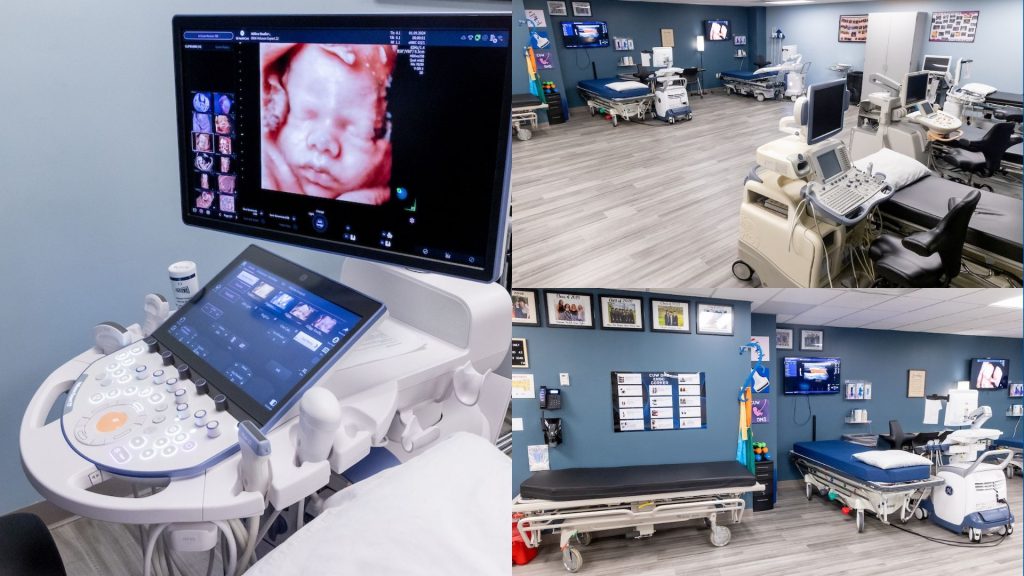
Diagnostic Medical Sonography students now have access to a space that is not only state-of-the-art, but will also push their education to the next level.


Unveiled this fall, Concordia University Wisconsin’s Diagnostic Medical Sonography (DMS) program now features a new lab designed to prepare students to meet the growing community demand for sonographers. According to the Bureau of Labor Statistics, employment in the field is projected to grow 13% between 2024 and 2034, with an average annual wage of $89,340. With an aging population, advances in technology, workforce turnover, and increased access to healthcare, the need for skilled sonographers has never been greater.

A new era of healthcare

closeups of equipment

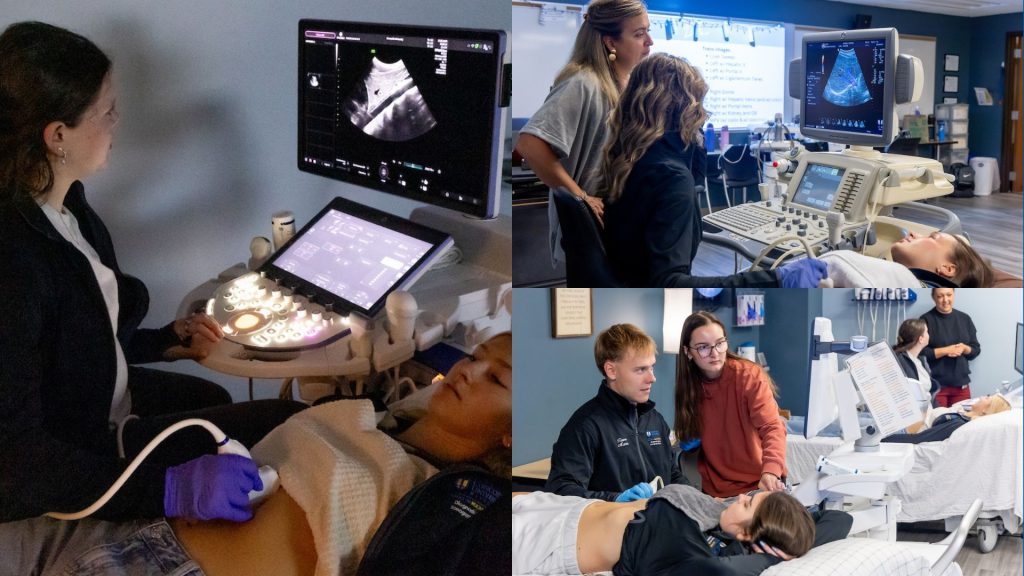
With an enhanced space featuring more equipment, updated technology, and improved vantage points, Lisa Reimer, director of CUW’s Diagnostic Medical Sonography Program and chair of the Department of Imaging, says students’ educational needs are being prioritized. They now have more hands-on opportunities with equipment, access to both live models and phantoms (simulated bodies), and more guided one-on-one support from professors.

“Our students experience a fully integrated program,” says Reimer. “In any given week, they’re learning in the classroom, practicing in the lab, and then reinforcing it all in the clinical setting with patient care.”

CUW is uniquely positioned compared to other programs where students may only use the equipment in a hospital setting. “We are able to provide training in the classroom first, and then students enter the hospital,” notes Linda Samuel, dean of the School of Health Professions.

According to Reimer, this helps students build initial muscle memory and understand protocols in a supportive setting where they can ask questions like: What images do I need to take? When do I take them? Is that a good image? If not, how can I make it better?

As a Christian university, CUW emphasizes serving Christ by serving others—even in the diagnostic process. “We are talking with our patients and interacting with them throughout their whole exam,” Reimer explains. Students develop multiple skills simultaneously: communicating with patients, capturing images, typing, annotating, and ensuring safety and comfort.

A new lab means clearer understanding

students working closely with equipment in lab
yellow flyer with text and lab equipment

“The new DMS lab space allows my classmates and me to refine our skills and continue growing into the best sonographers we can be!” shares Avery Zangl, a senior in the DMS program. “Scanning always offers room for improvement and new learning, but the updated environment, combined with the guidance of our knowledgeable professors, truly supports our success.”

Hailey Foster, a junior in the DMS program, has also grown more confident in her scanning skills thanks to the space. She values the opportunity to practice outside of class and during personal time, without relying solely on a clinical site for experience. “With multiple machines to practice on and classmates to scan, this lab equips us with the abilities we need to take into our future careers,” she says.


Additional reading


Want in?

Concordia University Wisconsin is a Lutheran higher education community committed to helping students develop in mind, body, and spirit for service to Christ in the Church and the world. The Bachelor of Science in Diagnostic Medical Sonography (DMS) offers four distinct pathways to prepare learners to step forward into their calling as a medical sonographer: the undergraduate DMS certificate, in-person bachelor’s degree, in-person bachelor’s degree with DA, or an online sonography completion program.


Student Spotlight: Mikayla Dolan

Wearing many hats, Mikayla demonstrates her service to Christ and Concordia.


As a double major in psychology and social work, Mikayla Dolan dedicates her time to CUW through club involvement, to the broader community through service, and to building a bright future for herself. Humble about the many positions she currently holds, Mikayla remains focused on helping others.

Finding her path in psychology

Inspired by a clinical psychologist she met at church, Mikayla initially wanted to pursue the same career. She found the study of behavior and the brain intriguing—especially how they intersect to help people.

woman holding a tie blanket

“The program has challenged me academically and taught me critical thinking and research skills that I will be able to use in my future vocations,” Mikayla says. “The professors have also served as incredible Christian mentors and ensured that I am supported every step of the way.”

Not only has Mikayla grown in her leadership roles as a psychology major, but she has also participated in service projects for the community. As part of Mental Health Awareness & Suicide Prevention Week and her fall service-learning project, Mikayla joined her fellow Psychology Club members in preparing blankets for the Lakeshore Regional Child Advocacy Center, where she is currently interning.

“Mikayla, our Psychology Club president, is an amazing young woman whose leadership, compassion, and vision have truly shaped the club this year,” says Vittoria Sipone, Ph.D., assistant professor of psychology. “She has a gift for bringing people together and inspiring others to step up, and I couldn’t be prouder of the example she sets for her peers.”

While psychology gave her a strong foundation, Mikayla soon realized her call to serve was even broader.

A broader way to serve

She added social work as a second major because it felt like a natural choice and would look appealing to graduate schools. As she explored the program, she came to appreciate the beauty of its design. “It’s a wide field with so many different opportunities to serve people in the community and the world,” she says.

Recognizing the gifts God has given her, Mikayla says the social work program has helped her use them to serve God and His people. “It has helped me develop in empathy, understanding, and confidence in my ability to advocate for others,” she explains. “The practical experience the program offers, along with faculty who genuinely care for students, has made my experience something I am incredibly grateful for.”

With both majors serving as her groundwork, Mikayla has discovered a new passion. “I found out that I really love public policy, organization, and helping people on a really big, macro level.”

Graduating in May 2026, she plans to pursue law school. Her father, a pastor, wasn’t surprised. “It was funny—my dad would always make comments like, ‘You’d be a good lawyer,’” Mikayla says. When she told him she wanted to pursue law school, he was ready with his collection of resources.

But seek first his kingdom and his righteousness, and all these things will be given to you as well. Therefore do not worry about tomorrow, for tomorrow will worry about itself. Each day has enough trouble of its own. – Matthew 6:33-34

Faith in action

Here is a list of Mikayla’s current CUW extracurriculars. She says she has no favorites—she enjoys them all in different ways.

  • Campus Ministry Leadership Team (CMLT): Service to Milwaukee Coordinator/Faith Associate in Wittenberg Hall
  • Student Social Work Organization (SSWO): Executive Director
  • Psych Club: President
  • Comfort Dogs: Handler for Runner
  • Feed My Starving Children (FMSC): Event Organizer
  • Lakeshore Regional Child Advocacy Center: Intern

“What those organizations all have in common is that they are very service-oriented and focused on serving Christ and His Kingdom,” Mikayla explains.

God calls us to do His work in His time. Through CUW, Mikayla found her calling to serve others. As part of her psychology service-learning project this spring, she is organizing an event with Feed My Starving Children, a nonprofit that empowers volunteers to pack meals for malnourished children in nearly 70 countries.

Over 500 volunteers and $30,000 are needed to host this event March 18–20, 2026. To learn more about how you can support or volunteer, visit here.

“The generous will themselves be blessed, for they share their food with the poor.” – Proverbs 22:9

Want in?

Concordia University Wisconsin is a Lutheran higher education community committed to helping students develop in mind, body, and spirit for service to Christ in the Church and the world.


Alumni Spotlight: Jensen Hurley

Concordia University Wisconsin alumna shares her personal and professional journey after completing her Bachelor of Social Work (BSW) and pursuing a Master of Social Work (MSW).


“Remember who you are. Don’t compromise for anyone, for any reason. You are a child of the Almighty God. Live that truth.” This quote by Lysa TerKeurst, speaker and author of Christian non-fiction, sets the tone for an inspiring story of redemption and purpose in the midst of struggle.

CUW alumna Jensen Hurley (’24) is a powerful example of resilience. A survivor of domestic violence and substance use disorder (SUD), she has transformed her life with courage and faith. Since graduating in 2024 with a bachelor’s degree in social work, she has worked full-time as a shelter manager at Advocates of Ozaukee.

Courage for today, hope for tomorrow

“I remember there was a time when I was first getting sober, and I was really struggling,” Jensen says. “I thought, Can I do this? I don’t know if I can. I just prayed—and felt relief. I definitely leaned on my faith to get through that.”

After getting sober in 2020, Jensen decided to pursue higher education with the unwavering support of her parents. Her mom—her best friend—stayed by her side every step of the way, and neither parent ever gave up on her.

God is good and “slow to anger and abounding in steadfast love…” (Numbers 14:18)

Rising from the ashes

Jensen worked while earning her degree, inspired by the flexibility she had seen in her mom’s human resources program at CUW. Guided by her “dearly held values and beliefs,” she chose social work.

“It was phenomenal,” Jensen says. “I was able to work full time with special needs adults and complete my program.” Most importantly, she says, CUW’s support never left her feeling alone.

“From the moment Jensen entered the BSW program, I knew she would succeed,” says Nichole Ostrowski, BSW program director. “She carried a spirit of resilience and determination that was evident from our first conversation.”

Now, as a shelter manager, Jensen loves watching people heal. “They don’t even realize how strong they are or that they’re doing the work. Then all of a sudden, months go by … it’s awesome to see them grow and build that connection.”

Kari Klatt, BSW program field coordinator and clinical assistant professor, worked closely with Jensen as an undergrad, witnessing her academic work and interactions with peers. “She serves others with genuine empathy and understanding, and she conveys an unwavering belief that change and growth are possible.”

Both Ostrowski and Klatt agree that Jensen is authentic and that her lived experiences have positioned her to make a meaningful impact in social work. As Ostrowski puts it, “Jensen doesn’t just understand struggle; she transforms it into purpose—and that’s what makes her an extraordinary social worker.”

Full circle

Today, as a CUW alumna and graduate student, Jensen is building a secure future for herself while supporting others in crisis—something that resonates deeply with her past.

“They’re all frazzled, and seeing them like that is really hard,” she says. “But when I go to them, I actually enjoy taking their mind off it, making a connection, and following up with support.”

Jensen is pursuing her MSW at Concordia while completing her field placement at Ascension Columbia St. Mary’s Hospital in Ozaukee. There, she works in intensive outpatient care with adults struggling with mental health and addiction.

“One thing you’ll quickly realize are the deep connections between social work and Christian faith,” Jensen says. “There are many parallels between what Jesus calls us to do and what social work calls us to do.”

Want in?

Concordia University Wisconsin is a Lutheran higher education community committed to helping students develop in mind, body, and spirit for service to Christ in the Church and the world. If you’re passionate about helping others, social work could be the career for you. Concordia’s Bachelor of Social Work program combines rigorous academic training with hands-on field experience and a Christian worldview. Students even have the option to complete their BSW and Master of Social Work (MSW) in just five years. Learn more about CUW’s social work program, or connect with BSW Program Director Nichole Ostrowski at Nichole.Ostrowski@cuw.edu.