Concordia’s School of Health Professions will dedicate its new Interprofessional Clinic during an open house on Wednesday, March 29. All are invited to attend.
Concordia University Wisconsin has completed a remodel on its School of Health Professions wing to create a state-of-the-art clinic devoted to students in diagnostic medical sonography, occupational therapy, physical therapy, physician assistant, rehabilitation science, speech-language pathology, and social work. The 9,150-square-foot Interprofessional Clinic is a dedicated space that allows students to learn while also offering health and social care services to community members for free or at significantly reduced prices.
In celebration of the new facility, the School of Health Professions will host a dedication and open house. All are invited to attend this free event and experience the clinic in person.
Interprofessional Clinic Dedication and Open House
Wednesday, March 29 | 3:30-5:30 p.m.
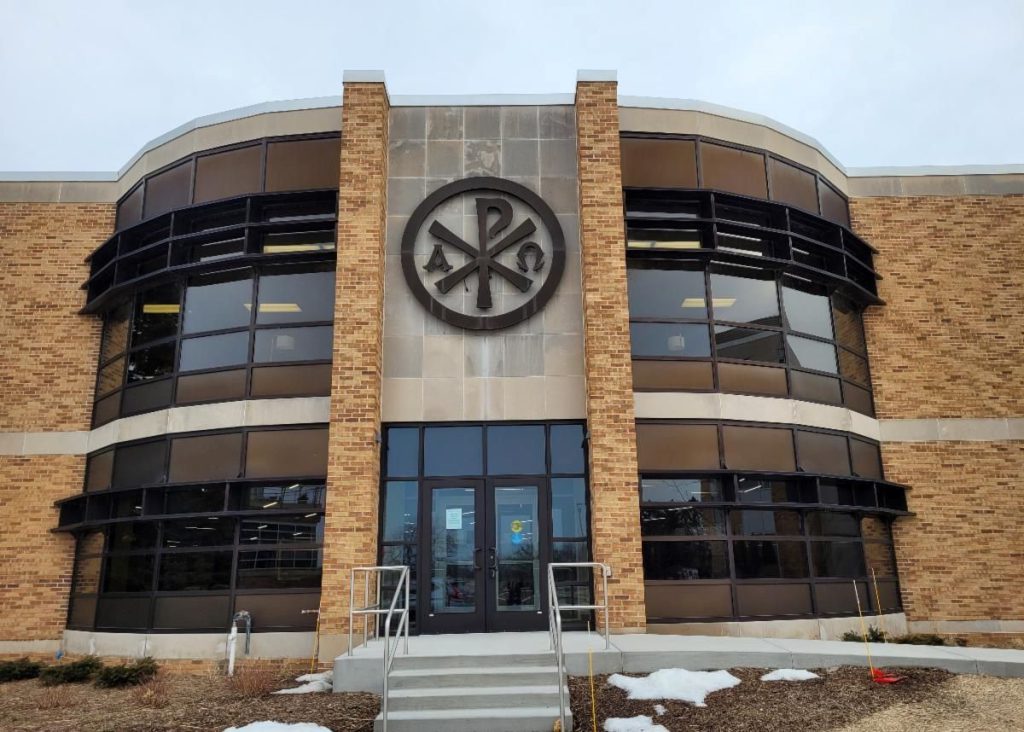
The Interprofessional Clinic is located between Patrick T. Ferry Hall and the Speech, Language, and Hearing Clinic. A ribbon cutting will take place outside, weather permitting. After, tours and refreshments will be available inside.
In the media
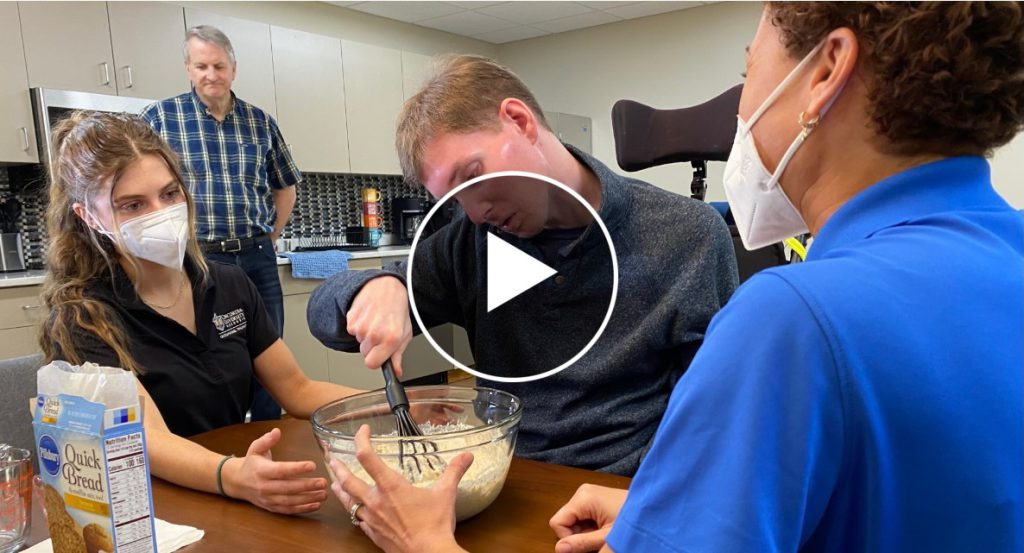
CBS 58 stopped by campus on Tuesday, March 28 to see the clinic in action. Concordia was featured on the morning show and on afternoon news segments. Click on the image below to see the spot.
Features of the Interprofessional Clinic
Construction on the Interprofessional Clinic wrapped up in January and students are already putting the space to good use. The project was supported by a generous grant from the Russell & Josephine Kott Memorial Charitable Trust, with equipment funded by a separate grant from the Patrick J. and Janet L. Thompson Family Foundation.
The new clinic space consists of:
A reception area
A splinting area
An open gym area for rehab and wellness activities
A mock apartment
A simulation space comprised of four rooms with hospital beds
An observation room for students
Private and group treatment rooms
Meeting rooms
A large storage room
An office space for clinic staff
History and growth opportunities
Concordia has a long tradition of offering health and wellness services to uninsured or underinsured community members, including most recently PA students and pharmacy students working together on campus to administer COVID-19 vaccines. Its physical therapy/occupational therapy community clinics kicked off the tradition more than 20 years ago. In recent years, the School of Health Professions has expanded its repertoire of service beyond PT/OT. Today, the list includes:
The new clinic presents opportunity for even more growth. For example, the PT/OT community clinics had run just two days a week in the past because of space/scheduling constraints in its previous off-campus “homes”. By contrast, the new clinic allows for services up to five days a week, and healthy student enrollment in participating programs ensures there’s enough manpower to meet the demand. The new clinic also opens up opportunities to incorporate students in physicians assistant studies, pharmacy, and social work in the near future.
An interprofessional approach
The clinic’s namesake pays homage to an area of excellence at Concordia. Interprofessional Education (IPE) provides opportunities for students enrolled in health and human services programs to learn and train together. The goal is for collaborative learning, where students build their IPE communication skills, as well as knowledge base and understanding of other specialties.
Concordia is well positioned to provide ample and excellent IPE opportunities because of the breadth of health care and social service programs offered at the university. Not only has IPE been shown to benefit students, it helps patients as well.
“We’re so thrilled to be able to expand our reach and offer students and guests access to a brand-new facility,” said Linda Samuel, PhD, dean of the School of Health Professions. “Concordia’s health professions students make up a significant portion of our student population. As we seek to continue to position ourselves as leaders in the field, preparing future health professionals for excellence and to extend Christian care past graduation, it’s important that our facilities match the caliber of our curriculum.”
Want in?
The School of Health Professions offers a range of professional programs and degrees at the bachelor’s, master’s, and doctoral levels. Whether you pursue your education through online instruction or through classroom learning, you can expect a distinctive learning environment that will prepare you for a career marked by excellence, compassion, and service.
Concordia University Wisconsin’s School of Pharmacy once again bested the average of students nationwide who have attempted and successfully matched to an accredited pharmacy residency program, earning it the 9th best match rate in the U.S. out of 147 schools.
Of the 21 students from the CUW class of 2022 who participated, 88 percent received placements this year. According to results released last week by the American Society of Health-system Pharmacist (ASHP), Concordia’s match rate surpasses the national average by nearly 14 points. The ASHP National Resident Matching Program provides an unbiased mechanism for matching applicants’ preferences with those of residency programs across the country.
The percentage of students at Concordia who opted for a residency is also greater than most other pharmacy schools. Reports from literature show that national average participation rates tend to hover around 26 percent. Concordia’s was 44 percent. Additionally, six Concordia students successfully early committed/matched to PGY2 residencies. This is a 100 percent success rate for those who attempted to match.
What is a residency?
Pharmacy residencies are optional educational experiences for licensed pharmacists. They focus on the resident providing patient care and furthering their project, leadership, and teaching skills under the preceptorship of experienced pharmacists. Residencies take place in hospitals, ambulatory care settings, community pharmacies, and managed care organizations. They are fast becoming a requisite for obtaining a position in many settings where pharmacists are involved in direct patient care.
Residencies typically last one to two years and begin in early July. Concordia’s 2023 graduates will primarily serve Wisconsin residents through residency experiences. Nineteen (83%) matched within the state. The remainder matched with programs in Minnesota, Illinois, Iowa, Michigan, Georgia, and Connecticut.
Impressive NAPLEX and MPJE scores
These latest results add to the School of Pharmacy’s ongoing success rates. National NAPLEX results show that Concordia students finished in the top quartile of all schools. NAPLEX is the official licensure exam to assess clinical knowledge for pharmacists. Meanwhile, MPJE results place CUW in the top third of all schools nationally and as the top performer in Wisconsin. The MPJE is unique per state and tests knowledge of the legal framework for pharmacy practice. Passing both NAPLEX and MPJE is required to practice pharmacy in the state of WI.
“We are proud of the continued success of our students and soon to be graduates in matching with excellent residency programs both in Wisconsin and nationwide and grateful for the trust those residency sites continue to place in the high quality of our pharmacy graduates. We are always excited when we can help our graduates succeed in their chosen vocation within pharmacy, whether it is residency, community practice or whatever else it may be.” Erik C. Jorvig, PhD, dean of Concordia’s School of Pharmacy.
Want in?
As a CUW pharmacy student, you can expect to participate in active applied learning throughout your degree program. Our accomplished faculty teach and mentor each individual student in a welcoming Christ-centered environment. Our highest priority is helping you develop your talents for a rewarding life, not only a career.
Are you just starting to explore your college options? A Visit Day at Concordia is the place to start.
Although guests can schedule a visit for pretty much any day of the year, Visit Day experiences promise a little extra pizazz. They are a great way to step into life at CUW for a day and interact with current students, professors, or coaches.
There are three Visit Days left for the spring 2023 semester, but one of them is nearly at capacity. So don’t miss your opportunity to attend one of the remaining two:
General Visit Day | March 24
Especially appropriate for high school seniors or anyone looking to start an undergraduate program
Your visit will include a guided tour led by one of our amazing student ambassadors. You’ll hear from a professor and get an up-close look at classrooms, labs, athletic facilities, residence halls, dining options, the Chapel, and so much more. A concluding Q&A session helps make sure you get all your questions answered.
Learn about the area
If you’re traveling from out of town, your Visit Day is a great opportunity to explore the area surrounding our campus. The “North Shore” area offers plenty of exciting things to do, including great restaurants, parks, lake access, and more. Downtown Milwaukee (home of the two-time world champion Milwaukee Bucks!) is just a 20-minute drive away, opening up a whole other world of cultural opportunities.
Learn about who we are
As a Lutheran higher education community, we take our mission seriously—and it shows. There’s something truly special about our campus, in how we love one another, care for one another, and strive to show the love of Christ in everything we do. The best way to experience that is to come and pay us a visit.
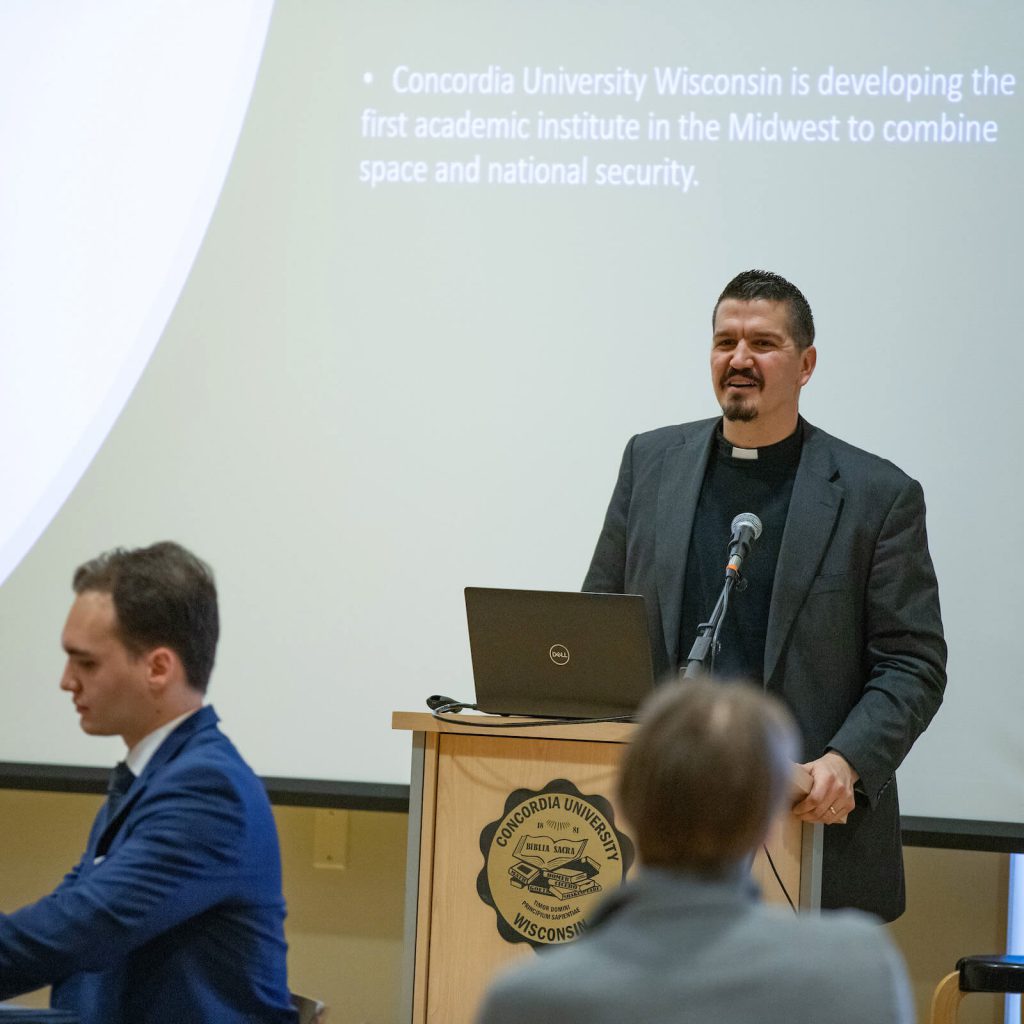
When it comes to outer space, possibility is literally in the air, and on Tuesday, March 14, nearly 100 industry and thought leaders gathered at Concordia University Wisconsin to ruminate about the potential it holds.
More than a dozen speakers of international repute—including U.S. Space Force officials, a former NASA scientist, and leading space investment teams and developers of technology—visited campus for the inaugural Strategic Space Summit, which was put on by the Concordia National Security and Space Center (CNSSC).
Keynote speaker Rick Tumlinson, one of the world’s top visionaries in the field, kicked off the all-day event. Tumlinson is co-founder of Space Fund, Deep Space Industries, Orbital Outfitters, and the New World Institute. He is credited with helping create the new commercial industry highlighted by Elon Musk and Jeff Bezos.
“You are one of the luckiest generations to be able to be alive right now, when all of human history changes,” Tumlinson told those gathered. “That (change) is happening now, within the next year or so.”
From top left clockwise: Dr. Lamont Colucci, George Pullen, John Quinn, CUW Theology Professor Rev. Dr. Jason Lane, and CUW student Yannik Gruner
Why space?
Speakers spent the day laying out the rationale for exploration beyond earth and explaining its impact for the average person. Space exploration holds implications in the political, national security, and economic realms, to name a few.
As Pullen explained on Tuesday, the space economy is estimated at $500 billion today; however, the forecast is projected to escalate to $4 trillion by the 2040s. The need for democratizing that system and applying free-enterprise principals is great.
“If we (America) don’t make those norms under which people conduct science in space, someone else will impose their norms,” Pullen said.
Impact on the economy
Just before lunch, several speakers joined in a panel discussion focused on the economic and business implications of the field. Panelists included (listed in order as shown from right to left in the video):
George Pullen, Chief Economist of MilkyWayEconomy (Moderator)
The summit concluded with a second panel discussion focused on national security. Panelists included (listed in order as shown from right to left in the video):
Dr. Joel Mozer, U.S. Space Force Director of Science, Technology, and Research
Dr. Lamont Colucci, Director of Doctrine Development for the U.S. Space Force and Professor of Political Science at Concordia University Wisconsin
Dr. Gabriele Rizzo, Principal Advisor for Futures and Foresight to Senior Leadership in the U.S. Space Force and NATO
Learn more about the Concordia National Security and Space Center
The CNSSC exists to promote American national security, space economics and power, science, and exploration, unifying the ideals of virtue, free enterprise, human potential, and American security. In addition, the activities of the Center serve to recognize each individual’s God-given talent and seek to develop students in mind, body, and spirit for a life of service to the Church and humanity.
WUWM reporter Emily Files took time to speak with one of Concordia’s Ukrainian students ahead of the one-year anniversary of the Russian invasion of Ukraine.
Anton Prima is earning his bachelor’s degree from Ukrainian American Concordia University (UACU) in Kyiv. CUW helped co-found the university more than two decades ago.
While many UACU students fled the country following the Feb. 24, 2022 initial invasion, Prima has remained in his home country.
He took some time this week to speak with WUWM reporter Emily Files about his memories from a year ago, as well as what he is experiencing today.
Click on the image below to access the segment.
Want in?
We’ve welcomed hundreds of students from all over the world to Concordia. At Concordia, you earn more than just a degree. Here, you can learn fully—in mind, body, and spirit—and be completely you. In class and out of class, you will make real connections, relationships that will last a lifetime, with people who sincerely want to see you achieve your fullest potential. Learn more about international services at Concordia.
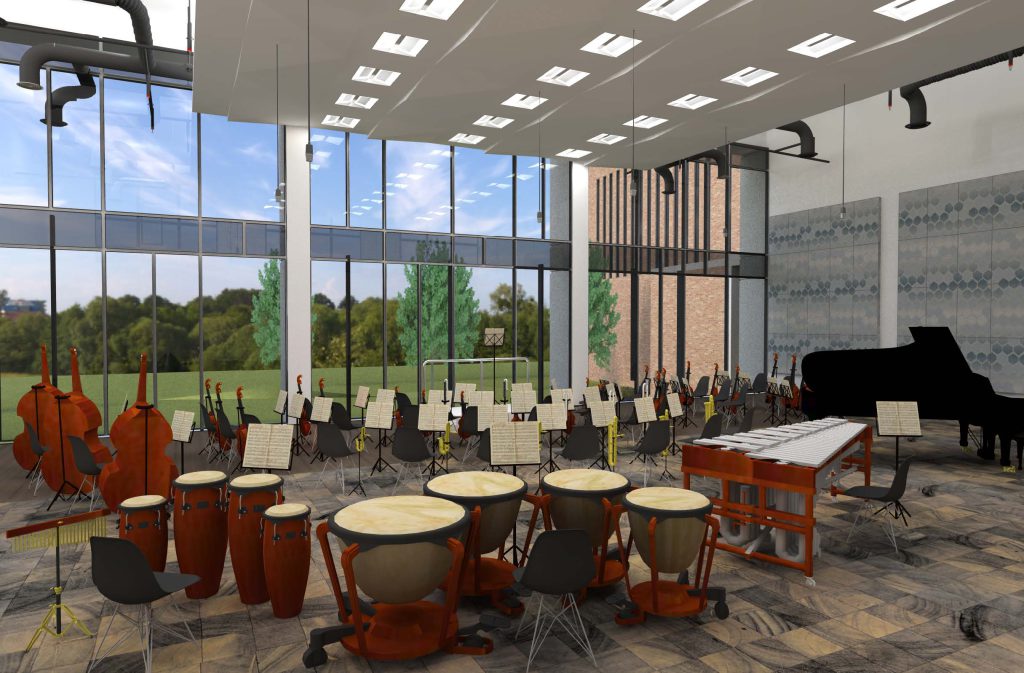
Concordia University Wisconsin has launched a campaign to raise funds for a new music building that will devote 6,800 square feet to rehearsal and practice rooms for the 225-plus students at Concordia who are majoring in music programs or involved in one of CUW’s 12 music ensembles.
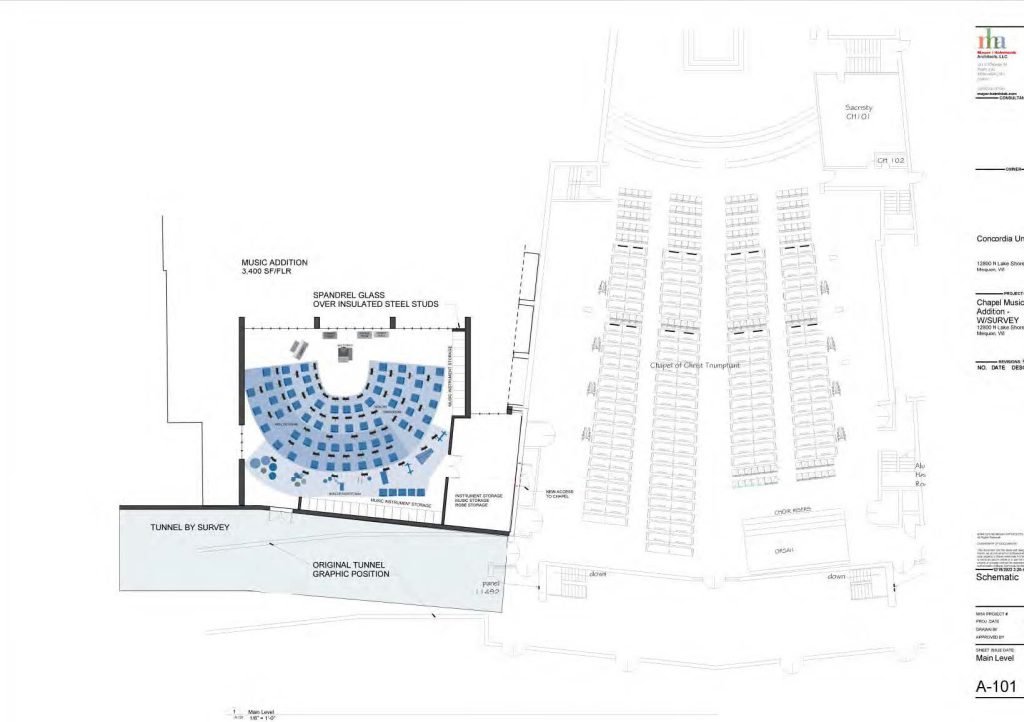
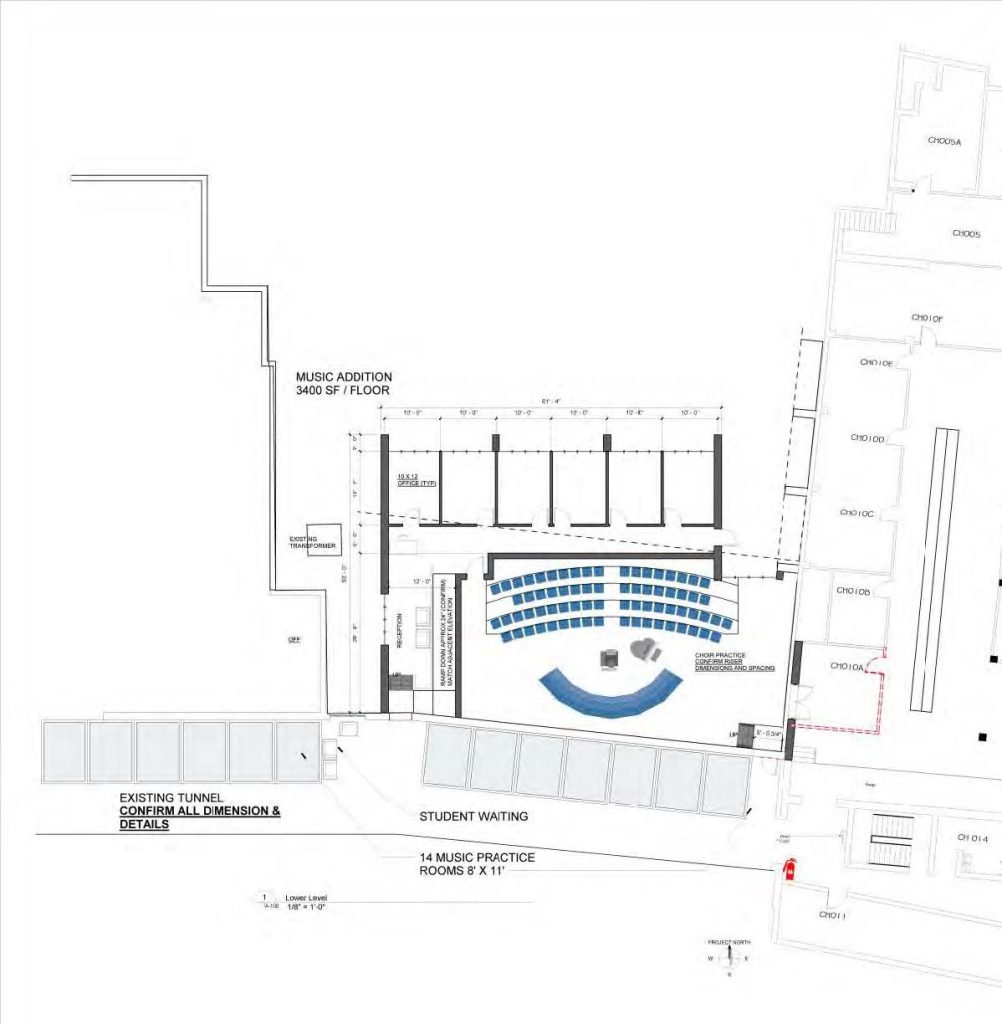
The proposed two-story facility will occupy a portion of Regents Courtyard. The first floor will adjoin with the Undercroft, while the upper level will connect to Concordia’s Chapel of Christ Triumphant, which is intended to remain the primary concert space for Concordia’s ensembles.
Concordia has raised over $1.7 million toward the overall $4 million-dollar-goal. The project was first announced publicly in December.
This will be the first time in university history that music students and faculty will have a dedicated, centralized rehearsal home on campus. Furthermore, the new structure will allow for the addition of sorely needed practice rooms and upgrades to rehearsal spaces.
Once the project is completed, the university plans to reallocate space by converting the current orchestra room into classrooms and lab space for Concordia’s new engineering programs.
The new building will feature:
On the main level…
A designated rehearsal room for orchestra and band with capacity for approximately 75 musicians.
A block of lockers for individual instrumentalists.
A storage room, for larger instruments and the university’s sheet music inventory, that connects to the Chapel, allowing for easier access and transportation of instruments from rehearsal to performance space.
On the lower level…
A designated rehearsal room with risers for choral groups.
A total of 14 sound-proofed practice rooms (currently there are only three available to students).
Offices and a reception area for Concordia’s five fulltime music faculty
Students studying parish music will still have access to the organs in the Rogate Chapel and Chapel of Christ Triumphant. Handbell ensembles will continue to practice in their current space within the redesigned Undercroft.
Music at-a-glance
Music is the only program within the university that has a foothold in both the academic and extra-curricular realms. As such, the Music Department’s reach and scope of benefits is wide-ranging.
“Sometimes it’s difficult to fully quantify the impact of music because it’s so far-reaching, but the power of it is undeniable,” said Music Chair Dr. Louis Menchaca, who has served at Concordia since 1992. “We have the academic component, but we’re more than just the academics. Students who participate in music at Concordia are honing their problem-solving and communication skills, they’re building relationships, and, most importantly, they’re growing in their appreciation of their God-given talents and learning to channel those into declarations of praise and witness for Him.”
An overview of CUW music’s broad reach:
225+ individuals involved in music at Concordia
12 music ensembles
13 endowed scholarships supporting approximately 100 students
40 students, in an average year, across all grade levels choose to major or minor in music at CUW, contributing to the pool of sorely needed called workers at LCMS congregations nationwide
47 academic programs (outside of music majors) are represented among music participants
5 fulltime faculty on staff
18 part-time adjunct instructors employed
Annual domestic trips undertaken for Kammerchor, Wind Ensemble, and Alleluia Ringers; International tours every four years
Want in?
Since 1881, Concordia University’s focus has been to teach and prepare students for careers and vocations that serve The Lutheran Church-Missouri Synod. Music has always been an integral part of that goal. The Music Department contributes to the spiritual, cultural, artistic, academic and co-curricular enhancement and advancement of the university. As CUW has grown in scope and size, the Music Department, likewise, remains integral to the university mission.
Since its inception, CUW has proudly supported the Church by preparing workers to serve as Ordained or Commissioned Ministers within the LCMS and church work programs. That good work continues today.
Census numbers released last month by Concordia’s Office of Institutional Effectiveness show CUW as a leader within the Concordia University System in this regard. A comparative fall 2021 enrollment report of CUS schools shows CUW has:
The most church work candidates enrolled (224 candidates)
The largest pre-seminary program in the CUS (61 candidates)
The second-largest Lutheran Teacher Diploma program (3 candidates behind Nebraska)
Robust numbers enrolled in its Director of Church Ministries program (44—More than any DCE program in the System)
Additionally, Concordia University Wisconsin maintains a strong Lutheran-Christian population among students pursuing non-rostered degrees. This demonstrates the university’s dedication to preparing workers who will strengthen the Church in all vocations of life:
87%of traditional undergraduates are Christian (The second-largest percentage, after CUAA’s 90%, within the CUS)
1,247 of those students are Lutheran (The largest number in the CUS)
72%of graduate-level learners are Christian, with 20% of those identifying as Lutheran (The most in the CUS)
Church work tracks
The good work of preparing called workers for the LCMS continues today through four main routes: pre-seminary, Lutheran Teacher Diploma, Director of Church Ministries/Pre-deaconess, and parish music. CUW also offers the sole parish nursing certificate within the Concordia University System. While not a rostered position within the LCMS, many nurses who have graduated from CUW’s program have gone on to serve within a congregational setting.
Is God calling you to teach the Gospel and administer the Sacraments as an LCMS pastor? CUW encourages pre-seminary students to take a major in Applied Theology and a major or minor in Theological Languages. However, pre-seminary students can major in any program at the university, such as business, education, or health professions. Those in the pre-seminary track take required courses. New Testament, Biblical Theology, and Greek, provide a solid foundation before heading off to Seminary.
God has called and equipped you to be an inspiration to students in the classroom. At CUW, you will be prepared to share the Gospel using the gifts and platform God has given you. Earn your Lutheran Teacher Diploma in early childhood, elementary. A dual major of early childhood and elementary, special education, or secondary education. Students can focus on concentrations which have been carefully and creatively designed to meet the needs of students for today and tomorrow. Over the past 5 years, CUW has placed nearly 100% of its graduates within five months after graduation.
Your calling is to serve the Church in evangelism, mission, parish teaching, youth ministry, or pre-deaconess/social ministry. You’ll be ready to support Bible studies, community outreach, mercy work, and administrative duties. Since no two graduates will have the exact same roles, you’ll take management and leadership courses that will help you adapt to any situation. You’ll gain a solid foundation with a theology major, and you’ll diversify your skillset with two minors. The first minor is in church ministries and the second minor is in nonprofit management so that you can understand how operations work at a church or nonprofit organization.
CUW also offers an online DCM certificate program in an adult accelerated format. This 47-credit program grants graduates a certificate and makes them eligible to receive a call within the LCMS as a DCM.
Parish musicians teach the faith through music. Discover the many ways you can serve through Parish Music: from learning to direct choirs and instrumental groups to supporting the structure of the Divine Service, you’ll develop your skills from training with practicing church musicians. As you learn to lead the congregation through music, you’ll have many opportunities to grow in your vocation as a parish musician.
On March 3, award-winning ensemble The Lee Trio, along with Milwaukee Symphony Orchestra musicians, will deliver a concert at Concordia University Wisconsin. The Lee Trio will also offer a free masterclass the preceding day.
Music lovers from the Northshore region and beyond have a rare, up-close opportunity to learn from world-renowned musicians and experience their talent. The Concordia University Wisconsin Chamber Music Series is pleased to present two events featuring The Lee Trio and MSO musicians:
Masterclass
Thursday, March 2 | 2:30-4 p.m.
Concordia University Wisconsin, Chapel of Christ Triumphant
This is a FREE event, but reservations are requested. Email CUW Music Director Dr. Louis Menchaca to reserve your spot.
With the goal of providing community members edification, education, and enjoyment through high-quality musical performances, Concordia’s brand-new Chamber Music Series proudly kicks off with a free masterclass led by internationally renowned performers.
Attendees will have an intimate opportunity to see these impressive musicians in action and learn from some of the best. Following the masterclass clinic, a Q&A session will be held, giving audience members the chance to interact with the performers.
“It promises to be incredibly informative and engaging,” said CUW Music Department Chair Dr. Louis Menchaca. “To gain insight into these highly accomplished musicians’ process is invaluable to any young, or even seasoned musician.”
Concert Performers
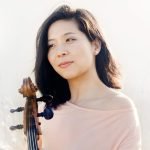
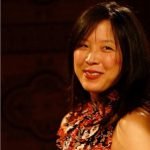
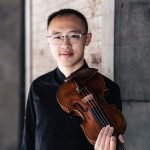
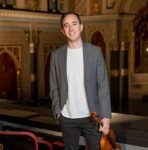
The March 3 concert will feature two of The Lee Trio sisters: Angela Lee on cello and Melinda Lee Masur on piano. Harvard alumnus and current doctoral candidate at Juilliard Max Tan will step in for sister Lisa Lee on violin.
The Lee Trio
Angela Lee | Cello
A graduate of The Juilliard School and Yale School of Music, cellist Angela Lee is a recipient of a Fulbright scholarship to study in London with William Pleeth, a grant from the Foundation for American Musicians in Europe, the Jury Prize in the Naumburg International Cello Competition, and a cello performance fellowship from the American-Scandinavian Foundation. She is a founding member of The Lee Trio, which has commissioned and premiered works of numerous living composers. Using music to foster peace and goodwill, she has made humanitarian trips to the Republic of the Philippines and the former Yugoslavia. While on a U.N.-sanctioned tour of six war-torn cities throughout Bosnia-Herzegovina, she performed for NATO troops and displaced civilians. In addition to coaching chamber music at the San Francisco Conservatory of Music, Ms. Lee serves on the San Francisco Symphony Youth Orchestra Alumni Association Leadership Council and on the Board of Directors of The Resonance Project (https://music-resonance.org), which promotes empathy through live music in mediation settings and international conflict resolution.
Melinda Lee Masur | Piano
Lauded for her “impeccable technique and artistic interpretation” [The Columbian], pianist Melinda Lee Masur has performed on all three stages of Carnegie Hall, at London’s Wigmore Hall and Purcell Room, the Berliner Philharmonie, Boston’s Symphony Hall, and at the Ravinia Festival. She has performed with such artists as Augustin Hadelich, Alban Gerhardt, Fanny Clamagirand, Adrian Brendel and Thomas Quasthoff, and is a founding member of The Lee Trio, celebrated for its “gripping immediacy and freshness” [The Strad]. A graduate of Harvard University and Hannover Hochschule für Musik, Melinda serves as Director of Piano Chamber Music and Co-Director of the Young Artist Piano Program at the BU Tanglewood Institute. Melinda Lee Masur is a Steinway Artist.
Max Tan | Violin
Praised as “eloquent” by the New York Times and “warmly rhapsodic” by the Boston Globe, Taiwanese American violinist Max Tan has appeared on stages across the United States, Europe, and Asia, forging a varied career as performer and educator. He has performed with the Chamber Orchestra of Wallonie, the Amadeus Chamber Orchestra of Polish Radio, the Hudson Valley Philharmonic, The Juilliard Orchestra, amongst others. Notable festival appearances include at the Ravinia Steans Music Institute, Yellow Barn, Chelsea Music Festival, and The Perlman Music Program. Mr. Tan is an alumnus of the Sylff and Kovner Fellowships and recipient of the Richard F. French Award from Juilliard and the Arthur Foote Prize from the Harvard Musical Association. A Harvard alumnus and current doctoral candidate at Juilliard, Mr. Tan’s mentors include Catherine Cho, Donald Weilerstein, Itzhak Perlman, Lynn Chang, and Albert Markov. He is assistant faculty of violin and chamber music at Juilliard’s Pre-College Division.
Milwaukee Symphony Orchestra contributors
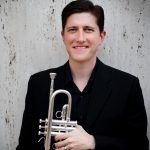
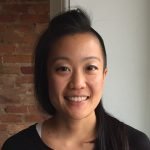
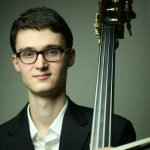
The Friday concert will feature by MSO musicians including Matthew Ernst, Dylana Leung, Alejandro Duque, and Nash Tomey.
Alejandro Duque | Viola
Violist Alejandro Duque joined the Milwaukee Symphony Orchestra in 2018 and is currently acting assistant principal. Previously, he performed with the Austin Symphony and various ensembles in the Texas area including the Kinetic Ensemble and Austin Camerata. He also received fellowships to numerous music festivals such as the Tanglewood Music Center, Aspen Music Festival, Music Academy of the West, and the New York String Orchestra Seminar. More recently, he has been a guest artist at the Sunset ChamberFest, Caroga Lake Music Festival, Lakes Area Music Festival, and with the Fine Arts Quartet. Alejandro received his Bachelor of Music degree at the University of Southern California under the mentorship of Donald McInnes and his Master of Music degree at UT Austin under Roger Myers and John Largess.
Matthew Ernst | Trumpet
Matthew Ernst currently serves as Principal Trumpet of the Milwaukee Symphony Orchestra, appointed by Edo de Waart in 2016. He was previously the Principal Trumpet of the Cincinnati Symphony Orchestra and Pops, Associate Principal Trumpet of the Louisiana Philharmonic Orchestra, and acted as Principal Trumpet for the Santa Fe Opera Orchestra and the Virginia Symphony Orchestra. A dedicated educator, Matthew maintains a private studio in Milwaukee, and he and his wife, Janna Ernst, a collaborative pianist, tour extensively as a duo, giving performances and masterclasses across the country. Matthew has a Bachelor of Music degree from the University of Michigan, also receiving the school’s prestigious Emerging Artist Award, and two Master of Music degrees from Southern Methodist University in trumpet performance and wind conducting. Matthew resides in Shorewood, Wisconsin, with Janna and their two daughters, Madeleine and Margaret.
Dylana Leung | Violin
Dylana Leung is a first violinist with the Milwaukee Symphony Orchestra. Prior to holding this position, she was assistant concertmaster of the Elgin Symphony Orchestra, section member of the Syracuse Symphony Orchestra, and concertmaster of the Civic Orchestra of Chicago. Ms. Leung was second prize winner of the 2000 Stulberg International String Competition, and national finalist at the American String Teachers Association Competition. She dabbled in Civil Engineering as a double major candidate at the University of Michigan until it became clear that calculus was not her forte. Dylana credits her teacher Paul Kantor, and peers at the Cleveland Institute of Music for fostering an atmosphere that was both challenging, and nurturing. You can always find an assortment of dark chocolate stashed in her mailbox at work, and she enjoys running along Lake Drive across the Fox Point footbridge most mornings.
Nash Tomey | Bass
Nash Tomey joins the MSO as the new Assistant Principal Bass. A member of the Kansas City Symphony from 2017-2022, Mr. Tomey is an experienced orchestral bassist and chamber musician. He attended the New England Conservatory where he studied with Boston Symphony Assistant Principal Bass Lawrence Wolfe and Donald Palma of the Orpheus Chamber Orchestra. Under the tutelage of Boston Symphony Principal Bass Edwin Barker, he received his master’s degree from Boston University in 2017. During summers at the Tanglewood Music Center, Tomey has worked with several noted conductors including Andris Nelsons, Christoph von Dohnányi, Michael Tilson Thomas and Charles Dutoit. He also attended the Pacific Music Festival, Aspen Music Festival and Wabass Institute. He was the 2nd Prize Winner at the 2021 ISB Solo Bass Competition.
Music of the Midwest
The concert will open with Berceuse from Sonata for trumpet and piano, which was written by a local composer, Brian Packham.
Packham’s first compositions appeared shortly after he began piano lessons at age 9. He continued his education at the Peabody Conservatory, preparatory division and Berklee College of Music, where he studied composition with John Bavicchi and piano with Stephanie Plsek. While at Berklee Brian received two scholarships and was the first student to win the Wind Ensemble composition competition two years in a row, 1984 and 1985.
Packham’s music for the concert hall ranges from full orchestra to small chamber ensembles and much music for solo piano. Other musical endeavors include music for film and theater. Packham is currently interim music director at Brookfield Congregational Church.
Following Packham’s composition, selections from Felix Mendelssohn’s Piano Trio No. 2 in C Minor and Camille Saint-Saens’ Septet in E-flat Major will be performed.
More about The Lee Trio
Since its critically acclaimed Wigmore Hall debut in 2002, The Lee Trio’s “gripping immediacy and freshness” and “rich palette of tone colours” [The Strad] continue to move audiences and critics around the globe. The Trio’s awards include the Recording Prize at the Kuhmo International Chamber Music Competition in Finland, 2nd Prize in the G. Zinetti International Chamber Competition in Italy, and the Gotthard-Schierse-Stiftung grant in Berlin for rising international artists.
In recent seasons, the Trio has given recitals and masterclasses in cities from Shanghai, Hong Kong, Taipei, San Francisco, New York and Toronto to London, Copenhagen, Berlin, Paris and Kiev. The Lee Trio has performed as soloists with orchestras such as the Shanghai Philharmonic, Kiev Symphony Orchestra and Chorus, Shenzhen Symphony and Macao Youth Symphony. The Trio’s tours of China have included recitals and masterclasses in Hong Kong, Macao, Shenzhen, Hangzhou and Shanghai, at the Zhongshan Culture and Art Center, Hong Kong’s City Hall Theatre and Lee Hysan Concert Hall, recordings for RTHK4, Hong Kong’s classical broadcast radio, and a guest appearance on the televised program, Music of Friends.
Since 1881, Concordia University’s mission has been teaching and preparing students for careers and vocations that serve The Lutheran Church-Missouri Synod. Music has always been an integral part of that mission. The music department contributes to the spiritual, cultural, artistic, academic and co-curricular aspects of life on campus.
Students can choose to participate in any of CUW’s 12 choral, instrumental, or handbell ensembles. More than 250 undergraduates representing 47 academic programs elect to join music groups at Concordia each year.
Our Masters of Science in Leadership (MSL) program is committed to building strong leaders to be prepared for the communities and businesses they are a part of.
With this online program you can earn your MSL and position yourself for upward mobility in a variety of fields. Whether you’re an entrepreneur, employed by a large corporation, or just passionate about leadership, our MSL program is made for you.
At Concordia University, we want to honor your unique calling in life. Our programs are Christ centered and encourage leaders to bring meaningful values and strong ethics into their workplace.
Here are the details:
30 total credits
10 total courses
Classes take 8 weeks
All courses are 100% online
No GRE or GMAT required
Opportunity to earn a Certified Manager (CM) designation as part of coursework
Leadership is a process that involves setting a goals have having a solid foundation to build direction which should be guided by moral principles. Leading others is a tedious and difficult task that requires confidence and transparency. Our MSL program seeks to help you become the best leader you can become.
The program blends Christian leadership and ethics with theory and practice. It will provide you with a wide variety of working professionals to guide organizational efforts effectively with methods based on proven scientific study. Every aspect of the program is designed for you to be successful in any area of work you do.
I asked ChatGPT to review the top reasons to attend CUW and here’s what it had to say.
Ever since ChatGPT’s public launch two months ago, it has had people in a tizzy over its ultra-sophisticated AI capabilities, as well as the potential ethical pitfalls such a tool presents. If you haven’t heard of ChatGPT, here’s a basic description of what it is and what it does.
Now, as a writer, I’m sure you can appreciate the reservations I have about a free tool that generates original copy in minutes (i.e. basically does my job). Given all the hype, however, I thought it would be interesting to test ChatGPT’s capabilities when it comes to Concordia. I asked it to “list the top reasons to attend Concordia University Wisconsin,” and here’s what it came up with.
Top reasons to attend Concordia University Wisconsin
Christian focus
What ChatGPT had to say: Concordia University Wisconsin is a Christian university and incorporates Christian values and teachings into its curriculum and campus culture.
What it missed: I’d argue that we don’t just incorporate Christianity, it’s the basis of all that we do. Sure, we don’t always “do life” perfectly, but when there’s a question or decision to be made, I can confidently say that Concordia’s leaders and community turn to Scriptures for the answer and seek to have God’s Word inform our practices. It’s part of not only our Christian identity, but our Lutheran tradition to hold God’s Word as the inerrant truth.
Small class sizes
What ChatGPT had to say: The university prides itself on small class sizes, which allow for individualized attention and personalized learning experiences.
What it missed: Yes, we’re proud of the fact that we have an 11:1 student-to-teacher ratio and an average class size of 16, because we firmly believe that a personalized education is the best education. But it’s not just the small class sizes that make us unique. It’s the combination of our “big-school opportunities” paired with this personal approach. At Concordia, students can be confident they’re getting the best of both worlds.
Wide range of academic offerings
What ChatGPT had to say: Concordia offers a wide variety of undergraduate and graduate programs, in fields such as business, education, nursing, and theology, that are designed to prepare students for successful careers.
What it missed: We have more than 70 undergraduate programs, 50-plus graduate programs, and six doctoral offerings, to be more specific. Half of our academic schools are devoted to health care-related fields. In fact, we cover virtually every health care career you could want with the exceptions of MD and dentistry. We also offer a variety of business and education-related degrees, as well as a wide range of degrees in the arts and sciences.
What ChatGPT had to say: The university’s faculty members are experienced professionals in their fields, and they are dedicated to providing a high-quality education to their students.
What it missed: Nearly 90% of our full-time faculty hold terminal degrees and the rest are working towards them. Many of these individuals continue to be practitioners in their fields as well, contributing to important research or serving the community through their lens of expertise. Unlike big state schools, where students may never actually have [insert name of impressive professor here] as their teacher, Concordia students are actually taught by the experts, not a TA.
Extracurricular activities
What ChatGPT had to say: The university has a wide range of extracurricular activities, clubs, and organizations that students can participate in, including sports teams, music groups, and volunteer organizations.
What it missed: Concordia is ahead of the game with many of its sports teams, offering unique athletic programs that provide individuals from all walks of life and with all types of athletic interests an opportunity to compete at the collegiate level. Music offerings are robust as well, with a total of 12 ensembles to choose from. And there are no shortage of opportunities to get involved or step into leadership roles through student groups like SGA or CAB.
Location
What ChatGPT had to say: The university is located in Mequon, Wisconsin, a suburban area near Milwaukee, which offers access to a variety of cultural, recreational, and job opportunities.
What ChatGPT had to say: The university offers a range of support services, including academic advising, career counseling, and mental health services, to help students succeed both academically and personally.
There are many more reasons to like Concordia. The best way to see if the university is the right fit for you is to pay us a visit. Schedule a stop today!