CUW celebrates 40 years since its move from downtown Milwaukee to its current location in Mequon.
Editor’s note: This story first appeared in the spring 2023 edition of Hearts Together. a publication of Concordia University Wisconsin and Ann Arbor.
CUW has come a long way since its 13-student start in the basement of Trinity Lutheran School in downtown Milwaukee.
From its inception in 1881 to today, CUW has grown to encompass thousands of students. Its student body is made up of on-campus, online, and hybrid learners at the undergraduate, master’s, and doctoral levels. CUW now offers more than 70 undergraduate programs, 50-plus graduate degrees, and six doctoral offerings. Program fields include education, church work, business, the liberal arts, and a wide variety of health care-related fields. And it has expanded its reach into Michigan thanks to the 2013 merge with Concordia University Ann Arbor. Together with the Ann Arbor campus, CUWAA is the largest LCMS school of higher education in the United States.
But before the university took a leap of faith in adopting a new campus in an entirely different state, school and Synod leaders made another decision that many deemed risky. They relocated CUW from its established home in the heart of Wisconsin’s largest city to a new home 20 miles north. And it has made all the difference.
Relocating to Mequon
The decision to move came at a pivotal point in the school’s history. In 1978, Concordia’s transition from a two-year school to a four-year accredited college prompted growth. For several years, university leaders hung their intentions on an expansion plan that would keep the school in Milwaukee. That plan would have required the school to purchase and raze an adjacent neighborhood of homes, however. When pushback from community members arose, the university’s leadership needed to pivot. Ultimately, university leaders made the decision to explore the feasibility of relocating to an entirely different campus.
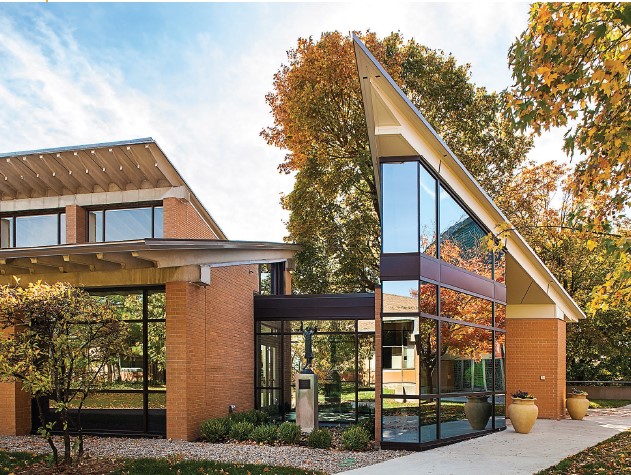
The LCMS Board of Directors scouted the Notre Dame of the Lake campus in Mequon. At the time, the School Sisters of Notre Dame owned the property. They used it as a motherhouse/training center for teaching sisters. In July 1982, a momentous decision was made: Concordia would move to Mequon. The following year, CUW ushered in its first students—and its largest class yet—at 12800 North Lake Shore Drive in Mequon. And thus, “The Miracle of Mequon,” as it is colloquially called, officially began.
Many in the CUW community still hold a special place in their hearts for the downtown campus. However, the move to Mequon undisputedly afforded a plethora of possibilities and growth opportunities that would not have been feasible had the school remained. This year, CUW celebrates 40 years by the lake. We give thanks to the Lord for all of the opportunities the “new” location made possible.
Come and see what Concordia University Wisconsin and Ann Arbor has to offer you. Book a visit to either of our campuses to experience an all-inclusive view of student life and to learn more about programs.
The year 2023 marks 10 years since Concordia University Wisconsin’s merge with Concordia Ann Arbor.
Editor’s note: This story first appeared in the spring 2023 edition of Hearts Together. a publication of Concordia University Wisconsin and Ann Arbor.
It’s a dramatic tale of faithful people who came together to save a school from the brink of extinction.
At its start, Concordia in Ann Arbor, Michigan, existed to honor God and train up students to better serve the Lord throughout the world. The school prospered in its mission for several decades. However, somewhere around the turn of the century its path forward became difficult. By 2010, the institution was on the verge of closure.
But at the same time, the Lord was at work within the hearts of many faithful leaders who could not bear to see Concordia close. It took a collective effort to right the ship because the solution—merging two separate institutions in two separate states—was so Herculean that had one person been the only driver it surely would have failed.
It has been 10 years since Concordia University, Inc. became “one university with two residential campuses.” To celebrate, some of the champions of the merger gathered on a Zoom call to share a collective oral history of the momentous feat.
Merger leaders on the call
Rev. Patrick T. Ferry, PhD, president of CUW
Rev. David Maier, president of The Lutheran Church-Missouri Synod (LCMS) Michigan District
William Cario, PhD, senior vice president of academics for CUW
Kenneth Gaschk, senior vice president of enrollment for CUW
Jim Saalfeld, chairman of the Board of Directors for Michigan Church Extension Fund
Ferry: Our Board had not made any decisions to merger, so one of the things that we, from the CUW side, recognized was that unless we had a really strong agreement from the people who were in that room then we wouldn’t have anything to bring to our Board. So I felt like everything was kind of hinging on how would our partners, in this case, would join us in stepping up to the challenge. That included Church Extension Fund, Michigan Church Extension Fund, the LCMS, all kinds of folks. So I was cautiously optimistic but I knew without a really strong concurrence, we couldn’t bring it to our Board.
Saalfeld: We had been the primary lender to Concordia Ann Arbor for years and they struggled. We had gone so far as to talk at board meetings about what if? What if it closed, and would the University of Michigan be interested in buying the property, and all sorts of things like that. Going into that meeting I knew that the university was down to its last options, so I was hopeful but I was also concerned because I knew that in order to make it happen we were probably going to have to do something that we almost never ever do and that was forgive some debt.
Bates: God forgives. CEF does not. That’s our tagline. [Laughter] Yeah, we knew it was pretty precarious. We had a first mortgage on, not all the land but most of the land, and if we were just cold-hearted businessmen then probably the simplest thing to do would have been to foreclose and see what we could have gotten off the proceeds of a sale. But as ministry-hearted men, that didn’t seem to be the right direction to go. Now I remember that we knew we were probably going to have to take a little bit of a haircut but we weren’t quite sure what that number was going to be, and in our mind that number wasn’t quite as significant as it was in (Head of Financial Operations at CUW) Al Prochnow’s mind. But Al has a way of negotiating that he makes his point pretty clear, and part of that meeting was him saying, “Here’s the number. Now go huddle with yourselves and come back.”
If we were just cold-hearted businessmen then probably the simplest thing to do would have been to foreclose and see what we could have gotten off the proceeds of a sale. But as ministry-hearted men, that didn’t seem to be the right direction to go.
John Bates, CFO of Michigan Church Extension Fund
Saalfeld: I would just add that I do remember the meeting and the thing I recall is how relatively short it was on the front end. I think we opened it, went around the room and introduced ourselves, and Al just got right to it: “If we’re going to make this happen, these are the things we need.” And he just went down the line to the different entities that were in the room letting them know what they either needed to forgive or what they needed to take on. But again, as John notes, we all wanted the success of the school. We knew we were down to the last options and so it was a big day where we knew this was probably the last chance that this school was going to have.
Ferry: The other part of it was that CUW was going to take on half of all that. And we wanted to know that our partners – extension funds and the districts – were going to meet us halfway, and they did. Not every district was there, so we had to go make some pitches from there, but Michigan (District) led the way.
Dave Maier, he’s on the Mount Rushmore of those who made sure this was going to happen. He was a tremendous leader in that regard, and he encouraged his colleagues from the other districts to step up and do it, and they all did. John used the term haircut. I think we talked about that all morning; who would take a haircut? And it got to be a barber shop in there! Michigan Church Extension Fund, long before we ever got into the conversation, Concordia Ann Arbor would not have succeeded, so they have been collectively the heroes for sure in the story.
Bates: I will add one thing. It really was important to note that the room was filled with godly men who had Kingdom building at heart. It was financial people but it wasn’t strictly a financial decision. So when you think about working with Dave Maier and Pat Ferry and Ken Gaschk, godly men, they all want Kingdom building to happen. It made it a little easier to swallow our pride and accept what we had to accept.
Worth the investment
Maier: I think a lot has been said here. I would completely agree with John that there were godly, spiritual men there. Yes, they had to talk numbers, no question. Even Al (Prochnow), who I’ve come to know as a numbers guy, was very definitely devoted to the Lord. There was just a great spirit there. We knew it was a last chance, last ditch effort. I think Pat said correctly; I think we were talking about $18 million and CUW was going to come up with $9 (million) and everybody else had to come up with the other $9 (million) if we were serious about it.
You talked about a pit in your stomach. Actually I felt better going into the meeting than I did coming out, in a way, because our Council of Presidents meeting was within one week, and I had to then go talk to the English District and Ohio District and Indiana District and Michigan District. I can remember, with some of the other execs there, that we had to go and appear before the Indiana District Board of Directors. Pat, I think you were there too, weren’t you?
Ferry: I attended each of their conventions the following summers. So I had to kind of build on what was started.
Maier: There you go. So this was me and some others at their Board of Directors. It was in Carmel, Indiana. And English District came through. They actually were the first. Dave Stechholz (Bishop/President Emeritus of the English District) was so proud of that. He just wanted to see the school make it, and he’s been a great ambassador for the school. Terry Cripe (president of the Ohio District) was concerned but, man, did they come through also. Indiana, I just talked about them. English that was Stechholz. Michigan, really very thankful for our business manager, Chad, digging deep and coming up with $1.3. The CEF, what a God-send they are! So, altogether, the Holy Spirit was present and working, and it was nice to be along for the ride. Great men!
Maier: Keep this in mind, I had no idea what I was doing. This was nine days into the presidency and I was called down to the Board of Regents meeting with Al Borcherding from St. Louis telling us Ann Arbor was closing. And I talked with the chairman there and I just said, “You know what? Not on our watch. Not on our watch! It is not going to happen. God will not let this happen.” I didn’t know how formative that was. I meant it, but I didn’t know what I was quite saying. But God was good! The Regents rallied there too and really tried to think about what that would mean, but their support and encouragement was immense.
Ferry: As I mentioned “In the Room Where it Happened,” our Board took this question up a few years before the merger occurred and said no. They said no. They were sympathetic but they said we’ve got other things to talk about and think about and that from a business perspective, this was a little iffy and they just said no. And even with that, as we came to the decision finally, the Regents were very much supportive. Dave (Maier) had sent a letter to our Board. (LCMS) President Harrison had sent a letter to our Board. They were able to balance these mission-business questions pretty effectively, but there were a number of members of our Foundation Board who just simply said this is not a good idea. And we lost about a third of them from our Foundation Board because of that.
Maier: I didn’t know that. Pat, let me ask a question: So what was it that the Wisconsin team saw in Ann Arbor? What was it that tipped it in the scales of saying, ‘Okay, let’s go for it.’?
Ferry: I think when we looked at it, we thought, in so many ways, it’s just like what we have going on in Wisconsin, and better in some respects. CUAA had Michigan District and the other districts in that orbit. I mean you had more Lutherans in that region than anywhere else, and we just really believed that, with all due respect, that Ann Arbor was just hanging on because you can’t squeeze blood from a turnip. They were just trying to keep it afloat, but if we could infuse some programs and infuse some ideas–and some of the ones we thought would work did and some of them didn’t. So we just thought we could kind of replicate what we’d done because the demographics and the region seemed to mimic so much of what we’d already experienced. We were always just so surprised that Ann Arbor hadn’t been more successful, but they were just hanging on. There’s only so much you can do. They needed a bit of runway.
To elaborate on what programs didn’t work well. We really felt like adult education was going to take off there. Well, the fact is that it didn’t take off there and it just sunk in Mequon too. We were on the cusp of a changing model. We thought that would work and it didn’t, but other things did.
Gaschk: Well, from my perspective, I went to Concordia (Wisconsin) when it was a two-year school. There were people who talked about “maybe Concordia Milwaukee should close” at the time. And Pat went to St. John’s Winfield, and both of those schools were struggling. But Concordia Wisconsin was given that second chance. And that final chance. And my feeling was, “Look at how the Lord blessed Concordia with that second chance!” I didn’t want to see, if I had anything to do with it, another Concordia close. That was important to me. The impact that Concordia had on my life and on so many other people’s lives, I was going to do whatever I could, whatever small part I could play, to help it be successful.
I never doubted that Concordia Ann Arbor, that we could turn it around. One of the things that I always kept saying was, “I’m coming to Concordia Ann Arbor and I’m looking at it like I’m trying to buy something and go into the store and all the shelves are empty.” Because what happens is so often in higher education we look at “How do we balance the budget right now?” And education is different. You can’t balance the budget by cutting. There’s never been an organization anywhere in the world that has ever cut its way into prosperity.
You have to invest in new products, you have to invest in new things to move forward. I had thought Ann Arbor had cut everything off the shelves that, even the person that wanted to come into Concordia Ann Arbor and look at it, realistically, there was nothing there to buy. So developing those new programs was so important.
The one thing I was always blessed with through all the years I was at Concordia was, Mequon was never shy about starting new programs. I think that was the way I looked at it. I believed that if we started to offer new programs and find different ways to broaden our base– I look at the success of the athletic programs that are at Ann Arbor now. Those things have helped Ann Arbor grow. And the facilities are very important. Higher education is a very competitive market, and I just felt that it was important to do what Mequon did; offer programs, look at programs, and move forward.
Making it work post merger
Cario: I don’t know that there was a point in which I knew that this was going to work. Really from the beginning, higher education is like trying to turn a big ship around. It takes a while. We’re still trying to figure that out in some ways. What’s the balance, say, between athletics and encouraging music? Or, the emphasis that we have discovered has worked on some STEM and health care programs? Those types of things. We’re still trying to figure it out.
Probably the other challenge that we are still working through is what is the relationship between the two campuses academically, as well as in other ways. Of course, with athletics, it made a lot of sense to help keep campus identities separate from each other, and that has worked really well. Our thinking going into this– Pat, do you remember the discussions we had about that phrase: one university, two campuses? That paradoxical-type thing? It’s a good Lutheran way to look at things, but it doesn’t provide the assurance and the surety that, at least some people, have always wanted. Some people on both sides.
There’s always been a pull for the Ann Arbor campus to retain a good sense of autonomy. There’s also a pull from the Mequon campus to standardize. That’s been true on the academic side. Our first step was to align our programs for the sake of efficiency, and that actually cut down a number of Ann Arbor programs to begin with, and then we’ve been able to add programs after that.
There’s always been that tension though. What works in Mequon doesn’t always necessarily work in Ann Arbor, and vice versa. We’re still learning that balance.
Ferry: Talking about heroes, I have to just give so much credit, especially in the early days, to the faculties on both campuses. First of all in Ann Arbor, they changed everything. They changed their calendar, they changed their days, they accommodated every change for the benefit of our efficiencies.
Then on the Mequon side: there could have been a lot of grumbling about this, right? “Oh, we’ve got limited resources. We’re going to have to fit a lot of them into it over there.” But people did not complain. I mean, the faculty at Mequon really embraced this as a mission opportunity. Maybe they talked about it behind my back, but publicly people were very, very positive about it. Now, as Bill was alluding with this, there were lots of growing pains and challenges and trying to figure out how to actually make it work, but the initial response from the faculties on both campuses was just remarkably positive.
Gaschk: You know, I look back at my career and I was blessed to be at Concordia Wisconsin for 37 years, and I look back at the years of working with Ann Arbor and driving back and forth– I think I figured out one year I drove 46 times back and forth to Ann Arbor in one year. I look back at my career and that’s the thing I’m most proud of. The fact that Ann Arbor is still there and that Ann Arbor is doing well and providing workers for the Church, both professionally and in the broader sense. Like I was; I was a business student at Concordia Milwaukee, and there were people at the time who thought that a Concordia shouldn’t offer business as a program, but the Lord has used me in so many different ways in that time.
But the stories are, you know, it was such a team effort. I remember going to the first (LCMS) Youth Gathering we went to as a Concordia Wisconsin-Ann Arbor entity and we were the talk of the Gathering. One thing I was always blessed with was a president who never really held me back at Youth Gatherings, and it was just fun. Some people were worried about the identity of Ann Arbor, but I would tell you, most people were really excited about the fact that Concordia Wisconsin and Concordia Ann Arbor were coming together side by side to advance the Kingdom. And I think that the egos were pretty much put aside.
In all those trips that I would take to Ann Arbor, I would come back to Mequon with an “oh shoot” moment. “What did I just find out about today?” That happened for some time. For example, in maintenance, we went downstairs and there were over 150 refrigerators – and I’m not exaggerating – that were down there because they didn’t want to have to pay the cost to take out the freon that was in the thing, so we had to get rid of 150 refrigerators all at once.
A switch gear, I remember coming over one time and we lost power to the whole campus because a switch gear was literally under water so many times that the bottom of the switch gear rusted out and fell down so now we have no power on campus for a week. Those are the moments that you panic a little bit, but what was so neat about it was how everyone just worked together to figure it out. Those are the fond memories of this thing. You know, I can’t think of a single memory that I have in the whole process where I go, “Boy, I really hated that.” I just loved the fact that we were all working together for the common good and advancing the Church.
Saalfeld: If I could add a point on that. One thing that’s always struck me is what a good chemistry there’s been between the leadership at Concordia Ann Arbor and Concordia Wisconsin and the other entities involved, whether it was Pat (Ferry) or Al Prochnow, Bill (Cario), Roy Peterson, Ryan Peterson, Curt Gielow, Dean Rennicke – I just like talking to these people because they’re fun people to hang out with. I don’t know if God just blessed us in that regard or what, but it’s always been something I’ve noticed that has existed.
Ferry: Another group of people to note. You talk about this marketing challenge. The most important group is the students, and how did they respond to this and how did they react to it? There was one place where all the students came together and that was the Concordia Invitational Tournament. And just before the merger was occurring, the tournament as at Seward.
The Concordia Ann Arbor women had a really good team that year, but Seward’s women are always really good, and I just remember being so moved in that championship game when Seward was playing Ann Arbor and Mequon had a contingent of kids there, and they all got up and they all went over and they sat with the Ann Arbor fans, which was a little bit smaller and they cheered their hearts out the whole game. And Ann Arbor won, so that was even better. So that was one good example of it.
But then, it was maybe a year later after the merger occurred, and it was the men’s game. It was in Ann Arbor. It was a good game against Concordia Wisconsin and Ann Arbor. It was nip and tuck. The fans were standing and cheering. CUW fell behind and all of a sudden the Ann Arbor kids start yelling out – you know, like you do to kind of make fun – “We can’t hear you! We can’t hear you!” And then like a second later the Mequon kids start yelling, “We still own you! We still own you!” They were rubbing it in a little. And that became the cheer every year for a little while. That was a little embarrassing, but I think it was all in good fun ultimately.
And the Strategic Communications and Marketing Department has done a particularly good job of bringing students together in publications and in other ways to really help the wider world appreciate that this is one university with two residential campuses.
Cario: This does raise the issue of apparel of course. I’m wearing blue today, Mequon colors, but people who go back and forth often have to have either a different set of clothing, depending on which campus one was on, or Pat, sometimes at CIT you had some shirts that were purple or half and half and there were those types of things. The vast majority of Concordians still connect with their campus more than Concordia University, Inc. and I think that’s not a bad thing by any means. That’s important but, at least for those of us who do spend significant time going back and forth and spending time on both campuses, there is that reality of a pretty tight working group recognizing differences but seeking common solutions.
Gaschk: I enjoyed that because my wardrobe expanded. It doubled, so it made it easier to get dressed for work!
Change is good
Among the many changes since the 2013 CUWAA merger are several physical improvements to the Ann Arbor campus. Here are some of the significant upgrades, renovations, and additions CUAA has seen in the past decade.
Kreft Center for the Arts renovated (2015)
Cardinal Stadium constructed (2015)
North Building acquired (2016)
Thunder Sports Complex constructed (2018)
Cardinal Fieldhouse renovated (2019)
School of Health Professions wing at North Building created (2021)
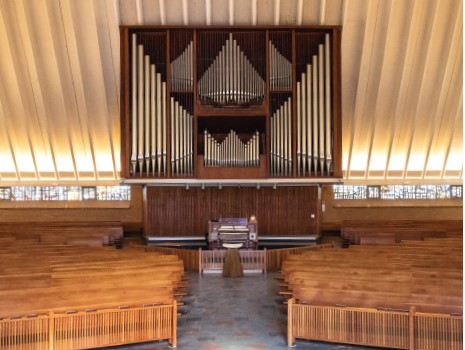
Chapel of the Holy Trinity pipe organ restored (2022)
The alumni perspective
Maier: As an alum, there was a joy in doing this and thankfulness. The university treated me well. I experienced being the first class that had the junior year added on and then we had the senior year added on, so we graduated, our class, with the first four-year degree. And we were blessed. We were just blessed. And the spiritual growth that we experienced was just tremendous, so it was just a part of the excitement and joy.
Cario: There were several of us faculty members on the Mequon campus who had Concordia Ann Arbor ties. Along with me, Randy Ferguson, who was in the Academic Office with me at the time, also was a Concordia Ann Arbor alum. So we did feel like we had a special tie there and a sense of, “We don’t want this to fail. We want to do this right.” It was really strange as a Concordia Wisconsin employee and faculty member going over to Ann Arbor and thinking about and seeing what had happened and contrasting that with my experiences. That was a bit jarring at times to see some of those struggles I hadn’t connected that much. So I wasn’t always aware of some of the challenges, and that encouraged my willingness to put some time into this thing.
Our God, our hope for years to come
Bates: We’re all part of a denomination that faces challenges these days, and to see this situation which was so dire, to see level-headed people come together, put aside whatever differences there were – and there weren’t a lot of differences between Concordia Wisconsin and Ann Arbor – but put those things aside and just work towards a solution that might not be perfect for me, but God-pleasing for the Church at large. And to just press forward to make wise decisions to make those things happen. I mean, there was no guarantee that this was going to work. But work with smart people, seek God’s guidance, and good things can happen. I’m always glad when I see that happening within the denomination. I think there’s more opportunities for that. So maybe there’s a lesson for our denomination to learn from this experience. That’s my takeaway.
Maier: My takeaway is “better together.” You would expect this of God’s people. God’s blessing was upon it, but it took great people. I look at John and Jim, certainly Pat, Bill, and Ken, I just want to say, in the end as I looked at it all, I think getting the money together probably was – no, it was the easier part. Looking at leaders like Pat Ferry, and the quiet Bill Cario that I had known from college – and he still is, but just brilliant too. Ken Gaschk who is just this constant muscle. These were incredible individuals who said, “I’m going to do it for the Lord,” and after the money thing was settled, that’s when the job really began and they did a phenomenal job. And I just want to say thank you to them again. Great courage.
Saalfeld: I would just say, “Anything’s possible with God.” There were lots of prayers put up and the course almost seemed like there was not much hope. I described the scenario that Concordia was in like a plane that was headed down, nose-diving, and it got pulled up at the last minute by the combination of the two universities. I don’t know if anybody really understood fully where this was going to go. Now, you see so many cars on the campus here that they have to park in grassy areas. It’s just like, “Wow, what can’t God do?” This is definitely an example.
Gaschk: I would tell you that I was blessed at Concordia to see God’s hand at work in such neat ways. Concordia Milwaukee was going to build a library on campus and a group of activists got together and blocked Concordia from building this library and tearing down some dilapidated houses that Concordia owned. And we sat back and said, “I don’t get it. Why is this happening?”
Well, shortly after that the Mequon campus became available for sale. The number was astronomical what the School Sisters wanted. The university says, “Great, but we just can’t afford it.” Came back two other times and finally the number came to a number that was doable. Now, Concordia had money because we had just completed this campaign to build this library but now we can’t build the library, so we have all these donors who have committed to this campaign and the Mequon campus becomes available.
People also don’t realize, shortly after that Mequon move, Jeffrey Dahmer was in Milwaukee. That was two and a half blocks away from the old Concordia campus. Marquette University lost about 25% of its enrollment because (they were afraid to live in Marquette campus housing because) of the Jeffrey Dahmer incident. And if Concordia would have still been there, Concordia would not have survived. There is no way, no how Concordia would have survived. So that’s how I saw God’s hand at work the first time.
The second time was with Ann Arbor. Because if we looked at this from a business decision, it made no sense at all. Absolutely none. But I remember looking at people from the Extension Fund and hearing that line: God forgives. The extension Fund doesn’t. That was the mantra that we heard over and over again. And so, I thought, there’s no way this is really going to happen, but we kept moving forward. So here again, God is showing us that he is really in charge.
I look back at this as my greatest achievement in my career at Concordia. I was blessed to be a part of Concordia during a time where I saw the first time we had 300 new students, 400 new students, 500, 600, 700, 8, and even 900 new students. But when I look back, this is the thing that I’m most proud of.
I’m talking about the 90 students on our two campuses who have been baptized into the faith in the last 10 years. The angels in heaven rejoice over that. Even if it was just one, it would have been worth whatever we could have invested in order for that to be made possible.
CUWAA President Emeritus Rev. Pat Ferry, PhD
Ferry: It’s great to be with all of you today. Thank you, all of you, for the part you have played in all this. We’re people of faith and people of faith sometimes need to take a step of faith – or even a leap of faith. In retrospect, what’s the worst thing that could have happened? Well, we all could have lost some money for sure. But look what has happened instead. And I’m not just talking about Ann Arbor’s growth in its enrollment. I’m talking about the 90 students on our two campuses, most of them in Ann Arbor by the way, the 90 students who have been baptized into the faith in the last 10 years. The angels in heaven rejoice over that. Even if it was just one it would have been worth whatever we could have invested in order for that to be made possible.
And it’s not just one, it’s 90, it’s more than that who have grown in their faith and who are having an impact. Ken said it well, Bill and Ken and I have enjoyed lots of things about our time at Concordia Wisconsin – some enormous, historic things, but this one will always be close to our hearts because it’s been such a wonderful experience and I’m truly grateful.
Want in?
Come and see what Concordia University Wisconsin and Ann Arbor has to offer you. Book a visit to either of our campuses to experience an all-inclusive view of student life and to learn more about programs.
Dr. Erik Ankerberg has begun his tenure as president of Concordia University Wisconsin and Ann Arbor.
Editor’s note: This story first appeared in the spring 2023 edition of Hearts Together. a publication of Concordia University Wisconsin and Ann Arbor.
Dr. Erik Ankerberg has begun his tenure as president of Concordia University Wisconsin and Ann Arbor. He is the ninth leader to hold office on behalf of CUW and the seventh for CUAA.
After a global call for candidates in the summer of 2021 and an endorsement from a Lutheran Church–Missouri Synod Prior Approval Panel, Concordia’s Board of Regents unanimously voted to extend Ankerberg a Divine Call on Oct. 25, 2022. He officially began his term on Jan. 9, 2023.
A lifelong Lutheran, Ankerberg has devoted his entire career to serving within Lutheran schools. His first position after graduating from Concordia University Chicago was as an English teacher at Martin Luther High School in Greendale, Wisconsin. From there, he made a transition to the collegiate level, serving as an English instructor at CUW for a year and then as assistant professor of English at CUAA from 1999–2004.
President Erik Ankerberg at his installation.
His acumen for strategic planning and curriculum oversight helped him quickly rise in the ranks. For the majority of his career, he has led academic operations for three separate Lutheran universities, most recently as provost for Concordia University Chicago.
“This university has a long and rich history of serving Christ, the Church, and the wider world through a rigorous, holistic, and Christ-centered approach to education,” said Ankerberg. “The Lord has richly blessed Concordia University Wisconsin and Ann Arbor, and I am humbled and honored to join this faithful university community, whose members are deeply committed to student success.”
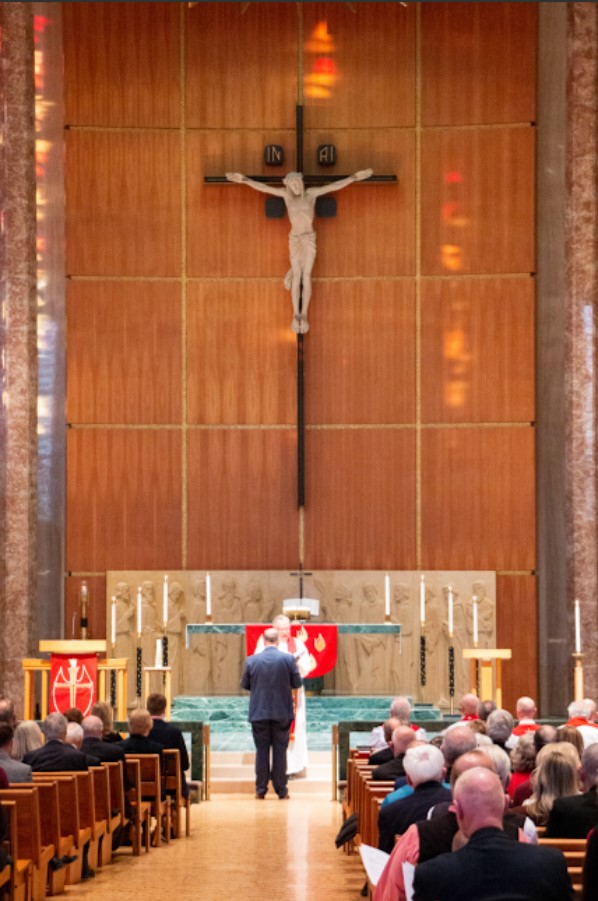
An installation service was held on Sunday, Feb. 5. The Concordia community will again celebrate Ankerberg during his inauguration ceremony, which will occur closer to the start of the 2023–24 academic year.
From those who know him
Ankerberg’s professional resume includes nearly 15 years of experience in Lutheran higher education. Along the way, he gained a few supporters—individuals who understand what it takes to lead. Here’s what they had to say about their trusted colleague and friend.
“Erik is a gifted strategic thinker. His linear planning—getting from the current situation to the goal—is very sound and detailed, but it’s never merely linear. His strategies always reflect careful thought on an entire matrix of possible influences and outcomes. A complex institution like CUWAA will benefit from his leadership.”
—Concordia University Chicago President Russell P. Dawn, DPhil, JD
“Dr. Ankerberg is a Christ-centered leader with a deep knowledge of higher education based on his experiences as a faculty member, researcher, and senior administrator. His calm presence is an encouragement to others as he intently listens to their thoughts, opinions, and concerns. At his core always will be a heart of humble vocational service toward those he leads in fulfilling the institution’s mission and vision.”
—Wisconsin Lutheran College Provost John Kolander, PhD
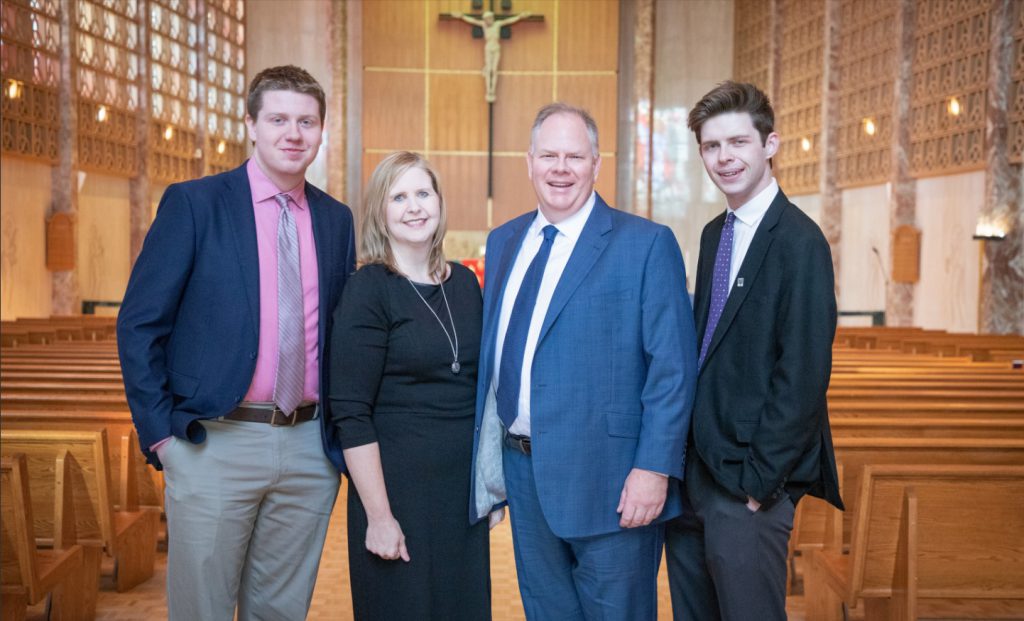
Erik Ankerberg, PhD, and his wife, Jennifer, have been married for 27 years. They have two sons, Peter (right) and David.
Want in?
Come and see what Concordia University Wisconsin and Ann Arbor has to offer you. Book a visit to either of our campuses to experience an all-inclusive view of student life and to learn more about programs.
Pharmacy students help individuals who are low-income or in poverty to access essential health care services.
Editor’s note: This story first appeared in the spring 2023 edition of Hearts Together. The magazine is a biannual publication of Concordia University Wisconsin and Ann Arbor.
Classroom learning is essential, but some lessons are more profound when experienced firsthand. It’s a main reason why Associate Professor of Pharmacy James Lokken, PharmD, commits several of his “off days” each academic year to student-learning opportunities at City on a Hill. Founded in 2001, City on a Hill is a faith-based nonprofit located in Milwaukee. Its mission is to break the cycle of generational poverty in Milwaukee through training, education, and resource allocation.
About once a month, Lokken oversees onsite Saturday workdays for CUW students. The workdays allow CUW pharmacy students to fulfill course requirements or simply volunteer. The students have helped with a variety of programs over the years: an “ask a pharmacist” station, vaccine clinics, smoking cessation workshops, health screenings, and more.
The experience often stretches students to apply knowledge in new ways, said Lokken. For example, City on a Hill maintains a “med room” full of slightly expired or discarded medications. The medications are still safe for use—and for an uninsured, low-income population they fit the price tag—but prescribing them requires an extra-diligent eye from a licensed pharmacist. That’s where Lokken can help. CUW students play a role in meticulously inventorying the supply so that pharmacists like Lokken can assess their efficacy.
“That’s one of the beautiful aspects of our work at City on a Hill: It teaches students how to function in a resource-poor environment,” Lokken said.
City on a Hill also helps instill a core virtue of Concordia’s School of Pharmacy: servant leadership.
“It puts a whole new perspective on how we can use our God-given time, talents, and treasures to help those who need it most,” Lokken said. “There are so many opportunities to help if we just take the initiative to do so.”
Want in?
The School of Pharmacy at CUW is committed to the development of pharmacists who are servant leaders, dedicated to providing value-based, patient-centered care that improves the health of our communities in rural and urban areas through excellence in teaching, research, service, and practice.
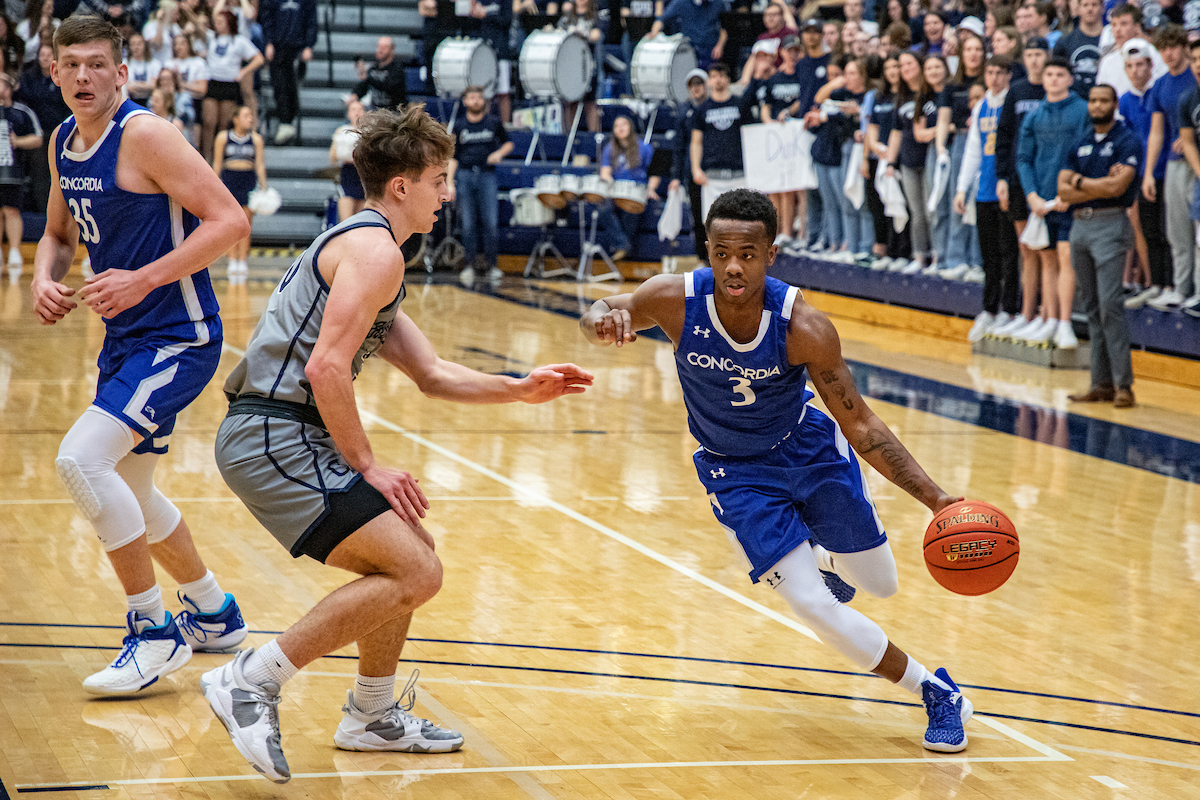
Freeman Jackson went from being a couch surfer in high school who began his collegiate tenure on academic probation to earning his spot within CUW’s School of Pharmacy and an ongoing place on the Falcon basketball team.
Jackson is currently in his first year of pharmacy school at CUW and recently wrapped up his second-to-last season on CUW’s basketball roster. He came to Concordia as an undergraduate because of the Unlimited Potential Scholarship program he was offered.
After struggling academically his freshman year, he put in the work to turn his trajectory around. He got himself off of academic probation and back onto the basketball court. As icing on the cake, last spring, he received official word that he had earned admittance to the CUW School of Pharmacy.
“I screamed for about an hour and, to be honest, I still haven’t come down from that high,” Jackson said. “It just felt so good to have my hard work pay off.”
Having previously been homeless, financial security is a big deal to Jackson. He’s thrilled to be heading into a career that can provide a stable income for him. Furthermore, he’s acutely aware of the good he can do for the profession.
“There’s an image with a pharmacist,” he said. “I’m black. I have tattoos. I play a sport. I don’t necessarily look the part, but it can still be me. I can still be a Doctor of Pharmacy, and that can mean a lot to a group of people who otherwise don’t have someone who looks like them as their pharmacist.”
In the media
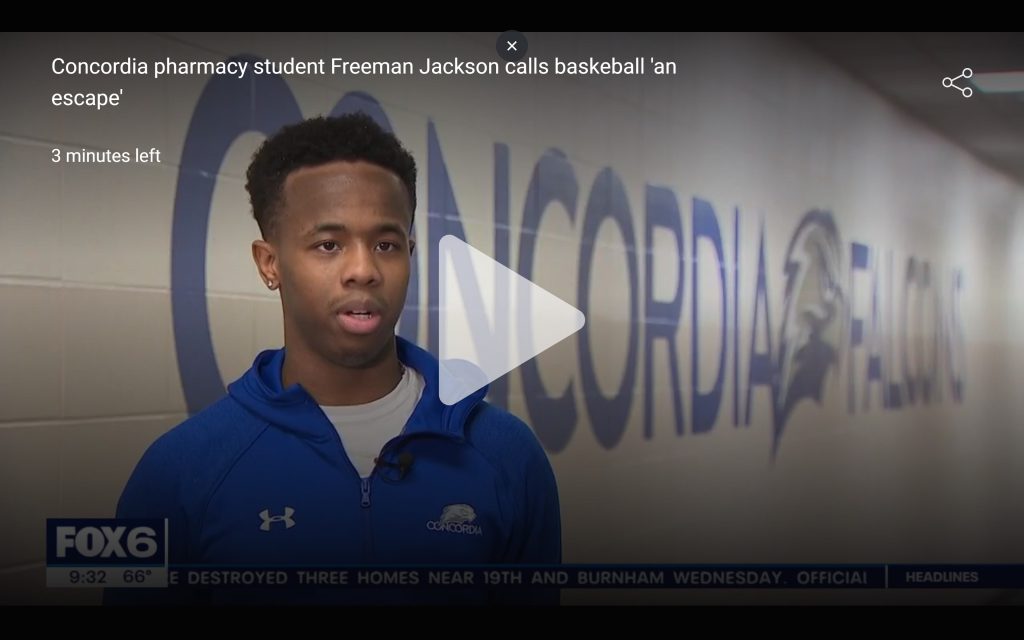
Sports reporter Lily Zhao and the Fox6 Sports team recently visited the CUW campus to speak with Jackson and tell his story in the station’s Beyond the Game feature. To watch the segment, click on the image below:
Learn more about CUW’s School of Pharmacy
As a CUW pharmacy student, you can expect to acquire a world-class clinical and scientific knowledge base and to experience active applied learning throughout your degree program. Our accomplished faculty teach and mentor each individual student in a welcoming Christ-centered environment. Our highest priority is helping you develop your talents for a rewarding life, not only a career.
Equipped with a new space, Concordia’s Academic Resource Center is stepping up to help pandemic-era high schoolers make up for lost academic progress.
Editor’s note: This story first appeared in the spring 2023 edition of Hearts Together, a magazine publication of Concordia University Wisconsin and Ann Arbor.
Countless studies have found that academic achievement across all grade levels slowed amid COVID-19. The latest national ACT scores seem to corroborate the findings, with last year’s test scores falling to a three-decade low. The delay in academic achievement has now carried over to colleges. At Concordia, the ARC has never been busier as a result.
Before the pandemic, center staff recorded roughly 1,600 student visits in an average academic year. That number more than tripled last school year, and this year the resource center is on track to surpass its total yet again.
Of course, the increased demand requires the ARC team to be on their A game. The center has hired more student tutors, increased the number of classes in which support is offered, and expanded hours. It also refined the peer academic coaching model and introduced a summer bridge program to assist with students’ transition from high school to college.
A new space
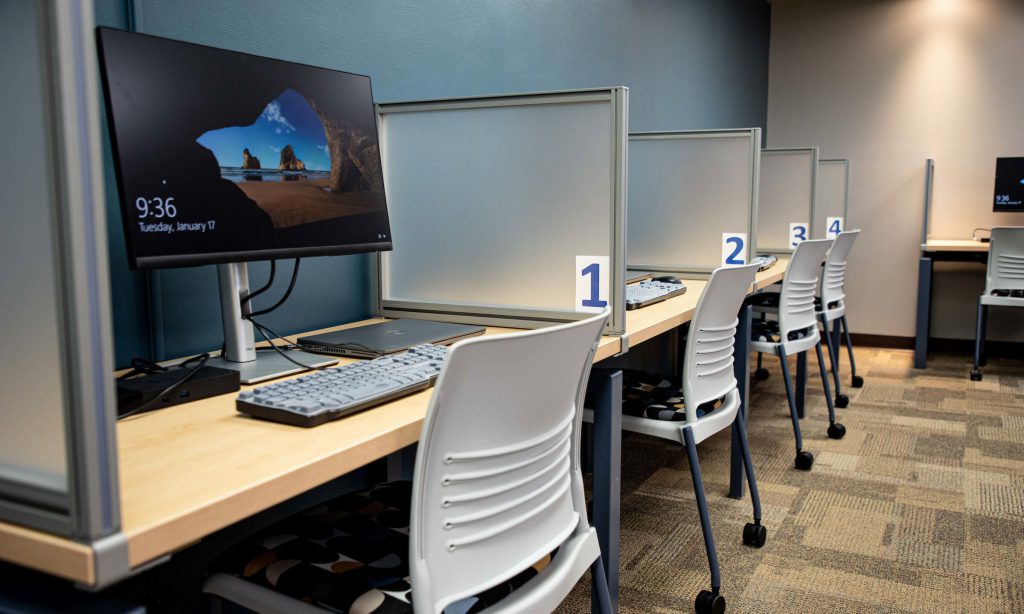
And now the ARC has a new home, with more space to better accommodate its heavily utilized services. Thanks to funds from a Title III grant and private donations, structural upgrades were made to offices and classrooms at the back of Rincker Memorial Library, allowing the ARC to expand its physical footprint to about 2,000 square feet. ARC staff moved into their new digs at the beginning of the year.
All their efforts are paying off. At the start of the spring 2022 semester, about 130 students were on academic probation, which means they had a GPA of 2.0 or lower. By the start of this year’s spring term, that number had shrunk by 23 percent.
“Students have invested a lot to come to Concordia, so it’s only fitting that we invest our best in them,” said ARC Director Jan Chapman. “We want to see students succeed, and all of them have it in them to be successful. We’re all working hard to bounce back from the pandemic.”
Upgraded
Ever since the pandemic, the Academic Resource Center has experienced a boom in demand for services. The ARC staff has managed to keep pace thanks in large part to an increase in physical space and resources.
3,167
ARC visits recorded in fall 2022
462
Individual students (or 16% of undergraduates) served in fall 2022
3.5x
More ARC visits in 2021-22 than 2018-19
71
Peer mentors and student tutors on staff
23%
Decrease in students on academic probation from spring 2022 to spring 2023
Want in?
The Academic Resource Center provides free services, programs, and support for all CUW students so they can grow into independent learners and adjust to life as a college student.
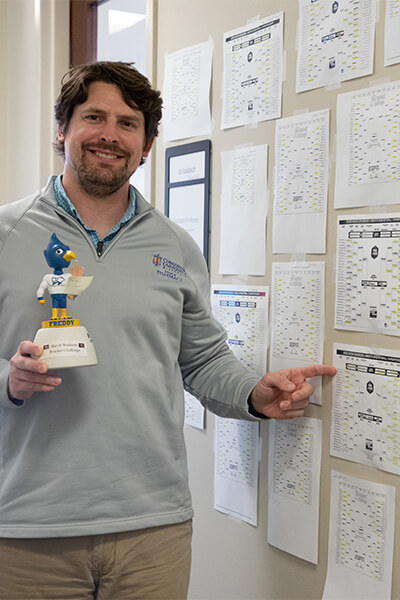
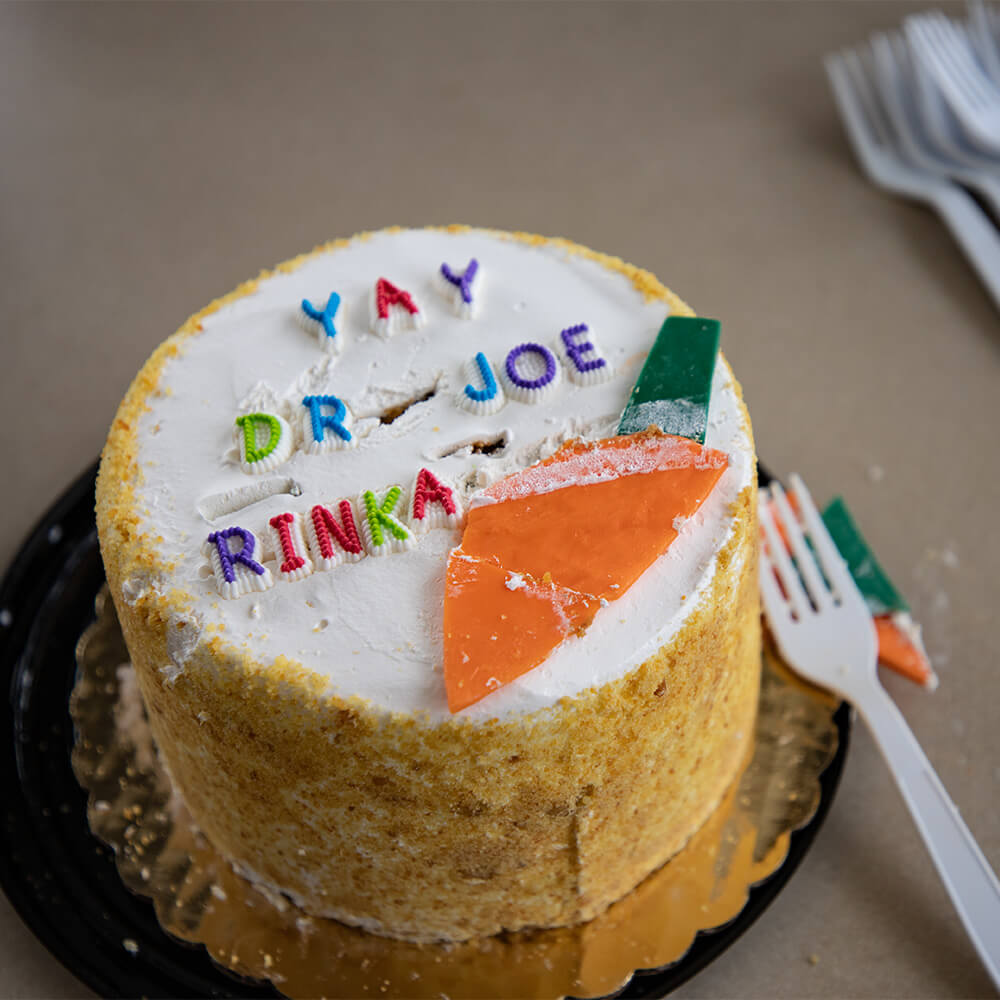
A group of 53 students, faculty, and staff recently wrapped up the School of Pharmacy’s annual NCAA bracket challenge competition. This year’s winner was Assistant Professor of Pharmacy Practice Joe Rinka, PharmD.
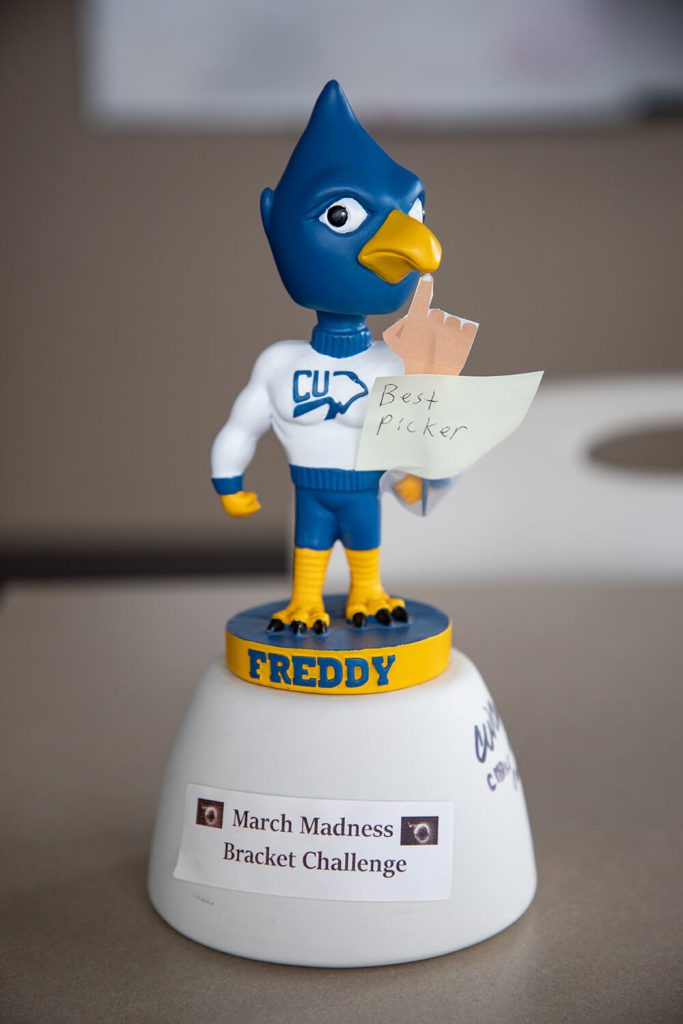
Rinka was honored with a trophy during an informal ceremony this afternoon. The traveling trophy is a makeshift creation designed by members of the Concordia Student Pharmacists Association, who helped with the effort. The purposefully primitive trophy features a Freddy the Falcon bobblehead atop a mortar bowl with a “top picker” post-it note affixed to his finger. A perfect nod to the good-natured fun that ensues throughout the competition.
Supporting pharmacy student scholarships
Each year, proceeds from the $5 buy-ins go toward supporting a scholarship endowment formed in honor of a beloved pharmacy professor, Dr. Christian Albano. This year, the competition brought in $400. Albano unexpectedly passed away in 2017 while playing the sport he loved, basketball. Albano was also a fan of college basketball and participated in bracket challenges with his Concordia colleagues long before the competition became anything “official.”
“It means a lot that this award is tied to Christian’s name,” Rinka told the small group gathered as he accepted his trophy. “This suits his legacy well.”
The competition technically started more than a decade ago, but as a humble competition among a few colleagues, said Chris Cunningham, PhD. Participation grew as more and more people saw brackets posted in the pharmacy hallway outside faculty member’s offices.
Last year, students approached Cunningham asking to join. From there, the competition has continued its momentum. Now, any Concordian is invited to join.
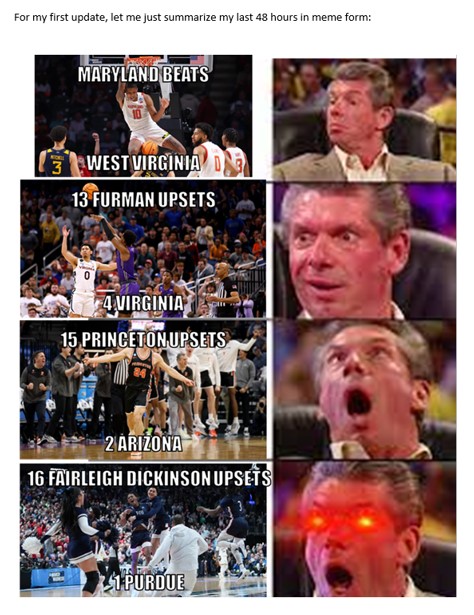
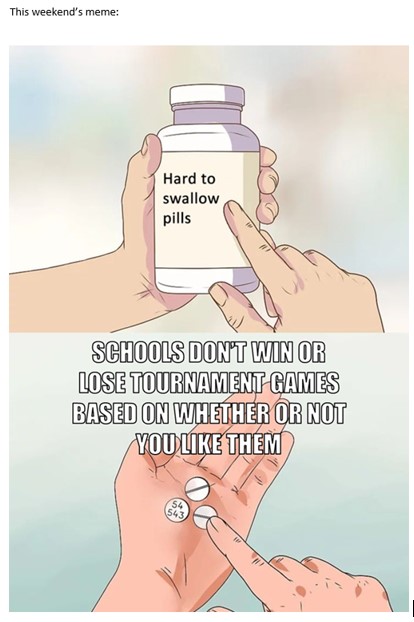
Meme-worthy
Beyond the cause, the biggest draw is the meme-laden summary emails Cunningham graces the group with each week. Scroll down to get a taste of the fun.
Round One
Round Two
Elite Eight
Want in?
As a CUW pharmacy student, you can expect to acquire a world-class clinical and scientific knowledge base and to experience active applied learning throughout your degree program. Our accomplished faculty teach and mentor each individual student in a welcoming Christ-centered environment. Our highest priority is helping you develop your talents for a rewarding life, not only a career.
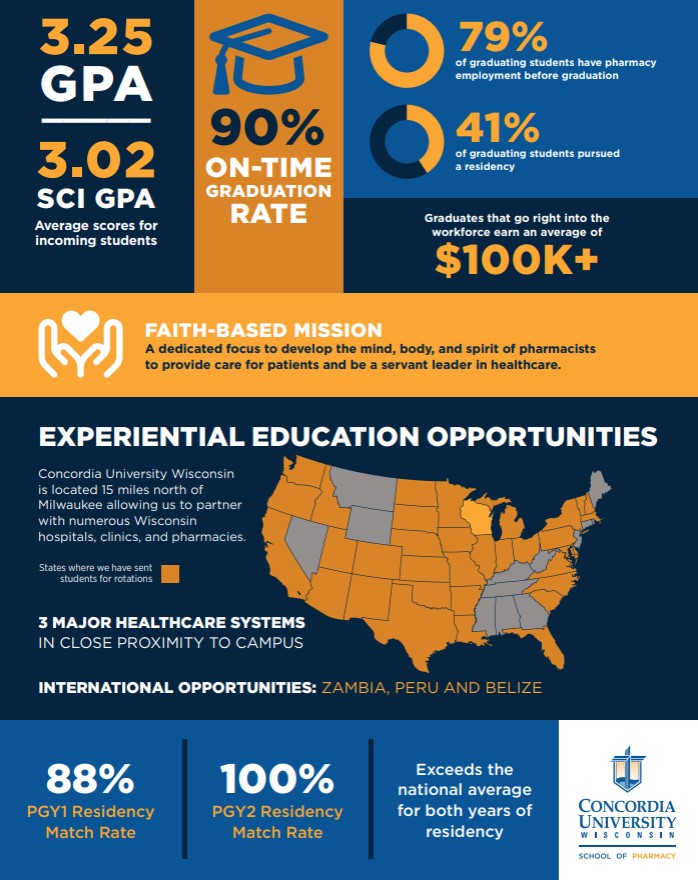
Concordia’s most recent pharmacy graduates achieved above-average pass rates on the NAPLEX and MPJE certifying exams.
Concordia’s most recent pharmacy graduates achieved above-average pass rates on certifying exams. The class of 2022’s NAPLEX scores placed them in the top quartile of all pharmacy schools nationwide. Meanwhile, their MPJE scores earned them the number one spot in the state.
Top quartile nationally for NAPLEX
The CUW class of 2022 scored in the 77th percentile on the NAPLEX exam, according to results released earlier this year by the National Association of Boards of Pharmacy (NABP). The purpose of the NAPLEX is to determine whether candidates possess the necessary knowledge, judgment, and skills to begin working as a pharmacist. Graduates of a PharmD program must also pass the NAPLEX before they are eligible to practice pharmacy in the U.S.
Top in the state for MPJE
Meanwhile, the MPJE exam is unique for each state. It tests knowledge of the legal framework for pharmacy practice. Concordia’s School of Pharmacy graduates placed in the top third of all schools nationally on the MPJE and beat out the two other pharmacy schools in Wisconsin.
9th best nationally for residency matching
Earlier this month, the American Society of Health-system Pharmacist (ASHP) released residency match rate results for universities nationwide. Concordia’s School of Pharmacy not only topped the national average, its class of 2022 88 percent residency match rate was the 9th highest in the U.S. (out of 147 schools). The ASHP National Resident Matching Program provides an unbiased mechanism for matching applicants’ preferences with those of residency programs across the country.
More stats
These latest results add to an already-impressive resume of achievements for the CUW SOP:
* Information above shows statistics and information from 2022.
Want in?
As a CUW pharmacy student, you can expect to participate in active applied learning throughout your degree program. Our accomplished faculty teach and mentor each individual student in a welcoming Christ-centered environment. Our highest priority is helping you develop your talents for a rewarding life, not only a career.
How did your first quarter go?! Are you crushing your goals? Or looking for a reset? Vitality is here for you no matter where you are on your journey. To maximize your points, make sure you check in frequently and submit points often. Remember, in addition to points for physical activity, you can get weekly points for goal check-ins, attending Bible studies and having your spouse do the same! Here are some additional ideas to add to your points plan!
Week 14
It’s never too early to plan for retirement. During the week of Spring Break, CUW had our Concordia Plans Retirement Rep/Financial Educator on site. If you attended one of the presentations offered by Laura Scheer, navigate to the points planner in Vitality, scroll to Financial Wellness and select the box for “Attend Live Presentation.” (If you attended via Zoom, that works too!) If you need assistance proving your attendance, let Sarah Gartman know and she can get a list of attendees from Laura!
Week 15
Spring has sprung (I mean…if not now…then when?!) Do you participate in a sports league? Did you know you can earn 350 points per league? To learn more, navigate to Resources/Guide to Vitality/Vitality Points/Physical Activity. There are dozens of types of sports leagues. See if yours qualifies!
Week 16
Part of your Retirement Readiness is keeping your beneficiary designations up to date. Earn 100 Vitality Points for updating your beneficiaries in two areas:
Concordia Retirement Savings Plan (CRSP) and
Concordia Disability and Survivor Plan(CDSP)/Accidental Death and Dismemberment/Supplemental Life. This is done in the Concordia Plans portal.
To receive Vitality Points, submit proof that your beneficiaries are current: a photo or scanned copy of your Fidelity Beneficiaries screen, Portal Beneficiaries screen or Beneficiary Allocations page
Week 17
Take a nutrition course. Vitality offers 6 online courses to choose from. You can receive points for 3 per year (and each course is worth 300 points). Learn how to eat for weight management, healthy eating in a modern world, or how to achieve a healthy balanced diet. It’s a great way to earn points while getting back to the basics of nutrition. Navigate to Resources/Health Resources/Nutrition Courses to get started.
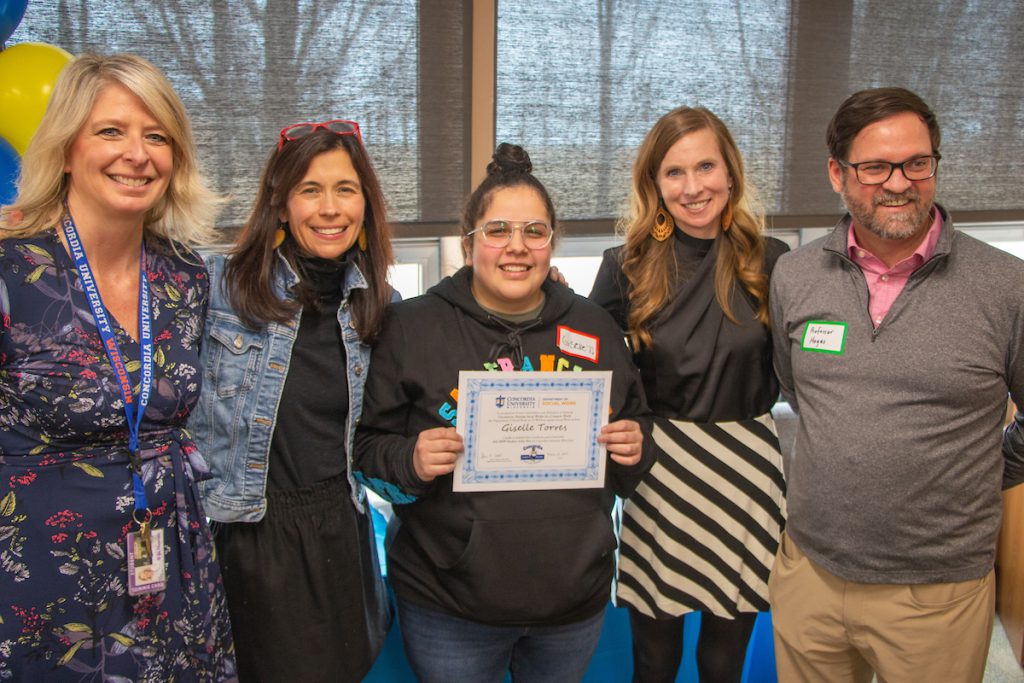
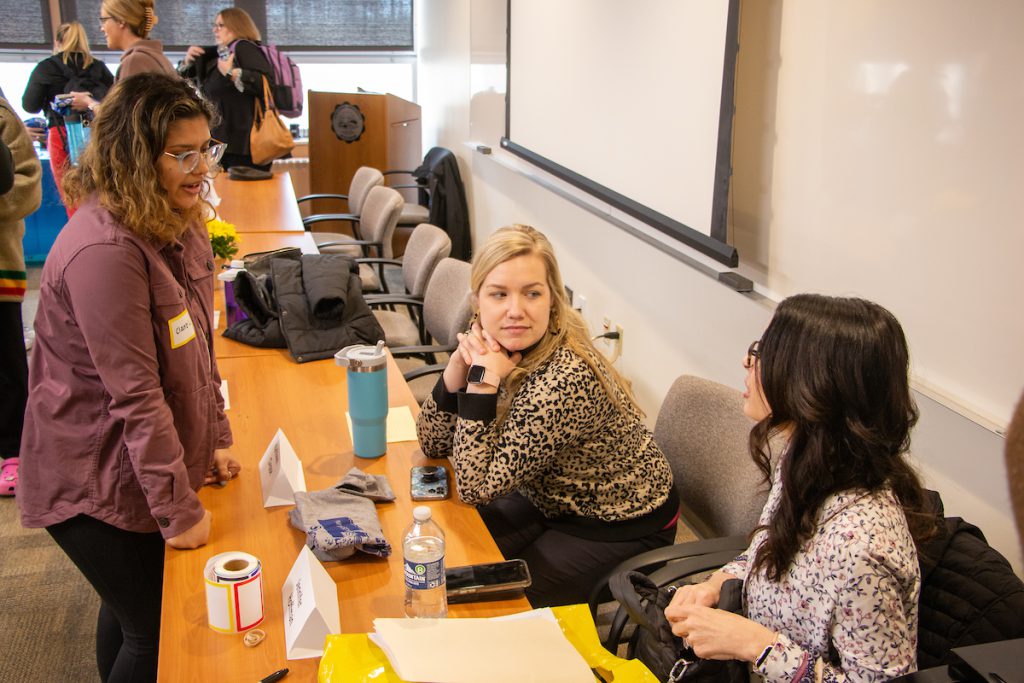
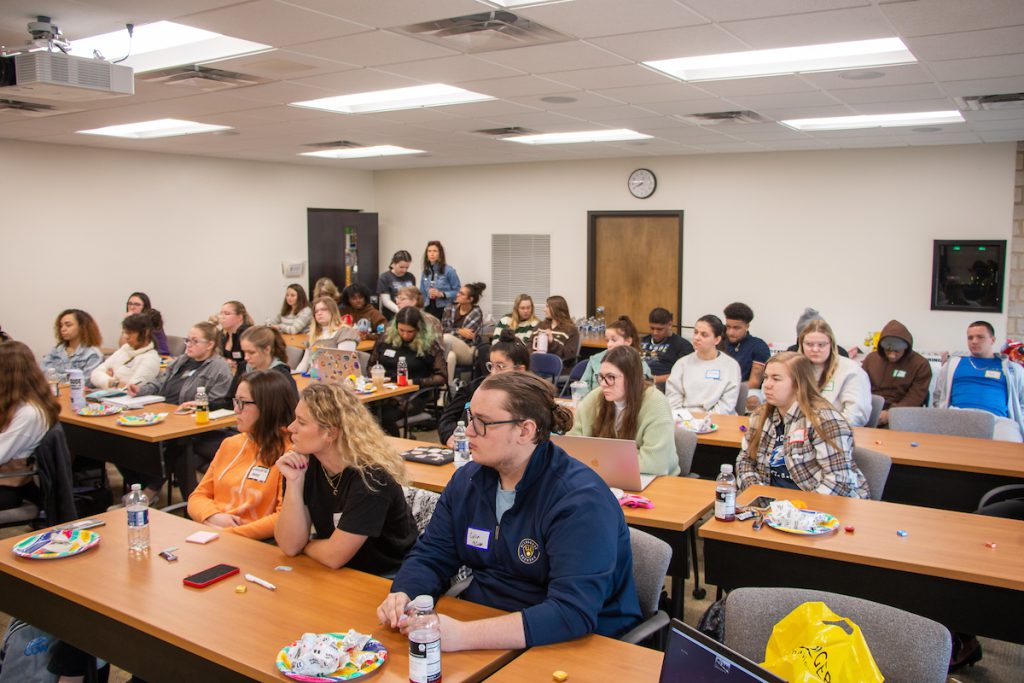
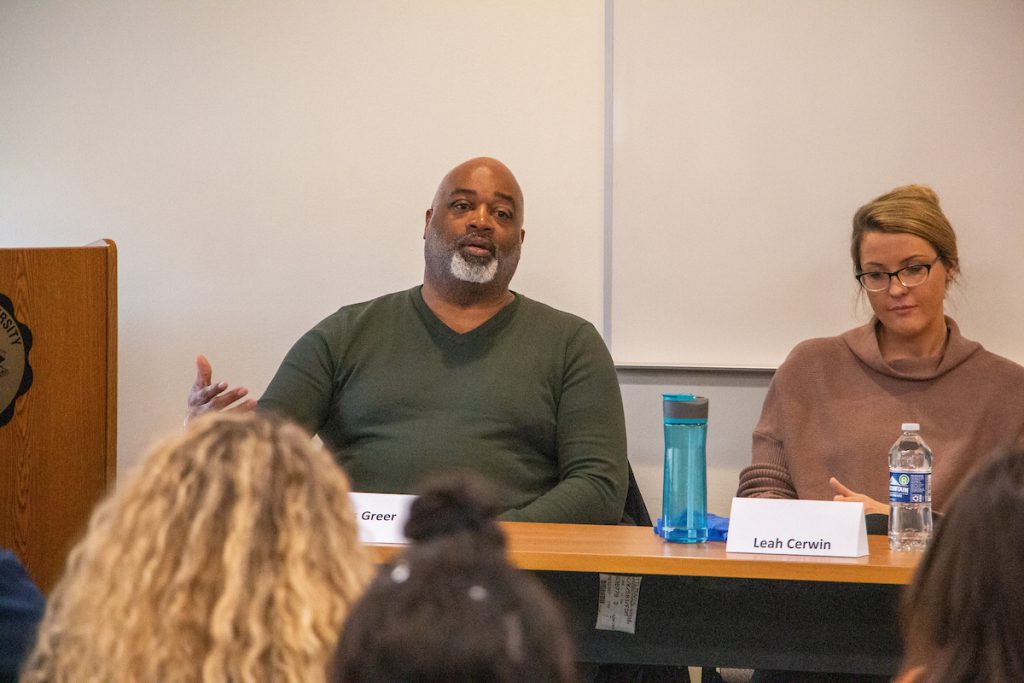
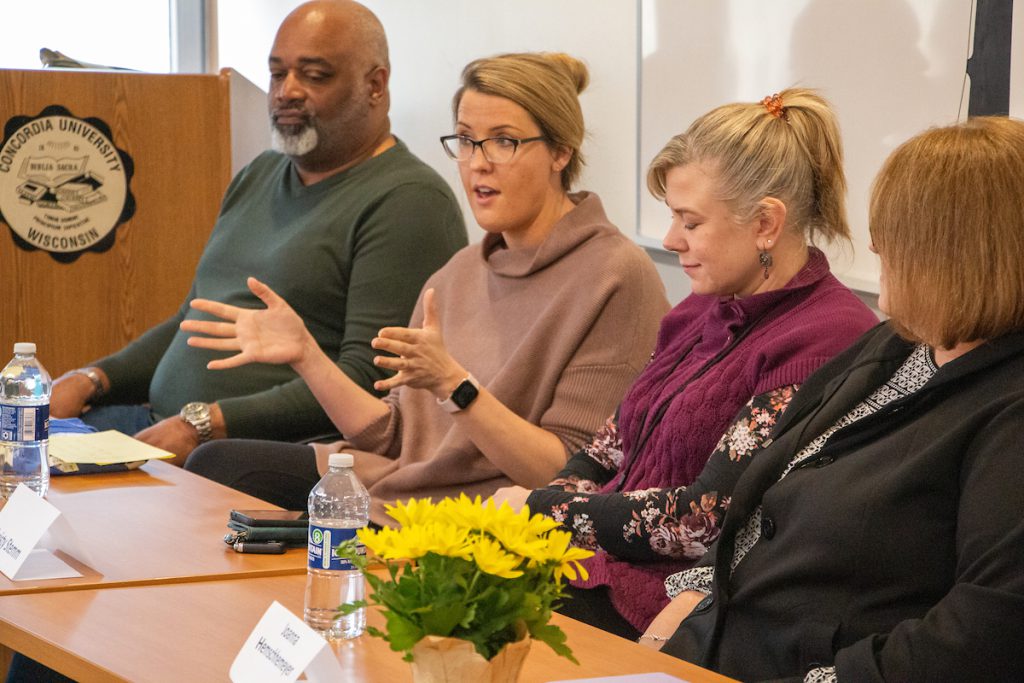
Seven professionals visited campus to talk to CUW social work students about the varied jobs available in the field and what fuels them in their work.
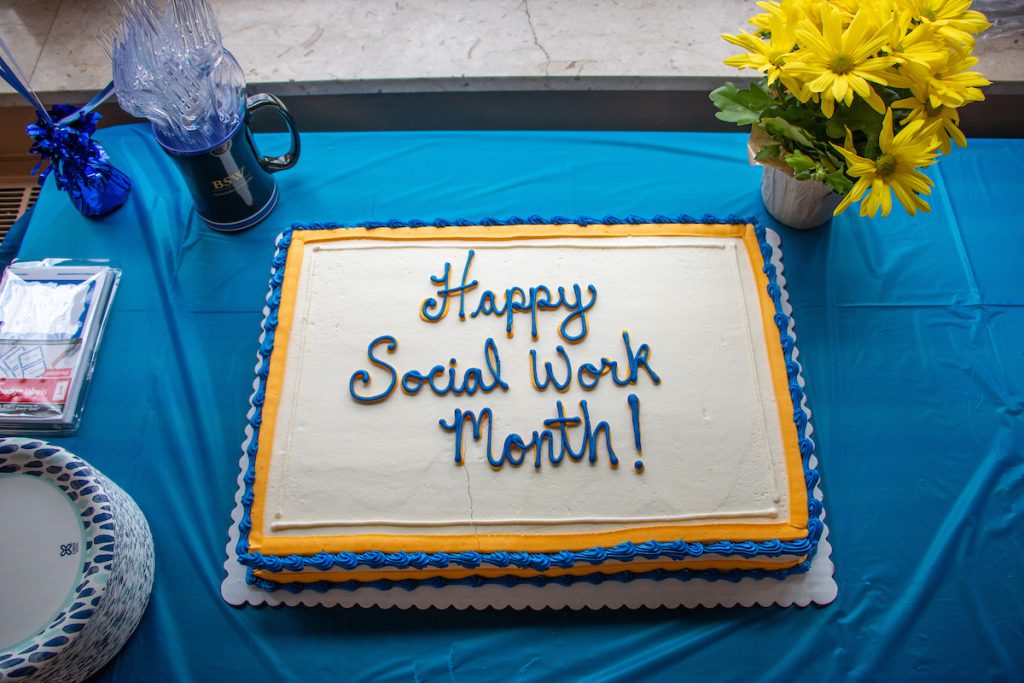
March is Social Work Month. In recognition of this important field, Concordia’s social work department invited a panel of professionals to campus on Thursday, March 23, to share insights with students. Nearly 50 students, ranging from freshmen to graduate students who are nearing program completion, packed the Lakeshore Room for the voluntary event.
Here’s a peek at what the panelists had to say. Scroll to the bottom to watch the full discussion.
“When you first start working with people in this population, most of the time they think everything is hopeless. So you start working with somebody, building a working partnership, engaging with them, putting them in the right position, connecting them to the right resources, and then seeing that hope shine in their face, and then some success happen, that’s the reward.”
“I never start a day thinking, ‘Why am I doing this?’ … I’ve always felt that I’m sitting solidly in my purpose. It’s hard work, but for me, it’s what God wants me to do.”
“For me it’s exciting because I never know what I’m going to be walking into. … It’s not inherent for everyone to be a problem solver. I like to look at the big picture and figure out a way to say yes.”
“Social work is a fun field to be in. I’ve loved it for all the years I have done it and I will continue to do it for as long as I possibly can. I love helping people. It is great to run into someone you helped years ago and find out how you helped them. I also love being a field instructor. I get to teach what I have learned over the years, but then I also learn from my students.”
“It’s the student relationships (that I love most). One of the unique parts of working in a school setting is I get to grow with the students and watch how they can bloom and grow and develop and change.”
“I love working with a huge system of people who are truly there to support patients and families and who are all there to make sure that we have safe children in our communities.”
Kathleen Cleppe
Therapist with Rogers Behavioral Health
“Even if you don’t know what pathway you’re going to take in social work, (the field) gives you the opportunity to keep discovering yourself and finding your passions.”
Full panel discussion
Click on the video below to hear the full conversation.
Want in?
Concordia’s social work program uses Christian service, quality research, and hands-on learning to grow you as a competent professional. Earn your bachelor’s degree at CUW and then continue on to acquire an MSW, the most sought-after social services degree. Learn more about our programs by clicking below.