Is Church Ministry Work for You?

That’s what the Director of Church Ministries Certificate program is for. To train and prepare individuals just like you for work alongside pastors throughout the LCMS network.

According to Rev. Dr. Kurt Taylor, the goal of the program is twofold. To help individuals gain a deeper understanding of the Christian faith and become better equipped to serve in the Church. Achieving this goal starts with a deep dive into theology.

The first level of the program is the “Foundations for Service.” Participants will encounter religion classes on the Old and New Testament, biblical theology, religion in America, and Christians through the ages. With that foundation, Rev. Taylor says, “They can be the most theologically knowledgeable person in the church besides the pastor.”  

What is the curriculum like?

But preparation for church ministry in this program doesn’t stop at theology. The course curriculum also includes an entire level dedicated to “Practice in Serving.” Here participants learn about Christian caregiving, family and youth ministry, youth and adult religious education communicating Bible messages and missions. We believe learning and theology are about the whole person so we integrate that concept into our program.

Rev. Taylor uses a baseball analogy to describe the outcome for graduates of the Director of Church Ministries Certificate program.

“We’re creating utility infielders,” Rev. Taylor said, referring to the breadth and depth of knowledge and experience program participants receive. “We want to give the widest variety of exposure to what goes on in parish ministry.”

The program consists of traditional students eager to dedicate their lives to the Church to retirees wanting professional church work. In a time when the question of survival hangs in the balance for the Church, Rev. Taylor remains optimistic, even hopeful.

“I get excited when I see these young people and their love for the Lord,” Rev. Taylor said. “The future of our Church is in good hands.”

Our Director of Church Ministries Certificate is a non-degree program that is offered 100% online. The first and final course, each of which consists of a three-day residency at the Mequon campus. The online theology certificate program follows a cohort model. A new cohort starts every June, made up of courses that run for eight weeks at a time. On-campus students working on their Bachelor of Arts at Concordia can also take advantage of the certificate. 

Finishing up the program

Finishing the program, participants who receive certification can be rostered in the LCMS with the designation: Minister of Religion Commissioned — Lay Minister. Meanwhile, progress is being made toward this designation changing to Minister of Religion Commissioned — Director of Church Ministries.

Participants without a Bachelor of Arts degree will be unable to receive certification. If you wish to receive certification from the program but lack a bachelor’s degree you still can. You can take additional courses to earn your bachelor’s degree through our online adult learning theology major. This can be done alongside the certification program.

The Director of Church Ministries Certificate program is also open to any layperson curious about theology with a desire to learn more at a collegiate level. Lay people are invited to take as many courses as they want.

To learn more about the certificate, visit the program page. You can also explore the admissions process and get started on your application.

This blog was originally published on April 8, 2019. It has been updated to reflect current information.

TMJ4 & Fox6: Concordia students help run on-campus chocolate business

Concordia is now the owner of a former Third Ward favorite, Red Elephant Chocolate, and students are getting involved in the hands-on lessons the on-campus chocolate business offers.


The Concordia Red Elephant Chocolates team is hard at work for the holiday season. TMJ4 and Fox6 stopped by the Robert W. Plaster Free Enterprise Center kitchen to watch them at work.

Earlier this year, Concordia acquired the assets of Red Elephant Chocolate, which was founded by Richard Koenings and formerly had a presence in Milwaukee’s historic Third Ward. The business is now called Concordia Red Elephant Chocolates. There’s no longer a storefront. Instead, the operation runs out of CUW’s professional-grade kitchen on campus.

Click on the image below to watch CUW in the news.


Want some?

The Concordia Red Elephant Chocolates Christmas catalogue is now available. Anyone nationwide can place an order to enjoy the handcrafted delicacies. Orders for the holiday season are coming in fast, so be sure to place your orders soon!


What it means to be a Christian social worker: A Concordia student’s perspective

Editor’s note: This piece was written by CUW student Anna Hagen as part of an essay contest open to all Concordia social work students. The contest asked students to articulate what it means to be a Christian social worker. Here was Anna’s response.


As I was walking along the beach the other morning at sunrise, I was following behind two individuals who were picking up shells. They were, of course, picking up all of the big, beautiful shells void of blemishes. Struck by a creative vision to create a mosaic, I began to pick up the smaller, broken shards of shells. When I picked up each broken piece, I would rinse it in the water and run my finger along its jagged edges. Each piece had its own unique beauty, from flat pieces to curved pieces, and everything in between. As I examined these broken pieces, I started reflecting upon the brokenness in my own life. If you and I are being completely honest, we probably don’t have to look too far to find some pretty jagged edges in our lives. The trials we have endured and times when things just didn’t quite end up how we had planned leave behind marks that are far from smooth and even. While painful at the time, each of these experiences shape who we are as individuals. If we look a little deeper, aren’t these jagged edges where our beauty lies?

Caught up in my creative endeavor to collect broken shells and wrapped up in thoughts of brokenness, I almost missed the sunrise occurring right over my left shoulder. When I finally looked up from the sandy shore, I was almost blinded. The sun that had been just barely peeking out from behind the clouds moments before was now shining brightly on the horizon, illuminating the entire sky with golden hues. Still in my state of reflection, I wondered to myself how often we get so caught up in our struggles and grief that we miss out on the beauty and light all around us.

Then, another thought struck me. Isn’t this what being a Christian social worker is all about? Seeking out the broken who are all too often forgotten about and left behind, and reminding people to look up out of their despair and take in the light that is surrounding them? Maybe for some people that light is Christ, whom they have lost sight of in the midst of their trials. For others, that light may be a supportive family member or a caring friend. Perhaps it is a community resource or a skill or hobby that once brought joy. For others, that light may still be lingering behind the clouds, and what they really need is someone to walk beside them in the darkness so that they know they are not alone.

Being a Christian social worker does not mean imposing my beliefs and values on others. As I was picking up the shells, I had no criteria or preconceived notions. I simply picked them up where they were at and saw them for what they were: beautifully broken, one-of-a-kind, and full of potential. Being a Christian social worker does mean that my values will be a driving force in all I do. That I will be driven by love, compassion, and a desire to serve. As a Christian social worker, I will view each client as a unique child of God with gifts and strengths, worthy of dignity and respect.

Being a Christian social worker also means that my work will be more than just a job or even a career. Being a social worker will be my vocation and a fulfillment of God’s calling for my life. It means that I will have the privilege of serving vulnerable populations and promoting social justice. That I will act in love and joyfully serve, following in the example Jesus set.

Lastly, being a Christian social worker means embodying the Concordia University Wisconsin campaign slogan: Live Uncommon; using the talent, creativity, faith, and courage God gives each of us to live our lives with purpose. While picking up broken shards of shell along the beach is certainly uncommon, with a purpose in mind, the end result was one of beauty.

Interested in a social work degree?

Concordia offers an undergraduate and graduate-level degree program in social work. Learn more about the Bachelor of Social Work here and the Master of Social Work here.

Read more of our students’ perspectives about why they chose a social work degree.

This blog was originally published on April 2, 2019. It has been updated to reflect current information.
What is a Teaching Certificate and What is a Teaching License?

You’ve decided on a career path as an educator. You’re ready for the next step. But what is a teaching certificate vs a teaching license?

Teaching certificate vs. teaching license

There are many directions you can go in this rewarding career of teaching, and many decisions are still ahead of you. Most importantly, what type of teaching appeals to you most? When you’re considering your options, it’s always best to verify what your state requires. In many states, the terms certification and licensure mean the same thing.

What is a teaching certificate?

A teaching certificate is an agreement with your state that you have fulfilled all standards and requirements to be a certified teacher in that state. Michigan, for example, uses the term teaching certificate or teaching certification the way that other states use license or licensure. In other words, if you want to be certified to teach by the Michigan Department of Education, you need to earn a teaching certificate. Concordia University Ann Arbor offers a Teacher Certification Program. This program is ideal for working adults who wish to achieve their dream of becoming a certified teacher in Michigan. This program does qualify for financial aid.

What is a teaching license?

Depending on your state, teaching license can mean the exact same thing as a teaching certificate. For example, Wisconsin uses the term teaching license to refers to the “completion of an approved educator preparation program and meeting all applicable Wisconsin statutory and testing requirements,” according to the Department of Public Instruction.

Concordia University Wisconsin offers a post-bachelor’s teaching licensure program if you don’t already have a Wisconsin teaching license. You need a bachelor’s degree to earn your teaching license in Wisconsin. If you’re looking for an accelerated bachelor’s in elementary education, Concordia offers that program as well in an online format.

Are you ready to get your teaching license in Wisconsin, learn the steps here.

The benefits of a teaching certificate/teaching license

While it’s definitely possible to teach in some capacities without a certificate or license, meeting your state’s requirements for teaching has its benefits. First of all, understanding what your state requires is a part of professionalism. With your certificate/license, you’re demonstrating that you’ve met the requirements to teach in your state. Next, you’ll be able to be a lead your classroom with confidence knowing that you’re certified/licensed to teach in your state. Finally, in some schools and districts, the pay is better for teachers who have their state’s endorsement as certified/licensed educators.

Here is where you can find the requirements to teach in your state.

Do you want to know more?

If you want more information about teacher certification or teacher licensure, feel free to check out our online and in-person programs in Wisconsin and Michigan.

This blog was originally published on September 21, 2020. It has been updated to reflect current information.
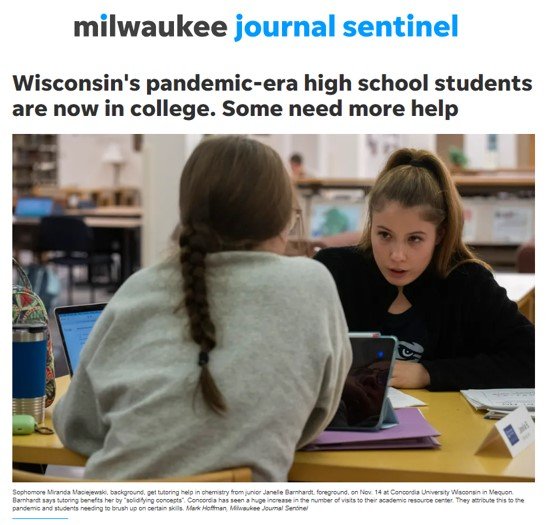
Journal Sentinel: Concordia’s ARC is stepping up to help its struggling pandemic-era high school students

Many pandemic-era high schoolers have found the transition to college to be a challenge. Concordia’s Academic Resource Center is working extra hard to help them make up for lost progress.


In a Nov. 29 article titled, “Wisconsin’s pandemic-era high school students are now in college. Some need more help,” Milwaukee Journal Sentinel reporter Kelly Meyerhofer explores the trend of more college students than usual who are struggling in college due to academic laxness they experienced while in high school because of the pandemic. In general, Meyerhofer found that Wisconsin colleges are seeing students who are less engaged in the classroom or not scoring as high on tests as previous classes.

Meyerhofer visited Concordia University to speak with Academic Resource Center Director Jan Chapman about the differences the ARC is experiencing this year compared to others. The ARC recorded:

  • Roughly 1,600 ARC visits in 2018-19
  • That jumped to 5,550 visits in 2021-22
  • About 2,825 visits recorded for this semester alone (through mid-November)

RELATED: 6 practical strategies if you’re a high schooler with the ‘lowest ACT score in three decades’

To accommodate the increased demand, Concordia has hired more student tutors and increased the number of classes in which support is offered. The school expanded hours for the writing center and peer tutoring to include Sundays, which students requested in a survey earlier this semester. Concordia has also refined its peer academic coaching to better serve students unaccustomed to the rigor of college classes.

The efforts are paying off, writes Meyerhofer. Last spring, about 200 students were on academic probation, meaning they had a GPA of 2.0 or lower. The list has since shrunk to fewer than 40 students.

Click here or below to access the full story via the Milwaukee Journal Sentinel’s website.


Want in?

The Academic Resource Center (ARC) provides free services, programs, and support for all CUW students so they can grow into independent learners and adjust to life as a college student.


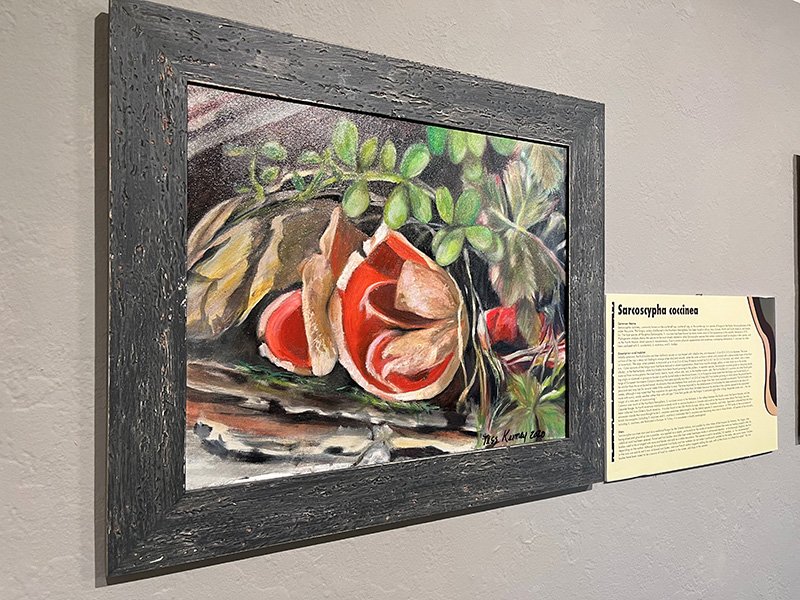
Faculty exhibitors showcased in CUW Art Gallery

Our art instructors aren’t just great at teaching art, they’re accomplished at creating it, as well! Check out the CUW Art Gallery now through Dec. 16 to enjoy some of their amazing work.


Meet the exhibitors

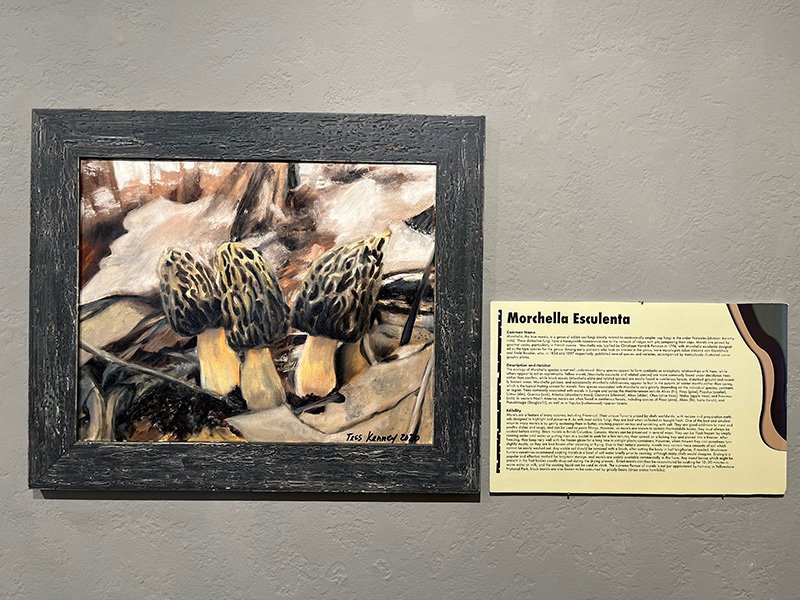
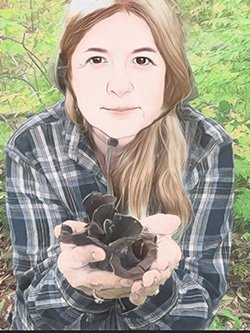
Theresa Kenney, PhD

Chair of Visual & Performing Arts
President, Wisconsin Mycological Society

I am first and foremost an educator. I have been a teacher in higher education for 30 plus years. The many places I have taught include the Milwaukee Institute of Art and Design, The University of Wisconsin Milwaukee, Milwaukee Public Schools, University School, and Concordia University.

I specialize in digital technology, drawing, composition, color theory, art history, design history, art in the humanities and animation. I often look for ways to find collaborations with various non-profits and community organizations using my expertise in art and design.

Interesting Fact:

As a child I grew up with parents who were both avid bowhunters and wild foragers in every sense of the word. We ate wild food in the form of flora, fungi and fauna gathered from the forest every day. So, when I was asked to help The Wisconsin Mycological Society (WMS) with their technology, I gladly volunteered.


Charlene Nemec Kessel

Associate Professor of Art

Education:

  • BFA, The School of the Art Institute of Chicago, 1993
  • MFA, The School of the Art Institute of Chicago, 1997

Hometown: Milwaukee, WI

Interesting Fact: I have five children and live on an asparagus farm.


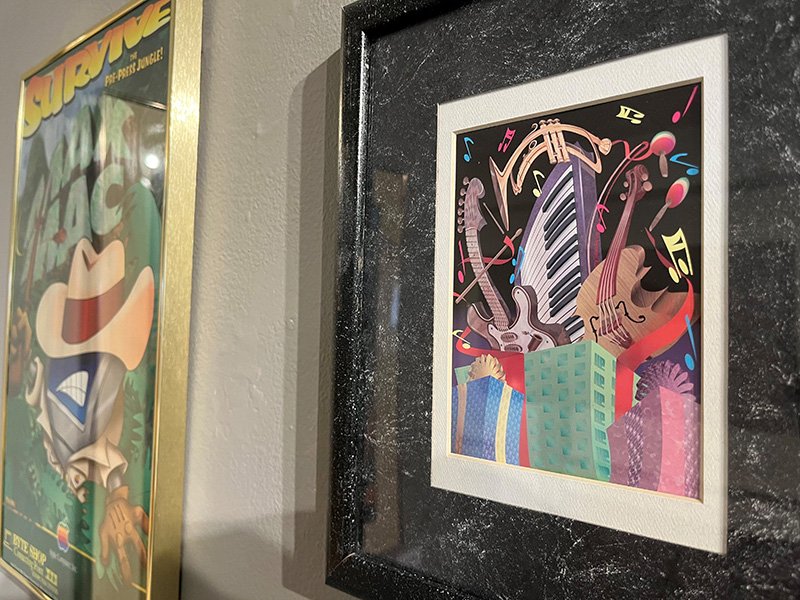
Mario Macari

Adjunct Professor of Art

Education: BS, Art Education

Hometown: Milwaukee, WI

Mario Macari has been an illustrator for the past 35-plus years, buying his first Macintosh in 1985 and working with early versions of Photoshop, Illustrator and other graphic arts programs over the years. After helping pioneer the very first Desktop Color Separations for Western Publishing, he served a short stint as an in-house illustrator a music publisher doing cover illustrations digitally. He then became an instructor and consultant for an Apple VAR, finally starting his own consulting company in Chicago and touring the country with photographer Dean Collins for Kodak. Mario has done animations for Cochlear and Mastercard. He has worked on websites for Disney and Maytag. He has written and illustrated books for Dungeons and Dragons and Western Publishing.

Interesting Fact: Tallest person to have done marketing projects for the Disney Corporation


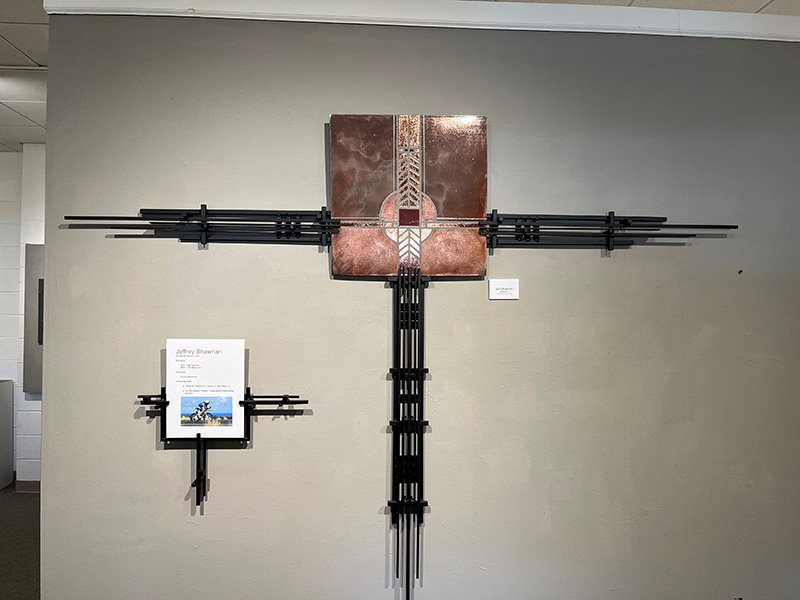
Jeffrey Shawhan

Assistant Professor of Art

Education:

  • BFA, University of Wisconsin-Parkside
  • MFA, University of Wisconsin-Milwaukee

Hometown: Racine Wisconsin

Interesting Facts:

  • Father of 3: Nolan (20), Sullivan (17), and Regan (9)
  • 14-time Ironman Triathlon finisher (3-time World Championship qualifier)

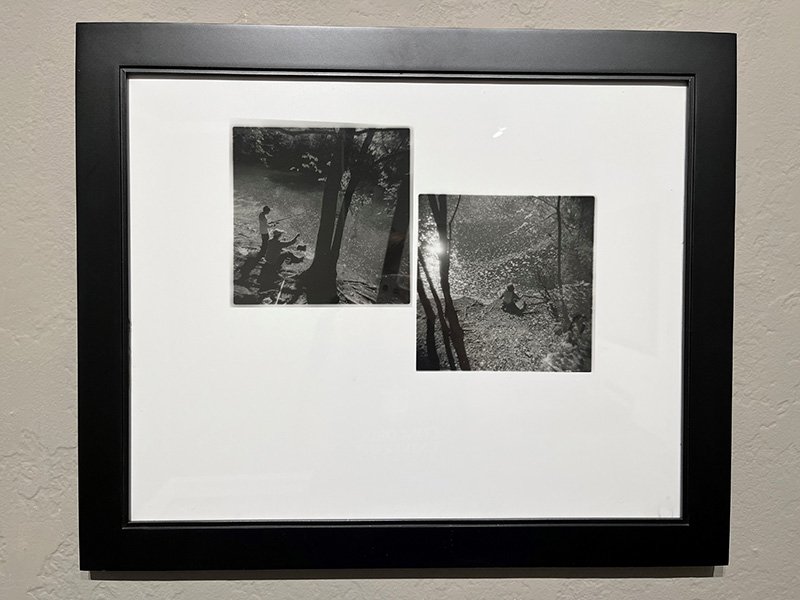
Paul Calhoun

Paul Calhoun

Associate Professor of Art

Paul Calhoun’s photographs have been exhibited throughout the United States, in Europe, and the Far East. His work has received financial support from numerous public and private foundations including the National Endowment for the Arts, and the National Endowment for the Humanities.

As an educator he has taught photography to street children in East Europe, to disadvantaged young people in the United States, and on the undergraduate and graduate levels. Currently he is working on a long-term project photographing refugees and immigrants in cooperation the Clement A. Price Institute at Rutgers University.


Jill Engel

Education:

  • MFA, University of Wisconsin-Milwaukee, 1996 (Ceramics)
  • BFA, University of Nebraska-Lincoln, 1992 Ceramics/Printmaking)

Some say I am a Nebraskan and others say I’m a Milwaukeean. It meets somewhere in the middle in my mind. Trained as a ceramist and printmaker I have always been intrigued by the “nitty-gritty” and the disenfranchised. My work embraces both traditional and non-traditional art making techniques that focus on the power of sharing stories through repetitive mark making using needle and thread, yarn, ink, and reclaimed scraps of fabric. 


Location: Barth 109 (CUW campus)

Hours: Mon-Thurs 4-8 p.m.; Fri & Sun 12-4 p.m. (closed Saturday)


Want in?

In the Visual & Performing Arts Department at Concordia University Wisconsin and Ann Arbor, we define ourselves as determined, passionate, articulate, and strategic practitioners in collaborative, creative and scholarly arts education, both regionally and nationally. Guided by our expert faculty, we inspire our students to hold the arts with the utmost respect, to devote themselves to their education, and to be actively involved in creative inquiry. We believe the arts are a relevant, critical, and essential part of contemporary life. We uphold artistic tradition and embrace creative innovation as vehicles for human transformation and cultural betterment that contribute to the cultural life and vitality of our service to God and the Church. For more information, click the link below.