Concordia University offers attractive transfer options for students in the wake of Northland College’s closure announcement.
Concordia’s community extends its thoughts and prayers to the students, faculty, staff, and alumni of Northland College. The northern Wisconsin campus has announced its plans to close at the end of the semester after more than a century of service.
In light of this announcement, Concordia is committed to helping ease the transition for any Northland students looking to transfer to CUW:
All completed Northland College undergraduate credits will be accepted as transfer credits to Concordia University Wisconsin (There may be exceptions in academic programs leading to state licensure, i.e., through the Department of Public Instruction.)
Smooth credit transfer process into a comparable degree program
Direct admission to online or in-person programs whenever you are ready to begin at CUW
Exclusive ‘Direct to CU’ scholarship offered at the online undergraduate level; Competitive financial aid packages available at the traditional undergraduate level
Tips to help us with your transfer
It may take some time for you to receive your transcripts from Northland. Help expedite your potential transfer by sharing an unofficial transcript – courses and credits completed – with us when you apply. Be sure to add our FAFSA code (003842) to your financial aid application.
Concordia will present you with a competitive financial aid package within just a few business days after receiving a FAFSA and completed documents, or after you complete Concordia’s non-need form.
Program highlights
Concordia offers multiple compatible programs for Northland students. Some of our highlighted program areas include:
Ethical. Hard-working. Respectful. Curious. Welcoming. Christ-minded. While all our students are different, certain qualities unite our community and make us Concordians. We look forward to welcoming you!
If you have preliminary questions or concerns, please contact our Admissions Office at Admissions@cuw.edu. Otherwise, we invite you to go ahead and start your application.
CUW Master of Science in Education—Literacy alumna Karen DeWalt reflects with gratitude on her journey of achievement.
Editor’s note: DeWalt is a 6th grade science and social studies teacher in the Slinger School District. She graduated with her master’s degree from CUW in 2023. That same year she earned the Marsha Konz Graduate Educator Award from Concordia. She shares the following about her experience at CUW:
Concordia University of Wisconsin has all the desirable elements, qualities, and characteristics of a first-rate literacy program. It is the perfect university to earn a Master of Science in Education–Literacy: Reading Teacher and/or Reading Specialist (#1316/#5017 DPI licensures). In many ways, I can compare the literacy journey to the step-by-step journey a seed takes before it sprouts into a unique plant or flower.
CUW provides a nurturing and caring professional learning community, paired with highly supportive, positive, and experienced instructors. I continued to grow as I built the skills necessary to effectively implement and manage literacy programs for K-12 students. A sensible yet rigorous, well-organized, steady, and sequential flow of literacy coursework aligned with the 12 Wisconsin Administrator Standards prepared me for real-world classroom and school experiences with K-12 students. Completing each literacy course—including the portfolio, practicum, 5017 field work, and capstone—brought a rewarding sense of joy and accomplishment.
The moment arrived when I walked across Concordia’s graduation stage at the R. John Buuck Field House with a genuine feeling of gratitude and thankfulness to the Lord, my instructors and professors, and the family members who had been on the journey with me. Most importantly, I gained the confidence to lead and put into practice my professional knowledge as a K-12 Literacy Coach, Intervention Teacher, Reading Teacher, and Specialist. I am now fostering the love of reading and writing and educating today’s youth to become lifelong learners.
Want in?
Take the next step in your literacy leadership journey! Learn more and join the program today.
Concordia offers microcredential programs that can help you gain proficiency in a specific skillset, with a relatively low time and cost commitment.
A microcredential is a series of courses that focus on a specific area of study, helping the learner to develop skills and knowledge curated for a particular career pursuits. Microcredentials are designed to be completed in a shorter timeframe than a bachelor’s degree or even a certificate degree. In this way, they often offer more flexibility compared to traditional courses and degrees. Instead of receiving a diploma, those who complete a microcredential may earn a digital badge or certificate of completion that may be shared with employers.
Who are microcredentials for?
Microcredentials are beneficial for a wide range of individuals:
Students seeking part-time jobs or internships.
Adults currently working or re-entering workforce after time away from a traditional learning environment, looking to upskill or reskill for a position.
Individuals with some college experience who have not obtained a traditional degree.
How can employers benefit?
Microcredentials help employers by:
Providing insight into a candidate’s competencies.
Offering a more comprehensive view of an individual’s abilities beyond a traditional resume.
These credentials create a more meaningful narrative of a candidate’s skills and expertise, making hiring decisions more informed.
The future of microcredentials
According to Parchment, a leading academic credential management platform, microcredential growth is on the rise:
Undergraduate certificate enrollment grew 7.3%, while graduate certificates increased by 1.9% in Fall 2024.
83% of learners believe institutions should prioritize skills-based learning alongside traditional academics.
The global alternative credentials market for higher education is projected to grow by $1.84 billion from 2025-2029.
Exploring Microcredentials at Concordia University
Microcredentials are an excellent way to re-engage with learning, especially for those with busy schedules who cannot commit to full-time education. They offer a balance between personal and professional responsibilities while still allowing individuals to gain valuable knowledge and skills.
Concordia offers a variety of microcredential programs worth considering:
Social Media Strategies – Understand key social media concepts, tools, and applications. Click here to learn more.
Data Analytics Bootcamp – A 16-week program preparing learners for careers in business intelligence, data engineering, and machine learning. Click here to learn more.
Animal-Assisted Therapy – Utilize the human-animal bond to create positive therapeutic environments. Click here to learn more.
Medical Billing and Coding – Prepare for CPC, CCA, or CBCS credential pathways in medical billing and coding. Click here to learn more.
CUW nursing student Mara Kiekhoefer is the new Wisconsin Student Nurses Association (WSNA) president. Students enrolled in Bachelor of Science in Nursing programs throughout Wisconsin elected her at the recent WSNA Convention.
The WSNA exists to help future nurses develop professionally and learn how to advocate for the profession. The association offers resources, leadership opportunities, and career guidance year-round, but its hallmark event is the annual State Convention. This year’s convention took place Jan. 31-Feb. 2 in the Wisconsin Dells. Each year, the convention brings together WSNA members and non-members from nursing schools throughout the state for engaging speakers, professional development opportunities, giveaways, and voting on the next year’s elected representatives.
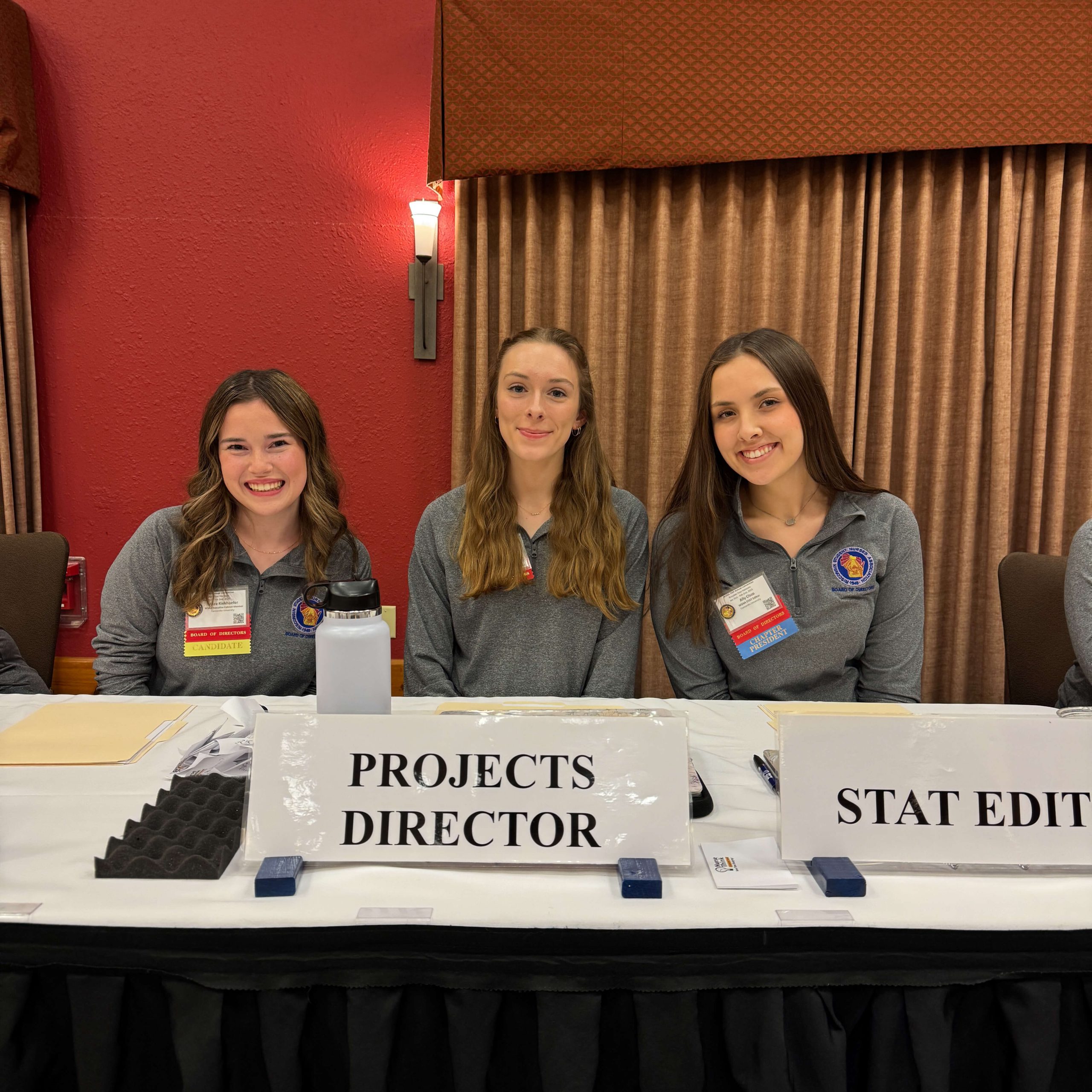
Mara Kiekhoefer (left) with Brigit Burkett (’25) and Ally Cisco (’25). Burkett and Cisco concluded 2024-25 terms at the state level as Projects Director and Stat Editor, respectively.
Kiekhoefer’s election carries on a tradition of strong CUW SNA representation at the state level. Kiekhoefer, who will earn her BSN degree from Concordia in May 2026, served on the Executive Cabinet this past year. She says her CUW SNA Advisor Geny Vernon, DNP, and peers strongly encouraged her to step into a bigger role after participating at the state level in 2024-25.
“This coming year, I hope to draw from my experiences as a cabinet member,” says Kiekhoefer. “As President, I hope to further encourage more attendees to our State’s Convention. I am looking forward to continuing to grow my skills and influence future nursing students.”
CUW had healthy attendance at this year’s convention, proving that the university’s nursing program not only produces top-notch professionals but also leaders dedicated to shaping the future of healthcare. Nearly a dozen CUW nursing students attended this year’s event, which was one of the strongest showings of any university in Wisconsin.
Community service and legislative influence
One of the many things that sets Concordia’s nursing program apart from others in Wisconsin is its approach to student involvement with the WSNA. At CUW, every pre-nursing and nursing student automatically becomes a member of the Wisconsin Student Nurses Association, with no dues or fees required to join. This is a distinction from other nursing schools, where students often have to pay membership fees or wait until they are officially enrolled to participate.
This inclusive approach ensures that every nursing student at Concordia can engage with the WSNA and attend the state convention.
“We want to demonstrate to our students that community service matters and that it’s important to have your voice heard at the state level,” says Vernon, who has served as the CUW SNA Faculty Advisor for the past 13 years. “What we do at the WSNA level does make a difference on Capitol Hill. If we want to affect change and influence what our jobs look like, we need to make our voices heard.”
We want to demonstrate to our students that community service matters and that it’s important to have your voice heard at the state level. —CUW Assistant Professor of Undergraduate Nursing Geny Vernon, DNP
One of the most powerful aspects of WSNA involvement is the opportunity to influence healthcare policy, particularly at the state and federal levels. The convention provides a chance for delegates from nursing schools across Wisconsin to discuss resolutions that impact healthcare and nursing practice. For CUW, the involvement in these resolutions is an opportunity to shape the future of the profession and advocate for legislation that addresses issues like nursing burnout and nursing shortages, says Vernon.
At the local level
Because every nursing student is an automatic member of the WSNA, Concordia’s local chapter is one of the more active student groups on CUW’s campus. About once a quarter, CUW’s SNA brings in an expert from the nursing field to demonstrate the diverse job opportunities that exist. Past presenters have included nurses who specialize in forensics and mental health, and those who work with Flight for Life or prison populations.
Service is also at the heart of CUW’s SNA activities. Over the years, students have made blankets for children’s hospitals, assisted with blood drives, volunteered at nursing homes, and worked at first-aid stations at marathons.
Affecting change
Ultimately, CUW’s nursing program and its active involvement in the Wisconsin Student Nurses Association highlight the importance of student engagement, leadership development, and advocacy for change in the healthcare system. By empowering students to make a difference in their communities and at the state level, Concordia is preparing the next generation of nurses who will have a lasting impact on the profession and the world around them.
“What a nurse’s job looks like is not necessarily up to the individual employers; it starts at the Legislative level,” Vernon says. “We can create the wording in these documents to represent our best interests as professionals. Then it’s voted on and it becomes a larger voice. A need is seen and then declared so that our lawmakers can hear it.”
Want in?
The School of Nursing develops nurses ready to excel in today’s challenging health care context. As a nursing student, you will learn to care for people of all ages in both acute care settings and the community. Instructors and classroom experiences blend curricular rigor with a passion for care, a balance that develops you uniquely both to serve with professional excellence and to fulfill your sense of calling as you care and serve throughout your career. Nursing undergraduate students also participate in the Concordia Core, a rigorous, liberal arts curriculum integrated with Lutheran distinctives.
The Music Department at Concordia University Wisconsin is proud to welcome back The Lee Trio for a concert and masterclass in the beautiful Chapel of Christ Triumphant.
Since its critically acclaimed debut in 2002, The Lee Trio’s “gripping immediacy and freshness” and “rich palette of tone colours” (The Strad) continue to move audiences and critics around the globe. In recent seasons, the Trio has given recitals and masterclasses in cities from Shanghai, Hong Kong, Taipei, San Francisco, New York and Toronto to London, Copenhagen, Berlin, Paris, and Kiev.
We’re proud to include Mequon, Wisconsin in that list.
The Lee Trio Concert
Saturday, March 15 | 7:30 p.m. Chapel of Christ Triumphant | CUW Campus
The Lee Trio helped to launch the new Chamber Music Series at Concordia University Wisconsin in the Spring of 2023. This year (March 2025), it will continue to bring together world-class musicians to make music together in the intimate setting of the beautiful chapel on Concordia’s campus.
Because The Lee Trio is passionate about working with and performing the music of living composers, this concert will include works by two living composers, including a Midwest premiere performance and a World premiere performance.
Audiences will be able to experience the enduring classics of the great classical, baroque and romantic composers as well as encounter new music and premiere performances of works by local/Wisconsin/Midwest composers and/or composition students.
The Lee Trio’s visit to campus will also include a masterclass to instruct and coach music students about the possibilities, complexities, and art of composing for and performing with chamber ensembles.
Master Class with the Lee Trio
Friday, March 14 | 5:00 p.m.
The master class is open to the public and free of charge!
Meet The Lee Trio
Jennifer Choi | Guest Violin
Jennifer Choi has charted a career that breaks through the conventional boundaries of solo violin, chamber music, and improvisation. Hailed by The New York Times as “soulful, compelling..an excellent violinist,” she has performed worldwide since giving her debut recital at Carnegie Hall’s Weill Hall in 2000. Recent highlights have included guest Concertmaster of the Grammy award winning Experiential Orchestra (EXO). A prominent chamber musician, Jennifer was a former violinist of the Miró String Quartet. She has performed for the Chamber Music Society of Lincoln Center, The Metropolitan and Guggenheim Museums, and numerous other chamber music series across North America, Europe, and Asia. Read More.
Angela Lee | Cello
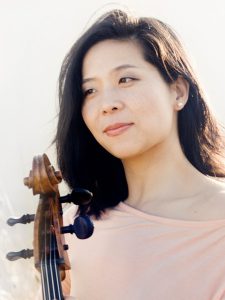
Since giving her Carnegie Hall debut in 1994, Angela Lee’s “amazing finesse, control and coloration” (San Francisco Chronicle) and “astonishingly rich tone” (San Francisco Examiner) has been celebrated with recitals in Alice Tully Hall at Lincoln Center and Victor Borge Hall at Scandinavia House in New York, Chicago’s Cultural Center, The Phillip’s Collection and Kennedy Center in Washington, D.C., Copenhagen’s Nationalmuseet and the Purcell Room at South Bank Centre in London. She has soloed with orchestras including the Taipei Philharmonic Orchestra, the San Francisco Concert Orchestra, the New Haven Symphony, the CAMS Orchestra, the Central Philharmonic Orchestra, the Paraiba Symphony, São Paulo State Orchestra, the Chautauqua Symphony, and the Hertfordshire Chamber Orchestra (UK), performing works of Boccherini to Barber to Kernis. Read more.
Melinda Lee Masur | Piano
Lauded for her “lustrous performances [and] extraordinary musicianship” (Incident Light) and “impeccable technique and artistic interpretation” (The Columbian], pianist Melinda Lee Masur has performed on all three stages of Carnegie Hall, at London’s Wigmore Hall and Purcell Room, the Berliner Philharmonie, the Ravinia Festival, the Festival Les Muséiques Basel and in cities throughout the United States, Europe and Asia. She has been featured on nationally broadcast radio, including Chicago’s Dame Myra Hess and Texas Public Radio, as well as on Hong Kong’s classical radio/television station, RTHK4, and has appeared as soloist with orchestras such as the Vancouver Symphony, Shanghai Philharmonic and Harvard-Radcliffe Bach Society. Read more.
Tickets & Pricing
General Admission:$25 CUW students, faculty and staff: $10
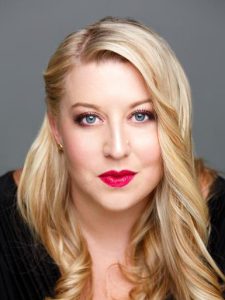
Laura Strickling, two-time GRAMMY® award nominee for Best Classical Vocal Solo Album for 40@40 (2024) and Confessions (2022), is celebrated for her work performing and promoting new music, with an emphasis on new additions to the modern song canon. Her, “flexible voice, crystalline diction, and warm presence,” (New York Times) make her a welcome guest soloist for a range of opera, oratorio, concert, and chamber works, including many nationally- and internationally renowned symphony orchestras.
Nicole Swanson
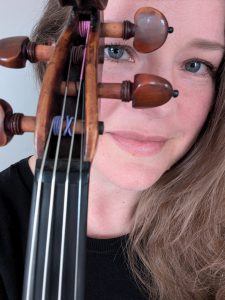
Violist Nicole Swanson has enjoyed a multifaceted career in the performing arts and higher education. Highlights include Assistant Principal Violist with the Milwaukee Symphony Orchestra and Symphony San Jose, Teaching Artist for the Los Angeles Philharmonic, Manager of Community Engagement Programs at the Colburn School Conservatory of Music, and viola faculty at the University of Minnesota. She has also performed at the Academy Awards Governors Ball and with the Black Eyed Peas on American Idol. Nicole recently launched Zircon Arts – an organization dedicated to progress at the intersection of the arts, education, public policy, and social justice.
Jay Shankar
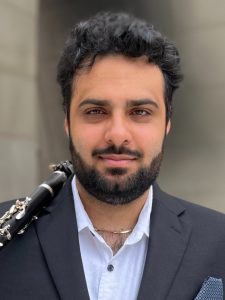
Jay Shankar was recently appointed as the Assistant Principal/Second/and Eb Clarinet with the Milwaukee Symphony Orchestra. He was named the winner of the prestigious International Vandoren Competition and a semi-finalist at the International Crusell Competition in Finland, as the only American Clarinetist. Shankar is also an avid chamber musician, a frequent guest of world-class orchestras, and has performed as Principal Clarinetist in several world-renowned orchestras. Shankar received his Masters at the Colburn Conservatory of Music and Bachelors from The Peabody Conservatory at The Johns Hopkins University.
Want in?
Concordia University Wisconsin is a Lutheran higher education community committed to helping students develop in mind, body, and spirit for service to Christ in the Church and the world. Music has always been an integral part of that mission. The music department contributes to the spiritual, cultural, artistic, academic and co-curricular aspects to University life on campus. As the campus has grown in scope and size the music department has become more integral to the University mission. To learn more about Music at CUW, click the link below.
In this season of love, don’t forget to show love to yourself.
Valentine’s Day is an opportunity to express our love to the ones most important in our lives. However, our efforts to show love to others quickly become futile if we don’t first show love to ourselves. Healthcare experts emphasize the importance of self-care—nourishing mind, body, and spirit—as a way to foster overall well-being. From mental health tips to physical self-care practices, a few of Concordia’s healthcare faculty experts offer their practical advice for how to show love to yourself during this special week.
Megan Watry-Christian, PhD, OT/L
Occupational Therapy Department Chair
One piece of advice I have for showing yourself some love is to make space for quiet. Our world is so loud and always moving at a fast pace. I find that sometimes getting caught up in the busyness of my day can steal some of my peace. You could turn off the radio for your drive home, find a quiet place to just sit and ‘be’ for a few minutes, or use some quiet time to reflect on the blessings in your life. I like to end my quiet time but talking to God through prayers of gratitude so I stay focused on positives and keep my eyes on Him.
Nichole Ostrowski MSW, CAPSW
Bachelor of Social Work Program Director
Showing love to your mind, body, and spirit through a practice of self-care is fundamental to your health and happiness. Self-care means something unique to each individual. As a social worker, self-care is actually mandated in our NASW Code of Ethics and is considered part of the commitment to being an ethical and competent professional. Unfortunately, many of us are taught that always putting others first, working hard, or constantly being productive is the ‘right’ thing to do, whereas taking care of oneself can be seen as selfish or indulgent. However, self-care is not just a luxury; it’s essential for maintaining balance and health. It helps us recharge our emotional, physical, mental, and spiritual batteries. Self-care is an act of loving kindness towards yourself, so love big! Here are some effective self-care strategies:
Consider the way you speak to yourself. Do you need to flip the script?
Reflect on what brings you peace and joy. Go chase that.
Nurture what gives you a sense of purpose. Ground yourself in that.
Practice gratitude daily. Watch how it shifts your perspective.
Foster meaningful relationships with those who lift and fill you up.
Practice mindfulness to manage stress and improve focus.
Set emotional and time boundaries to protect your mental health. It’s okay to say no and prioritize your needs.
Mike Brown, PharmD
Associate Dean for Academic Affairs in Concordia’s School of Pharmacy
Showing love to your body includes being proactive in communicating with your healthcare providers. You know your body best, and your healthcare providers need to hear from you and your feedback on your health in order to best help you lead your healthiest life. The lifestyle changes and therapies that providers recommend and provide require consistent communication and monitoring to maximize their benefit and minimize any side effects to your body. So keep the communication with your providers going to best help them help you!
Rachel Pickett, PhD
Psychology Department Chair
Psychologists suggest five quick and easy tools that we can all use to manage stress and engage in self-care. These strategies can be used anywhere, even in the midst of a busy schedule!
Calm yourself with deep breathing exercises using the 4-4-6 rule… Breath in for 4 seconds, hold for 4 seconds, and exhale for 6 seconds. This practice helps the body manage physiological arousal.
Focus your racing thoughts by counting backwards by 3 from 100. Distracting your brain with a task can break negative thinking patterns.
Relax muscles by tensing individual parts of our body (e.g., making a fist) for 10 seconds and then release. Feeling the contrast of tension and relaxation induces calming sensations.
Ground yourself by physically touching objects around you, or noticing smells, sounds, or temperature. This technique can make us more aware of our environment and feel more balanced.
Lastly, give yourself positive affirmations! Think of 3 things that went well and recognize your strengths each day.
For brief videos to walk you through these exercises click here.
Want in?
This February, CUW is showing you the love during Early Commit Month. Prospective undergraduate students who commit to CUW before March 1 for Fall 2025 have the chance to win prizes! Plus, gain early access to things like the housing application and your student portal. In order to be considered “committed” you just need to provide an initial tuition deposit of $200. Reach out to your Admission Counselor or email admission@cuw.edu to make your deposit.
Haven’t applied yet? There’s still time! Start by clicking on the button below.
Online learning at Concordia University offers flexibility and accessibility, but it also presents unique challenges. Here are some tips for navigating the journey.
Online learning at Concordia University offers flexibility and accessibility, but it also presents unique challenges. Whether you’re a first-time online student or a seasoned digital learner, overcoming these obstacles can help you succeed in your academic journey. Here are some common issues online college students face and strategies to overcome them.
1. Time Management Struggles
Many online students juggle work, family, and other responsibilities alongside their studies. Without a structured schedule, it can be easy to fall behind.
Solutions:
Create a dedicated study schedule and stick to it. Most students set aside a designated amount of regular time per week. Plan for a few hours each weekday and allow a longer catch-up time on the weekends.
Use productivity tools like calendars, task managers, or study apps to stay organized.
Set specific deadlines for assignments and break tasks into smaller, manageable parts.
2. Lack of Motivation and Discipline
With limited in-person interactions with professors and classmates, staying motivated can be challenging.
Solutions:
Establish clear academic goals and remind yourself of your long-term objectives.
Join online study groups or virtual discussion forums to stay engaged.
Reward yourself for completing tasks to maintain motivation.
3. Technical Issues
Reliable internet access, software compatibility, and hardware problems can be major hurdles for online students.
Solutions:
Utilize the Concordia University IT HelpDesk for any technical troubles you may have. Call 262-243-4357 or mail them at ithelpdesk@cuw.edu.
Become familiar with tutorials and prompts on your Student Portal.
Ensure you have a stable internet connection and necessary software before starting courses.
Familiarize yourself with the online learning platform and troubleshoot issues ahead of time.
Have a backup plan, such as using a library or a friend’s computer if necessary.
4. Feeling Isolated
Without the traditional classroom setting, some students may feel disconnected from peers and instructors.
Solutions:
Participate actively in online discussions and group projects.
Reach out to professors and classmates via email, chat, or video calls.
Take advantage of virtual networking opportunities, like webinars and student organizations.
5. Difficulty Staying Focused
Studying from home comes with distractions like household chores, social media, and family responsibilities.
Solution:
Designate a quiet, clutter-free workspace for studying.
Use focus techniques like the Pomodoro method (25-minute study sessions with breaks).
Turn off notifications and set boundaries with family members during study time.
6. Struggles with Self-Paced Learning
Online courses often require self-directed learning, which can be difficult for those used to traditional classroom instruction.
Solutions:
Set specific, achievable learning goals each week.
Reach out to instructors for clarification when needed.
Make use of supplementary learning materials like videos, articles, and tutoring services.
Utilize the services offered by Concordia’s Academic Resource Center including the Writing Center, Online Tutoring, and the use of the TutorMe Online Tutoring program featuring 24/7 access.
7. Managing Stress and Mental Health
Balancing studies with personal responsibilities can be overwhelming.
Solutions:
Practice stress management techniques such as deep breathing, meditation, or exercise.
Maintain a healthy work-life balance by taking breaks and getting enough rest.
Seek support from school counselors, mental health resources, or supportive friends and family.
Utilize Concordia’s Student Wellness Programs which provide access to Wellness, Health, and Counseling services.
While online learning presents unique challenges, developing strong habits and utilizing available resources at Concordia can help you navigate these obstacles successfully. With proper planning, discipline, and motivation, you can excel in your online education and achieve your academic goals!
Want in?
CUW’s Online classes are offered year-round, with students beginning courses in two eight-week mini-terms during the Spring, Summer, and Fall for most programs. Take action and connect with Concordia University’s admission team by visiting CUW Online Undergraduate Admissions for undergraduate degrees or Graduate Admissions for the master’s degrees or by calling 262-243-4300.
St. Marcus School is the education ministry of St. Marcus Ministries. It serves approximately 1,180 students across three Milwaukee campuses.
I am one of three Speech-Language Pathologists (SLPs) at St. Marcus Lutheran School in Milwaukee. As an SLP I provide access to communication for all students. St. Marcus serves students ages K3-8th grade. I work with students to support their speech sound production, their language abilities, speech fluency, and provide access to augmentative and alternative communication (AAC). As an SLP, I work inside the classroom and take kids outside of the classroom. One of the things I am most proud of is helping support the K3 program at St. Marcus. My colleagues and I are developing a K3 whole-class curriculum to enrich student’s language abilities. Building connections with all the students is important to me. I strive to be someone that the students can look up to!
Concordia education
Concordia has been my “home” since I began my educational journey in 2018. I was fortunate enough to complete my undergraduate (BS in Communication Sciences and Disorders) and graduate education (MS in Speech-Language Pathology) at CUW. The Communication Sciences and Disorders/Speech-Language Pathology (and Audiology) faculty have supported me throughout my entire vocational path. They have provided me with the education necessary to carry out my vocation and provided us with community resources. The faculty continue to be resourceful as I navigate obtaining my full licensure (Certificate of Clinical Competence) as an SLP. I know that if I have any questions or concerns, I can rely on someone to help! CUW deepened my love of speech-language pathology through my time in the SLP program.
Early on the program, we were able to make connections with SLPs through our clinical practicum experiences. Being part of various communities (schools, hospitals, skilled nursing facilities, clinics, etc.) had well prepared me for interviewing for jobs. I was able to share about my real-life experiences as I determined the right place for me after graduation.
CUW also helped me shape my interprofessional skills and abilities through the Interprofessional Education certification program. I was able to connect with OTs, PTs, social work students, and other developing professionals to increase my ability to work with others. Our program ensured we had time to practice necessary skills such as interviewing and polishing our resumes. The individuals at CUW care about your education as well as where you are going post-graduation. Our SLP professors shared with us job opportunities in the community from clinical instructors and other friends/colleagues.
Why CUW?
I chose Concordia because of its location, class size, and values. I was able to stay on a beautiful campus which was fortunately close enough to my hometown (Sheboygan Falls!). My family has been some of my biggest supporters throughout my life, so it was important to be able to visit. Being at CUW, we had small class sizes which provided ample opportunities for hands on learning experiences. We were able to have open discussions about relevant topics and develop close relationships with the faculty members. Lastly, learning at a Christian university became something that I was drawn to. Concordia helped me strengthen my faith as a young adult. I was able to attend chapel often and pray and worship alongside other young Christians. As a Christian, I believe that I was called to CUW for a greater purpose, that is, to live out my vocation.
A focus on Christ
Concordia supported my faith life tremendously. With prayer, religion, and faith being talked about so openly at CUW, I was able to engage in self-reflection. This self-reflection helped me see where I can be a better Christian. I believe that if I did not strengthen my faith through my time at CUW, I would not have ended up at St. Marcus, a Lutheran school. It is a powerful thing knowing that I am supporting my students in their skills and abilities. By giving them a voice, I hope that they will use their voice to share the Word of God and Christ’s Love with others. Through Christ, all things are possible. I sincerely believe I have one of the best jobs in the world and I owe it all to God and the people God placed in my life at CUW. The people I met at CUW have done nothing but encourage and uplift me in my education and in my growing faith.
Explore more
Concordia’s mission is fulfilled when our graduates live out their vocations—in other words, when they go into the Church and world and serve boldly in the name of Christ. Our alumni and current students are continually doing this with excellence! Explore more by clicking below.
Concordia University Wisconsin is at the heart of an exciting new initiative aimed at empowering pastors in The Lutheran Church—Missouri Synod (LCMS) with financial education and debt relief.
A significant feature of the PEF is the 14-module, self-paced, online financial education curriculum developed by CUW. This program reflects the Batterman School’s ongoing commitment to fostering leadership skills among LCMS pastors and their organizations. The curriculum includes ten modules focused on personal finances and four modules on organizational financial management. By addressing these two critical areas, CUW aims to provide pastors with the tools they need to navigate personal and ministry-related financial challenges confidently.
The Continuing Education Department at CUW will collaborate with the Batterman School of Business to oversee the delivery and management of the 14 modules, ensuring that participants receive a seamless and engaging educational experience. This partnership highlights CUW’s commitment to interdisciplinary efforts in serving faith-based leaders.
Beyond technical knowledge, the program emphasizes the holistic wellness of pastors. Participants will conclude their training with an online session facilitated by LCEF’s Grace Place Wellness Ministries, where they will reflect on how financial wellness contributes to overall well-being.
Concordia’s Commitment to Faith-Based Leadership
This initiative builds on CUW’s longstanding tradition of integrating Lutheran values into its business education programs. The Batterman School of Business offers a comprehensive range of degrees, including undergraduate and graduate programs in leadership, business administration, and analytics. The financial education curriculum for pastors is another expression of the school’s mission to serve faith-based communities by providing practical, Christ-centered solutions to real-world challenges.
Dr. Matt Hurtienne, faculty member in the Batterman School of Business, highlighted the importance of this initiative: “At Concordia, we believe that financial literacy is a vital component of effective ministry. By equipping pastors with these essential skills, we are empowering them to focus more fully on their calling to lead and serve.”
Collaboration for Impact
The PEF initiative is funded by MinistryFocus through a $1.25 million grant from Lilly Endowment Inc. as part of its National Initiative to Address Economic Challenges Facing Pastoral Leaders. With additional matching support from LCEF, the program will offer loan repayment assistance of $5,000 to up to 93 pastors and their families in 2025. This combination of financial relief and educational support underscores the collaborative effort between MinistryFocus, LCEF, and CUW.
Rev. Ken Krueger, president of MinistryFocus, expressed gratitude for CUW’s involvement: “Concordia’s financial education program is a cornerstone of the Pastoral Excellence Fund. Their expertise ensures that pastors not only receive immediate debt relief but also gain the skills needed for long-term financial health and effective ministry.”
Looking Ahead
Concordia University Wisconsin remains steadfast in its mission to serve and uplift faith-based leaders. By contributing to this vital initiative, CUW continues to be a trusted partner in strengthening the church and its leaders for generations to come.
Want in?
Concordia University Wisconsin is a Lutheran higher education community committed to helping students develop in mind, body, and spirit for service to Christ in the Church and the world. To learn more about continuing education opportunities at CUW, click the link below.
Concordia University Wisconsin and Marquette University Law School have partnered to offer an accelerated pathway for students pursuing a career in law.
The innovative 3+3 Pre-Law Program allows qualifying CUW undergraduates to complete both their bachelor’s degree and a Juris Doctor (JD) degree in just six years, saving students a full year of education and providing an accelerated route to becoming an attorney.
The partnership, which was officially signed into effect this year, allows students participating in the program to complete three years of undergraduate study at Concordia before transitioning into the first year of law school at Marquette for their fourth year of study. Concordia students who are admitted to the accelerated program will take the LSAT and apply to Marquette Law School during the third year of their undergraduate program at CUW. The credits earned during that fourth year (29 credits under Marquette’s curriculum) will apply to their bachelor’s degree and their first year of law school. Upon completion of their first year of law school, Concordia will award students their bachelor’s degree and students may participate in CUW commencement exercises.
Building upon institutional strengths
The partnership combines the strengths of Wisconsin’s two largest private institutions of higher education. Marquette Law School—one of only two law schools in the state—is known for its academic rigor and commitment to public service. Located in Milwaukee, Marquette Law provides students with a top-tier legal education and the opportunity to engage in a wide array of professional experiences through clinics, internships, and externships.
Concordia, meanwhile, offers an undergraduate experience that champions developing students’ Christian character through personalized attention and ample growth opportunities. Concordia’s small class sizes and low teacher-to-student ratio make it easier for students to access extra help from professors and support staff or get involved with research or extra-curricular growth opportunities. This combination of small-school-style-access and big-school-caliber opportunities makes Concordia an ideal choice for pre-professional preparation programs like this partnership with Marquette.
Students who enroll in the 3+3 program will receive personalized attention beyond the norm, as they will be assigned to two advisors, CUW’s Pre-Law Advisor and their regular academic advisor, to help ensure they stay on track to meet the requirements for this unique program.
“By partnering with Marquette University, we are offering an exceptional opportunity for our students to gain both a broad liberal arts education and high-caliber professional legal training in less time,” said CUW Pre-Law Advisor and Associate Professor of Justice and Public Policy Matthew Mac Kelly, JD, EdD. “This program is ideal for students eager to start their legal careers sooner, with the added benefit of specialized advising and personalized support throughout their journey.”
“We are excited about the partnership with Concordia and look forward to welcoming Concordia students to our community,” said Vada Waters Lindsey, associate dean for Enrollment and Inclusion at Marquette Law School.
Program Highlights
Accelerated Pathway: Complete both a bachelor’s degree and Juris Doctor in six years, saving time and money.
Dual Credit: The first year of law school at Marquette counts as the fourth year of undergraduate study at Concordia.
Strong Support System: 3+3 program participants will be assigned to two advisors, CUW’s Pre-Law Advisor and their regular academic advisor. Participants will benefit from pre-law programming offered in conjunction with Marquette Law School.
Broad Undergraduate Areas of Interest: Students may pursue an undergraduate program in any subject area at CUW. Concordia’s broad range of bachelor’s programs include business, liberal arts, justice and public policy, history, philosophy, political sciences, computer science, English, and more.
Want in?
Students interested in the 3+3 Pre-Law Program may apply by selecting “Pre-Law” as their area of interest during the CUW application process or by notifying their academic advisor after admittance. To formally enter the program, students must meet with CUW’s Pre-Law Advisor for an entrance interview and complete a Student Educational Plan (SEP) in collaboration with their advisors.
While the 3+3 program provides a streamlined pathway, there is no guarantee of admission to Marquette University Law School. Students not admitted to Marquette as 3+3 participants, or who decide not to continue in the program, may explore other professional pathways. They also remain eligible to apply to any law school, including Marquette, as traditional applicants.