Concordia University Wisconsin is gaining attention beyond campus for its thoughtful and innovative use of artificial intelligence.
In recent weeks, the university’s new AI tools, which are scheduled to launch in February, have been featured in two separate media venues, underscoring Concordia’s growing role in shaping conversations about technology, ethics, and education. A television interview with Dr. Michael Litman, professor and chair of the Department of Computer Science, offered a firsthand look at how these tools will be used in the classroom, while a local online publication amplified Concordia’s message by picking up the university’s own story. Together, the coverage reflects how Concordia’s work in AI is resonating with the wider community.
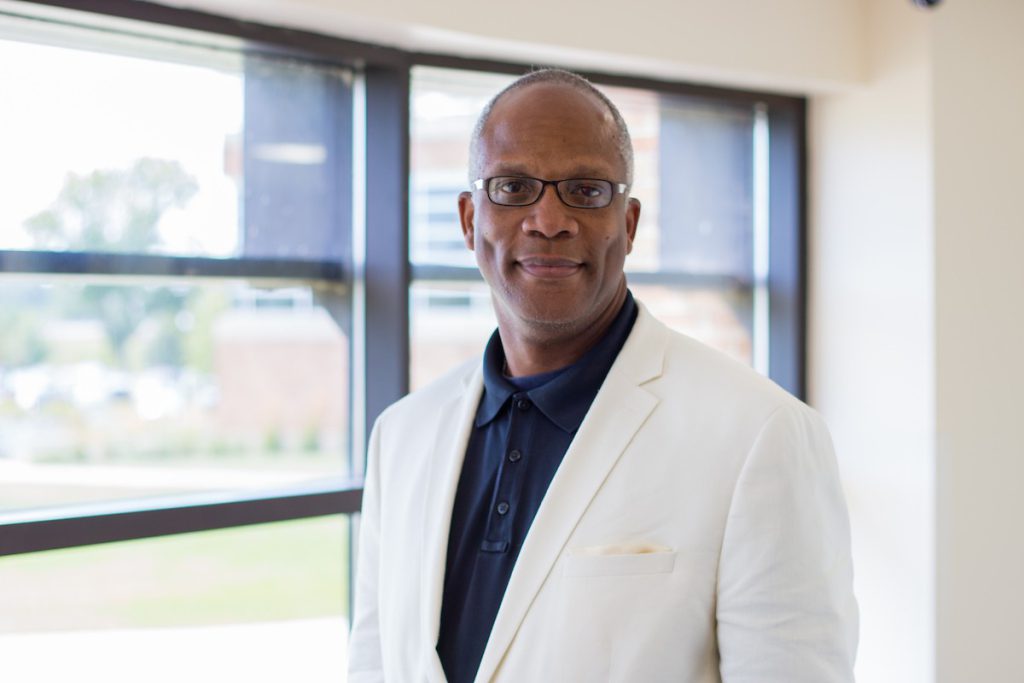
Dr. Michael Litman
Fox6 Milwaukee
Litman spoke with Fox6 Milwaukee host Ted Perry in a 12-minute segment, a notably long conversation by television standards, allowing time for meaningful discussion about how Concordia is approaching artificial intelligence in higher education.
The extended format gave Litman the opportunity to explain not only what the tools do, but why Concordia is committed to using AI thoughtfully, responsibly, and in service to student learning.
In addition to the television spotlight, Concordia’s AI tools were also featured in an online story by Urban Milwaukee, extending the reach of the university’s message through a respected local digital publication. The piece drew from Concordia’s own story and highlighted how the university is integrating artificial intelligence into teaching and learning with intention and care. By amplifying Concordia’s perspective for a broader civic audience, the coverage reinforced the university’s role as a thoughtful contributor to regional conversations about emerging technology and its impact on education.
Want in?
Concordia University Wisconsin is a Lutheran higher education community committed to helping students develop in mind, body and spirit for service to Christ in the Church and the world.
As we pause to remember the life and legacy of Dr. Martin Luther King Jr., we give thanks for his courageous witness to justice, dignity and love of neighbor.
Guided by his Christian faith, Dr. King challenged individuals and communities to seek truth, extend grace, and work faithfully toward a more just world.
In this spirit, we share two reflections from CUW faculty members, who offer thoughtful insights on faith, vocation, and what it looks like to live out Christ-centered service in our everyday lives.
Faith That Worked, Vocation That Cost, Justice That Served
The Rev. Dr. Martin Luther King Jr. is often remembered as a dreamer. Before he was a dreamer, he was a pastor. Before he was a symbol, he was a servant. Before he was celebrated, he was condemned. His legacy cannot be understood without recognizing that his faith was not decorative; it was operational, as he made clear in his 1963 book, “Strength to Love.”
Rev. Dr. King’s faith did not live in stained glass. It lived in streets, jails, pulpits, courtrooms and burial grounds. His theology was not about escape from suffering, but responsibility within it. Writing from a Birmingham jail cell in 1963, he argued that injustice anywhere is a threat to justice everywhere, insisting that Christian faith must confront social sin, not merely personal morality.
This belief shaped his vocation.
Rev. Dr. King did not treat his calling as a career. He treated it as an assignment from God. Vocation, for him, was not about personal comfort or safety. It was about obedience. He understood that purpose often demands sacrifice and that leadership often requires loneliness. In his final speech, “I’ve Been to the Mountaintop,” delivered in 1968, he accepted the possibility of death because he believed he had been called to do God’s will.
Justice, in Rev. Dr. King’s vision, was not a slogan. It was structure. It was policy. It was access. It was dignity. He did not speak only about love; he spoke about voting rights, housing, labor and economic inequality. In “Stride Toward Freedom,” published in 1958, he wrote that “true peace is not merely the absence of tension; it is the presence of justice.” He understood that reconciliation without equitable treatment is theater, not transformation.
Yet, his pursuit of justice was always anchored in service.
He never argued that Black or White people deserved power over others. He argued that all people deserved power over their own lives. His work was not about dominance — it was about deliverance. Influenced by Jesus’ model of servant leadership in Mark 10:45, he believed moral courage was the highest form of leadership, a theme later emphasized by historian Clayborne Carson in “The Autobiography of Martin Luther King Jr.”
What troubles many today is not his dream — it is his discipline. Not his hope — but his insistence. Not his speeches — but his demands.
We quote Rev. Dr. King when he comforts us. We ignore him when he confronts us. But his legacy does not belong to nostalgia. It belongs to the world.
Throughout the coming days, as we attend Chapel, attend class, and interact with administration, faculty, staff and students, we must all remember that faith that does not move is not faith, vocation that does not risk is not calling, and justice that does not disrupt evil and oppression is not justice. Thus, service to Christ and the world that does not cost is not service.
Rev. Dr. King did not give us a dream to admire. He gave us work to finish. Consequently, the question is not whether we will honor his work. The question is, are we willing to continue his work?
Hope, Truth, Courage and Vocational Calling in Divisive Times
“We are now faced with the fact that tomorrow is today. We are confronted with the fierce urgency of now.” Dr. King spoke these words exactly one year-to-the-date before he was assassinated, expressing his feelings of concern towards the Vietnam War.
On April 4, 1967, our nation and our world were embroiled in divisive cultural wars, bloody fighting wars, and spiritual and emotional upheaval much like today. The “urgency of now” ties into a burning question that seems to resonate throughout social media of “What can we do?” to heal political and cultural division, to stop the spread of spiritual/moral apathy, and to save our children (and ourselves) from a world that seems to be spiraling out of our control in the face of a digitized future of algorithmic bias and misinformation. The very thought and real presence of broken families, communities, churches, and systems from the heap of societal assaults on our conscience can overwhelm one to the point of silence.
What can you say or do to reverse the often-temporary absolutes one clings to for moral or cultural convenience?
Many wonder how to live faithfully when voices are loud, wounds are real, and unity feels like a distant memory or pipe dream. Trust can feel thin and truth elusive. Dr. King, much like his revolutionary 16th century namesake, Martin Luther, both shared a conviction that faithfulness means standing for truth even when it’s costly. Loving one’s neighbor is not optional, but tied to our Christian vocation to serve our neighbor in the ordinary facets of our life.
We are called to protect the vulnerable, acting for the good of others as an act of faith. Dr. King famously said, “Darkness cannot drive out darkness; only light can do that. Hate cannot drive out hate; only love can do that.” This echoes the words of Scripture: “The light shines in the darkness, and the darkness has not overcome it.” (John 1:5) We are called to love our neighbors and our enemies. Christian love is not weakness, though it can appear to be in a current culture obsessed with “winning.”
What has been “won” is our redemption through the Cross. Because of this prior love exemplified on the Cross, we can courageously love in a manner that embodies truth and rejects cruelty. We can aide a neighbor, even when it’s hard.
King cautions, “The arc of the moral universe is long, but it bends toward justice.” (1967) As a lifelong Theatre artist, I examine all characters and plots through “arcs,” placing an emphasis on the journey more so than the final destination. Arcs reflect transformation, embraced as superior to chronological order. They capture internal shifts in a way that sequence cannot. As I reflect on Dr. King’s statement, I think of how our human transformation is ever-evolving, inviting us to walk alongside one another as we navigate the complexities of our human experience.
Joy can be found in the journey, and it gives us hope. We can be hopeful that it ends in justice because, through Christ’s sacrifice, we have overcome. Our doctrine of vocation reminds us that God has placed us in specific callings as teachers, students, leaders, family, artists, scientists and neighbors, not to withdraw from the world in fear, but to serve within it with courage. Dr. King’s life reminds us not to imitate the world’s anger, nor to retreat in silence, but to use what God has given to serve in spaces, both significant and small.
Faithful witness does not have to involve shouting, but is showing up with compassion, grace and integrity, trusting that our call is deeper: shaped by the Gospel, serving in humility, committed to a truth that can only be formed by love. “For at one time you were darkness, but now you are light in the Lord. Walk as children of light.” (Ephesians 5:8–9)
Faith and action. Called and responsive. Tomorrow is Today, and we can make a difference with our love.
Answering Dr. King’s call to love our neighbor
In honor of Dr. Martin Luther King Jr., you are invited to pause, reflect and serve. On Friday, January 23, we will gather in Chapel to hear God’s Word and sing together, with gospel choir Joyful Noise, as we reflect on our Christian calling to love our neighbors in the places God has put us.
Following Chapel, you are invited to take part in a tangible opportunity to serve our neighbors through a partnership with the Milwaukee Rescue Mission. After Chapel, you may:
Write notes of encouragement for neighbors served by the Milwaukee Rescue Mission
Learn more about the Mission and future service opportunities
After the group from Chapel subsides, the activities will be moved to the library so that students, staff and faculty can participate throughout the day.
As Lutherans, we confess that we are saved by grace alone through faith in Christ. Freed by that Gospel, we are sent into our vocations to serve others. In simple acts, spoken words, written notes, and faithful presence, we bear witness to Christ’s love by offering comfort, hope and peace to our neighbors.
Want in?
Concordia University Wisconsin is a Lutheran higher education community committed to helping students develop in mind, body and spirit for service to Christ in the Church and the world.
Together, the publication and grant extension mark a significant achievement for Gries and highlight Concordia’s growing research presence in exercise science and health physiology.
Why this research matters
Most people understand that regular exercise supports good health. What is less understood is how even brief periods of inactivity affect the body — especially when exercise resumes.
Gries and his research team set out to answer a deceptively simple question: How does a single day of reduced physical activity change the body’s metabolic and molecular response to exercise the following day?
“We wanted to understand whether short-term inactivity could blunt the benefits of exercise — and the answer is yes,” Gries said.
This question has important implications for health, fitness, aging, and chronic disease. Emerging evidence suggests that short-term inactivity can disrupt many of the beneficial adaptations typically triggered by exercise, even in otherwise healthy individuals.
How the study was conducted
Using a rigorous crossover study design, researchers asked healthy adults to complete two exercise trials:
After a normal activity day of greater than 8,500 steps
After a reduced activity day of less than 5,000 steps
After each day, participants completed 60 minutes of aerobic exercise at 65 percent effort – a standard exercise bout. To understand what was happening inside the body, the research team conducted an unusually comprehensive analysis, including:
Skeletal muscle biopsies before and four hours after exercise
RNA sequencing of the biopsied skeletal muscle to measure changes in more than 20,000 genes
Metabolic gas measurements during exercise
Blood samples to track key metabolic markers during exercise and recovery
This level of molecular and metabolic analysis is rarely conducted at small institutions. The grant funding allowed CUW to expand its research capabilities through the purchase of point-of-care blood analyzers and specialized equipment for skeletal muscle biopsies — a technique new to CUW and uncommon in academic settings.
Key findings
The study revealed that even one day of reduced activity significantly altered how the body responded to exercise.
Muscle responses were dramatically different: At rest, nine genes related to metabolism differed after a low-activity day, which suggests that one day of inactivity already changed skeletal muscle. During exercise, however, inactivity altered the expression of 1,403 genes, compared to 793 genes after a normal activity day. The differences between these gene changes were linked to inflammation, metabolism, immune responses and cell cycle regulation.
Fuel use shifted toward carbohydrates: After a low-activity day, participants burned more carbohydrates and less fat during exercise, indicating reduced metabolic efficiency.
Blood lipid levels increased: After a single day of inactivity, triglycerides were higher throughout exercise and recovery — an early marker associated with increased metabolic disease risk.
Fuel substrates within the skeletal muscle changed: A single day of inactivity caused the muscle to have the fuel source (metabolites) similar to those of older adults or people with obesity.
These findings showed that walking more than 8,500 steps per day produced a meaningfully different exercise response than walking fewer than 5,000 steps, even when structured exercise was the same.
A clear takeaway: movement outside exercise matters
Gries’s findings reinforce a simple but powerful message: you cannot exercise your way out of being sedentary.
Formal exercise remains essential, but daily movement — standing up, walking regularly, and reducing prolonged sitting — is equally important. Even small changes, such as taking a five-minute walk every hour, can help support healthier physiological responses.
“This research shows we need to think beyond exercise alone,” Gries said. “Daily activity matters just as much as structured workouts. Small changes — like taking a short walk every hour — can make a meaningful difference.”
A team effort with student involvement
The project depended on the dedication of a strong research team, including Concordia students who gained hands-on experience in participant testing, muscle biopsy preparation, and data collection.
“Working on this project gave me meaningful exposure to the rigor behind high-quality research and strengthened my confidence working in research environments.”
— Jonathan Baranowski, pharmacy student involved in the project
Contributing researchers included Joseph McGraw, Emily Goetz-Sutinen, Jessica Grimm, Jonathan Baranowski (pharmacy student), and Mark Berres (faculty member at the University of Wisconsin–Madison). Their involvement reflects CUW’s commitment to high-impact, experiential learning and advanced research training for students.
“It was an honor and privilege to collaborate with Dr. Kevin Gries on this study,” said Joe McGraw, a pharmaceutical science professor in the School of Pharmacy. “The impact of exercise on chronic illness cannot be understated. Exercise often surpasses drugs for chronic illness prevention and treatment outcomes. The important work of exercise physiologists like Dr. Gries continues to highlight these findings. As we seek to optimize health and longevity, I look forward to future collaborations with him.”
Grant success and what comes next
The original two-year AHA grant totaled $154,000 and concluded at the end of 2025. Due to the project’s success, the American Heart Association awarded an additional year of funding — nearly $74,000—to extend the research into 2026.
“The one-year extension of Dr. Gries’s prestigious American Heart Association grant is a testament to his ability to execute high-level science at our university,” McGraw said. “The ability, commitment and perseverance necessary to accomplish this work by Dr. Gries and his team cannot be understated.”
Grant funding has also supported professional development, allowing Gries to present findings at national and international conferences, including the American College of Sports Medicine meetings in Boston and Atlanta, the Mitochondrial Physiological Society conference in Copenhagen, and the Integrative Physiology of Exercise conference at Penn State.
Looking ahead, Gries plans to investigate how aging affects exercise response biology, and whether changes are driven by aging itself or by declining physical activity levels over time.
“Understanding whether changes in exercise response are due to aging or inactivity is the next critical question,” Gries said. “This research opens the door to rethinking how we approach physical activity guidelines across the lifespan.”
About Dr. Kevin Gries
Gries is an assistant professor of physical therapy whose research focuses on exercise physiology, skeletal muscle biology, metabolic health, and the molecular adaptations to activity and inactivity. His work supports Concordia’s mission to advance health science research while equipping students to understand the human body from whole-body performance down to cellular function.
Concordia University Wisconsin is a Lutheran higher education community committed to helping students develop in mind, body and spirit for service to Christ in the Church and the world.
Across Wisconsin and the nation, healthcare systems are facing a critical workforce shortage. Hospitals, clinics, long-term care facilities, and community health organizations continue to feel the strain as demand for care grows and staffing gaps widen.
Concordia University Wisconsin is helping meet this urgent need by preparing 388 healthcare graduates in the class of 2025 who are ready to serve where they are most needed.
“Nursing shortages are being felt in every corner of healthcare, from hospitals and clinics to long-term care and community settings,” said Jessica Leiberg, PhD, DNP, dean of the School of Nursing at CUW. “Our calling as a School of Nursing is to prepare graduates who are clinically prepared, compassionate in their care, and ready to serve patients and families from the moment they enter the profession.”
Graduates stepping into high-demand healthcare roles
In 2025, CUW awarded 1,772 degrees, many in healthcare and health-related fields that are experiencing significant workforce shortages. These graduates are entering the profession prepared to serve patients, families, and communities across the region and beyond.
Together, these graduates are helping fill critical gaps in nursing, pharmacy, rehabilitation sciences, behavioral health, primary care, and healthcare administration — areas where workforce shortages directly affect patient outcomes and access to care.
Education rooted in service and purpose
Concordia’s approach to healthcare education is grounded in its Lutheran mission to develop students in mind, body and spirit for service to Christ in the Church and the world. Students are prepared not only with clinical knowledge and professional skills, but also with a strong sense of vocation and responsibility to serve others with compassion and integrity.
“At Concordia, we emphasize care for the whole person,” Leiberg said. “Our students learn that nursing is both a profession and a vocation — one that requires excellence, integrity and a deep commitment to serving others.”
Graduates leave CUW ready to step into frontline and specialized roles, equipped to care for patients, support clinical teams, and strengthen the healthcare systems their communities rely on.
Strengthening communities through workforce impact
At a time when healthcare workforce shortages dominate national and state conversations, CUW’s graduates represent immediate, tangible impact. They are joining healthcare teams, supporting clinical partners, and helping stabilize systems that communities depend on every day. As healthcare challenges continue to evolve, CUW remains committed to preparing skilled, compassionate professionals who are ready to meet today’s urgent needs and tomorrow’s challenges
Want in?
Concordia University Wisconsin is a Lutheran higher education community committed to helping students develop in mind, body and spirit for service to Christ in the Church and the world.
Gather in the Christ Triumphant for daily chapel, Monday through Friday at 9:30 a.m.
Schedule subject to change. In-person attendance is always encouraged, but Chapel services can also be livestreamed HERE.Catch up on previous sermons via the Chapel YouTube channel HERE.
2025-26 theme: Free to Serve
‘For you were called to freedom, brothers and sisters; only do not use your freedom as an opportunity for the flesh, but through love serve one another. For the whole law is fulfilled in one word: You shall love your neighbor as yourself.’ Galatians 5:13-14
Thursday, Apr. 30: Liturgist: Bakker | John 10:1-10
Friday, May 1: Rev. Jonathon Bakker | Ephesians 2:19-22
Note: This schedule is updated frequently.
Learn more
At CUW you can see and feel a Christian emphasis from how our professors teach in the classroom to how our athletes play on the field. We instill in our students that living a full Christian life is about more than worship. CUW is a Christian university, not because we’re perfect people, but because we’re forgiven sinners who gather together in Christ. To learn more, click the link below.
CUW is pleased to honor two outstanding students every month, one undergraduate student and one graduate student. Congrats to Maddie and Hollie!
Undergraduate Student of the Month
Maddie Brashaw is a Biomedical Sciences major. She is an extremely high academic achiever in a very difficult science major despite many extracurricular demands on her time. She is a leader on the women’s tennis team. She has served as an Supplemental Instruction (SI) leader and tutor for a number of difficult Biology and Chemistry classes. She has conducted research investigating how mutations in the cohesin complex contribute to leukemia. She has served on the board for the pre-medicine club for 2+ years and took over as president this year. She has also worked with Appalachia Service Project helping build homes for impoverished families. She is currently a senior who is applying to medical schools. Maddie will make an excellent physician in the near future! She truly lives out the mission of CUW!
Maddie was nominated by Dr. Joseph Fisher.
Graduate Student of the Month
Hollie Smith is a third-year Pharmacy student who has excelled in her coursework while also being active in scholarship and service to the community. She is currently writing a journal article on a new pain management medication called suzetrigine which will be peer-reviewed and published in the Journal of the Pharmacy Society of Wisconsin (JPSW). Additionally, through one of her course projects, she is putting together care packages for homeless individuals she would pass every week on her way to her pharmacy rotation. Thoughtful on its own, Hollie went even further by researching what these individuals are most likely to want or need. Through this research she created her own care packages which included warm socks, utensils, hand sanitizer, hygiene products, fruit snacks, granola bars, etc.
Hollie was nominated by Dr. Jordan Wulz.
Concordia University Wisconsin has been awarding Student of the Month since 2016. Want to see our previous Student of the Month awardees? Take a look here!
Want in?
At Concordia University Wisconsin, we believe that education is at the junction of faith and learning. That means that we get to know you personally – your unique gifts and skills – so that we can help you develop fully in mind, body, and spirit to achieve your highest potential. To learn more or to apply, click the link below.
As part of our ongoing commitment to recognizing excellence, we regularly celebrate the achievements of our faculty, staff, students and alumni.
Twice each year, we gather many of these stories to reflect on how our community lives out its calling in service to Concordia and beyond. From professional promotions and published scholarship, to creative works and notable service, these milestones reflect the dedication, expertise, and faith they bring to Concordia. We are grateful for the many ways they serve our university, and wider community.
Jill Krell, associate professor in the School of Nursing, was awarded a two-year grant totaling $119,800 to support the Mexico Mission Trip, advancing experiential learning and service-based education.
Professional appointment in quantum computing research
Dr. Michael Litman, professor and chair of the Department of Computer Science at Concordia University Wisconsin and co-founder of the AI and Quantum Innovation Lab, was appointed chair of the Quantum Computing Advisory Board at OS Applied Research.
STUDENTS
Early acceptance to medical school
Blake Jakobi was officially accepted into the Lake Erie College of Osteopathic Medicine Early Acceptance Program. Through this program, he has secured a reserved seat in medical school upon graduation, contingent on maintaining academic requirements, without the need to take the MCAT or reapply.
Dr. Bashir Easter, ’12, who earned his MBA at CUW, was named one of Wisconsin’s 32 Most Influential Black Leaders for 2025 by Madison 365. He is the founder of Melanin Minded, an organization dedicated to empowering Black and Latino communities through culturally appropriate resources and support for individuals affected by Alzheimer’s disease and related dementias.
Completion of Lutheran teacher colloquy program
Kaylin Hempe, ’15, Andrea Dykman, ’16 CUAA, and Jennifer Ferguson, ’25, successfully completed the Lutheran Teacher Colloquy Program for commissioned ministry and were declared qualified for a first call, as affirmed by Dr.James D. Juergensen, director of LCMS Teacher Placement.
Have an accomplishment to share?
We want to celebrate the accomplishments of our Concordia community. If you or someone you know — faculty, staff, student, or alumnus/alumna — has received an award, recognition, or other newsworthy accolade, please let us know.
In a world where courage often shouts, Concordia University Wisconsin new alumna Rimsha Arooj has learned to live it quietly.
Growing up in Pakistan as part of the Christian minority, Arooj developed a deep sense of strength — not in defiance, but in quiet conviction. Her upbringing taught her how to remain grounded in her faith while honoring the differences of others, a lesson that shaped her journey to CUW, where she recently earned her MBA and was chosen as the student speaker for the December commencement ceremony.
“Being part of a Christian minority community taught me that faith is something you live through actions, not just words. It required quiet courage, the courage to remain grounded in my values, while honoring and respecting differences,” Arooj said. “This experience showed me that true strength comes from humility, empathy and openness. Being part of this community deepened my understanding of service and reminded me that faith is most meaningful when it fosters unity, love and understanding among people.”
And it was those life lessons she brought with her when she enrolled in the MBA program at Concordia University. Her journey was “shaped by courage, faith, and the willingness to step into the unknown.” She arrived with big dreams, but also with uncertainty and questions.
“What shaped me most during my time at Concordia was the sense of community and purpose I found here,” she said. “CUW became more than a university; it became a place where I learned not only academically, but personally and spiritually. Through challenges, growth, and moments of self-discovery, Concordia helped me find my voice, strengthen my confidence, and believe in my calling.”
A reflection on her journey
As Arooj reflects on her academic journey, she looks upon the relationships she formed as “transformational” in her life. Professors, mentors and even friends she made along the way played a vital role in her growth.
“One of the most meaningful aspects was feeling seen and supported, especially as an international student,” Arooj said. “Moments of encouragement, leadership opportunities, and being trusted with responsibility helped shape my confidence and sense of purpose. These relationships strengthened my mind through learning, my spirit through faith, and my heart through belonging.”
Bolanle Lagundoye is one of those instructors and mentors who played a role in Arooj’s educational journey at Concordia. “I remember the day in class when she shared that she had been nominated to speak at the 2025 commencement,” Lagundoye said. “She was genuinely excited and full of joy. In that moment, I felt deeply proud to have played even a small part in her educational journey.”
She added that she considered Arooj a “brilliant and motivated person” who will be successful in whatever path she decides to take.
Leading with compassion
Arooj earned her bachelor’s degree in business administration and management from the Budapest Metropolitan University, and has now completed her MBA in our Batterman School of Business. She plans to use her newest degree in a position where she can lead with compassion, integrity and service.
“Whether in my professional career or personal life, I want to be someone who uplifts others, creates opportunities, and stands for ethical leadership,” she said. “Concordia taught me that success is not just about achievement, but about impact. I intend to live out those values by serving with humility, embracing diversity, and being a light wherever God places me.”
At a glance
1. Who has made the biggest impact on your college journey? “My professors and mentors at Concordia who believed in me even before I fully believed in myself.” 2. What does graduation mean to you in one word or phrase? A milestone built on faith, resilience and courage 3. If your life had a theme song right now, what would it be? “Unstoppable” by Sia 4. What’s your go-to comfort food when you need a pick-me-up? “A cozy cup of coffee and a sweet treat always lift my spirits and make everything feel a little brighter.” 5. If you could teleport anywhere for a weekend getaway, where would you go? Key West, Florida, for sunshine, beaches and a carefree island vibe 6. What’s something small that never fails to make you laugh or smile? Spontaneous laughter with friends or little acts of kindness. “It reminds me how simple joys make life so bright.”
Editor’s note: This is one in a series of stories highlighting a few Concordia’s uncommon graduates. Faculty and staff submit candidates for consideration. Stories are posted in the days leading up to or after commencement. View more uncommon graduates here.
Want in?
Concordia University Wisconsin is a Lutheran higher education community committed to helping students develop in mind, body, and spirit for service to Christ in the Church and the world.
Two CUW physical therapy students were featured on Milwaukee television news station in celebration of the inaugural white coat ceremony.
Concordia University Wisconsin’s physical therapy students reached a historic milestone this December with their program’s first-ever white coat ceremony — a moment so significant it caught the attention of a local news station. The story highlighted how this new tradition, launched during graduation week, marks an important transition for students moving from classroom learning to clinical practice.
The inaugural ceremony, held on Friday evening, Dec. 12, 2025, was thoughtfully organized by PT students, including Jamie Schneider and Annabella Kolinski, who were featured in the news segment. The group’s vision was to provide a meaningful way for its student cohort to pause and celebrate their academic journey before stepping into professional roles. “We’re just making sure our cohort has this moment to celebrate,” Schneider told the reporter. Kolinski added, “It is a surreal moment for sure.”
As family and friends looked on, each student received their white coat, a long-standing symbol in the medical field that now takes on personal meaning for this group of Concordians. Program chair and alumnus Dr. Dale Gerke praised the students’ efforts, noting that they had been planning this event since their first year in the program. “It’s really a symbolic celebration of everything they have accomplished academically,” he said.
This new tradition reflects Concordia’s commitment to developing students in mind, body, and spirit for service to Christ in the Church and the world — and honors the initiative of students who live out that mission in meaningful ways.
Take a look at the segment (and blog) by clicking here.
Want in?
Concordia University Wisconsin is a Lutheran higher education community committed to helping students develop in mind, body, and spirit for service to Christ in the Church and the world.
A recent WLUK report featured Concordia University Wisconsin faculty and staff as expert voices in a timely conversation about federal changes affecting nursing education.
Their inclusion underscored Concordia’s role as a trusted resource on issues that directly impact students, the health care workforce, and access to advanced nursing degrees. Check out the Green Bay station’s television segment here.
Jessica Leiberg, PhD, DNP, dean of the School of Nursing, provided perspective grounded in academic leadership and real-world experience. She addressed the potential challenges created by lower federal borrowing limits while also affirming the strong sense of calling that continued to draw students to the nursing profession — particularly in the face of ongoing workforce shortages.
The broadcast also included insight from Kevin Sheridan, assistant vice president of Financial Aid and Student Accounts, who helped explain how the policy shift could affect students and families navigating graduate education costs. His comments brought clarity to a complex issue and reflected Concordia’s commitment to supporting learners with transparency and care.
Together, their voices reflected Concordia’s mission in action — engaging thoughtfully with public issues and advocating for students through informed, compassionate leadership.
Want in?
Rooted in a mission of Christ-centered service, the School of Nursing at Concordia University Wisconsin prepares both new and experienced nurses for meaningful careers in a rapidly changing healthcare landscape. Through flexible online and hybrid pathways—including MSN, MSN-DE, DNP, and post-master’s certificates—Concordia equips nurse leaders who combine clinical excellence with compassion, integrity, and a commitment to whole-person care.