Welcoming Dr. Seth Westfall as program director

Faithful leadership guiding the next chapter of teacher preparation at CUW.


The School of Education at Concordia University Wisconsin is delighted to welcome Dr. Seth Westfall into a new leadership role, one that builds naturally on her deep expertise, servant heart and passion for supporting future teachers.

Westfall has recently been named program director for the Alternative Education and Cross Categorical Special Education Add-On License programs, a role that reflects both her professional strengths and her longstanding partnership with the School of Education.

“We are absolutely blessed to have Dr. Seth Westfall stepping into this leadership role,” shared Dr. Adam Paape, assistant dean in the School of Education. “She has already been a wonderful partner to us through her work in instructional design and assessment, and she brings that same energy, clarity and heart for students into everything she does. We’re eager to see her leadership in action. God is good.”


A trusted partner with a strong institutional presence

Westfall joined CUW in July 2024 as an instructional designer and assessment specialist in the Center for Excellence in Learning and Teaching. In that role, she collaborates closely with program directors and faculty to design effective, engaging courses across teacher and administrator preparation programs.

Her work includes designing and delivering professional development for faculty on topics such as student engagement, effective rubric design, curriculum development and meaningful assessment practices. She also supports ongoing faculty growth through formative classroom observations and instructional coaching, always with an emphasis on reflective practice and continuous improvement.

In addition to her work behind the scenes, Westfall also serves as an adjunct instructor for in-person undergraduate students, teaching the human learning course. Her classroom presence is marked by enthusiasm, care and a genuine love for supporting future educators.

“She brings incredible energy and passion to her teaching,” Paape noted. “Our students feel her commitment to them, and our faculty value her insight and support. She is exactly the kind of leader we want walking alongside our programs.”


A career grounded in service to students

Before joining Concordia, Westfall served in public education beginning in 1996, with teaching experience spanning preschool through eighth grade. Her first teaching position was in a therapeutic nursery, where she worked with toddlers and preschoolers with autism and significant disabilities, a formative experience that shaped her lifelong commitment to meeting students where they are.

Her career has also included roles as an instructional coach, literacy coach and assistant principal, giving her a well-rounded perspective on teaching, leadership and school improvement. In 2020, she transitioned into higher education as a full-time faculty member in the education division at Alverno College.

Westfall holds lifetime licensure in K-9 education and early childhood special education and earned her doctorate in educational leadership with a focus on curriculum and instruction.


Leading with faith, purpose and a student-centered vision

At the core of Westfall’s work is a deep belief in student-centered education and a clear calling to ensure all learners have access to high-quality teaching. Her leadership is rooted in the development of master teachers, educators who are both highly skilled and deeply committed to serving students with compassion and integrity.

“Seth has such a natural ability to lead with humility and purpose,” Paape shared. “She supports future teachers, faculty and programs with wisdom and grace. We are truly thankful for her willingness to serve in this capacity.”

As she steps into this new role, the School of Education looks ahead with confidence, gratitude and prayerful anticipation for what God will continue to do through her leadership.


Fun facts about Dr. Seth Westfall

  • Purple is her favorite color. If it comes in purple, she will probably choose it.
  • As an avid reader, she relies on the public library to keep up with her reading habit.
  • Baseball is her favorite sport. “Go Brewers!”

Want in?

Concordia University Wisconsin is a Lutheran higher education community committed to helping students develop in mind, body and spirit for service to Christ in the Church and the world. The School of Education equips and inspires Christian servant leaders to pursue integrity and excellence in the delivery of educational services within professional and lifelong learning.


CUW launches a one-of-a-kind MPH + FNP dual degree

An integrated graduate pathway prepares nurses for advanced clinical practice and public health leadership.


Concordia University Wisconsin is launching an innovative new graduate offering designed to meet today’s most urgent health care needs: an integrated Master of Public Health (MPH) + Master of Science in Nursing – Family Nurse Practitioner (FNP) dual degree.

Structured as a fully integrated pathway, CUW’s MPH + FNP dual degree appears to be the only program of its kind in Wisconsin.

The program brings together advanced clinical training and public health leadership in a single, intentional course of study, preparing nurses to care for individuals while also strengthening the health of entire communities.

“This program is in direct alignment with our mission of helping students serve Christ in the world,” said Jessica Leiberg, PhD, DNP, dean of the School of Nursing. “Christ Himself educated others how to heal the sick and tend to communities, and we aim to model Christ in all we do.”


Why this dual degree matters now

nurse with kid

Health care today extends far beyond the exam room. Nurses are increasingly called to address not only individual diagnoses, but also the broader conditions shaping patient outcomes.

Across the country, health systems and communities are navigating rising chronic disease and aging populations, persistent health disparities and access gaps, growth in home-based and community-centered care, public health emergencies and disaster preparedness, and policy shifts that influence how care is delivered.

In these environments, clinical expertise alone is no longer enough. Nurse leaders must also understand population health data, prevention strategies and the systems that influence care at scale. CUW’s MPH + FNP program was designed with this reality in mind.

“Our dual degree program allows students to bridge the knowledge of two caring disciplines: nursing and public health,” said Sandy Slater, Ph.D., M.S., director of the public health program and professor in the School of Pharmacy. “We developed the MPH program with a special emphasis on servant leadership, which focuses the leader on the needs of others for both individual and collective benefit.”


A powerful combination: Clinical practice and public health leadership

nurse by table in conference room

Students in the MPH + FNP dual degree program earn two complementary credentials designed to expand both clinical reach and leadership capacity.

Master of Science in Nursing–Family Nurse Practitioner

The FNP track prepares graduates to provide comprehensive primary care across the lifespan. Coursework and clinical experiences focus on diagnosing and managing acute and chronic conditions, prescribing medications and developing treatment plans, delivering preventive and wellness-focused care, coordinating services across clinical and community settings and serving individuals, families and underserved populations.

“This dual FNP-MPH program integrates the best of both disciplines,” Leiberg said. “It prepares graduates for advanced clinical practice across the lifespan while equipping them with the population health expertise needed to shape community planning, policy and evidence-based care delivery.”

Master of Public Health

The MPH component equips students with the tools needed to improve health outcomes beyond individual encounters. Areas of emphasis include epidemiology and population health analysis, health promotion and disease prevention strategies, program planning and evaluation, health policy and leadership and addressing social determinants of health.

“Our dual degree program provides students with advanced educational opportunities that prepare them to respond to the needs of individuals, families and communities,” Slater said. “Students gain applied skills in epidemiology, health policy, communication, informatics, implementation science and program evaluation, equipping them to lead population-level change with integrity, compassion and competence.”

Together, these degrees prepare graduates to serve as advanced clinicians who also think strategically about systems, equity and long-term community well-being.


Career paths shaped by this dual degree

man checking temperature on infant

Graduates of the MPH + FNP dual degree are prepared for roles that demand both hands-on clinical care and big-picture leadership.


Primary Care,
Outpatient Settings

  • Family Nurse Practitioner
  • Clinic director or clinical manager
  • Quality improvement or care coordination leader

Home Health,
Community-Based Care

  • Home-based primary care provider
  • Community health program manager
  • Chronic disease and transitional care leader

Public Health,
Government, Policy

  • County or state public health nursing leader
  • Public health program supervisor or officer
  • Health policy advisor
  • Emergency preparedness and response coordinator

These roles require professionals who can interpret data, design and evaluate programs, navigate policy and remain grounded in patient care. CUW’s dual-degree structure intentionally develops that combination.


What sets CUW apart

While MSN/MPH combinations exist nationally, CUW’s MPH + FNP dual degree stands out through its FNP-focused clinical foundation, its mission-driven approach to public health and its design for working nurses.

Flexible online coursework, integrated clinical experiences and close faculty support allow students to advance their education while balancing professional and personal responsibilities. The program also responds directly to workforce needs as health systems increasingly seek professionals trained in both clinical practice and population health strategy.


Preparing leaders who can see the whole picture

woman nurse with older women

The future of health care depends on leaders who understand both the patient in front of them and the systems shaping outcomes behind the scenes. CUW’s MPH + FNP dual degree prepares nurses to diagnose illness, prevent disease, advocate for equity and strengthen care delivery across communities.

“This program reflects our commitment to preparing nurses who lead with skill, purpose and compassion with care,” Leiberg said.


Ready to lead at the next level?

For nurses seeking to expand their impact from the patient beside them to the population around them, CUW’s MPH + FNP dual degree offers a clear and intentional path forward.

Serve with skill. Lead with vision. Strengthen health one patient and one community at a time.


Want in?

Concordia University Wisconsin is a Lutheran higher education community committed to helping students develop in mind, body and spirit for service to Christ in the Church and the world. CUW’s MPH and FNP dual degree lets students build advanced clinical skills while gaining public health leadership training, so they can care for individual patients and make a broader impact on the communities they serve.


One day makes a difference: CUW research shows how inactivity reshapes the body’s response to exercise

Concordia University Wisconsin’s Department of Physical Therapy is celebrating a major research milestone — and building momentum for what comes next.


The first externally-funded study from Dr. Kevin Gries’s integrative physiology lab has been published in the American Journal of Physiology–Endocrinology and Metabolism, and the American Heart Association (AHA) has awarded the project an additional year of funding.

Together, the publication and grant extension mark a significant achievement for Gries and highlight Concordia’s growing research presence in exercise science and health physiology.


Why this research matters

Most people understand that regular exercise supports good health. What is less understood is how even brief periods of inactivity affect the body — especially when exercise resumes.

Gries and his research team set out to answer a deceptively simple question: How does a single day of reduced physical activity change the body’s metabolic and molecular response to exercise the following day?

“We wanted to understand whether short-term inactivity could blunt the benefits of exercise — and the answer is yes,” Gries said.

This question has important implications for health, fitness, aging, and chronic disease. Emerging evidence suggests that short-term inactivity can disrupt many of the beneficial adaptations typically triggered by exercise, even in otherwise healthy individuals.


How the study was conducted

Using a rigorous crossover study design, researchers asked healthy adults to complete two exercise trials:

  • After a normal activity day of greater than 8,500 steps
  • After a reduced activity day of less than 5,000 steps

After each day, participants completed 60 minutes of aerobic exercise at 65 percent effort – a standard exercise bout. To understand what was happening inside the body, the research team conducted an unusually comprehensive analysis, including:

  • Skeletal muscle biopsies before and four hours after exercise
  • RNA sequencing of the biopsied skeletal muscle to measure changes in more than 20,000 genes
  • Metabolic gas measurements during exercise
  • Blood samples to track key metabolic markers during exercise and recovery

This level of molecular and metabolic analysis is rarely conducted at small institutions. The grant funding allowed CUW to expand its research capabilities through the purchase of point-of-care blood analyzers and specialized equipment for skeletal muscle biopsies — a technique new to CUW and uncommon in academic settings.


Key findings

The study revealed that even one day of reduced activity significantly altered how the body responded to exercise.

Muscle responses were dramatically different:
At rest, nine genes related to metabolism differed after a low-activity day, which suggests that one day of inactivity already changed skeletal muscle. During exercise, however, inactivity altered the expression of 1,403 genes, compared to 793 genes after a normal activity day. The differences between these gene changes were linked to inflammation, metabolism, immune responses and cell cycle regulation.

Fuel use shifted toward carbohydrates:
After a low-activity day, participants burned more carbohydrates and less fat during exercise, indicating reduced metabolic efficiency.

Blood lipid levels increased:
After a single day of inactivity, triglycerides were higher throughout exercise and recovery — an early marker associated with increased metabolic disease risk.

Fuel substrates within the skeletal muscle changed:
A single day of inactivity caused the muscle to have the fuel source (metabolites) similar to those of older adults or people with obesity.

These findings showed that walking more than 8,500 steps per day produced a meaningfully different exercise response than walking fewer than 5,000 steps, even when structured exercise was the same.


A clear takeaway: movement outside exercise matters

Gries’s findings reinforce a simple but powerful message: you cannot exercise your way out of being sedentary.

Formal exercise remains essential, but daily movement — standing up, walking regularly, and reducing prolonged sitting — is equally important. Even small changes, such as taking a five-minute walk every hour, can help support healthier physiological responses.

“This research shows we need to think beyond exercise alone,” Gries said. “Daily activity matters just as much as structured workouts. Small changes — like taking a short walk every hour — can make a meaningful difference.”

A team effort with student involvement

The project depended on the dedication of a strong research team, including Concordia students who gained hands-on experience in participant testing, muscle biopsy preparation, and data collection.

 “Working on this project gave me meaningful exposure to the rigor behind high-quality research and strengthened my confidence working in research environments.”

— Jonathan Baranowski, pharmacy student involved in the project

Contributing researchers included Joseph McGraw, Emily Goetz-Sutinen, Jessica Grimm, Jonathan Baranowski (pharmacy student), and Mark Berres (faculty member at the University of Wisconsin–Madison). Their involvement reflects CUW’s commitment to high-impact, experiential learning and advanced research training for students.

 “It was an honor and privilege to collaborate with Dr. Kevin Gries on this study,” said Joe McGraw, a pharmaceutical science professor in the School of Pharmacy. “The impact of exercise on chronic illness cannot be understated. Exercise often surpasses drugs for chronic illness prevention and treatment outcomes. The important work of exercise physiologists like Dr. Gries continues to highlight these findings. As we seek to optimize health and longevity, I look forward to future collaborations with him.”


Grant success and what comes next

The original two-year AHA grant totaled $154,000 and concluded at the end of 2025. Due to the project’s success, the American Heart Association awarded an additional year of funding — nearly $74,000—to extend the research into 2026.

 “The one-year extension of Dr. Gries’s prestigious American Heart Association grant is a testament to his ability to execute high-level science at our university,” McGraw said. “The ability, commitment and perseverance necessary to accomplish this work by Dr. Gries and his team cannot be understated.”

Grant funding has also supported professional development, allowing Gries to present findings at national and international conferences, including the American College of Sports Medicine meetings in Boston and Atlanta, the Mitochondrial Physiological Society conference in Copenhagen, and the Integrative Physiology of Exercise conference at Penn State.

Looking ahead, Gries plans to investigate how aging affects exercise response biology, and whether changes are driven by aging itself or by declining physical activity levels over time.

“Understanding whether changes in exercise response are due to aging or inactivity is the next critical question,” Gries said. “This research opens the door to rethinking how we approach physical activity guidelines across the lifespan.”


About Dr. Kevin Gries

Gries is an assistant professor of physical therapy whose research focuses on exercise physiology, skeletal muscle biology, metabolic health, and the molecular adaptations to activity and inactivity. His work supports Concordia’s mission to advance health science research while equipping students to understand the human body from whole-body performance down to cellular function.


Read the full study

“A Single Day of Reduced Activity Alters the Next Day’s Transcriptomic and Metabolic Exercise Response” in the American Journal of Physiology–Endocrinology and Metabolism.

Student Alexis Mader contributed to this article.


Want in?

Concordia University Wisconsin is a Lutheran higher education community committed to helping students develop in mind, body and spirit for service to Christ in the Church and the world.


CUW students collect supplies for India mission

Students are collecting educational and enrichment items for an orphanage near Pune.


CUW’s National Student Speech Language Hearing Association chapter is hosting a Missions Materials Drive through Jan. 15 to support graduate clinical instructor Laura Rowe, M.A., CCC-SLP, on her upcoming mission trip to India. Rowe, a speech-language pathologist, will serve alongside a mobile medical unit in a rural area near Pune, providing care and education to those in need.

“The upcoming trip to India will be an opportunity to assist people in a rural area of Pune with their medical needs,” Rowe said. “We will also be providing in-services for hospital staff, including training on the basics of safe oral feeding after stroke or surgery.”

Rowe and her team will stay at Aplaghar Orphanage from Jan. 30 to Feb. 7, where they will work with children after the school day. The orphanage is home to 45 children, ranging in ages 4 to 16.

“I am bringing donations for the children that are being collected by NSSLHA to provide enrichment activities,” Rowe said.

Students, faculty, staff and community members are invited to donate items that will make a direct impact on the children Rowe will serve. Donations may be dropped off at the collection box behind the front desk of the Speech-Language-Hearing Clinic in the Robert W. Plaster Free Enterprise Center.

Suggested items include:

  • Games such as UNO, Candy Land, and Go Fish
  • Arts and crafts supplies, including coloring books, crayons and colored pencils
  • Pencils and small puzzles

Please avoid holiday-themed items.

This drive reflects CUW’s commitment to global service, compassion and student leadership. By supporting Rowe’s mission, the CUW community helps equip children in India with educational and recreational resources while living out the university’s mission to share Christ’s love in tangible ways.


Want in?

Concordia University Wisconsin is a Lutheran higher education community committed to helping students develop in mind, body and spirit for service to Christ in the Church and the world.


Concordia University Wisconsin helps address the healthcare workforce shortage

Across Wisconsin and the nation, healthcare systems are facing a critical workforce shortage. Hospitals, clinics, long-term care facilities, and community health organizations continue to feel the strain as demand for care grows and staffing gaps widen.


Concordia University Wisconsin is helping meet this urgent need by preparing 388 healthcare graduates in the class of 2025 who are ready to serve where they are most needed.

“Nursing shortages are being felt in every corner of healthcare, from hospitals and clinics to long-term care and community settings,” said Jessica Leiberg, PhD, DNP, dean of the School of Nursing at CUW. “Our calling as a School of Nursing is to prepare graduates who are clinically prepared, compassionate in their care, and ready to serve patients and families from the moment they enter the profession.”

Graduates stepping into high-demand healthcare roles

In 2025, CUW awarded 1,772 degrees, many in healthcare and health-related fields that are experiencing significant workforce shortages. These graduates are entering the profession prepared to serve patients, families, and communities across the region and beyond.

This year’s healthcare-related graduates include:

Together, these graduates are helping fill critical gaps in nursing, pharmacy, rehabilitation sciences, behavioral health, primary care, and healthcare administration — areas where workforce shortages directly affect patient outcomes and access to care.


Education rooted in service and purpose

Concordia’s approach to healthcare education is grounded in its Lutheran mission to develop students in mind, body and spirit for service to Christ in the Church and the world. Students are prepared not only with clinical knowledge and professional skills, but also with a strong sense of vocation and responsibility to serve others with compassion and integrity.

“At Concordia, we emphasize care for the whole person,” Leiberg said. “Our students learn that nursing is both a profession and a vocation — one that requires excellence, integrity and a deep commitment to serving others.”

Graduates leave CUW ready to step into frontline and specialized roles, equipped to care for patients, support clinical teams, and strengthen the healthcare systems their communities rely on.


Strengthening communities through workforce impact

At a time when healthcare workforce shortages dominate national and state conversations, CUW’s graduates represent immediate, tangible impact. They are joining healthcare teams, supporting clinical partners, and helping stabilize systems that communities depend on every day. As healthcare challenges continue to evolve, CUW remains committed to preparing skilled, compassionate professionals who are ready to meet today’s urgent needs and tomorrow’s challenges

Want in?

Concordia University Wisconsin is a Lutheran higher education community committed to helping students develop in mind, body and spirit for service to Christ in the Church and the world.


Chapel Schedule 2026


Gather in the Christ Triumphant for daily chapel, Monday through Friday at 9:30 a.m.

Schedule subject to change. In-person attendance is always encouraged, but Chapel services can also be livestreamed HERE. Catch up on previous sermons via the Chapel YouTube channel HERE.


2025-26 theme: Free to Serve

‘For you were called to freedom, brothers and sisters; only do not use your freedom as an opportunity for the flesh, but through love serve one another. For the whole law is fulfilled in one word: You shall love your neighbor as yourself.’ Galatians 5:13-14


Jan. Chapel

  • Monday, Jan. 5: Rev. Jonathon Bakker | 1 Kings 3:4-15
  • Tuesday, Jan. 6: Matins | Liturgist: Bakker | Matthew 2:1-12
  • Wednesday, Jan. 7: Rev. Taylor | Psalm 72:1-11(12-15)
  • Thursday, Jan. 8: Rev. Eric Skovgaard,| Ephesians 3:1-12
  • Friday, Jan. 9: Rev. Jastram | Isaiah 60:1-6

  • Monday, Jan. 12: Rev. Tomesch | Romans 6:1-11
  • Tuesday, Jan. 13: Morning Prayer | Liturgist: Bakker | Matthew 3:13-17
  • Wednesday, Jan. 14: Rev. Jonathon Bakker | Isaiah 42:1-9
  • Thursday, Jan. 15: Guest Rev. Daniel Reh | Psalm 29
  • Friday, Jan. 16: Rev. Aaron Moldenhauer | Matthew 3:13-17

  • Monday, Jan. 19: No service
  • Tuesday, Jan. 20: Matins | Liturgist: Bakker | 1 Corinthians 1:1-9
  • Wednesday, Jan. 21: Rev. Jonathon Bakker | Psalm 40:1-11
  • Thursday, Jan. 22: Rev. German | John 1:29-42a
  • Friday, Jan. 23: Rev. Soenksen | Isaiah 49:1-7

  • Monday, Jan. 26: Guest Rev. Peter Bender | Titus 1:1-9
  • Tuesday, Jan. 27: Matins | Liturgist: Bakker | 1 Corinthians 1:1-9
  • Wednesday, Jan. 28: Rev. Jonathon Bakker | 1 Corinthians 1:10-18
  • Thursday, Jan. 29: Rev. Pietsch | Isaiah 9:1-4
  • Friday, Jan. 30: Rev. LaFeve | Psalm 27:1-9(10-14)

Feb. Chapel

  • Monday, Feb. 2: Rev. Jonathon Bakker | Luke 2:22-32
  • Tuesday, Feb. 3: Matins | Liturgist: Bakker | Matthew 5:1-12
  • Wednesday, Feb. 4: Rev. Aaron Moldenhauer | Micah 6:1-8
  • Thursday, Feb. 5: Rev. Michael Larson | Psalm 15
  • Friday, Feb. 6: Rev. Tomesch | 1 Corinthians 1:18-31

  • Monday, Feb. 9: Rev. Jonathon Bakker | Psalm 112:1-9
  • Tuesday, Feb. 10: Morning Prayer | Liturgist: Bakker | Matthew 5:13-20
  • Wednesday, Feb. 11: Rev. Jacob Schultz | 1 Cor 2:1-12(13-16)
  • Thursday, Feb. 12: Rev. Dr. Mark Rabe | Isaiah 58:3-9a
  • Friday, Feb. 13: No Service

  • Monday, Feb. 16: Guest Rev. Craig Reiter | 2 Peter 1:16-21
  • Tuesday, Feb. 17: Matins | Liturgist: Bakker | Matthew 17:1-9
  • Ash Wednesday, Feb. 18: Liturgist: Bakker | Psalm 51:1-13(14-19)
  • Thursday, Feb. 19: Rev. LaFeve | Matthew 6:1-6, 16-21
  • Friday, Feb. 20: Rev. Taylor | Joel 2:12-19

  • Monday, Feb. 23: Rev. Jonathon Bakker | Genesis 3:1-21
  • Tuesday, Feb. 24: Rev. Dr. Nathan Meador | Acts 1:15-26
  • Wednesday, Feb. 25: Guest Rev. Jack Gilbert | Matthew 4:1-11 | Haven
  • Thursday, Feb. 26: Matins w/Benedictus | Liturgist: Bakker | Romans 5:12-19
  • Friday, Feb. 27: Rev. Jastram | Psalm 32:1-7

Mar. Chapel

  • Mar. 2 to Mar. 6: Spring Break, No Service

  • Monday, Mar. 9: Rev. Taylor | Psalm 95:1-9
  • Tuesday, Mar. 10: Matins | Liturgist: Bakker | John 4:5-26
  • Wednesday, Mar. 11: Rev. Jonathon Bakker | Romans 5:1-8 | Haven
  • Thursday, Mar. 12: Rev. Jason Schockman | John 4:5-26
  • Friday, Mar. 13: Guest Rev. Aric Fenske | Exodus 17:1-7

  • Monday, Mar. 16: Rev. LaFeve | John 9:1-7, 13-17, 34-39
  • Tuesday, Mar. 17: Morning Prayer | Liturgist: Bakker | Isaiah 42:14-21
  • Wednesday, Mar. 18: Rev. Jastram | Romans 5:1-8 | Haven
  • Thursday, Mar. 19: Rev. Pietsch | Matthew 2:13-15, 19-23
  • Friday, Mar. 20: Rev. Jonathon Bakker | Ephesians 5:8-14

  • Monday, Mar. 23: Rev. Aaron Moldenhauer | Ezekiel 37:1-14
  • Tuesday, Mar. 24: Matins | Liturgist: Bakker | John 11:17-27, 38-53
  • Wednesday, Mar. 25: Rev. Jonathon Bakker | Luke 1:26-38 | Haven
  • Thursday, Mar. 26: Rev. Greg Hovland | Romans 8:1-11
  • Friday, Mar. 27: Rev. Joshua Teggatz | Psalm 130

  • Monday, Mar. 30: Rev. Jonathon Bakker | John 12:1-23
  • Tuesday, Mar. 31: Rev. Jonathon Bakker | John 12:23-50

Apr. Chapel

  • Wednesday, Apr. 1: Matins with Benedictus | Liturgist: Bakker | John 13:16-38
  • Thursday, Apr. 2: Liturgist: Bakker | Hebrews 9:11-22

  • Monday, Apr. 6: No Service
  • Tuesday, Apr. 7: Rev. Jonathon Bakker | Jeremiah 31:1-6
  • Wednesday, Apr. 8: Rev. Jonathon Bakker | Psalm 16 | Haven
  • Thursday, Apr. 9: Matins | Liturgist: Bakker | Matthew 28:1-10
  • Friday, Apr. 10: Rev. Ben Leeper | Colossians 3:1-11

  • Monday, Apr. 13: Rev. Jonah Burakowski | Psalm 148
  • Tuesday, Apr. 14: Rev. Paul Marks | 1 Peter 1:3-9
  • Wednesday, Apr. 15: Rev. Alvaro Witt | John 20:19-31 | Haven
  • Thursday, Apr. 16: Morning prayer | Liturgist: Bakker | John 20:19-31
  • Friday, Apr. 17: Rev. Aaron Fenker | Acts 5:29-42

  • Monday, Apr. 20: Rev. Erik Ankerberg | Psalm 116:1-14
  • Tuesday, Apr. 21: Matins | Liturgist: Bakker | Luke 24:13-35
  • Wednesday, Apr. 22: Rev. Carl Seeger | 1 Peter 1:17-25 | Haven
  • Thursday, Apr. 23: Rev. Chris Dhuse | Acts 2:14a, 36-41
  • Friday, Apr. 24: Rev. Aaron Koch | Luke 24:13-35

  • Monday, Apr. 27: Morning prayer | Liturgist: Bakker | 1 Peter 2:19-25
  • Tuesday, Apr. 28: Rev. Jonathon Bakker | Psalm 23
  • Wednesday, Apr. 29: Liturgist: Bakker
  • Thursday, Apr. 30: Liturgist: Bakker | John 10:1-10
  • Friday, May 1: Rev. Jonathon Bakker | Ephesians 2:19-22

Note: This schedule is updated frequently.

Learn more

At CUW you can see and feel a Christian emphasis from how our professors teach in the classroom to how our athletes play on the field. We instill in our students that living a full Christian life is about more than worship. CUW is a Christian university, not because we’re perfect people, but because we’re forgiven sinners who gather together in Christ. To learn more, click the link below.


New year, new tools: CUW expands campuswide access to generative artificial intelligence

BoodleBox, a secure, integrated platform for learning, launches in 2026 at Concordia University Wisconsin.


Preparing students for a changing world means more than keeping pace with technology. It means giving them the tools — and the guidance — to use it well. Beginning Feb. 1, CUW will provide students, faculty and staff with access to BoodleBox, a platform for generative artificial intelligence.

BoodleBox brings a suite of AI tools together in a secure, university-supported environment. The platform uses CUW single sign-on and integrates with Canvas, allowing students and faculty to access tools directly within their courses.

“This is about meeting students where they are,” said Dr. Leah Dvorak, vice president of academics. “Artificial intelligence is already shaping nearly every profession, and we have a responsibility as a university to help students engage with these tools thoughtfully, ethically and with purpose.”

Through the platform’s implementation, Dvorak said, CUW is reinforcing its commitment to preparing students for life beyond graduation.

“Our responsibility is to ensure graduates are prepared for the realities of today’s workforce,” she said. “Employers are seeking individuals who can use AI tools creatively and responsibly while exercising strong judgment and discernment.”

BoodleBox will also allow students to take a portfolio of custom bots or collaborative projects with them after graduation.

“That portability gives students a tangible way to demonstrate their skills and confidence using AI,” Dvorak said.


Premium AI tools available

Through BoodleBox, the CUW community will have unlimited access to paid versions of AI tools, including ChatGPT 5.1, Claude 4.5 (Haiku, Opus and Sonnet), Gemini 2.5 Pro, Perplexity, Semantic Scholar and DALL-E 3 for image generation. Instead of navigating individual subscriptions or limited free trials, users can explore multiple tools side by side in one place.

That access matters, Dvorak said, because limits built into free tools can become barriers to learning. Many platforms restrict daily prompts or features, which can interrupt coursework and disadvantage students without paid subscriptions. BoodleBox removes those obstacles, ensuring equitable access to advanced tools.


Designed with education in mind

girl on computer in courtyard

The platform was selected with teaching and learning as the priority. BoodleBox allows users to compare different AI models and versions, helping students see how responses vary and how models evolve. It also includes research-focused tools such as Perplexity and Semantic Scholar, which support information gathering and source-based inquiry.

Faculty have also begun exploring the ability to create AI bots trained on specific course materials. Instructors can upload texts, documents or approved resources and build bots that respond using only that content. Faculty and students can then collaborate using those bots alongside a wide range of large language models within shared group chats.

“This creates an environment where students and faculty can engage directly with AI while remaining anchored in course content,” Dvorak said. “It allows them to see both the strengths and limitations of these tools and reinforces the role of human judgment.”

Students can ask questions, review concepts and deepen understanding while remaining grounded in course-specific material.


Faculty perspectives on AI and learning

Dr. Michael Litman, professor and chair of the Department of Computer Science, sees this approach as essential to preserving deep learning in an era of instant answers.

“As a professor of computer science, I see generative AI fundamentally reshaping how students learn — not by replacing instruction, but by changing how students process and internalize what they are taught,” Litman said. “When answers are always one search away, students can default to consumption rather than synthesis. AI amplifies that tension.”

Litman believes generative AI is most valuable when used as a partner in reflection rather than an answer engine.

“The real opportunity is treating AI as a dialogue partner,” he said. “After instruction, students can revisit ideas, ask clarifying questions, test assumptions and explore alternate explanations without the pressure of speaking up in class. That private, iterative conversation allows students to wrestle with complexity at their own pace.”

From an academic leadership perspective, Dvorak emphasized that AI is already reshaping disciplines across science, health care and beyond.

“Artificial intelligence is changing the way knowledge is generated, applied and evaluated,” she said. “What once required years of work can now happen in moments, which challenges us to think differently about how we teach students to analyze, interpret and use information wisely.”

Dvorak noted that AI-assisted tools are becoming standard across many professional fields.

“We are reaching a point where fluency with AI will be an expectation rather than an advantage,” she said. “Our goal is to ensure students understand not only how to use these tools, but when and why they should be used.”

Together, Litman and Dvorak see generative AI as a tool that, when guided intentionally, strengthens rather than replaces human expertise.

“Used well, AI pushes students to ask better questions, identify gaps in their understanding and connect ideas across disciplines,” Litman said. “The goal isn’t faster completion of assignments. It’s helping students value learning itself.”

“Our students will be prepared for what comes next,” Dvorak added.


Prioritizing security and responsible use

sign of biblical use of AI

Security and privacy were central to CUW’s decision to adopt the platform. BoodleBox is HIPAA- and FERPA-compliant and does not use entered data to train large language models, providing a safer environment for learning.

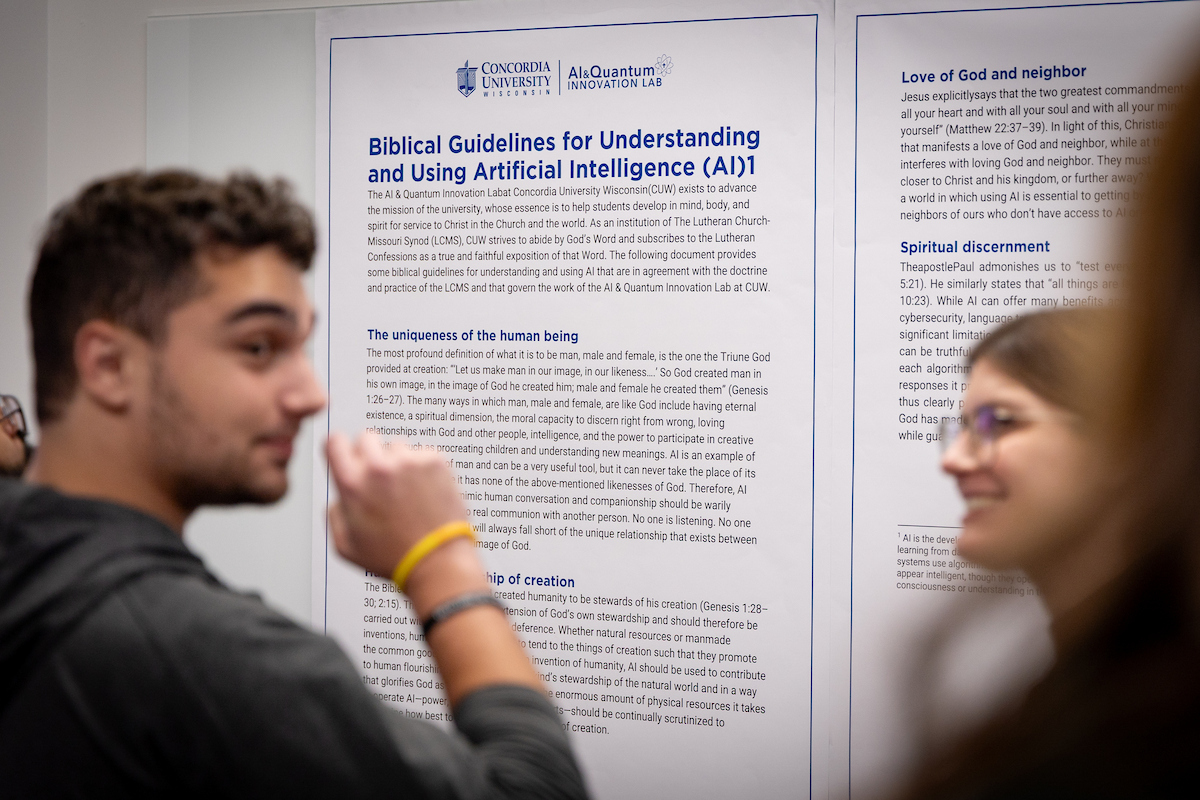
The launch of BoodleBox also aligns with CUW’s Artificial Intelligence Governance Plan, developed by the university’s Strategic Task Force on AI. The plan establishes expectations for ethical AI use, rooted in the university’s Christian commitment to integrity, stewardship, human dignity and care for one another. It outlines responsibilities for students, faculty and staff while preserving academic freedom through flexible syllabus policies.

“Our goal is not to prescribe how faculty teach,” Dvorak said. “It is to provide clear guidance so expectations are transparent and AI use supports meaningful learning.”


Training and what comes next

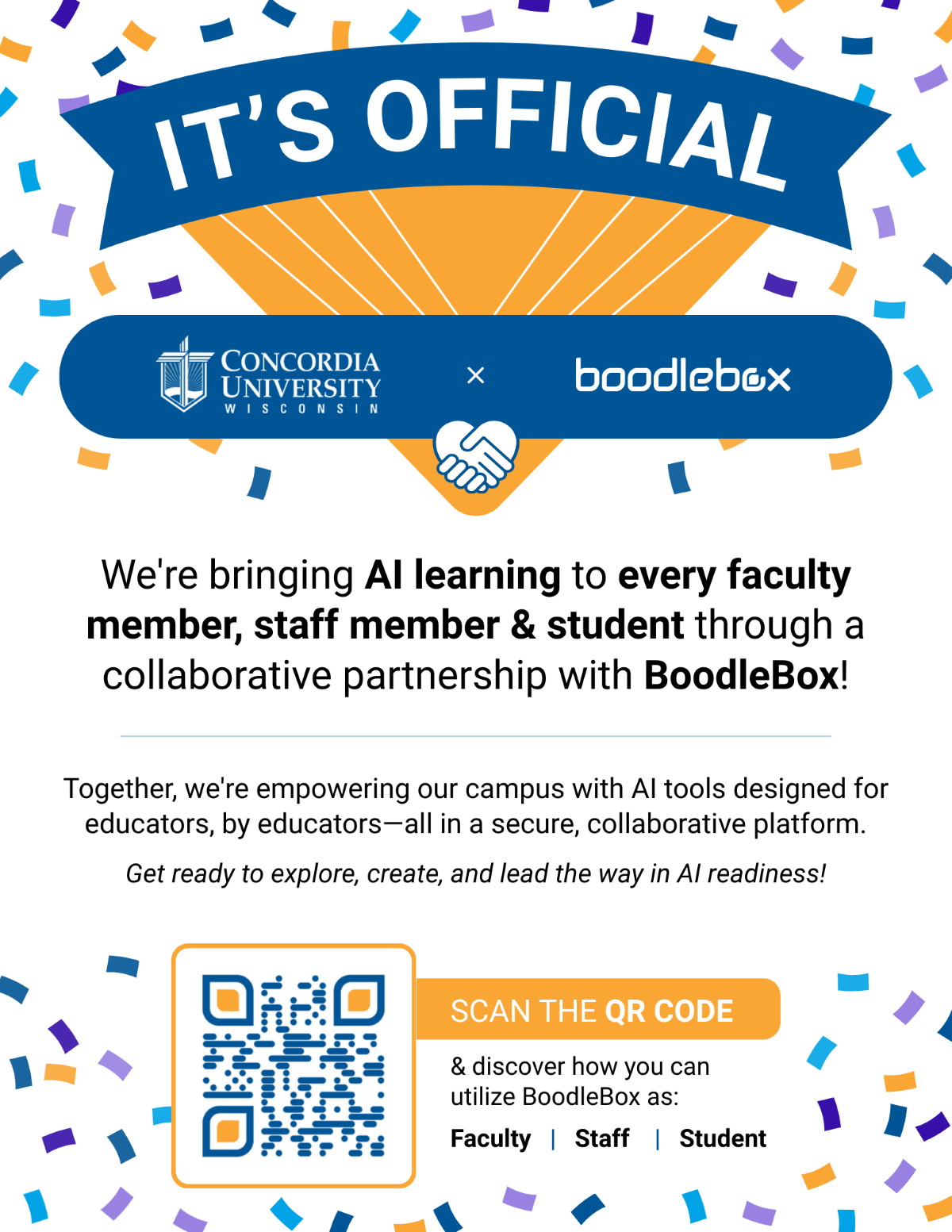
BoodleBox template with QR code

Discipline-specific training is a key part of that approach. CUW’s goal is for every student, in every program, to receive instruction on how AI is used within their field. Training opportunities for faculty, staff and students will begin shortly after the platform’s launch and will be offered both in person and online, with ongoing support through the Center for Excellence in Learning and Teaching and Information Technology.

As CUW continues to expand its work in artificial intelligence, including new undergraduate and graduate programs, BoodleBox represents a step forward that balances innovation with responsibility.

“Generative AI does not diminish education,” Litman said. “When used intentionally, it can restore curiosity, reflection and meaningful intellectual engagement.”

“This is an important moment for our campus,” Dvorak said. “We are embracing new technology in a way that reflects who we are and prepares our students for meaningful work and service.”

While there will always be a place for an unplugged classroom, Dvorak added, more faculty are finding creative ways to incorporate ethical and transparent AI use into assignments rather than banning it altogether. A recent faculty survey showed that more than two-thirds of CUW courses already include some form of AI-related learning opportunity for students.

Updated on Jan. 7, 2026.


Further exploration

computer station

Want in?

Concordia University Wisconsin is a Lutheran higher education community committed to helping students develop in mind, body and spirit for service to Christ in the Church and the world.


Looking Back: 10 Noteworthy News Stories of 2025

As the year comes to a close, our staff has compiled a list of stories from 2025 highlighting some of the year’s most notable developments. Why? Because publishing an article that said “all” simply was not practical — even for us. We hope you enjoy them, and the new year.

Here are 10 end-of-the-year picks, presented in a countdown format. These are not listed in order of significance.


people in crowd

No. 10 – In the media: Concordia honors students, campus safety officers who helped save Humberto Barraza’s life

On March 12, the Concordia community came together to honor the heroic actions of students and celebrate CUW student Humberto Barraza’s miraculous survival and recovery.


skeleton graphic

No. 9 – Bringing Anatomy to Life: CUW’s New Anatomage Table Enriches Learning Across Health Programs

The Anatomage Table is a life-size touchscreen digital anatomy system that uses high-resolution images from real human cadavers to provide students with a safe, interactive way to explore the human body in support of the university’s mission to develop skilled, compassionate health professionals.


hall of fame graphic

No. 8 – Falcons Athletics induct Hall of Fame class of 2025

Concordia University Wisconsin has announced the Concordia Wisconsin Athletics Hall of Fame Class of 2025: Cara (Landherr) Grilli, Eric Kittel and Tom Saleska.


Steve Gorbes graphic

No. 7 – Cutting Through the Noise: Steve Forbes on the Future of America’s Economy

At CUW’s annual Liberty, Faith, and Economics Summit, Forbes summed up the day with his keynote speech, leaving students hopeful and inspired.


people in courtroom graphic

No. 6 – New CUW-Marquette 3+3 program offers accelerated path to law degree

The innovative 3+3 Pre-Law Program allows qualifying CUW undergraduates to complete both their bachelor’s degree and a Juris Doctor (JD) degree in just six years, saving students a full year of education and providing an accelerated route to becoming an attorney.


football graphic

No. 5 – Concordia University Wisconsin to Join College Conference of Illinois and Wisconsin in 2027

CUW announced that it has accepted an invitation to join the College Conference of Illinois and Wisconsin, one of the premier NCAA Division III conferences in the nation. CUW will officially begin competing as a CCIW member in the 2027–28 academic year. 


aerial of campus

No. 4 – CUW Named a Top 10 University in Wisconsin

CUW has once again been recognized among the top universities in the state, earning a place in the Top 10 of the 2025 Niche rankings. The Milwaukee Journal Sentinel reported on the announcement, highlighting the best colleges across Wisconsin and affirming CUW’s standing among the state’s leaders in higher education.


woman with kid

No. 3 – Back-to-Back! CUW Speech, Language & Hearing Clinic Voted ‘Best of Milwaukee’ for Second Consecutive Year

We are thrilled to announce that the Speech, Language & Hearing Clinic at CUW has once again been voted “Best Speech Therapist” in Milwaukee by the readers of the Shepherd Express.


people talking in new lab

No. 2 – A new era of innovation: CUW opens AI & Quantum Innovation Lab to inspire servant leaders in science, technology

Students, faculty, staff and community members gathered October 7 to celebrate the unveiling of CUW’s new AI & Quantum Innovation Lab on campus.


black and white nursing image

No. 1 – DE-MSN: A Beacon of Hope for the Future of Nursing

A new program invites career changers to answer God’s call to serve. CUW has launched a new Direct Entry Master of Science in Nursing (DE-MSN) program to help you make your move — and make it meaningful.


Want in?

Concordia University Wisconsin is a Lutheran higher education community committed to helping students develop in mind, body, and spirit for service to Christ in the Church and the world.


Jumpstart! to Pharmacy: CUW Builds a Pipeline Years Before PharmD Coursework Begins

Early access programs, faculty mentorship and community partnerships introduce high school students to pharmacy careers.


At Concordia University Wisconsin, pharmacy education begins years before students enter PharmD coursework.

Through partnerships with local schools, national organizations and community supporters, CUW School of Pharmacy faculty create early access to pharmacy education for high school students through the Jumpstart! to Pharmacy program. These experiences help students understand the profession, its impact and viable pathways into health care.

faculty standing together
Wisconsin Association of School Boards (WASB) Business Honor Roll, presented by Greendale School District (2025). Dr. MIchael Pickart is in the middle.

This work was recently recognized by the Greendale School District, which honored Dr. Michael Pickart, professor in the CUW School of Pharmacy, and Dr. James Lokken, ’14, associate professor of pharmacy practice, for their leadership in youth apprenticeship and outreach initiatives.

Pickart said he and Lokken are grateful for the recognition, noting that many employers are unaware of the impact high school youth apprentices can have within their practices. Work-based learning opportunities play a vital role in supporting the development of much-needed future health care professionals and employees.

“We are confident that future Jumpstart! to Pharmacy endeavors will address these challenges while uplifting youth who may not yet recognize their passion for caring for others or clearly identify the health care career pathways they aspire to pursue,” Pickart said.


From classroom to career

Jumpstart! to Pharmacy is the CUW School of Pharmacy’s youth apprenticeship program. It introduces high school juniors and seniors who participate in the Boys and Girls Clubs of Greater Milwaukee Brighter Futures Program to the pharmacy profession through hands-on learning, mentorship and exposure to professional practice.

students in scrubs

The program was created during the 2023–24 academic year and first piloted in the 2024–25 academic year. Initially supported by a grant from the National Association of Chain Drug Stores (NACDS) Foundation, Jumpstart! to Pharmacy provides:

  • Early exposure to pharmacy and health care careers
  • Direct engagement with CUW faculty and pharmacy students
  • Clear insight into the academic and professional expectations of a PharmD pathway

Jumpstart! to Pharmacy has since received national recognition from the National Association of Chain Drug Stores and sustained philanthropic support from the PNC Foundation, including a recent funding renewal.

For CUW, Jumpstart! represents a long-term investment in the future pharmacy workforce.


Learning side by side with future pharmacists

CUW School of Pharmacy faculty and students play a central role as mentors and instructors in these programs.

Alongside Pickart and Lokken, pharmacy students have led workshops focused on:

  • Research presentation skills
  • Molecular biology techniques
  • Global health research, including work related to albinism in Tanzania

This mentorship model places high school students in direct contact with future pharmacists, strengthening access, confidence and professional awareness.

“It provides an opportunity for students to improve their understanding of medicine and gain practical skills in medication management relevant to careers in pharmacy or health care,” Pickart said.


Why the pipeline matters

Pharmacy requires leaders who are scientifically prepared, ethically grounded and committed to service.

By engaging students early, Pickart said the program aims to provide youth employment opportunities that help address the financial challenges faced by their families while fostering the development of health care professionals committed to serving their home communities throughout Milwaukee.

In turn, the School of Pharmacy seeks to:

  • Expand access to pharmacy education
  • Strengthen the PharmD recruitment pipeline
  • Build sustained school and community partnerships
  • Support vocational discernment alongside academic preparation

Recognition from the Greendale School District affirms the impact of this work beyond the university campus.


Looking ahead

Programs such as Jumpstart! to Pharmacy reflect Concordia’s mission and define its approach to pharmacy education. For students considering a PharmD pathway, CUW offers early access, sustained mentorship and a learning community grounded in service.


Want in?

Concordia University Wisconsin is a Lutheran higher education community committed to helping students develop in mind, body, and spirit for service to Christ in the Church and the world.


Maddie Brashaw and Hollie Smith are CUW Students of the Month

CUW is pleased to honor two outstanding students every month, one undergraduate student and one graduate student. Congrats to Maddie and Hollie!


Undergraduate Student of the Month

Maddie Brashaw is a Biomedical Sciences major. She is an extremely high academic achiever in a very difficult science major despite many extracurricular demands on her time.  She is a leader on the women’s tennis team. She has served as an Supplemental Instruction (SI) leader and tutor for a number of difficult Biology and Chemistry classes. She has conducted research investigating how mutations in the cohesin complex contribute to leukemia. She has served on the board for the pre-medicine club for 2+ years and took over as president this year.  She has also worked with Appalachia Service Project helping build homes for impoverished families. She is currently a senior who is applying to medical schools. Maddie will make an excellent physician in the near future!  She truly lives out the mission of CUW!

Maddie was nominated by Dr. Joseph Fisher.


Graduate Student of the Month

Hollie Smith is a third-year Pharmacy student who has excelled in her coursework while also being active in scholarship and service to the community. She is currently writing a journal article on a new pain management medication called suzetrigine which will be peer-reviewed and published in the Journal of the Pharmacy Society of Wisconsin (JPSW). Additionally, through one of her course projects, she is putting together care packages for homeless individuals she would pass every week on her way to her pharmacy rotation. Thoughtful on its own, Hollie went even further by researching what these individuals are most likely to want or need. Through this research she created her own care packages which included warm socks, utensils, hand sanitizer, hygiene products, fruit snacks, granola bars, etc.

Hollie was nominated by Dr. Jordan Wulz.


Concordia University Wisconsin has been awarding Student of the Month since 2016. Want to see our previous Student of the Month awardees? Take a look here!


Want in?

At Concordia University Wisconsin, we believe that education is at the junction of faith and learning. That means that we get to know you personally – your unique gifts and skills – so that we can help you develop fully in mind, body, and spirit to achieve your highest potential. To learn more or to apply, click the link below.