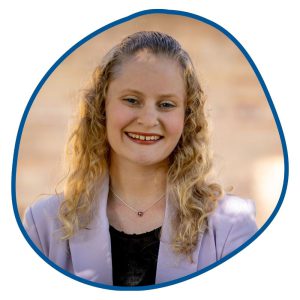
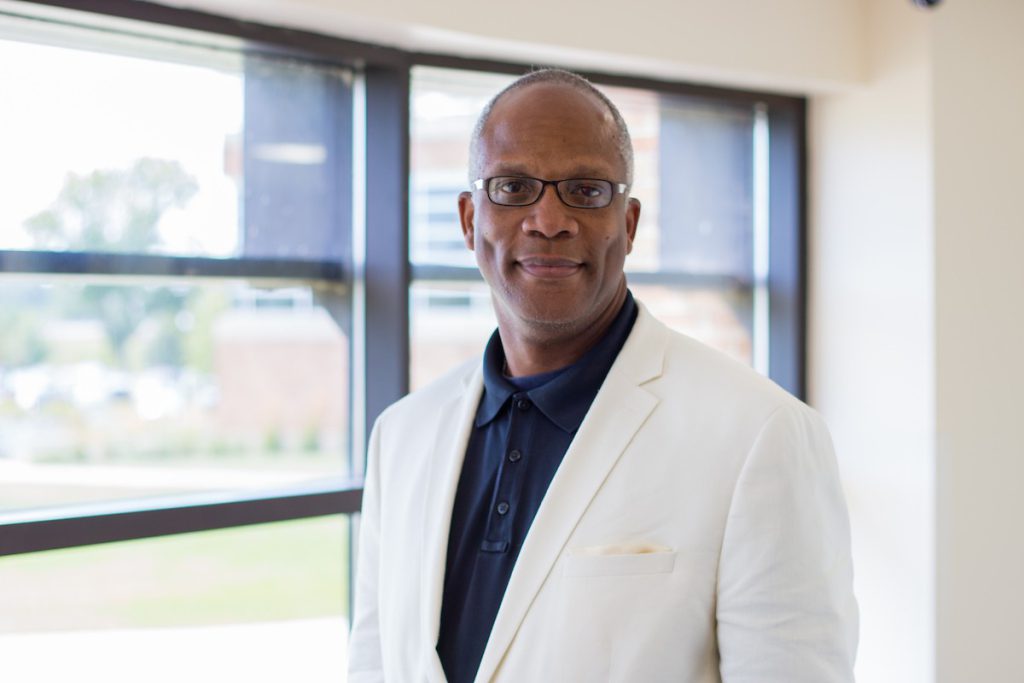
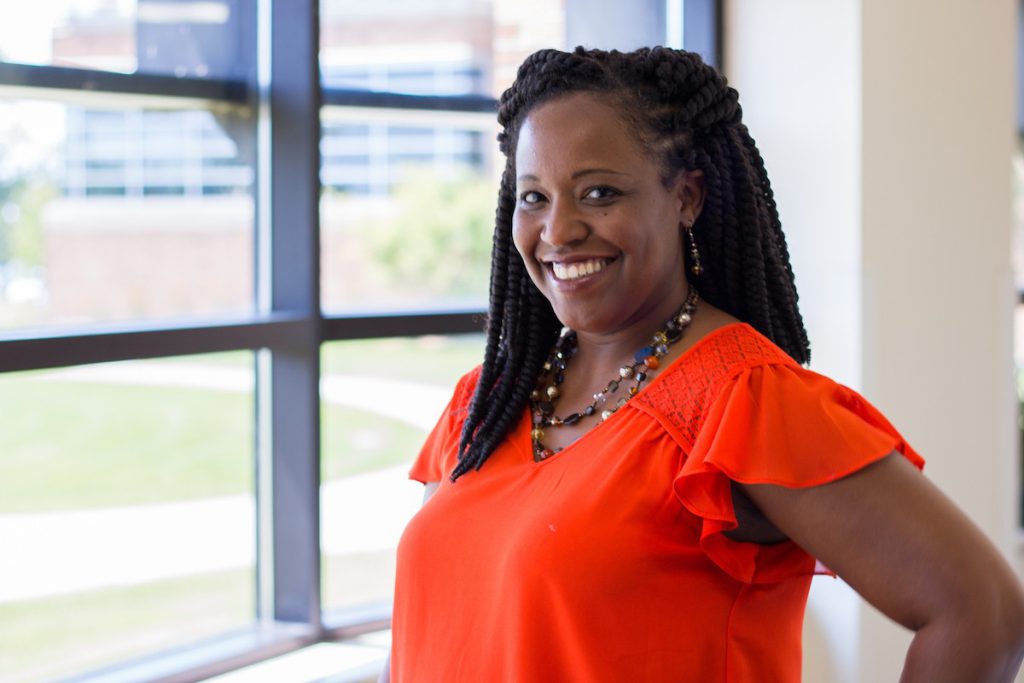
From Living Word Lutheran to Concordia University Wisconsin, the sophomore justice and public policy major reflects on faith, community and growth during his college journey.
National Lutheran Schools Week (NLSW) celebrates the impact of Lutheran education across the country by highlighting God’s work in schools of The Lutheran Church—Missouri Synod. More than 1,800 LCMS preschools, elementary schools and high schools serve over 160,000 students nationwide, pairing strong academics with a clear Gospel foundation. At CUW, that mission continues as students from Lutheran schools arrive prepared, motivated and eager to serve.
In honor of National Lutheran Schools Week, Concordia is highlighting several CUW students who are proud graduates of Lutheran high schools. One of them is sophomore Jadon Lewis, a graduate of Living Word Lutheran High School.
Student Snapshot
Name: Jadon Lewis High School: Living Word Lutheran Year at CUW: Sophomore Intended Graduation Date: May 2028 Major:Justice & Public Policy
Q&A with Jadon Lewis
How has Concordia helped you grow in mind, body or spirit during your time here? Concordia has pushed me in many positive ways. Academically, professors and classes challenge me to think more deeply and apply what I am learning to everyday situations. Spiritually, chapel and small group conversations have helped me stay focused and grounded when life gets busy or coursework feels heavy. I have also grown through friendships that encourage me to stand confidently in my faith and pursue my goals. Physically, being part of the CUW football team has helped me develop better habits and continue pushing myself. Overall, Concordia cares about developing every part of who I am, not just the academic side.
What moments on campus have made you feel most supported, welcomed or part of a community? Coming in as a freshman, I was excited but also nervous about adjusting to college life. I didn’t know anyone, and everything felt new and overwhelming at times. From our very first football team meeting, the captains and older players went out of their way to welcome us, learn our names and help us navigate campus. From practices and workouts to shared meals in the cafeteria, we built real relationships through moments of hard work and laughter. That early support showed me how much the university wants students to succeed and feel welcomed as part of the community.
In what ways have Concordia’s professors or staff made a meaningful difference in your college journey? My professors have made a strong impact because they care about students beyond the classroom. They take time to explain assignments, encourage questions and connect coursework to real life. I have had professors pray over the class before exams and regularly check in when I was injured or sick. Advisors, coaches and other staff members have also helped me set goals and stay focused. Knowing there are adults here who truly want to see you grow makes the college experience more meaningful.
What would you want a high school student to know about life at Concordia and why it’s been a great place for you? I would tell a high school student that Concordia is a place where you can be yourself while still being challenged to grow. People here are genuine, and the campus has a peaceful atmosphere that makes it easy to connect with others. Professors pray with and for you, and they take time to get to know you as a person. It is clear they want you to succeed, which is not something you find everywhere. You are never just a name on a roster, and there are many opportunities to get involved and find your place. For me, Concordia has been a great mix of support, community and personal growth.
Concordia University Wisconsin is a Lutheran higher education community committed to helping students develop in mind, body and spirit for service to Christ in the Church and the world.
Leading students in faith, service and life through classroom and competition.
This week, Concordia University celebrates four alumni who have been recognized with 2026 South Wisconsin District Teacher of the Year Awards.
Their work reflects a deep commitment to excellence, compassion and purpose. Grounded in faith and called to serve, each educator lives out their vocation in the classroom, making a lasting difference in the lives entrusted to their care. This recognition is not only a professional honor, but also a testament to the way a Concordia education prepares graduates to lead and serve with integrity in the world.
Kyle Jagler
Middle school math/athletic director at Immanuel Lutheran in Brookfield, Wis. 2006 alumnus with a bachelor’s degree in Elementary Education
How has your understanding of teaching as a Christian vocation shaped the way you serve your students and school community each day?
I truly value the opportunity I have each day to be part of building young lives. As a Christian educator teaching in a Lutheran school, I not only have the privilege but also the responsibility to instruct each student to live a God-pleasing life, serving Him and others. I believe leading by example is a powerful way to accomplish this God-given task.
Can you share a moment in your teaching journey when you clearly saw God at work through your classroom or relationships with students?
It has been a joy and privilege to teach in many different places where God has called me to serve. I have witnessed students being baptized and students coming to understand who God is and the plan He has for them. Some of my favorite memories with students, when I have seen God at work, are during opportunities to serve together. We have served at Soles For Jesus and Feed My Starving Children. In those moments, I have seen students work together purposefully, with big smiles on their faces, for people they will most likely never meet.
Sadly, I have also attended multiple funerals for former and current students. At each funeral, I connected with students. In those moments of sadness and grief, there were reflections of a “bigger picture.” Through tears and hugs, we were able to have conversations rooted in the knowledge that heaven is our home someday through our hope and faith in Jesus.
Looking back on your time at Concordia, what experiences or mentors most prepared you to teach with excellence, compassion and confidence in Christ?
Concordia was a place where I felt my faith was ignited. Being on your own and managing your own time can be tricky at that age, but making the decision to worship with other believers of a similar age was important to me.
As I reflect on my education at Concordia, I have to say a big thank you to all of my block teachers. Each one of them was an excellent educator. They were personable, relatable and transparent in their teaching, and they were willing to share their experiences and faith. They had the best interests of every student in mind, which was evident in their teaching. I appreciated being able to go to them with questions and receive thoughtful feedback based on their experiences.
What encouragement would you offer to current Concordia students or future teachers who feel called to serve in Lutheran education today?
You never know where God is calling you to serve, but it is important to trust in that calling. God has a plan for each of us. We do not always know or understand that call, but He has a purpose for placing us where we need to be and where He needs us to be. Wherever God places us, it is important to establish and build positive relationships with students and families.
What’s your favorite thing about CUW?
I loved my time at CUW. During my years there, my favorite experiences were playing tennis and being part of Resounding Joy. I had the privilege of forming lifelong friendships and connections during my time on campus. It has been exciting to see the continued growth of CUW as it expands and provides meaningful degrees across a variety of vocations.
Concordia University Wisconsin is a Lutheran higher education community committed to helping students develop in mind, body and spirit for service to Christ in the Church and the world.
From Martin Luther High School to Concordia University Wisconsin, the biomedical sciences major reflects on faith, focus and purpose during the early years of her college journey.
National Lutheran Schools Week (NLSW) celebrates the impact of Lutheran education across the country by highlighting God’s work in schools of The Lutheran Church—Missouri Synod. More than 1,800 LCMS preschools, elementary schools and high schools serve over 160,000 students nationwide, pairing strong academics with a clear Gospel foundation. At CUW, that mission continues as students from Lutheran schools arrive prepared, motivated and eager to serve.
In honor of National Lutheran Schools Week, Concordia is highlighting several CUW students who are proud graduates of Lutheran high schools. One of them is Jadin Bagley, a biomedical sciences major expected to graduate in 2029 and a graduate of Martin Luther High School.
Student Snapshot
Name: Jadin Bagley High School: Martin Luther High School Year at CUW: First year Intended Graduation Date: 2029 Major: Biomedical Sciences
Q&A with Jadin Bagley
How has Concordia helped you grow in mind, body or spirit during your time here? Concordia has provided me with rigorous academics that challenge me, while small class sizes and additional resources have allowed me to push myself beyond my limits. There are many opportunities to get involved through sports, clubs and intramurals, which have helped me grow both mentally and physically. Christ is at the center of my classes and present in campus activities, which has allowed me to stay grounded in my faith. Through these experiences, I have begun to better understand how Christ has called me into my vocation.
What moments on campus have made you feel most supported, welcomed or part of a community? Move-in day and the first week on campus were some of the most welcoming experiences I have had at CUW. From the moment I arrived, my RA and other students made me feel supported and excited to be here. The activities planned for first-year students helped create a strong sense of community through group bonding, shared experiences and preparation for the semester ahead. That first week made me feel confident and excited to continue my journey at Concordia.
In what ways have Concordia’s professors or staff made a meaningful difference in your college journey? The professors at CUW genuinely want their students to succeed. As a new student, adjusting to college-level coursework was challenging, especially during the first month. One of my professors reminded me that small struggles are part of the learning process and help us grow. That encouragement helped me develop a healthier mindset toward my coursework and approach challenges with patience and confidence.
What would you want a high school student to know about life at Concordia and why it’s been a great place for you? Concordia has been a place that keeps me focused and disciplined. I have developed routines and habits that help me stay motivated and work toward my goals. While the classes are challenging, the reward comes from putting in the effort and staying committed. Concordia provides an environment that limits distractions and encourages purpose-driven living. One of my favorite places to study is the second floor of the business building, where the view of Lake Michigan brings both focus and peace. I have found a sense of purpose and calm at CUW that I did not have before coming here.
Concordia University Wisconsin is a Lutheran higher education community committed to helping students develop in mind, body and spirit for service to Christ in the Church and the world.
Sharing Jesus with joy through the hearts of the youngest learners.
This week, Concordia University celebrates four alumni who have been recognized with 2026 South Wisconsin District Teacher of the Year Awards.
Their work reflects a deep commitment to excellence, compassion and purpose. Grounded in faith and called to serve, each educator lives out their vocation in the classroom, making a lasting difference in the lives entrusted to their care. This recognition is not only a professional honor, but also a testament to the way a Concordia education prepares graduates to lead and serve with integrity in the world.
Amber (Schauland) Curtis
3K teacher at Divine Redeemer in Hartland, Wis. 1998 alumna with a degree in Early Childhood Education
How has your understanding of teaching as a Christian vocation shaped the way you serve your students and school community each day?
Teaching in a Lutheran school allows me the unique opportunity to speak about Jesus each and every day. Every part of our school day revolves around Jesus. He is present in the relationships I have with the children, parents and coworkers. What a blessing it is to be surrounded by so many people who love Him.
Can you share a moment in your teaching journey when you clearly saw God at work through your classroom or relationships with students?
Each year, our 3K classes present a Christmas program to family members. The joy the little children have for Jesus radiates from them as they worship Him with their voices. Their faith shines through as they praise Him. They are always so proud to proclaim how much they love Jesus.
Looking back on your time at Concordia, what experiences or mentors most prepared you to teach with excellence, compassion and confidence in Christ?
Candy Seider and Val Keiper were amazing professors. We knew they were always cheering for us to succeed while at CUW and in our careers. Dr. J was also incredibly helpful when I was looking for my first job.
What encouragement would you offer to current Concordia students or future teachers who feel called to serve in Lutheran education today?
Listen to what God is telling you. Talk to teachers you know and ask them how they feel about serving God in Lutheran schools. I absolutely love working with Christian people who have become some of my closest friends.
What’s your favorite thing about CUW?
I met my husband at CUW and am still friends with my roommates. I have many friends who also attended CUW, and it is great to have that connection.
Concordia University Wisconsin is a Lutheran higher education community committed to helping students develop in mind, body and spirit for service to Christ in the Church and the world.
From New Lutheran to Concordia University Wisconsin, the second-year Lutheran Early Childhood General and Special Education major reflects on faith, community and growth during her college journey.
National Lutheran Schools Week (NLSW) celebrates the impact of Lutheran education across the country by highlighting God’s work in schools of The Lutheran Church—Missouri Synod. More than 1,800 LCMS preschools, elementary schools and high schools serve over 160,000 students nationwide, pairing strong academics with a clear Gospel foundation. At CUW, that mission continues as students from Lutheran schools arrive prepared, motivated and eager to serve.
In honor of National Lutheran Schools Week, Concordia is highlighting several CUW students who are proud graduates of Lutheran high schools. One of them is Margaret Herbrich, a second-year student majoring in Lutheran Early Childhood General and Special Education and a graduate of New Lutheran High School.
Student Snapshot
Name: Margaret Herbrich High School: New Lutheran Year at CUW: Second year Intended Graduation Date: December 2027 Major: Lutheran Early Childhood General and Special Education
Q&A with Margaret Herbrich
How has Concordia helped you grow in mind, body or spirit during your time here? I have grown in mind, body and spirit during my time at Concordia. In just three semesters, my knowledge has increased significantly, and I feel confident that I will be prepared to teach when my time here is complete. The campus environment has also encouraged me to focus on my physical health, especially with Lake Michigan nearby, which motivates me to get outside and stay active. Spiritually, Concordia has had the greatest impact. There are many ministries to get involved in, and the community built through them is unmatched. Through daily chapel, Wednesday evening prayer and nightly services, I have been able to fully immerse myself in God’s Word. My religion and theology classes have also helped build a strong foundation for my faith. I cannot express how many ways Concordia has helped me grow in every area of my life.
What moments on campus have made you feel most supported, welcomed or part of a community? One of the first moments that stands out was attending my first Youth Ministry meeting. The room was full, everyone was joyful and so many people made an effort to welcome me and get to know me. As I continued attending, I quickly found a community of people who love God and share that love with children. Retreats through LIGHT, Youth Ministry and the Campus Ministry Leadership Team have also been meaningful experiences that strengthened my sense of support and belonging. Even something as simple as walking through campus and recognizing familiar faces each day creates a welcoming environment. Concordia has helped me build strong friendships rooted in faith and support.
In what ways have Concordia’s professors or staff made a meaningful difference in your college journey? Concordia’s professors and staff have made a lasting impact on my experience. They have provided me with tools to succeed academically and professionally while also helping me grow in confidence and understanding. They genuinely care about my success and about me as a person. My professors take time to get to know me, which motivates me to work harder in their classes. Because of them, my education feels personal. I am not just a number, but an individual who is seen and supported.
What would you want a high school student to know about life at Concordia and why it’s been a great place for you? Concordia truly feels like home. Students here are welcomed, encouraged and cared for in meaningful ways. There are many opportunities to get involved through clubs, ministries and leadership roles, and it does not take long to find where you fit. I have found ways to serve that align with who I am, and along the way I have built strong friendships and met incredible people. There truly is something for everyone at Concordia, and I am receiving a quality education with personal attention from professors who want to see me succeed.
Concordia University Wisconsin is a Lutheran higher education community committed to helping students develop in mind, body and spirit for service to Christ in the Church and the world.
Seeing every child as God’s own through a life of Lutheran education.
This week, Concordia University celebrates four alumni who have been recognized with 2026 South Wisconsin District Teacher of the Year Awards. Over the next four days, we will feature one of these outstanding educators and the work they are doing to serve students and communities.
Their work reflects a deep commitment to excellence, compassion and purpose. Grounded in faith and called to serve, each educator lives out their vocation in the classroom, making a lasting difference in the lives entrusted to their care. This recognition is not only a professional honor, but also a testament to the way a Concordia education prepares graduates to lead and serve with integrity in the world.
Autumn Bynum
4K teacher at Immanuel Lutheran School in Brookfield, Wis. 2009 alumna with a bachelor’sdegree in Early Childhood Education
How has your understanding of teaching as a Christian vocation shaped the way you serve your students and school community each day?
I have come to understand that a Christian vocation is not just a profession, but a calling to serve God by serving the students in my class and the families of our school. This understanding has shaped the way I approach each day with my students, families, coworkers and congregation members.
I strive to see every student as created in the image of God, deserving of dignity, patience and compassion—especially when learning is challenging or behavior is difficult. Rather than focusing only on academic outcomes, I aim to nurture the whole child — intellectually, emotionally, socially and spiritually — modeling Christ’s love through consistency, fairness and grace.
This sense of calling also guides how I serve the school community. I view collaboration with colleagues, support of families and participation in school life as extensions of my ministry. Even small, unseen acts — listening attentively, offering encouragement, praying for students or showing forgiveness — become meaningful ways to live out my faith. Grounded in the example of Christ as the ultimate teacher and servant, I approach my work with humility and purpose, trusting that God can use my daily efforts to shape lives and build a community rooted in love, justice and hope.
Can you share a moment in your teaching journey when you clearly saw God at work through your classroom or relationships with students?
As I look back on my teaching journey, I can clearly see how God has been at work through both the joyful days and the hardest moments. My time at Sherman Park Lutheran School deeply shaped me into the teacher I am today. Even in moments of deep sorrow, God’s presence was evident through His loving hands and faithful promises.
During my years there, we lost two students within a two-year span. As teachers, we wrestled with difficult questions — wondering if we had done enough to teach them about God’s love. Those experiences profoundly changed my teaching philosophy. Teaching the faith was no longer something I saw as optional or secondary; it felt like a matter of life and death. From that point on, my goal became to show God’s love through my words and actions so that every child would know they are deeply loved by God.
There was a special group of students at Sherman Park whom I never officially taught in my classroom. Often, they were sent to me when they were struggling, in trouble or simply needed a break. Over time, I was able to build trusting relationships with them and help them understand that the teachers at our school truly cared about them. After they graduated, they went on to Milwaukee Lutheran High School, where my husband served as their basketball coach. That connection allowed me to continue checking in on them — stopping by on my days off, bringing treats and reminding them that they were still loved and supported.
Years later, one of those students was tragically killed in a car accident. At his funeral, I experienced a deep sense of peace. I knew that we had done everything we could to show him God’s love, and I trusted in the promise that one day we would be reunited in heaven. That moment reaffirmed why I live and teach the way I do.
I approach each day with the understanding that it could be my last opportunity to impact a child’s life. My hope is that every student I encounter knows they are loved — by me and by God — not because of anything they have done, but simply because God is that amazing.
Looking back on your time at Concordia, what experiences or mentors most prepared you to teach with excellence, compassion and confidence in Christ?
During my time at Concordia, the professor who had the greatest impact on me was Dr. Candice Seider. She was my professor for a course called Teaching the Faith, which I took during a block at the end of my time at Concordia. In this class, we focused on how to teach children about God in meaningful, age-appropriate ways. Much of our time was spent creating plans for fun, engaging and faith-filled lessons.
What stood out to me most was Dr. Seider’s deep love for Jesus, storybooks and music. Those passions have greatly shaped the way I teach my young students today. I love reading stories to my students and am always searching for well-written books that teach the truth about how amazing God truly is. Music is also one of my favorite tools to use in the classroom—there is something powerful about music and the way it helps children connect emotionally and spiritually to what they are learning.
I am truly blessed to have had Dr. Seider as a professor, and I believe God has used her and her family to bless my family as well. I have remained connected with the Seider family beyond the walls of Concordia. We are friends with her son, Blake, and his family, and I had the privilege of teaching alongside her daughter-in-law at Immanuel, where we taught 3K together. Our children are around the same age as her grandchildren; they attend Immanuel, play on the same sports teams and even share some of the same classes.
I often see Dr. Seider at church and school events, and each time I am reminded of the profound impact she has had on my life. I am continually thankful for the incredible example she has been to me — not only as an educator, but as a faithful Christian who lives out her calling with joy and purpose.
What encouragement would you offer to current Concordia students or future teachers who feel called to serve in Lutheran education today?
To current Concordia students and future teachers who feel called to serve in Lutheran education, I would encourage you to trust that your calling truly matters. Teaching in Lutheran schools is not always easy, but it is deeply meaningful work. God places you exactly where you are needed, and He works through your daily interactions with students in ways you may not always see right away. Every lesson taught, every conversation held and every moment of patience or grace shown is an opportunity to reflect Christ’s love.
Lean into the community around you — your classmates, professors, mentors and colleagues — because Lutheran education is never meant to be done alone. Stay rooted in prayer and God’s Word, especially on challenging days, and remember that your faith is just as powerful a teaching tool as your lesson plans. Most importantly, remember that you are shaping hearts as well as minds. When Christ remains at the center of your work, God will use your vocation to bless not only your students, but families, schools and communities for generations to come.
What’s your favorite thing about CUW?
My time at CUW was one of the most meaningful seasons of my life. From the moment I stepped onto campus, I knew it was the perfect place for me. The students and staff were welcoming and genuinely cared about me as a person. During my time there, I was blessed to be a member of the softball team, which quickly became an extension of my family.
I also met my husband, Billy Bynum, while at Concordia (a 2006 graduate). He played both basketball and baseball at CUW. Billy and I were married in 2009 by President Dr. Ferry in the Chapel of Christ Triumphant, surrounded by many CUW students and staff who had a lasting impact on our lives.
For the past 17-plus years, we have continued to live out the mission that began at Concordia by teaching in Lutheran schools. Billy taught at Milwaukee Lutheran for 17 years and now serves as director of athletic advancement at Living Word, where our oldest daughter currently attends. I taught at Sherman Park Lutheran School from 2009–15 and have been teaching at Immanuel Lutheran School in Brookfield for the past 11 years.
We have loved teaching future Concordia students, and it brings us great pride to watch them go on to live full lives with Christ at the center of all they do.
Concordia University Wisconsin is a Lutheran higher education community committed to helping students develop in mind, body and spirit for service to Christ in the Church and the world.
Concordia University Wisconsin is gaining attention beyond campus for its thoughtful and innovative use of artificial intelligence.
In recent weeks, the university’s new AI tools, which are scheduled to launch in February, have been featured in two separate media venues, underscoring Concordia’s growing role in shaping conversations about technology, ethics, and education. A television interview with Dr. Michael Litman, professor and chair of the Department of Computer Science, offered a firsthand look at how these tools will be used in the classroom, while a local online publication amplified Concordia’s message by picking up the university’s own story. Together, the coverage reflects how Concordia’s work in AI is resonating with the wider community.
Dr. Michael Litman
Fox6 Milwaukee
Litman spoke with Fox6 Milwaukee host Ted Perry in a 12-minute segment, a notably long conversation by television standards, allowing time for meaningful discussion about how Concordia is approaching artificial intelligence in higher education.
The extended format gave Litman the opportunity to explain not only what the tools do, but why Concordia is committed to using AI thoughtfully, responsibly, and in service to student learning.
In addition to the television spotlight, Concordia’s AI tools were also featured in an online story by Urban Milwaukee, extending the reach of the university’s message through a respected local digital publication. The piece drew from Concordia’s own story and highlighted how the university is integrating artificial intelligence into teaching and learning with intention and care. By amplifying Concordia’s perspective for a broader civic audience, the coverage reinforced the university’s role as a thoughtful contributor to regional conversations about emerging technology and its impact on education.
Want in?
Concordia University Wisconsin is a Lutheran higher education community committed to helping students develop in mind, body and spirit for service to Christ in the Church and the world.
The LICI PhD will grow your influence with purpose and integrity.
If you are considering doctoral study, you are likely already leading in meaningful ways — asking deeper questions and shaping organizations to work better for people and purpose. Concordia University Wisconsin’s PhD in Leadership in Innovation and Continuous Improvement, known as LICI, was designed for leaders like you.
Beginning this coming academic year, CUW will offer the LICI PhD with a business emphasis. The program is delivered collaboratively by the Batterman School of Business and the School of Education, bringing together faculty expertise in leadership, organizational change, research and professional practice.
Amber Gray, EdD, CPA, MSA, director of academic innovation and professor of accounting, said many professionals who consider doctoral study want to deepen their leadership rather than step away from it.
“Many business professionals who consider doctoral study are already leading teams, driving strategy and making complex decisions in dynamic environments,” Gray said. “What they need is not just deeper business knowledge, but the ability to lead change, innovate responsibly and continuously improve systems and processes.”
The LICI PhD with the business emphasis prepares experienced leaders to apply research, innovation and improvement in ways that strengthen organizational performance and support meaningful change.
Many disciplines, one reality
Many prospective doctoral students share a common goal: to deepen their knowledge while continuing to work and lead. At the same time, they recognize that today’s organizational challenges rarely exist within a single discipline.
The LICI PhD reflects that reality. The program integrates leadership studies, improvement science and research preparation to equip scholar-practitioners to guide change across sectors. Students develop skills in data-informed decision-making, systems thinking and organizational improvement that apply across industries, including business, health care, education, engineering, nonprofit organizations and consulting.
For professionals who may have previously explored a PhD in business administration or a DBA, the LICI PhD with a business emphasis offers a clear and credible pathway forward. Rather than narrowing doctoral study, the program broadens it while maintaining a strong focus on applied business and organizational research.
Two emphases, one PhD
The LICI PhD is a 60-credit doctoral program offering two emphases: business and interdisciplinary leadership. Both pathways lead to the same PhD degree and share a common doctoral core in leadership, research and continuous improvement.
“Students select an emphasis that aligns with their professional goals,” Gray said. “The business emphasis is designed for professionals who want a stronger grounding in traditional business content, whereas the interdisciplinary leadership emphasis serves professionals who lead across systems or sectors and want a broader approach.”
While the emphases differ in focus, both pathways allow students to align doctoral study with their professional roles, responsibilities and long-term goals.
Structured for you
Doctoral study is demanding, and the LICI PhD is intentionally structured to support working professionals and executive leaders.
Students progress through the program as part of a cohort, building professional relationships while benefiting from shared learning and accountability. Small class sizes and faculty mentorship across two schools help ensure students are supported throughout coursework and research.
One of the program’s defining features is early and sustained engagement in the dissertation process. Students begin working on their research early and are paired with a dissertation chair from the start.
“We are very intentional about helping students finish,” Gray said. “That structure keeps students moving forward, prevents them from stalling after coursework is complete and provides consistent support throughout the entire dissertation process.”
Research with purpose
At its core, the LICI PhD is a research-focused doctorate. Students receive preparation in both qualitative and quantitative research methods, equipping them to design and conduct studies that inform leadership decisions and organizational improvement.
Research in the program is applied and practice-oriented. Students are encouraged to examine real challenges within their organizations or fields, contributing knowledge that strengthens systems and informs professional practice.
Graduates leave prepared to lead with credibility, confidence and clarity.
Want in?
Concordia University Wisconsin is a Lutheran higher education community committed to helping students develop in mind, body and spirit for service to Christ in the Church and the world. The PhD in LICI is a flexible, faith-shaped doctoral journey for working professionals who want to deepen their scholarly expertise, publish research, and influence systems across education, business, healthcare, ministry, and nonprofit settings.
This program allows full-time professionals to advance academically without pausing their careers. You will strengthen your expertise in Leadership, Research, and Improvement Science & Innovation — three pillars that power meaningful, evidence-based change.
Introducing a more affordable, efficient route into high-demand helping professions.
Psychology is one of Concordia University Wisconsin’s highly sought-after majors—attracting students with a passion for people and a desire to support mental, emotional and community well-being. Now, CUW is responding to student interest and national workforce needs with a newly approved Psychology Pre-Graduate Scholar Pathway, launching fall 2026.
This Pre-Graduate Scholar Pathway enables psychology and applied psychology students to complete their major program coursework in three years, then take up to 12 graduate credits during their fourth year. These graduate credits will count toward one of CUW’s master’s programs in counseling or social work.
“The graduate and undergraduate faculty worked closely to create a pathway that would set students up for career success,” said Rachel Pickett, PhD, department chair and professor of psychology. “Many students go on to master’s programs directly after completing their bachelor’s degree.”
Meeting a growing national demand for mental health professionals
The timing couldn’t be more urgent. The U.S. continues to experience a significant shortage of mental health providers, and organizations like the American Psychological Association and U.S. Department of Labor project strong, long-term growth in:
Clinical mental health counseling
Social work
Behavioral intervention roles
“We’re still seeing a major demand for people in psychology and social work,” Pickett noted. “These are fields that require human interaction. They’re not likely to be replaced by AI. Communities need real people—professionals who can support them.”
By shortening the path to licensure-required master’s degrees, CUW is helping address workforce gaps while empowering students to start meaningful careers sooner.
How the Pre-Graduate Scholar Pathway works
The innovative design of the pathway keeps everything in CUW’s traditional psychology and applied psychology curriculums intact—nothing is removed or watered down.
“It’s the exact same degree,” Pickett emphasized. “Students still get the research experience, the practicum, the service opportunities… everything our psychology graduates are known for.”
The difference lies solely in timing:
Years 1–3: Students complete the full psychology or applied psychology major coursework.
Year 4: Students remain undergraduates but take foundational graduate courses in their chosen track (12 credits):
Clinical Mental Health Counseling
Social Work
These graduate courses later transfer directly into the corresponding CUW master’s program.
Who thrives in this Pre-Graduate Scholar Pathway model
This pathway isn’t designed for every student—but it’s a perfect fit for those who are:
Motivated, organized and self-disciplined
Confident in pursuing a graduate degree in a helping profession
Ready for an accelerated academic pace
Seeking a faster and more cost-effective route to licensure
“The students best suited for this are driven,” Pickett said. “They know they want a master’s degree. They take initiative. They’re on top of their scheduling and requirements.”
Students don’t need to choose their specific graduate track immediately; they can explore their interests and decide among the prescribed options as late as year three.
Financial benefits: Start your career sooner and save money
One of the most compelling reasons to consider the Pre-Graduate Scholar Pathway is the potential savings in tuition, time and overall debt.
Students still complete a full 120-credit bachelor’s degree—while the graduate courses are taken in year four:
Reduce the total cost of the master’s program
Shorten the overall time to degree completion
Allow students to enter the workforce a full year earlier
“Students are shaving off a full year of time and cost,” Pickett explained. “By entering the workforce sooner, and taking fewer total semesters of graduate tuition, they’re in a better financial place long term.”
For careers that begin in community agencies, schools, clinics, or nonprofit spaces, this earlier start can make a meaningful impact on financial stability.
Strengthening readiness and professional confidence
Despite the condensed timeline, students continue to benefit from every hallmark of CUW’s education:
Independent research projects
Practicum or field work experiences
Service-learning each semester
Direct interaction with community and national leaders in the field
Support from undergraduate and graduate faculty teams
“Our students are already very competitive for graduate school,” Pickett shared. “This pathway keeps everything that makes our program strong—it just moves motivated students through more efficiently.”
Student experience: What it looks like in real life
Kaylee McCarty
Kaylee McCarty, BA psychology ’25, professional counseling (CMHC) Class of 2027
“When I first toured Concordia, I knew I wanted to be here. I’ve always loved small schools, and CUW made me feel like a person—not just another number on a class roster. During my undergraduate years, I majored in psychology, earned minors in athletic coaching and social science, completed the compassionate care certificate, and stayed active through SGA, Psych Club and the women’s golf team. When it came time to choose a graduate program, I felt an unmistakable pull to stay at Concordia and continue my education in a place that had already shaped me so deeply.”
Kaylee is now pursuing her Master of Science in professional counseling on the clinical mental health counseling track, with plans to graduate in May 2027.
“I chose counseling because I want to help the children of tomorrow. Since 2019, I’ve lived with multiple chronic conditions—that journey changed me. God has given me the ability to be strong, compassionate and patient—qualities I want to use to support children and adolescents who are navigating their own long-term health struggles. Recovery can take time. It can be frustrating. I want to be someone who understands that firsthand and can walk alongside them.”
CUW offers a Christ-centered education, preparing students for service. The psychology department emphasizes a biblical worldview of human nature, providing students a strong foundation that they can continue to build on in one of our graduate programs—which Kaylee is doing.
Her lived experience has shaped not only her calling, but also how she understands the national need for mental health professionals.
“There is a huge need for counselors right now, especially professionals who bring different experiences to their work. Clients deserve to find someone they connect with—someone who makes them feel safe enough to grow.”
Although Kaylee hadn’t encountered the newly announced Pre-Graduate Scholar Pathway during her own enrollment, she sees value in making clear, advanced routes available for motivated students like herself.
Begin your career in counseling or social work sooner
Whether your calling lies in helping children navigate school, supporting individuals through mental health challenges, or advocating for families and communities, CUW’s Pre-Graduate Scholar Pathway in psychology or applied psychology helps you begin that journey with greater efficiency—and without sacrificing depth or quality.
If you’re a motivated student with a heart for service, this is your opportunity to start making a difference sooner.
Want in?
Concordia University Wisconsin is a Lutheran higher education community committed to helping students develop in mind, body and spirit for service to Christ in the Church and the world. Christ’s example of treating all people with compassion, respect, and understanding is at the heart of the Psychology Department’s mission. In our programs you will be empowered to use your God-given talents and the skills and knowledge you gain from Psychology or Applied Psychology courses to become actively involved in serving others through various Christian vocations.
As we pause to remember the life and legacy of Dr. Martin Luther King Jr., we give thanks for his courageous witness to justice, dignity and love of neighbor.
Guided by his Christian faith, Dr. King challenged individuals and communities to seek truth, extend grace, and work faithfully toward a more just world.
In this spirit, we share two reflections from CUW faculty members, who offer thoughtful insights on faith, vocation, and what it looks like to live out Christ-centered service in our everyday lives.
Faith That Worked, Vocation That Cost, Justice That Served
The Rev. Dr. Martin Luther King Jr. is often remembered as a dreamer. Before he was a dreamer, he was a pastor. Before he was a symbol, he was a servant. Before he was celebrated, he was condemned. His legacy cannot be understood without recognizing that his faith was not decorative; it was operational, as he made clear in his 1963 book, “Strength to Love.”
Rev. Dr. King’s faith did not live in stained glass. It lived in streets, jails, pulpits, courtrooms and burial grounds. His theology was not about escape from suffering, but responsibility within it. Writing from a Birmingham jail cell in 1963, he argued that injustice anywhere is a threat to justice everywhere, insisting that Christian faith must confront social sin, not merely personal morality.
This belief shaped his vocation.
Rev. Dr. King did not treat his calling as a career. He treated it as an assignment from God. Vocation, for him, was not about personal comfort or safety. It was about obedience. He understood that purpose often demands sacrifice and that leadership often requires loneliness. In his final speech, “I’ve Been to the Mountaintop,” delivered in 1968, he accepted the possibility of death because he believed he had been called to do God’s will.
Justice, in Rev. Dr. King’s vision, was not a slogan. It was structure. It was policy. It was access. It was dignity. He did not speak only about love; he spoke about voting rights, housing, labor and economic inequality. In “Stride Toward Freedom,” published in 1958, he wrote that “true peace is not merely the absence of tension; it is the presence of justice.” He understood that reconciliation without equitable treatment is theater, not transformation.
Yet, his pursuit of justice was always anchored in service.
He never argued that Black or White people deserved power over others. He argued that all people deserved power over their own lives. His work was not about dominance — it was about deliverance. Influenced by Jesus’ model of servant leadership in Mark 10:45, he believed moral courage was the highest form of leadership, a theme later emphasized by historian Clayborne Carson in “The Autobiography of Martin Luther King Jr.”
What troubles many today is not his dream — it is his discipline. Not his hope — but his insistence. Not his speeches — but his demands.
We quote Rev. Dr. King when he comforts us. We ignore him when he confronts us. But his legacy does not belong to nostalgia. It belongs to the world.
Throughout the coming days, as we attend Chapel, attend class, and interact with administration, faculty, staff and students, we must all remember that faith that does not move is not faith, vocation that does not risk is not calling, and justice that does not disrupt evil and oppression is not justice. Thus, service to Christ and the world that does not cost is not service.
Rev. Dr. King did not give us a dream to admire. He gave us work to finish. Consequently, the question is not whether we will honor his work. The question is, are we willing to continue his work?
Hope, Truth, Courage and Vocational Calling in Divisive Times
“We are now faced with the fact that tomorrow is today. We are confronted with the fierce urgency of now.” Dr. King spoke these words exactly one year-to-the-date before he was assassinated, expressing his feelings of concern towards the Vietnam War.
On April 4, 1967, our nation and our world were embroiled in divisive cultural wars, bloody fighting wars, and spiritual and emotional upheaval much like today. The “urgency of now” ties into a burning question that seems to resonate throughout social media of “What can we do?” to heal political and cultural division, to stop the spread of spiritual/moral apathy, and to save our children (and ourselves) from a world that seems to be spiraling out of our control in the face of a digitized future of algorithmic bias and misinformation. The very thought and real presence of broken families, communities, churches, and systems from the heap of societal assaults on our conscience can overwhelm one to the point of silence.
What can you say or do to reverse the often-temporary absolutes one clings to for moral or cultural convenience?
Many wonder how to live faithfully when voices are loud, wounds are real, and unity feels like a distant memory or pipe dream. Trust can feel thin and truth elusive. Dr. King, much like his revolutionary 16th century namesake, Martin Luther, both shared a conviction that faithfulness means standing for truth even when it’s costly. Loving one’s neighbor is not optional, but tied to our Christian vocation to serve our neighbor in the ordinary facets of our life.
We are called to protect the vulnerable, acting for the good of others as an act of faith. Dr. King famously said, “Darkness cannot drive out darkness; only light can do that. Hate cannot drive out hate; only love can do that.” This echoes the words of Scripture: “The light shines in the darkness, and the darkness has not overcome it.” (John 1:5) We are called to love our neighbors and our enemies. Christian love is not weakness, though it can appear to be in a current culture obsessed with “winning.”
What has been “won” is our redemption through the Cross. Because of this prior love exemplified on the Cross, we can courageously love in a manner that embodies truth and rejects cruelty. We can aide a neighbor, even when it’s hard.
King cautions, “The arc of the moral universe is long, but it bends toward justice.” (1967) As a lifelong Theatre artist, I examine all characters and plots through “arcs,” placing an emphasis on the journey more so than the final destination. Arcs reflect transformation, embraced as superior to chronological order. They capture internal shifts in a way that sequence cannot. As I reflect on Dr. King’s statement, I think of how our human transformation is ever-evolving, inviting us to walk alongside one another as we navigate the complexities of our human experience.
Joy can be found in the journey, and it gives us hope. We can be hopeful that it ends in justice because, through Christ’s sacrifice, we have overcome. Our doctrine of vocation reminds us that God has placed us in specific callings as teachers, students, leaders, family, artists, scientists and neighbors, not to withdraw from the world in fear, but to serve within it with courage. Dr. King’s life reminds us not to imitate the world’s anger, nor to retreat in silence, but to use what God has given to serve in spaces, both significant and small.
Faithful witness does not have to involve shouting, but is showing up with compassion, grace and integrity, trusting that our call is deeper: shaped by the Gospel, serving in humility, committed to a truth that can only be formed by love. “For at one time you were darkness, but now you are light in the Lord. Walk as children of light.” (Ephesians 5:8–9)
Faith and action. Called and responsive. Tomorrow is Today, and we can make a difference with our love.
Answering Dr. King’s call to love our neighbor
In honor of Dr. Martin Luther King Jr., you are invited to pause, reflect and serve. On Friday, January 23, we will gather in Chapel to hear God’s Word and sing together, with gospel choir Joyful Noise, as we reflect on our Christian calling to love our neighbors in the places God has put us.
Following Chapel, you are invited to take part in a tangible opportunity to serve our neighbors through a partnership with the Milwaukee Rescue Mission. After Chapel, you may:
Write notes of encouragement for neighbors served by the Milwaukee Rescue Mission
Learn more about the Mission and future service opportunities
After the group from Chapel subsides, the activities will be moved to the library so that students, staff and faculty can participate throughout the day.
As Lutherans, we confess that we are saved by grace alone through faith in Christ. Freed by that Gospel, we are sent into our vocations to serve others. In simple acts, spoken words, written notes, and faithful presence, we bear witness to Christ’s love by offering comfort, hope and peace to our neighbors.
Want in?
Concordia University Wisconsin is a Lutheran higher education community committed to helping students develop in mind, body and spirit for service to Christ in the Church and the world.