Prepare to Lead in Today’s Data-Driven Business Landscape


Organizations increasingly rely on data to drive their decisions, making data analytics one of today’s most sought-after skills. Professionals who understand data within a business context are well-positioned to translate it into meaningful and actionable insights to improve organizational performance and inform strategic planning.

The rapidly growing field of Business Analytics is being fueled by unprecedented advances in technology. Massive amounts of business data from operations, social media, and other sources are being collected, and analytics techniques can be utilized to identify trends that could easily be lost in the presentation of raw data.

Business Analytics by Definition

Business Analytics involves extracting meaningful insights from the analysis and visualization of data to facilitate decision-making. This allows for difficult business decisions to be supported with data rather than intuition or gut feelings. Unwieldy amounts of data are turned into simple and effective visualizations. Models are created that allow for identifying trends and patterns that will affect future outcomes. Ultimately, businesses can recognize cost savings, improve customer service, and identify growth opportunities which increases their competitiveness.

MSBA at Concordia

The Master of Science in Business Analytics program carries the STEM designation and provides a foundation in both data analytics and business management. It will prepare you to effectively analyze business data and successfully present information to inform strategic decision-making. Our MSBA degree is designed to help you build a strong foundation for a successful career in business analytics, even without a background in data science or analytics. You will focus on applied business analytics with an emphasis on front-end users of data while also learning about the workings of the back office.

A benefit of a Business Analytics degree is the versatility it provides. Graduates can pursue various career paths, from data analysis and business intelligence to marketing research and financial analysis.

Our five specialized concentrations allow you to apply analytical concepts to your chosen area of expertise. These include:

  • Finance & Accounting
  • Information Systems
  • Management
  • Human Resources
  • Marketing

Business Analytics on the Job

Organizations are generating vast amounts of data which has increased the need for data-literate professionals who also know how to interpret and analyze the information. Our MSBA graduates bridge the gap between the tech and business suites by analyzing data to arrive at solutions that can change an organization’s strategy. A business analytics professional has the ability to be influential in business meetings where others may struggle, as data is utilized to support arguments and recommendations.

Career Outlook

The high demand for employees with analytics skills along with a short supply of talent in this area is driving growth in this field. The COVID-19 pandemic saw many companies accelerate their use of technology as they were forced to work and attempt to thrive in a dispersed and remote setting.

Every business today must be a technology business, and understanding patterns in the expansive amounts of available data is necessary to remain competitive. Companies are looking for employees who are able to understand the technical side of the job and who are also skilled in speaking with stakeholders in a way that is understandable to them. The most promising candidates and employees are those who combine their technical and analytical skills with good business judgment.

This demand and the value placed on Business Analytics professionals are supported by data. According to the Bureau of Labor Statistics, Management Analysts, just one of the many possible positions this degree prepares you for, are growing faster than the average, at a projected rate of 10% from 2022 to 2032.  The median pay in this role is over $77,000 annually according to Indeed.


Want in?

Whether you are just starting your career, looking to upskill, or trying to get a better handle on your company’s data to drive strategy decisions, the Master of Science in Business Analytics will equip you with the necessary knowledge and skills. We are ready to help you explore your options..


—This is written by Dr. Kim Schave, PhD, CPA.

Are you looking to make a career switch into accounting?


For Concordia’s online Master of Science in Accountancy, you can customize the program to fit your background and goals. This approach, along with our flexible courses, will help you successfully transition to a career in accounting. If you have an undergraduate degree in a business-related field and have taken the equivalent of introduction to financial accounting and introduction to managerial accounting, you are ready to begin our program!  If your undergraduate degree is not business-related, you may just be a few prerequisite courses away from starting your transition into an accounting program.

Deciding to make a career switch into accounting can be a significant decision with potential benefits. Here are several reasons why you might consider this transition:

  1. Stability: Accounting is a fundamental aspect of business operations, making it a relatively stable career choice. Regardless of economic conditions, businesses need skilled accountants to manage their finances, which can provide a sense of job security.
  2. Versatility: Accounting skills are transferable across various industries and sectors. Whether you’re interested in working for a large corporation, a small business, a non-profit organization, or even pursuing entrepreneurship, accounting knowledge will always be valuable.
  3. Career Opportunities: The demand for accountants remains high, offering numerous career paths and advancement opportunities. From entry-level positions like staff accountant to managerial roles such as controller or CFO, there are many avenues for career growth.
  4. Potential for High Earnings: Accountants often earn competitive salaries, especially as they gain experience and attain professional certifications such as CPA (Certified Public Accountant).
  5. Intellectual Challenge: If you enjoy problem-solving, analyzing data, and working with numbers, accounting can provide a fulfilling intellectual challenge. The field offers opportunities to tackle complex financial issues and develop innovative solutions.
  6. Job Satisfaction: For those who derive satisfaction from providing valuable financial insights, helping businesses make informed decisions, and contributing to their success, accounting can be a rewarding career choice.
  7. Continuous Learning: Accounting is a dynamic field that evolves with changes in regulations, technology, and business practices. As such, accountants have opportunities for continuous learning and professional development to stay current in their field.
  8. Contribution to Society: Accountants play a crucial role in promoting financial transparency, integrity, and accountability, which are essential for the stability and trustworthiness of organizations and the overall economy.

Ultimately, whether a career switch into accounting is right for you depends on your interests, skills, and career goals. Consider how earning your Master of Science in Accountancy at CUWAA aligns with your aspirations.


Want in?

Our 12-month master’s in accountancy will prepare you for the unique challenges and opportunities in public accounting. Through courses on accounting analytics, advanced taxation, auditing, fraud management, and ethical leadership, combined with a concentration of your choice in Business Analysis and Reporting, Information Systems and Controls, or Tax Compliance and Planning, you’ll be positioned to enter an organization with the skills to make a positive impact.


Amber Gray is the Assistant Dean for Graduate Programs – Batterman and Haab School of Business and an Assistant Professor of Accounting.

Empowering Educators: The Journey to Literacy Leadership

In today’s ever-evolving educational landscape, the role of literacy leaders has never been more crucial.


By Dr. Steven Witt

As we navigate through the complexities of teaching and learning, it becomes evident that literacy serves as the foundation for academic success and lifelong achievement. At Concordia University Wisconsin, we are committed to cultivating the next generation of literacy leaders through our esteemed Master’s program in Literacy.

Becoming a Literacy Leader

Are you ready to change lives? Our Master’s program offers a transformative journey that goes beyond traditional education. Grounded in a Christian worldview, we believe in the power of literacy to shape minds, hearts, and futures. By earning a Master’s degree from Concordia University Wisconsin, you’re not just obtaining a credential – you’re embarking on a mission to make a profound difference in the lives of students and communities.

Academic Excellence with a Christian Perspective

Our curriculum is designed to provide educators with the academic rigor and scholarly depth needed to excel in literacy leadership. Through a blend of science-based practices, instructional coaching techniques, and transformative leadership strategies, our program prepares graduates to address the multifaceted challenges of literacy education. With a focus on a Christian worldview, we emphasize compassion, empathy, and ethical leadership in every aspect of our teaching and learning.

The Heart of Literacy Leadership

Picture a world where every child discovers the joy of reading, where struggling readers find support and encouragement, and where educators serve as beacons of hope and inspiration. This is the vision that drives our literacy program at Concordia University Wisconsin. With a commitment to creating lifelong learners and fostering a culture of academic excellence, our graduates are equipped to lead with passion, purpose, and integrity.

Join Us on the Journey

Are you ready to embark on a scholarly journey to literacy leadership? We invite you to join us at Concordia University Wisconsin and become part of a community dedicated to shaping the future of education. With flexible online courses, rolling admissions, and unparalleled support from faculty and staff, your path to becoming a literacy leader has never been more accessible. Together, let’s rewrite the story of education and empower the next generation of learners.

Take the First Step

Visit our website to learn more about our Master’s program in Literacy and take the first step towards becoming a literacy leader. Together, we can transform lives, inspire minds, and make a lasting impact in the world of education.

Join us in shaping the future of literacy education. Together, let’s ignite a passion for learning and empower students to reach their full potential. #LiteracyLeadership #Education #MasterInLiteracy


Dr. Steven Witt is Professor of Education and Director of Literacy at Concordia University Wisconsin.


Want in?

Concordia University Wisconsin is a Lutheran higher education community committed to helping students develop in mind, body, and spirit for service to Christ in the Church and the world. To learn more about the Master of Science in Education-Literacy program, click the link below.


Summer AP lets you get ahead or catch up

Are you interested in getting ahead in your coursework? Would you like to retake Anatomy and Physiology to improve your grade?   


CUW offers both Anatomy and Physiology 1 and 2 during the summer. Taking one or both of these courses in the summer can free up your schedule and potentially allow you to graduate earlier. Alternatively, if you struggled during your first attempt at these courses you can retake a course during the summer. Being able to focus on one course at a time can really help academic performance. These summer courses also offer smaller class sizes that increase the one-on-one interactions students have with the instructors.

Beginning on May 13, Anatomy and Physiology 1 is held in the first half of the summer and Anatomy and Physiology 2 is run in the second half. Arrangements can be made if an individual wishes to take both courses during the summer. Both courses are run in a hybrid format meeting face-to-face and online.   Each course includes a laboratory component which is conducted face-to-face.

Students say…

Students really enjoy the summer versions of these courses:

“I was very happy that I was able to take this course during the summer. It really helped me fit the rest of my class schedule during the year. I learned a lot and am very happy with the grade I earned. It feels good to attend a college that helps you progress in your academic career.”

“The instructor was caring and made it very clear he cares about your success as a student in that class. Even, if you do not understand the material for the 2nd time he explained it, he will take his time to explain it in a 3rd way to ensure you understand the material.”


Want in?

If interested in enrolling please contact your academic advisor, the registrar, or Katie Eippert (kathryn.eippert@cuw.edu).  For more information about the courses, you can contact Dr. Kurt Kolander (Kurt.Kolander@cuw.edu) for A&P 1 or Dr. Joe Fisher (Joseph.Fisher2@cuw.edu) for A&P 2.

Transforming Literacy Education: Wisconsin’s ACT 20 and the science of reading

In a landmark move aimed at revolutionizing early reading practices, Wisconsin’s ACT 20 has set the stage for a profound transformation in literacy education.


By Dr. Steven Witt

With a renewed emphasis on integrating the Science of Reading into instructional practices, this legislation marks a significant step forward in ensuring that every child has the opportunity to become a proficient reader.

Understanding ACT 20

ACT 20 represents a paradigm shift in literacy instruction, emphasizing evidence-based practices rooted in the Science of Reading. This legislation signals a positive change, empowering educators with the tools and knowledge needed to deliver high-quality instruction that fosters literacy development from the earliest stages of learning.

The Science of Reading

At the heart of ACT 20 lies a commitment to the Science of Reading – a body of research that highlights the critical importance of phonics, phonemic awareness, fluency, vocabulary, and comprehension in the reading process. By leveraging this scientific evidence, educators tailor their instruction to ensure that every child has a strong foundation in literacy skills.

Empowering Literacy Leaders and Coaches

As Wisconsin embraces the Science of Reading, there is a growing recognition of the need for skilled literacy leaders and coaches who can support educators in implementing evidence-based practices. These leaders play a vital role in providing professional development, mentoring teachers, and guiding school-wide literacy initiatives. Through their expertise and guidance, they empower educators to deliver effective instruction that unlocks the full potential of every student.

The Role of Literacy Leaders

Now more than ever, literacy leaders are essential agents of change in the field of education. With their deep understanding of the Science of Reading and their ability to lead instructional improvement efforts, they are instrumental in driving positive outcomes for students. Whether through coaching, curriculum development, or policy advocacy, literacy leaders play a pivotal role in shaping the future of literacy education in Wisconsin and beyond.

Moving Forward

As Wisconsin embarks on this journey to transform literacy education, there is a sense of optimism and possibility in the air. With ACT 20 paving the way for evidence-based instruction and the cultivation of literacy leaders, we are poised to make significant strides in improving literacy outcomes for all students. By working together and staying committed to the principles of the Science of Reading, we can create a future where every child has the opportunity to become a proficient reader and achieve academic success.

Join the Movement

Are you passionate about literacy education and eager to make a difference? Join us in embracing the Science of Reading and becoming a champion for evidence-based instruction. By receiving your Master’s in Literacy at Concordia Wisconsin, we can create a brighter future for the next generation of readers in Wisconsin and beyond.

Join us in shaping the future of literacy education. Together, let’s ignite a passion for learning and empower students to reach their full potential. #LiteracyLeadership #Education #MasterInLiteracy


Dr. Steven Witt is Professor of Education and Director of Literacy at Concordia University Wisconsin.


Want in?

Concordia University Wisconsin is a Lutheran higher education community committed to helping students develop in mind, body, and spirit for service to Christ in the Church and the world. To learn more about the Master of Science in Education-Literacy program, click the link below.


‘Love one another’: A Maundy Thursday reflection

“Just as I have loved you, you also are to love one another.” (John 13:34)


By Rev. Dr. Aaron Moldenhauer

Jesus knew that his hour had come. It was time to depart from this world to the Father. About to depart, Jesus loved his own to the end. He tied a towel around his waist, poured water into a basin, and washed the disciples’ feet. The evening before he was crucified, he humbled himself to serve them; he knelt to scrub the grime of the road from the heels and insoles of the disciples. Lowly service from our humble Savior.

Such lowly service was an act of love. Jesus did this as an example for us: “If I then, your Lord and Teacher, have washed your feet, you also ought to wash one another’s feet. Truly, truly, I say to you, a servant is not greater than his master, nor is a messenger greater than the one who sent him” (John 13:14–16). A little later, Jesus said, “A new commandment I give to you, that you love one another: just as I have loved you, you also are to love one another. By this all people will know that you are my disciples, if you have love for one another” (John 13:34–35).

Love as Jesus loved

A new commandment—this new commandment gives “Maundy” Thursday its name.1 We hear this commandment to follow Jesus’ example in the context of Jesus scrubbing dirt from the toenails of his disciples. Hearing this word of God, we ought to reflect: Have we loved one another as Jesus has loved us? Have we served one another in love as Jesus has served us in love? Do our words and actions reflect a heart that knows we are not greater than Jesus, our Master and Lord? The sinful pride that lives within our hearts has led us to the opposite. We have placed ourselves first and demanded that others serve us. We have forgotten the example of Jesus and counted ourselves above getting down on our knees to wash feet—or whatever the equivalent service for the neighbor in your life is. We demand that others give to us, rather than obeying Jesus’ command to love them as he has first loved us.

“Just as I have loved you, you also are to love one another.” Our sin, our pride, our failure to keep this commandment reveals our need to gather anew around God’s Word and his Sacrament. On Maundy Thursday, we gather with the church to confess that we have sinned. We gather to cast pride out of our heart and to humble ourselves as Jesus humbled himself. We come to church with the prayer that God send his Spirit into our hearts by his Word. And we pray that his Spirit lead us to count others as better than ourselves, to lead a life of loving service for others rather than selfishly demanding that others serve us. We pray forgiveness for our sin.

But we gather for more. We come at Jesus’ invitation to marvel anew at the love our Lord shows to us. He came not to be served, but to serve, and to give his life as a ransom for many. In the upper room he gave us the meal of Communion to grant us his body and blood for our forgiveness, life, and salvation. We gather now to receive this rich meal. We gather to receive the Lord’s gift of forgiveness proclaimed through the pastor, extended through his Word, and distributed in the sacrament. Jesus left the upper room on Maundy Thursday to be betrayed into the hands of wicked men, to be condemned, crucified, and killed. He did that for you, that you might be forgiven and share in his eternal life.

Be doers of God’s Word

This kind of love leaves no room for bystanders or spectators. Maundy Thursday is not a day to stand by and watch Jesus from a distance. It is a day to hear his word, take it to heart, and do it. A day to confess our sin and receive his gift of forgiveness through word, absolution, and meal. A day to trust his promise: “If you know these things, blessed are you if you do them” (John 13:17). Blessed are you when you humble yourself; blessed are you when you take up the towel, tie it around your waist, and kneel to wash the feet of others. Blessed are you, cleansed and forgiven by the blood of this humble, serving Savior. Blessed are you as the Lord conforms you to the image of Christ by leading you to love and serve those around you.

We gather Maundy Thursday in reverent and somber services, standing in awe of the sacrificial love of our Savior. Many of these services end in darkness and silence, recalling our Lord’s betrayal in the Garden. The Maundy Thursday service leads us into the trial, crucifixion, and death of Jesus on Good Friday. And beyond—for this service leads us through the darkness of Good Friday and the silence of the tomb to the eternal light and life and joy of Easter.

May this hope won by your Savior, Jesus, fill you with love that you may hear and do Jesus’ command: “Just as I have loved you, you also are to love one another.”

1. “Maundy” comes from the Latin verb mandare, to command or order.


Rev. Dr. Aaron Moldenhauer is Vice President for Mission and Church Relations at Concordia University Wisconsin and Ann Arbor


Want in?

Concordia University Wisconsin is a Lutheran higher education community committed to helping students develop in mind, body, and spirit for service to Christ in the Church and the world. To learn more about Christian life at CUW, click the link below.


Top 7 reasons to become a nurse educator

The complex world of healthcare demands that healthcare workers not only use best practices, but that they also consistently maintain their knowledge of the latest research and its applications. There is always a need for more education in health care and specifically in the nursing world.

The key to this endeavor is the role of a nurse educator. Here are the top seven reasons why you should consider a career as a nurse educator.

#1 Nurse educators shape the future of nursing

As a Nurse Educator in today’s constantly changing medical landscape, you will be informing the next generation of nurse educators. It’s also your critical mission to educate those currently in practice of new, dynamic, and life-saving techniques and theories.

#2 Teach in schools or in a clinical setting (or both!)

Nurse Educators enjoy a wealth of opportunities to teach in a setting like a hospital or clinic. Also, you could teach in a traditional or online classroom setting. You will have the opportunity to educate various populations. Your options are endless when you’re a Nurse Educator. Whichever path you take it is up to you.

#3 Care for patients and be a teacher

You are the type of person who enjoys variety in your career and always works toward achieving continual professional milestones. As a Nurse Educator, you have the opportunity to continue practicing nursing and blend in teaching courses or training others at the same time. If you have long dreamed of teaching but did not want to give up the patient care side of nursing, a Master’s degree in Nurse Education allows you the opportunity to do both.

#4 This career field is in high demand

Most people know that nurses are currently in high demand, but did you know that one of the key reasons for this is due to the lack of nurse educators able to train the next generation? As a nurse educator, you will not only contribute to helping solve a national nursing shortage, but your skills will be in incredibly high demand. The job outlook for this career is excellent.

#5 No more long hours on your feet

You absolutely love being a nurse, but maybe your body, or family, or lifestyle is asking for a break from the 12-hour shifts and time on your feet. By becoming a Nurse Educator, you can still contribute to the wonderful world of nursing, but change the demands on your body. Most of these educators work in an office, classroom, or conference room setting with shorter hours, creating a much better work-life balance.

#6 You get to wear multiple hats

As a Nurse Educator, your job will be dynamic. From mentoring students to creating curricula for hospitals to conducting practical trainings, you have a variety of options. You will be in a unique position to bolster your communication, writing, and training skills all while continuing in the field you have known and loved.

#7 Become a leader in your field

As a registered nurse, you are already a vital part of the health care field. Now become a leader. Imagine inspiring future generations of nurses. Picture yourself at the forefront of emerging theory, recognized as a leader. Imagine becoming a nurse educator.

The Nurse Educator track is one of three track options for Concordia University’s Master of Science in Nursing degree. The other tracks are Adult/Gerontology Primary Care Nurse Practitioner and Family Nurse Practitioner. This MSN program is offered 100% online. RN-BSN-MSN completion options are also available.

This post was originally published on July 15, 2019. It has been updated to reflect current information. 

Why do the seeds sprout?

It is the season of seeds sprouting, so it is a good time to consider the theology of seeds.


By Dr. Dylan Thompson

I just started some sunflower seeds indoors. They are small hard seeds. When you plant them, and water them, and leave them in the sun, nothing happens for a while. Then they sprout. At this point, the small children and the scientists ask: Why did the seeds sprout?

Seed sprouting is due to highly complicated biochemical signaling inside the seed. When the temperature and the water content are right, these signaling pathways activate the part of the seed that is actually alive (rather than initial nutrients which is the other part of the seed … approximately). When the signaling pathways are flipped “on,” then the seed sprouts.

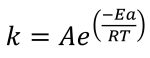
The scientist then asks: Why does the temperature have to be high enough for the seed to sprout? The answer to that question is almost impossibly complex. When I first wrote this paragraph I focused on thermodynamics, which wasn’t wrong—but was shockingly incomplete. In thermodynamics we are concerned chiefly with the “Free Energy” associated with a process as defined as ΔG by the following equation: ΔG = ΔH-TΔS. Since “T” is temperature, there is a temperature effect involved. But the process also has to do with numerous kinetic factors, such as the kinetics of the diffusion of water through the dry seed as it moistens. This would be described by an equation like:

… where k is the rate constant (bigger is faster) and Ea is the activation energy and T is, again, temperature. As the temperature increases there is more energy to overcome activation barriers so that the processes occur faster. In summary, the scientific answer to the question could fill a textbook.

But why?

Since scientists are often similar to somewhat annoying children, we ask again, why? Why do these thermodynamic and kinetic processes result in a growing plant? The more you study the processes involved, the more you will find that they are almost infinitely complex. There is a danger of assuming an infinite regression of “why?” questions. But ultimately the questioner should accept the following answer to the last “why?” This answer is akin to accidently wandering onto Holy ground. For the answer that ends the incessant “why?” is that God, in his benevolent mercy, and abiding goodness, has decreed that there will be seedtime and harvest as long as this earth will endure (Gen 8:22). In His Grace, He causes the seed to sprout in its season—that the creatures of his creation will not starve.

Importantly, the answer above that a scientist ought to find is the exact same answer that a theologian ought to start with. The scientist has certainly taken the scenic route, but has gained something on that path: awe and wonder at the magnificence of God’s creation. This awe and wonder which is founded on things that we can understand, give us a sense of the immensity of the growth of the seed of Faith which comes by hearing the Word itself (Rom 10:17). For we are taught that this Word is like a seed sown which sprouts and grows into faith, salvation, and every good work through God’s same benevolent Mercy and abiding Goodness (Mark 4:20).

Why do the seeds sprout? Because God is merciful, and loves his creation. Amen.


Dr. Dylan J. Thompson is an associate professor of chemistry at Concordia University Wisconsin. He has a special interest in discussing faith and science and has been teaching at CUW since obtaining his Ph.D. from Purdue university in 2014.


Want in?

Concordia University Wisconsin is a Lutheran higher education community committed to helping students develop in mind, body, and spirit for service to Christ in the Church and the world. In the Department of Physical Sciences, we’ll lead you to discover the complex details of God’s creation. Chemistry, biochemistry, pharmaceutical sciences, and physics are all housed in the Department of Physical Sciences, where our aim is to help you develop a thorough understanding of the world around you. Through rigorous coursework in the physical sciences, we will help prepare you for vocations in research, education, graduate studies, and much more.


Come aboard the Ecology of the Tropics experiential learning cruise

Concordia students and professors are on a nine-day cruise exploration of the Caribbean as part of the Ecology of the Tropics course. Follow along on their journey.


Ecology of the Tropics began meeting one hour per week at the start of the semester. The course culminates in a nine-day exploration of the Caribbean over spring break. The course helps students develop an increased appreciation for God’s creation through studying tropical ecosystems.

Professor Tom Saleska, PhD, joined this year’s adventure and he’s chronicling each day from his phone. Trip leader, Dr. Mark Schmitz, is also sharing updates via the Concordia Center for Free Enterprise Facebook page. Check back throughout the week as more entries are added.

Pre-trip

Ready to board for the cruise! These tow, Olivia Kurtz and Amanda Bauer, will now be called my “hockey twins”. They’re roommates on the women’s hockey team at CUW and eager travelers. We’re ready to roll!

Day 1

Landed safely in Puerto Rico. First meal in a typical restaurant with authentic Puerto Rican food. I asked the students, “What are you eating?” They stared at me with blank expressions. No clue, but certainly yummy breaded goodness.

Many of reading this post have kayaked at some point in your life, and some have kayaked at night, but I’m guessing non one has ever kayaked with other brave souls in pitch blackness with only a tiny glow stick on the kayak in front of you to light your path. Students did this and more; they paddled through a mango-lined, alligator-infested canal in search of a bioluminescent algae called Pyrodinum bahamense (which sparkles in your hand). It was interesting, education, exhausting, and frightening all at once. Fantastic, once-in-a-lifetime experience, and it’s all true (except for the alligator part…but it was still scary)!

Day 2

Our day began with an educational hike through a Puerto Rican tropical rain forest. Our guide, Papa Lion, pointed out interesting species as the students took pictures. Next, we stopped at a waterfall where the students couldn’t resist cooling off and splashing each other. After a tasty Puerto Rican dish, mofongo, it was onto the cruise ship for the start of the Caribbean cruise.

Day 3

Stayed on the ship the entire day. Boring? No way! The students had their day packed full with activities from swimming to shuffle board to to ping pong to euchre to eating as much as you want at the buffet. By the way, Dagan finished second in a ping pong tournament and the CUW Falcon dodgeball team won the tournament of champions (sounds like a good name for it). Another fantastic day – it’s on to Barbados.

Day 4

Today our group split up. Some of us went on a tour “Best of Barbados” where we saw tropical gardens and other historic sites. Did you know George Washington had relatives in Barbados and he borrowed some of our constitution from them? The rest of the group went snorkeling with turtles and tropical fish off some old pirate ship wrecks. Which would you choose? Snorkeling? Really?

Day 5

Most of the group went kayaking in the Mangroves of Trinidad’s coast line. Their goal was identification of native bird species. But maybe the highlight of the day occurred at dinner when all of our wait staff marched around the restaurant singing the Macarena and one did some impressive napkin art for us. Very entertaining, to say the least!

Day 6

Our day began with a nature walk through a tropical rain forest on the Island of Tobago. James, our guide, not only helped us identify various plant species but he also was a bird expert who could located, identify, and call all sorts of exotic birds.

The walk ended at Argyle Falls where the students frolicked, flipped, and yes, flopped into the refreshing water. Our fearless leader, Dr. Mark Schmitz, has organized excursions that are not only educational but also so much fun.

Day 7

A couple of us toured the Island of St. Lucia. Our tour group included only eight people and we had to sign a waiver…curious. The excursion included a “nature walk” which actually was a hike straight uphill 1,600 feet (thus the waiver) with guide, Jerwin, who was half human/half mountain goat. The last 200 feet were given the title “Stairway to Heaven.” After a 1,400-foot straight-up walk, I could think of a few other names I would have given that final uphill path.

Day 8

Final day on our ship, Jewel of the Seas. We’re gonna miss her! We landed on the island of Saint Martin. Most of the group went snorkeling on a catamaran cruise. Sounds like a blast! My wife, Vanessa, and I opted to take a scenic tour of the entire island crisscrossing from the Dutch half to the French half and back again. We were entertained by our delightful guide Dominick, who described the landscape, the culture, the history, the way of life of the people who live on the island. At the end of our bus tour we were treated to a catamaran excursion of the lagoon. Wonderful times! Great way to end a fabulous trip. Onto Puerto Rico, where we will again meet up with Papa Lion for a tour of San Juan.

Day 9

Our final day began (where it started eight days ago) with a gorgeous sunrise on the horizon of San Juan Puerto Rico. We were met by our favorite tour guide, Papa Lion, who took us on a fascinating trip around the city of San Juan where he highlighted both contemporary structures such as the Capitol building and historical sites like Castillo San Cristobal. We learned about the roles of early explorers (Christopher Columbus/Ponce da Leon) and how Puerto Rico evolved into the unique country it is today. Along the way we were refreshed with an ice cup of passion fruit called a limber, and learned how to make the traditional dish of Mofongo with a wooden mortar/pestle. We also saw the smallest house in the world, visited the church that contains the remains of Ponce De Leon, and walked in (and quickly out) of ancient, creepy, prison cells that once held 15 prisoners each. Yikes!

Final thoughts

First, if you ever visit Puerto Rico and need a guide, look up Papa Lion. No clue what his real name is but his range and depth of knowledge is incredible.

Second, our leader Dr. Mark Schmitz deserves a ton of gratitude from all of us for the very memorable trip. It takes a lot of work and time to put a trip like this together that created lifelong memories. Thanks so much!


Want in?  

Concordia offers 500-plus study abroad programs in 48 different countries. Students have the opportunity to see the world and experience new places and people, while earning their degree from CUW. Expand your horizons and perspective, and gain professional benefits from exposure to new cultures.


What you can do with your chemistry degree

“What are you planning to do after you graduate?” This can be a daunting question for science graduates. Here are just a few possible answers.


By Kelsey Shea Bohl, PhD

“What are you planning to do after you graduate?”

This question, while typically well-intended, plagues folks who choose one of the “classic” majors: chemistry, music, biology, art. While it’s assumed that students majoring in education will spend their careers in the classroom, the endpoint is often less obvious for those pursuing a degree in one of the primary liberal arts fields.

What can you possibly do with THAT? people wonder with concern when you tell them that you are majoring in chemistry, thinking that you are about to spend tens of thousands of dollars to stuff your brain full of information that is antiquated or inapplicable to a productive modern society. Concerned relatives would breathe a not-so-subtle sigh of relief if you told them you’d chosen to pursue a degree in business or in nursing.

Don’t get me wrong, these are wonderful degrees, and CUW has solid programs in each of these arenas. But what about those other majors? Are they just knowledge for the sake of knowledge? Or can you actually do something with a degree like chemistry? As it turns out, there are lots of job opportunities available for individuals who have earned a bachelor’s degree in chemistry.

While many of these careers are less visible than, say, teaching or nursing, they tend to be well-paying and are directly dependent on knowledge gained and skills developed in the coursework of a chemistry major. My goal in writing this article is to introduce you to a few such careers.

Research Laboratory Technician

Research technicians serve as support staff for research laboratories, whether this be at educational institutions, biotechnology startups, or pharmaceutical companies. The goal of the research varies widely from lab to lab, but the work of a technician is fundamentally the same.

Typically, technicians prepare common reagents for global use by lab members, make specific chemicals for use in unique experiments, or help supervise the progress of a reaction or experiment for a graduate student or senior research staff member. Techs also may be placed in charge of maintaining safe chemical storage and coordinating the disposal of hazardous waste. Others may supervise the upkeep of laboratory instrumentation.

Some business and administrative skills can also come in handy, as labs often involve technicians in supply ordering and chemical inventory management. In some laboratories, a technician will even receive his or her own research project.

Regardless of whether a lab is trying to develop a new drug to treat Alzheimer’s disease, better understand the biochemical changes underlying clinical depression, or simply determine how a newly discovered enzyme works, chances are the technicians are the heartbeat of the operation, helping keep the lab running smoothly from one day to the next.

Medical Laboratory Technician

Most adults visit the doctor at least once a year, and sometimes these visits involve “labs,” ordered to ensure we are consuming the proper balance of macronutrients, or that a medication we are taking is working the way it is supposed to work. After visiting with his or her doctor, the patient stops at the lab, gets blood drawn, and then, usually within a matter of hours, test results show up in a personal health portal.

But what happens between the needle stick and the notification that LDL cholesterol levels fall within the normal range? A medical laboratory technician has obtained the patient’s blood sample, processed it, and analyzed amounts of specific components of interest using a series of chemical reactions and laboratory instruments.

Despite high levels of automation involved in medicine these days, providers still depend on highly trained individuals to carefully perform clinical diagnostic experiments and provide trustworthy health information to patients.

Industrial Product Analysis & Quality Control

When I’m not in the classroom, I’m most likely spending time at home with my one-year-old daughter and yellow Labrador retriever. With this entropic combination, you can probably imagine that I find myself opening my cabinets and pulling out a spray bottle of all-purpose cleaner more than a few times a week. I do this so often that I rarely stop to ponder what is in that container of cleaning solution.

However, if you think for a moment, that seems a rather important detail, doesn’t it? I have a feeling that I’m not the only one who takes it as a given that the contents of the products that we bring into our homes are exactly as the label describes. Consumers are given a long list of chemical names to define the contents of a product, and active ingredients are provided with a high degree of mathematical precision.

There are 325 mg of aspirin in a tablet. The active ingredient in my daughter’s baby sunscreen is 20% zinc oxide. How do companies come up with these numbers? And how do they guarantee that the contents of their products match what’s on the label to a degree that can guarantee consumer safety? This critical task typically depends on a quality control analytical chemist. These chemists have a well-developed understanding of how to detect and quantify different substances of interest in products, as well as identify the presence of unwanted byproducts.

Analytical chemists are specialized in the use of sophisticated laboratory instrumentation, as well as the interpretation of the data that these instruments provide. It is their expertise that ultimately informs and protects the public when it comes to the products that we purchase and consume.

Forensic/Crime Lab Analyst

True Crime has become a societal obsession over the last decade. The recent news is full of stories of decades-old cases being solved with new developments in forensic technology. And who among us hasn’t watched at least one episode of “Dateline”?

Identifying a murderer via DNA left at the crime scene 35 years ago seems cool and perhaps mystifying, but it isn’t magic. Mostly, it’s a lot of chemistry. Detectives depend on skilled technicians to collect, preserve, and analyze biochemical evidence to help identify and convict criminals. The tools of the forensic trade largely consist of chemical reactions and instrumentation.

The collection of hard-to-detect fingerprints depends on the addition of chemicals that will specifically stick to oils but not anything else surrounding the print. Detection of low-visibility blood spatter involves a chemical that will only glow in the presence of a protein molecule found in human blood. Tracing a sample of DNA back to a specific person requires the analysis of the sequence of smaller chemical building blocks that make up the bigger biomolecule.

Biochemistry majors are particularly well-suited for a career in forensic science, as their undergraduate course work develops an understanding of the composition of critical biological molecules, how to detect them, quantify them, and analyze their composition. By the time a biochemistry major graduates, he or she will know the information required to make him or her a viable hire for a position in the crime lab.

Graduate School

Not for the faint of heart, but certainly for those craving to continue consuming chemistry curricula, some students choose to apply for either a master’s or doctoral program post-graduation. With a master’s degree, or, more often a PhD, a student can take any number of paths.

Those with an advanced or terminal degree in chemistry or biochemistry can serve as research scientists in labs at pharmaceutical companies, biotechnology companies, or teach chemistry at the collegiate level. Research scientists work alongside technicians, graduate students, and interns, to perform experiments with the purpose of better understanding scientific principles, identifying the origin of a disease, or developing and testing new drugs.

Those who wish to teach typically instruct both general chemistry courses, as well as upper-level chemistry classes in the individual’s area of specialty. Some folks with PhDs will go on to start research labs of their own, serving as a principal scientific investigator, or PI. Principal Investigators guide the type of research that is done under their supervision, provide advice and direction for experimentation, recruit graduate students and hire research staff, and write grants to fund the scientific work being done in their labs.

Regardless of the final career, completion of a Ph.D. in chemistry is completely dependent on knowledge built at the undergraduate level.

Knowledge is power

If you’ve read this far, you’ve probably noticed a few common themes: chemical reactions and laboratory instrumentation. There’s always some on-the-job training to be done, no matter the occupation. However, the professions highlighted above are jobs that depend on a strong background knowledge provided by a bachelor’s degree in chemistry.

Concordia offers a two-track chemistry major, a biochemistry major, and a chemistry minor. If any of these chemistry-dependent careers piqued your interest and you want to learn more, be sure to request a meeting with one of the chemistry faculty when you visit campus. We would love the chance to sit down and talk with you and your family because you can, indeed, do a lot of things with chemistry!


Want in?

Concordia University Wisconsin is a Lutheran higher education community committed to helping students develop in mind, body, and spirit for service to Christ in the Church and the world. In the Department of Physical Sciences, we’ll lead you to discover the complex details of God’s creation. Chemistry, biochemistry, pharmaceutical sciences, and physics are all housed in the Department of Physical Sciences, where our aim is to help you develop a thorough understanding of the world around you. Through rigorous coursework in the physical sciences, we will help prepare you for vocations in research, education, graduate studies, and much more.


Dr. Kelsey Shea Bohl is an adjunct professor of chemistry at Concordia University Wisconsin.