Student perspectives: What it means to be a Christian social worker

What does it mean to be an uncommon Christian social worker in a common world? Students in Concordia’s social work program participated in an essay contest to answer this question.


CUW’s social work department celebrated National Social Work Month in March. Part of the activities included an essay contest, with winners announced during a panel event on Friday, March 24. Congratulations to the winners of this year’s essay contest: Amanda Drabek and De’Vaun Williams. Here are their winning contributions.

Amanda Drabek

Master of Social Work

A big theme within Concordia University has been “living uncommon,” but what does that mean? The definition of uncommon is something that “isn’t ordinarily found or experienced” (Merriam-Webster, 2019). There is no real definition for being a Christian social worker. You can quick search the words/ meanings and definitions separately, and while there are some overlaps of terms, it means something different for every person.

We can cite and share about the teachings and practices of social work. It is a helping profession, where we fight for service, social justice, dignity and worth of the person, importance of human relationships, integrity, and competence in the common world. Christianity is about believing in Christ and having a relationship with God. When we do this, we allow him to use us as a conduit for a purpose and share the teachings and practices of His unconditional love and sacrifice. This can be an uncommon relationship/experience for many. It can be difficult in this profession to do.

Being a Christian social worker is about understanding that two things can hold true at the same time. We can know the profound grace and mercy that God gives us every day and be overwhelmed and discouraged with the struggles of this common world we face. If you’re like me, I struggle with the paradox of both at times—oftentimes, in fact. It is knowing that despite our clients’ (and our own) worst days, despite failing systems, despite pure evil in this world, there is something beautiful and good that waits at the end of all of this.

Being a Christian social worker is about understanding that two things can hold true at the same time. We can know the profound grace and mercy that God gives us every day and be overwhelmed and discouraged with the struggles of this common world we face.

Amanda Drabek, MSW student

It’s knowing we were born for this exact time and are equipped with His gifts, to make sure those around us are seen/heard/loved, as we encourage them to see the world the way we see it—in ways that aren’t ordinarily found or experienced in strategies/solutions/coping mechanisms of this world, but by the way God sees it for us. It’s by our actions, words, relationships with people that they will experience something uncommon, and this will ignite something in them.

There is a sacredness and peace that, even in our struggles, we are always known and loved. Does this mean that it’s hard? YES! Worth it? YES! What an honor to be a social worker, and a Christian one at that.


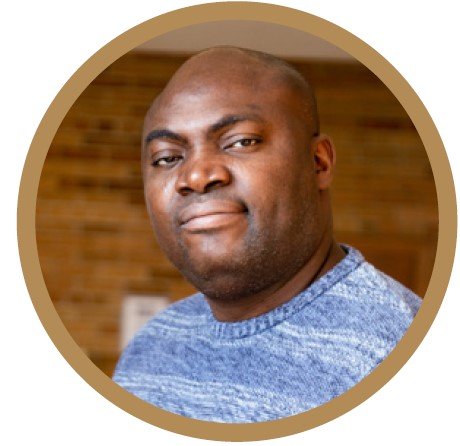
De’Vaun Williams

Bachelor of Social Work

Being an uncommon Christian social worker in a common world means embodying the principles of both faith and social work while engaging with the challenges of the world we live in. It means striving to integrate Christian values and principles into one’s professional practice while responding to the needs of individuals, families, and communities.

The uncommon Christian social worker seeks to serve others with compassion, respect, and empathy, regardless of their background or beliefs. They are committed to advocating for social justice, promoting human rights, and alleviating suffering. Their faith motivates them to serve those who are marginalized, vulnerable, and oppressed. In a common world that often prioritizes materialism, individualism, and self-interest, the uncommon Christian social worker strives to prioritize the needs of others. They recognize the intrinsic worth and value of every person and seek to empower them to achieve their full potential.

Creativity is also essential for an uncommon Christian social worker. They recognize that every individual and situation is unique, and they approach their work with flexibility, openness, and a willingness to think outside the box. They are innovative and resourceful in their problem-solving and seek to find creative solutions to complex issues.

Ultimately, being an uncommon Christian social worker means striving to integrate faith and practice in a way that honors both. It requires a commitment to ongoing learning, reflection, and growth. As such, an uncommon Christian social worker is a lifelong learner who recognizes that they do not have all the answers but is willing to continue the journey of discovery, transformation, and service.


Want in?

Concordia’s social work program uses Christian service, quality research, and hands-on learning to grow you as a competent professional. Earn your bachelor’s degree at CUW and then continue on to acquire an MSW, the most sought-after social services degree. Learn more about our programs by clicking below.



How to become a speech pathologist

Speech-language pathology is a great career choice if you are interested in assisting patients in overcoming speech and language disorders.

What is speech pathology?

Speech pathologists help patients improve their speech and language disorders. A speech disorder is a condition that prevents a patient from producing sounds needed for speech. Whereas, a language disorder prevents a patient from understanding and communicating their feelings and thoughts. Becoming a speech pathologist is a wonderful way to impact your community and help those in need. But how do you become a speech pathologist?

There are so many degrees and pathways available for college students. As a result, finding a way to become certified for a career can be overwhelming. Before applying for certification through ASHA (American Speech-Language-Hearing Association), a linear pathway can be hard to find. To start, here is a step-by-step process to becoming a certified speech pathologist:

Becoming a certified speech pathologist

To begin, you’ll need to get an undergraduate degree. Any bachelor’s degree in a similar field will be useful for preparing yourself to get your master’s degree. Already have a bachelor’s degree? Continue to the next section!

Classes in degrees like a bachelor’s in communication sciences and disorders, English, education, or psychology will give you a great  springboard for the more challenging content of a master’s degree. After you have your bachelor’s sorted you will be ready to go for your master’s.

How long is speech pathology school?

Next, you will need to take all of the knowledge you have gained and apply it to your master’s degree in speech-language pathology. At Concordia University Wisconsin, we have an excellent Master’s in Speech-Language Pathology program that pushes students to have a positive influence on their communities by challenging critical thinking within their vocation. Over the course of 2-years, you will build confidence in your skills of prevention, diagnosis, and effective treatment.

Graduating with a master’s in speech-language pathology

Our program is CAA (Council on Academic Accreditation) certified. This means you will be fully prepared for the next steps after graduation, like applying for licensure and certification. Also, our own state-of-the-art, on-campus Speech, Language, and Hearing clinic will help prepare you with real world experience to excel in your future vocation.

After you have graduated with your master’s in speech-language pathology, you will be ready to apply for certification through ASHA. Post-graduation and pre-application you also need a passing Praxis Exam score. The Praxis Exam is a content exam that will assess your knowledge in your field developed by ASHA. 

When you pass the Praxis Exam, your final task is to complete your clinical fellowship with an ASHA certified mentor. After all your fellowship documents have been received and approved, you will officially be ASHA certified! At this point, you will be able to apply to hospitals or clinics as a licensed speech-language pathologist.

Looking for more on how to become a speech pathologist?

Learn more about the good speech-language pathologists do in the world and paths that brought students success. Take a look at these blog posts for more information:

This blog was originally published on November 18, 2021. It has been updated to reflect current information.

10 tips for preventing falls this winter

Nationwide, one in four adults over the age of 65 experience a fall, and an older adult dies every 20 minutes, according to CDC data.

As the seasons change each year, safety becomes paramount, and taking proactive steps to prevent falls can help save lives. Fall prevention requires a collaboration between you, your primary care provider, and family members/caregivers.

Concordia’s Dr. Michael McKinnis, PhD, OTR/L, and OTDe student Kyra Lenzi offer the following tips for staying safe this winter season:

1. Assess shoe condition.

Just like your car tires, your shoe tread needs to be checked when winter rolls around. Ensure you have well-fitting shoes with good tread. Avoid sandals or Crocs when walking outside as these have limited traction or support.

2. Keep clothing from catching on doorframes.

As the temperatures drop, we add more layers. However, these oversized and baggy clothing items can often get caught on door handles or get in our way when safely navigating in our environment. It’s important to take extra precaution when exiting doorways, especially around stairs, not to snag your extra layers.

3. Remove debris or slipping hazards from walkways.

Keep stairs and sidewalks clear of leaves and ice. Leaves can be slippery when wet.

4. Add traction.

If you have to walk outside in the snow, consider adding crampons (grips) to your shoes for increased traction.

5. Maintain physical activity.

Find indoor spaces to continue walking. Walking keeps your leg muscles stronger which can prevent falls. Most cities have community/senior centers or indoor malls. Find a friend to keep you accountable for exercising. It’s ok to snack…on exercises. Ideally, we should be exercising for 30 minutes per day; it’s okay to do this in 3- to 10-minute increments if you can’t find an uninterrupted block of time.

6. Stay hydrated.

When we are not adequately hydrated throughout the day, we lose our alertness and ability to think clearly. We can receive our daily hydration from both drinks and certain foods; however, to determine your optimal daily hydration needs, consult your primary care provider.

7. Keep your phone handy.

In the case that you do experience a fall, having your phone nearby will allow you to call for help sooner. If you have smart-home technology (such as Amazon Alexa), you can use these devices to call for help if your phone is not nearby.

8. Participate in a fall prevention program.

The Stepping On program is an evidence-based fall prevention program that empowers older adults to carry out health behaviors that reduce the risks of falls.

Wisconsin locations that will assist you in finding a Stepping On session near you:

9. Stay current on your eye exams.

Medicare covers annual eye exams, so make sure you are staying current with your exams.

10. Do a medication check.

Talk with your primary care provider about your current medications, as it is important to discuss the impacts of your medications on fall risk.

—These fall prevention tips were developed by Dr. Michael McKinnis, PhD, OTR/L, and CUW Doctoral student Kyra Lenzi. If you have further questions for fall prevention, do not hesitate to reach out: Michael.McKinnis@cuw.edu. If you have further questions about the OT Clinical Doctorate, click here.

This blog was originally published on December 22, 2021. It has been updated to reflect current information.

Improving HR’s organizational performance

Want to improve organizational performance?

Ensuring HR’s Effectiveness in Improving Organizational Performance

As we look ahead to 2023, we cannot help to ponder as to how HR continues to improve its’ effectiveness in improving performance. This means at the individual, team, and organizational levels. Here are a few considerations.

Build a Highly Competent and Effective HR Team

At the core of HR, is the ability for HR professionals to lead organizations. HR professionals do not only perform historical HR tasks. They also use strategic HR planning and implementation of the respective strategies to enable organizations to win. There’s hyper competition today given the global economy. HR professionals cannot be novices but have to be trained professions with competencies earned through education, experience, and training.

The literature has clearly explained that a more competent HR team will lead to higher effectiveness. Effectiveness in HR will include the ability to attract, motivate, and retain the employees who bring the relevant skills to the organization that will help to improve performance at the individual, team, and organizational levels.

Therefore, it’s important for organizations to select HR professionals who have a relevant HR education, experience, and understanding of leading organizations as a whole. Connecting HR to all aspects of the organization to ensure the effective flow of people and information is essential. It is therefore an important aspect of an organization’s success to ensure HR professionals understand how an organization operation, the different functions, and connecting the different pieces to ensure an effective sum.

Align HR Strategy to Business Outcomes

How do any and all HR strategies impact the organization’s success? An audit of HR’s activities will list each HR strategy. What is the value added through that particular strategy? Is it worth doing? Does the organization allow adequate or excess time in that particular activity? Historically, HR spent a lot of time on administrative tasks. Much of these can be automated or even outsourced.

Understanding sources an organization uses for advertising shows which sources are more effective. This also delineates the respective sources as far as which employees are better performers. Training and development activities have proven to be effective in unleashing expertise. At the same time, are organizations providing training on the relevant topics? Are employees able to use the training to improve their practices on the job? Does the organization’s compensation philosophy and practices help to attract and retain the candidates and incumbents who are effective in creating competitive advantages? Does the performance management system really evaluate the practices, behaviors, and attitudes that lead to higher performance and productivity?

The point is that whatever HR practices are used should impact the effectiveness and efficiency of the organization in general. Apple, as an example, uses innovation as a core source of competitive advantage. In its’ recruitment practices, Apple emphasizes the human capital that is able to enhance its’ innovation practices and who will flourish in an innovative culture.

Measure All HR Activities

How does the organization know if the HR strategies are effective? To what extent does an HR strategy impact the established measures of success of the organization? How do the HR activities help to distinguish the organization from its’ competitors? With scarce economic resources, an organization has to be prudent in its’ investments considering if an investment is necessary, where that investment should be, and how much investment should be made in a particular area.

Be Compassionate with Employees

In a world rocked by Covid-19, there is an immense level of stress, mental health issues, and emotional turmoil that are impacting so many individuals, families, and organizations. The advice for organizations would be to demonstrate a genuine nature of compassion for all employees while holding all accountable for expected levels of performance. No one knows the grief, anxiety, or other feeling one is experiencing. Ultimately, showing compassion to a colleague can be meaningful to that individual and may also mean salvaging a person’s hope and optimism.

Earning a DBA can help you improve your skills

Concordia University Wisconsin’s DBA program includes a concentration in Organizational Performance and Change (OPC) that helps to develop expertise in developing highly competent and effective HR leaders. Our students in the DBA program are current and aspiring leaders who help to create and lead organizational strategies. The OPC concentration emphasizes studying HRM and HRD strategies that genuinely improve performance that align to organizational strategies and outcomes.

Originally published on December 22, 2021. Now updated with current information.

Advent Anticipation: Foreword

“Advent.” The word we associate with the time leading up to Christmas is from the Latin adventus, meaning “arrival” or “coming.” Traditionally, it is a period of preparation and anticipation as we look forward to celebrating the birth of Jesus Christ.

Another way to think of it is a period of waiting.

When I was a child, Christmas could not come soon enough. One year I made a paper candle using alternating horizontal strips of red and green. Every morning I removed one strip to mark Christmas getting closer, not realizing I had essentially created an Advent calendar. I just knew I really wanted Christmas to come.

These days, waiting for Christmas can feel stressful, as the trappings of the holiday season sometimes bring anxiety. It’s also an adjustment when your only child attends college in another state. There’s nothing wrong with being excited about your son coming home, of course, but I’m not sure it’s where God wants my focus. Jesus, as they say, is “the reason for the season.” Special celebrations should flow from that.

What does it mean to “prepare” for the arrival of Christ? For me, it’s about waiting on God. I’ve realized over the years that God often uses periods of waiting to teach me things. He seldom answers my big prayers immediately and uses that time to direct my attention toward Him. It worked this way when I was praying to find a wife, when we were praying to have children, and more recently, when I lost my job a few years ago. Eventually, when the time was right, He led me to this job at CUW–right where I’m supposed to be, at exactly the right time.

“But they who wait for the Lord shall renew their strength;
they shall mount up with wings like eagles;
they shall run and not be weary;
they shall walk and not faint.”
–Isaiah 40:31 (ESV)

So this Advent season, I’ll do my best to focus fully on Christ and open my heart to what He wants. What is He going to teach me? I can hardly wait to find out. I encourage each of you also to wait for and upon the Lord in this special season.

MIKE ZIMMERMAN

Corporate Communications Manager


About this series

“Advent Anticipation: the arrival of our Savior” is a sampling of biblical meditations composed by members of the CUWAA community. It is our prayer that you will take time during the Advent season to read and reflect upon God’s Word and await the coming of Jesus with newfound enthusiasm and anticipation through the Holy Spirit.

Advent Anticipation: Preparing for Christ Vs. Preparing for Christmas

Friday, December 23

Isaiah 43:25-44:20 and Revelation 11:1-19  

As we prepare for Christmas, I often find myself caught up in my “to-do” list for the season: cookies to bake, presents to wrap, a tree to decorate. All of these activities are meaningful and wonderful traditions. My four grandchildren (and if we are honest, their grown-up parents!) are all as excited as it is possible to be. One of their very favorite things this time of year is watching the many “holiday” shows, the same ones that I also watched and loved many years ago. These include Frosty the Snowman, A Charlie Brown Christmas, and The Grinch who Stole Christmas. The Grinch is a particular favorite, and Mr. Grinch’s experience, while definitely not explicitly focused on Christ, relates well to today’s text from Isaiah. As the Grinch learns, Christmas without a roast beast or presents beneath the tree is still Christmas. That’s because, as we know, Christmas isn’t really about all those delightful trimmings. It’s about the birth of Jesus and about what happens as a result of our Savior’s arrival into our world. 

Our Christmas traditions are certainly beautiful and meaningful. Yet, it’s easy to make those lovely experiences into idols. Isaiah 44:9 states “All who make idols are nothing, and the things they treasure are worthless.” The passage goes on to describe how a blacksmith and a carpenter each created an idol (the blacksmith with his hammer, and the carpenter with his chisel), and to remind us that “such a person feeds on ashes; a deluded heart misleads him” (Isaiah 44:20). What idols do we make? Do we sometimes confuse the focus on Jesus with the midwinter holiday trappings of lights, trees, desserts and presents? 

In this season of Advent, as we prepare for His coming, let us not forget why we are so excited. Let us remember who is coming and why He comes. Isaiah 43:25 clearly reminds us of this: “I, I am he who blots out your transgressions for my own sake, and I will not remember your sins”. Our sins are not only forgiven, but actually forgotten! What a gift! Nothing under the tree can compare. 

DR. LEAH DVORAK

Provost


About this series

“Advent Anticipation: the arrival of our Savior” is a sampling of biblical meditations composed by members of the CUWAA community. It is our prayer that you will take time during the Advent season to read and reflect upon God’s Word and await the coming of Jesus with newfound enthusiasm and anticipation through the Holy Spirit.

Advent Anticipation: The Best Gift Ever

Wednesday, December 21

Isaiah 42:1-25 and Revelation 9:1-12 

Do you remember wanting a certain Christmas gift so desperately that you could barely stand it? When I was a kid, I wanted more than anything to get the new Nintendo Wii video game console. I was jealous of a lot of my friends who had it until one Christmas my parents surprised my brother and me with one. We were overjoyed to have the best gift ever. We played for hours on end—that is, until we got bored with one game and begged our parents for another. Two games turned into five, which turned into too many to count. Fast forward about six years later, and we ended up giving our Wii to another family. The gift we anticipated more than anything else became something we rarely even used. We were on to the next bigger and better electronic game. 

During this Advent season, it is easy to get consumed with the buying and receiving of gifts instead of focusing on the incomparable gift we already have. In Isaiah 42:10-17, God is sharing His incredible gift to us is, but our sinful nature—then and now—puts earthly possessions and priorities above God’s gift to us. We will never be truly satisfied when we put our faith and hope in earthly possessions to give us true happiness. 

In this season of anticipation, may we strive to focus more on the gift of God’s Son coming to this earth to save us instead of all the material gifts we hope to receive at Christmas. My brand-new Wii or any gift given to me will never be the best gift ever. I had already had the most priceless gift given to me before I was born. That is a true reason for absolute celebration: 

Let them give glory to the Lord and proclaim his praise… (Isaiah 42:12a) 

We can thank God for his remarkable gift to us this season by keeping our eyes of faith focused on the ultimate gift of Christ Jesus. May the Holy Spirit kindle in us a desperate desire to know Jesus better and to share His love with all whom we encounter. 

KAYLA NOMMENSEN

CUW Student


About this series

“Advent Anticipation: the arrival of our Savior” is a sampling of biblical meditations composed by members of the CUWAA community. It is our prayer that you will take time during the Advent season to read and reflect upon God’s Word and await the coming of Jesus with newfound enthusiasm and anticipation through the Holy Spirit.

Advent Anticipation: The Whole World’s in His Hands

Tuesday, December 20

Isaiah 40:18-41:10 and Revelation 8:1-13       

I was born in Nigeria and grew up in Lagos before coming to the United States. As a result, I have spent more time than most on airplanes. Flying above the hustle and bustle of millions of lives gives one an interesting perspective. I become aware of both the vastness of God’s creation as well as the all-encompassing love and care He provides to each of the world’s inhabitants. While God is omnipotent and almighty, He also cares for our needs individually in special ways. Today’s Isaiah text underscores that continuum of God’s qualities: 

To whom will you compare me? Or who is my equal? says the Holy One. Lift up your eyes and look to the heavens: Who created all these? He who brings out the starry host one by one and calls forth each of them by name. Because of his great power and mighty strength, not one of them is missing. Even youths grow tired and weary, and young men stumble and fall; but those who hope in the Lord will renew their strength. They will soar on wings like eagles; they will run and not grow weary, they will walk and not be faint. So do not fear, for I am with you; do not be dismayed, for I am your God. I will strengthen you and help you; I will uphold you with my righteous right hand (Isaiah 40:25-26, 30- 31; Isaiah 41: 10). 

On a recent travel, I boarded the plane and greeted my seatmates. Almost immediately, one of them began to engage me in a deep conversation about faith. It connected both of us instantly and kept us conversing throughout the entire flight. What a blessing from God! 

We were late landing, and I had a very tight connection. My kind-hearted seatmate offered to help me find the gate for my connecting flight on his phone. He handed down my bag from the overhead bin. As I said goodbye to this gracious man, through this seemingly impromptu interaction, I had an overpowering sense of God’s overarching care and love for me. Indeed, He has the whole world in His hands. 

I pray each of you can enjoy the gift of that realization during this Advent season. 

DR. SAMSON FOLARIN

School of Arts & Sciences, CUW


About this series

“Advent Anticipation: the arrival of our Savior” is a sampling of biblical meditations composed by members of the CUWAA community. It is our prayer that you will take time during the Advent season to read and reflect upon God’s Word and await the coming of Jesus with newfound enthusiasm and anticipation through the Holy Spirit.

Advent Anticipation: Suitable Teachers and True-Hearted Believers

Sunday, December 18

Isaiah 34:1-2, 8-35:10, Micah 1:1-7:20, and Revelation 6:1-17      

About 25 years ago, the wife and I had our first true argument. I felt she and I were true hearted believers in God and could share that same belief to our only son. Being a cheap individual, however, I could not see the benefit of paying extra for our child to attend a parochial elementary school. My wife wanted him to have as many true hearted believers sharing God’s Word as possible. Needless to say, I lost that argument. 

What she knew—and I didn’t—was that we all need suitable teachers. As parents, we didn’t have all the answers and we learned along with our son the difference between false prophets and those with true hearts. Today we don’t worry about whom our son chooses as friends and acquaintances because we know his suitable teachers in life have shown him the right path to salvation. While he has had many opportunities to be selfish and greedy in his life, he has remained on the path of righteousness and faith. He is a true hearted believer in God and cares more about his common man than his personal accolades. 

More than ever, the world seems full of greed and looking out for self. Today’s Micah text speaks to the Earth’s transgressions and God’s promises of restoration and salvation through the promised Messiah to true hearted believers. 

Woe to those who plan iniquity, to those who plot evil on their beds! At morning’s light they carry it out because it is in their power to do it (Micah 2:1). 

All the nations may walk in the name of their gods, but we will walk in the name of the Lord our God for ever and ever (Micah 4:5). 

But you, Bethlehem Ephrathah, though you are small among the clans of Judah, out of you will come for me one who will be ruler over Israel, whose origins are from of old, from ancient times (Micah 5:2). 

I have enjoyed 17 years at CUW and the many people I too believe are true hearted. I also pray to be a suitable teacher through the power of the Holy Spirit. May each of us seek the same, during this Advent season and throughout the year. 

ADAM WALKER

Football Coach, CUW


About this series

“Advent Anticipation: the arrival of our Savior” is a sampling of biblical meditations composed by members of the CUWAA community. It is our prayer that you will take time during the Advent season to read and reflect upon God’s Word and await the coming of Jesus with newfound enthusiasm and anticipation through the Holy Spirit.

Advent Anticipation: God’s Love is Present in Every Moment

Saturday, December 17

Isaiah 33:1-24 and Revelation 5:1-14     

Concordia University is THE most beautiful place I have ever worked. Wildlife abounds — trees, grasses, flowers and animals. It truly is a blessing to work here, a place where I can feel the presence of God. 

In this latter part of my life, I have gotten into a habit of talking to God while driving in the car, especially in the mornings on the way to work. The area surrounding Concordia (as well as the campus itself) has provided a beautiful backdrop for my conversations with Him. I may tell Him I am grateful for His many blessings. I may ask for His forgiveness for one of my shortcomings. Oftentimes, though, I find myself asking for His help. 

It’s fitting that one of the scriptures for today talks about how God helps. The author in Isaiah 33:16-17 writes: Their bread will be supplied, and water will not fail them. Your eyes will see the king in his beauty and view a land that stretches afar. It’s a promise made to those “who walk righteously.” 

Somehow, during my morning conversations with God, I started attributing deer sightings to Him. Afterall, He created the magnificent animals who bring me peace each time I see them in the meadows, woods or crossing the road. 

I remember one morning as I was riding in to work, I thought about all that I had to accomplish before the day’s end and how I was going to need God’s help to get through. Suddenly, a deer poked out his head from the shrubbery in front of one of the homes on Lake Shore Drive. I felt as though God was using the deer to remind me of His love. My awe and appreciation of this beautiful creature compelled me to say a simple prayer: “God, I love you, too.” 

Now, whenever I see a deer when I am out and about, I think of God’s love. 

It is my prayer that you, too, see God around you in your life and are reminded of the many ways He loves us, especially during this Advent season when He gave us the priceless gift of our Savior Jesus Christ. 

SUE SULESKI

Advancement, CUW


About this series

“Advent Anticipation: the arrival of our Savior” is a sampling of biblical meditations composed by members of the CUWAA community. It is our prayer that you will take time during the Advent season to read and reflect upon God’s Word and await the coming of Jesus with newfound enthusiasm and anticipation through the Holy Spirit.