The uncommon nurse turning chaos into character

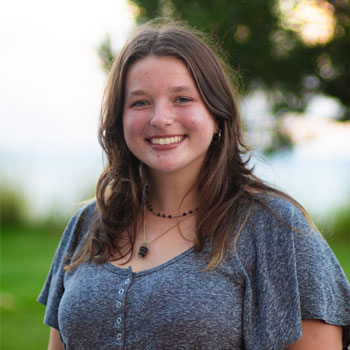
Meet Muriel Hazley (’23), a Cardinal Stritch transfer student who didn’t let life’s disruptions prevent her from earning her BSN.

Editor’s note: This is one in a series of stories highlighting a few Concordia’s uncommon graduates. Faculty and staff submit candidates for consideration. Stories are posted in the days leading up to commencement. View more uncommon graduates here. 


It took 15 years riddled with numerous heartaches, obstacles, and setbacks. But by the end of the day tomorrow, Muriel Hazley will have completed the final exam for her final course requirement to earn her Bachelor of Science in Nursing degree.

On Saturday, at the age of 53, she will cross Concordia University Wisconsin’s commencement stage alongside the 407 other individuals who comprise the December 2023 cohort of CUW graduates.

Hazley’s mother, who was the catalyst behind the journey, won’t be there in person to see it. It was the passing of Hazley’s mother in 2005 that ultimately spurred Hazley to finally make good on her goal of earning her degree.

“She was my cheerleader,” Hazley said. “She always believed in me. I wanted to see it through for her since I had promised I was going to do it.”

Hazley didn’t fully realize at the time the journey she would soon embark upon.

A divorce from her studies

Muriel Hazley and her grandchildren

Hazley originally began her studies at Cardinal Stritch University. Just a year and a half into her program at Stritch, Hazley had to take the first of a couple hiatuses from her program, as she found herself embroiled in a divorce. Suddenly with no viable childcare options for her four adolescent children, Hazley pressed pause on her degree to re-stabilize her family.

As her children grew, she considered returning to school. Then her teenage son announced he would soon become a father. Three years after her granddaughter, Aaliyah was born, Hazley assumed full custody of the child and has raised her ever since.

Still, Hazley’s promise to herself and to her mother pulled at her. When Aaliyah turned 7 and all but one of her children had moved out of the house, she found a way to add college back into the mix.

However, to her despair, when she returned to Stritch to resume her program, she learned that her previous credits were no longer valid. The time that had lapsed from when she first began was enough for credentialing requirements to change, causing her previous credits to become void.

More bad news

This wasn’t the only setback she faced in the years ahead. There were conflicting messages from academic counselors as she attempted to earn some of her general education credits at a reduced rate from a nearby college. The miscommunications resulted in Hazley having to take three extra courses.

And in 2020, there was, of course, the disruption of COVID. Added to the strain of the pandemic, Hazley abruptly lost her father, niece, and brother within the span of three months. The men died of aggressive forms of cancer and her niece suffered a fatal brain aneurism.

When she entered the 2022-23 academic year at Stritch, she was just a few semesters away from completion. Then the news came that Stritch would close at the end of the 2023 semester. Hazley found herself scrambling alongside hundreds of her Stritch peers to find a suitable transfer option.

Everywhere she turned the message was seemingly the same: a minimum of two years or 30 credits to earn her BSN from the new school.

“What were my options?” Hazley posed. “It was either find something or give up, and giving up wasn’t an option at this point.”

Prepped for professional pinning

Finally, she approached Concordia.

“I got here and Concordia heard my story and opened up their arms and hearts to me,” she said. “The amount of learning I’ve had in my short time here has been tremendous. There is not a single weak link among the professors at Concordia.”

Concordia heard my story and opened up their arms and hearts to me.

Muriel Hazley, (BSN ’23) Cardinal Stritch transfer student

Beyond her CUW professors, Hazley says she couldn’t have done it without the support of several key individuals. She cited her CUW academic guidance counselor, Katie Eippert, for helping her navigate the transfer, her children, and her sponsors, Bill and Agatha Coleman, who financially supported her through Concordia’s Adopt-a-Student program. 

Tomorrow evening, Hazley will participate in the CUW School of Nursing pinning ceremony. The tradition sees nursing graduates invite meaningful people in their lives to bestow a piece of professional memorabilia onto their white coats, symbolizing the completion of their program.   

Hazley invited Aaliyah granddaughter and youngest son’s name Airry, to do the honors.

“They’ve been there from the very beginning,” Hazley said. “The sacrifices I’ve made have not only been my own but theirs as well.”

And, of course, Hazley will be holding her mother in her heart throughout the weekend’s events.

“She’d be so proud of me,” Hazley said. “I’m proud of myself.” 


Want in?

The School of Nursing is dedicated to providing a rigorous Christ-centered education that develops and inspires highly skilled professional nurse leaders who are prepared to serve diverse communities with excellence, truth, integrity, and compassion to promote health and healing.

Concordia’s Calendar: What’s New?

Christmas time is right around the corner, and so is the Spring semester at Concordia. CUW introduced its newly structured academic calendar this fall for the 2023-2024 school year and the changes are evident.

The biggest change was the removal of the January term, “Winterim,” shortening the winter break between semesters from five weeks to three. In addition, the fall break that usually occurs in October was redistributed to other days in each semester. The summer term has been lengthened, allowing for more classes to be offered in May through July.

Students and faculty have had mixed feelings about this change. Many pros and cons were discussed during the planning process. The academic council, led by Dr. Leah Dvorak, was hard at work for several years to solidify goals and the plan to execute them. There were three main ideas with this new schedule: to synchronize traditional undergrad and all non-traditional programs to the same calendar, have an equal amount of in-class time for the spring and fall semesters, and provide time in the summer for more rigorous academics to be offered.

Dr. Jordan Beck, Faculty Chair and Professor of Physical Sciences, was a member of the academic council and is now seeing the effects of the plan he was able to contribute to making.

“The best part is the uniformity of the semesters, from a faculty side, that is very helpful,” he shared.

Students on the other hand are not worried about that specific aspect of these updates.

Near the end of the first semester of the new calendar, a group of 40 students ranging from freshman to fifth years were polled by the author about their opinions on the changes. 72.5% agree that a longer summer will be beneficial, 80% disagree that the fourth Friday breaks occurring each semester are adequate breaks for students, 42.5% disagree on the removal of Winterim and people are split on their opinions on the efficiency of the holiday breaks. A lot of students feel that Thanksgiving should be a weeklong break, especially since the removal of fall break. Other students acknowledge that October had no break and felt a significant amount of burnout that month.

Senior occupational therapy student Sophia Vandeloecht is one of these students who wanted her voice to be heard.

“It was frustrating not having any fall break,” Vandeloecht shared. “Since I am in graduate classes now it was hard to not have a built-in break or relief.”

Some students are split on their opinion of Winterim, but Vandeloecht may be on the same page as Dr. Beck that the extra time off in January has been beneficial in the past.

“I am going to miss the January time. That January time is nice to get ready for the spring semester,” Dr. Beck shared.

Historically, Vaneloecht has spent her January break working at an early childhood center to save up for the upcoming semester. Since she will not have this break, working in January will look a bit different this year.

Another frustration expressed by many students, especially those from out-of-state, is the short Thanksgiving break. Thanksgiving break has been a challenge for students for many years, and this new calendar did not change that. Many students end up skipping classes on the Wednesday before Thanksgiving to avoid traveling home in the evening or even on Thanksgiving day.

Conversely, students like Vandeloecht appreciate being off of classes during the day on Easter Monday so that they do not have to travel on Easter. While a holiday happening on a weekend may be easier to logistically plan for, it is still difficult for students to fully partake in each break.

Lengthened summer term has yet to happen but we will soon know how the students and faculty feel about that change. Will students feel more refreshed or just lost when they return in late August? Will the summer term be able to offer the excellent level course offered during the fall and spring semesters? Time will soon tell.

Almost a full semester in, some students want fewer yet longer breaks while other students like shorter breaks as long as they’re more frequent. Regardless, neither group feels 100% content with the new calendar. Luckily most students and faculty seem to be able to see both the pros and cons of the restructured layout.

Dr. Beck shared, “I’m optimistic that the benefits will outweigh the downsides.”

While students may want change immediately, the possibility may be slim, since this calendar plan was put into effect starting two years ago. Luckily, Concordians are not afraid to voice their opinions to make sure CUW is the best it can be.

“I hope they take the feedback that they are getting from this semester and make adjustments to next semester or next year,” Vandeloecht shared in her closing remarks.


What’s next?

While there are mixed reviews about each aspect of the calendar change, maybe there is still growth to happen. To view the full CUWAA academic calendars through 2026, click below.


—Abigail McGue is a writer for The Beacon, the official student newspaper of Concordia University Wisconsin.

Meet the 2023 Master Educator Award winners

Concordia University Wisconsin’s School of Education annually recognizes outstanding Lutheran educators in conjunction with commencement celebrations.


These awards recognize the distinction, dedication, excellence and a love for learning in LCMS education to elementary and secondary school educators. The Master Educator Award recipients are chosen based on the following criteria:

  • Is presently serving at an LCMS affiliated school
  • Has taught at the appropriate level in an LCMS affiliated school for at least five years
  • Has exhibited dedication, excellence, and distinction in his/her service
  • Imparts a love for learning while inspiring students to serve in Lutheran education

Honorees receive an award and stipend of $1,000. In addition, the school where they serve also receives a $1,000 monetary gift.

We are pleased to recognize the 2023 recipients of these awards:


Master Educator, Elementary: Kathy Adams

Our elementary Master Educator is Kathy Adams, who recently retired after 30 dedicated years of service in Lutheran elementary school ministry. Nearly all of those years—all but one semester, in fact—were teaching second-grade at Trinity Lutheran School of Freistadt in Mequon, Wisconsin.

Kathy graduated from CUW in 1985. By then she had already been married for a year to her husband, Rick, who is now also on staff at Trinity Lutheran. They have two sons, Robin and Andrew, and one daughter, Hannah Margaret, as well as one grandson, Ricky.

During her many years as an educator, Kathy made a concerted effort to meet the educational needs of all children across the full spectrum of ability. At the same time, she also made sure her students had a strong foundation of knowing Jesus as their Savior, which she describes as her “greatest joy and privilege as a servant of God.”

Kathy was nominated by our own Dr. Michael Uden, CUW’s vice president for enrollment, who wrote about her: “Not only does she see each child as a distinctive gift from God, but she encultures that respect and care for one another among her students, too. She shares God’s love and truth faithfully, directly, and in developmentally engaging ways. She is quick to communicate with parents, and she is considerate to share delightful anecdotes about strengths of each child that she witnessed in action during the day.”

Outside the classroom, Kathy uses her God-given gifts and abilities to serve her church. This includes accompanying the church choir and being a part of the handbell choir. She has taught Sunday School and served as its superintendent for several years. She has also been part of church mission trips to the Wind River Lutheran Mission in Wyoming, where she conducted Vacation Bible School.

Since retiring from her teaching duties this past spring, Kathy and Rick have relocated from their home in Wauwatosa, Wisconsin, and are now enjoying the lake life in Morris, Wisconsin, away from the busyness of the city.

Master Educator, Secondary: David Black

This year’s recipient of the Master Educator award for Secondary Education is David Black. David graduated from Concordia University Wisconsin in 1988 with a double major in history and theology. He later received a Master’s in American history from Butler University. He has been teaching in Lutheran schools for 36 years, including the last 11 years at Lutheran High School in Parker, Colorado.

His current role includes serving as director of Lights Academy—as in “Light of the World—which is a personalized, project based honors program for juniors and seniors at Lutheran High. The name “Lights,” by the way, was inspired by the phrase “Light of the World.”

In addition, he has also taught graduate-level online courses for over a decade at Concordia University Wisconsin in the Educational Technology and Design program. He has written numerous articles for Synodical and Lutheran Education Association publications, and has regularly presented at education conferences and consulted with Lutheran schools.

He was nominated by CUW’s Dr. Jim Pingel, Dean of Education, who wrote: “David is also a leader in navigating the ever-changing world of technology. Recently, he has shared his expertise and insights on how teachers can effectively use artificial intelligence in their classroom to directly impact student learning. In all things, David puts faith integration at the center of his content and pedagogy—a truly shining example of how to teach and live the faith.” David and his wife Gail—also a 1988 CUW graduate—have been married 34 years; they have three daughters: Stephanie, Susannah, and Carrie. And speaking of families, his connection to Concordia goes back nearly a century: his grandfather, the Rev. J. Henry Gienapp, was a professor at Concordia in Milwaukee for more than 50 years, from 1929 to 1980.


Want in?

Concordia University Wisconsin is a Lutheran higher education community committed to helping students develop in mind, body, and spirit for service to Christ in the Church and the world. Our Education programs focus on optimizing your abilities to serve students, schools, and the community through education. We develop well-rounded educational professionals that can teach and lead in rural and urban communities. With a Christian-centered focus, relevant curriculum, and engaging faculty you can play a meaningful role in the world of education.


CUW December Commencement: What you need to know!

On Saturday, Concordia University Wisconsin will honor 407 graduates at commencement. Here is everything you need to know about the upcoming ceremony.


Commencement Ceremony, Graduate and Undergraduate:

Saturday, December 16 | 1:30 p.m. | R. John Buuck Fieldhouse

Tickets are required for guests. Each graduate can request up to a total of eight tickets, which are free. For details regarding how to secure your tickets, please visit here.

For those unable to attend in person, the event will also be livestreamed, beginning five minutes before the start of the ceremony:


Commencement Speaker: Rev. Dr. Dan Paavola

Our commencement speaker this year is definitely a popular favorite on campus. Like many great men, he rose from humble beginnings, in this case, growing up on a dairy farm outside New York Mills, Minnesota. After graduating from seminary, he accepted a call to pastor a church in tiny Butternut, Wisconsin, up in the Wisconsin North Woods. It was there he developed a fondness for using “show and tell” in his preaching. If you’ve ever seen him preach in Chapel, you know he always has something with him besides just his sermon notes. After 12 years in Butternut, Dr. Paavola came to CUW to teach theology in 1996—and we’ve reaped the benefits of his faith and wisdom ever since.

Student Speaker: Sandra Quaintance

Sandra Quaintance is originally from Indiana, but now lives in Milwaukee with her three teenage boys and her husband of 24 years. But her journey is anything but a straight path. After receiving an Associate of Theology Degree from Murrieta California’s Calvary Chapel Bible College in 1999, Sandra went to work as a phlebotomist first in Cottonwood, Arizona and then in Wausau, Wisconsin. In 2003, she turned her attention to being a full-time homemaker and home school teacher to her children. In 2019, she went back to school, completing a B.A. in Human Development from San Diego Christian College in 2021, followed by the Master of Science in Education, Professional Counseling she will officially receive on Saturday from Concordia.


Master Educator Award, Elementary: Kathy Adams

Kathy Adams graduated from CUW in 1985 and recently retired after 30 dedicated years of service in Lutheran elementary school ministry. Nearly all of those years—all but one semester, in fact—were teaching second-grade at Trinity Lutheran School of Freistadt in Mequon, Wisconsin. During her many years as an educator, Kathy made a concerted effort to meet the educational needs of all children across the full spectrum of ability while also making sure her students had a strong foundation of knowing Jesus as their Savior.

Master Educator Award, Secondary: David Black

David Black graduated from Concordia University Wisconsin in 1988 with a double major in history and theology. He later received a Master’s in American history from Butler University. He has been teaching in Lutheran schools for 36 years, including the last 11 years at Lutheran High School in Parker, Colorado. He was nominated by CUW’s Dr. Jim Pingel, Dean of Education, who wrote: “In all things, David puts faith integration at the center of his content and pedagogy—a truly shining example of how to teach and live the faith.”


Baccalaureate Ceremony and Student Awards

Saturday, December 16 | 10:00 a.m. | Chapel of Christ Triumphant

At CUW, the baccalaureate ceremony is a Christian worship service with hymns, scripture lessons, a message, prayers, and special recognitions. It is an opportunity for our Christian community to celebrate all of God’s blessings associated with higher education and the earning of a degree. It is also a time to recognize and to thank God for all our vocations, what we do in our various careers to honor and to serve our Creator and Redeemer.

Baccalaureate Speaker: Rev. Eric Nelson

Rev. Eric Nelson graduated from Concordia Seminary, St. Louis with a Master of Divinity degree in 1995 and a Master of Sacred Theology degree in 2000. Since then, he has served parishes in Western Montana—Mount Calvary Lutheran in Polson and Zion Lutheran in St. Ignatius—before returning to Minnesota, where he has served St. Paul Evangelical Lutheran Church in Lester Prairie for more than 19 years.


The Marsha Konz Graduate Educator Award:

Madelaine Trewin

for outstanding performance as an educator and as a student in graduate education studies


Want in?

Concordia University Wisconsin is a Lutheran higher education community committed to helping students develop in mind, body, and spirit for service to Christ in the Church and the world. Want to learn more or apply? Just click the link below!


Christmas at Concordia Another Big Success

On Friday, December 1st and Saturday, December 2nd, the Concordia University Wisconsin music department hosted the 36th annual Christmas at Concordia! The campus chapel was nearly filled to the brim as staff, students, and members of the community eagerly awaited the start of the performance. The event featured a dinner beforehand for select members of the audience, along with a live stream for those who could not attend in person. The annual performance is a cherished event for the music program and serves as an opportunity for the community to unite for the celebration of the birth of Jesus Christ. Christmas at Concordia features all of CUW’s instrumental, vocal, and handbell ensembles including: the Alleluia Ringers, Chapel Choir, Chapel Ringers, Civic Chorale, Jazz Ensemble, Kammerchor, Selah, String Ensemble, Symphonic Wind Ensemble, and University Band.

The music program has long been an integral part of CUW’s mission to teach and prepare students for careers and vocations that serve the Lutheran Church. The music curriculum offers a broad range of performance opportunities for students, including band, choir, handbells, and orchestra. Each year, the premier ensemble within each genre takes a tour throughout the regional or continental United States. The music program involves more than twenty percent of all residential students and is only growing as the University continues to increase in scope and size.

As a first-time attendee at Christmas at Concordia, I was extremely impressed to say the least. The music department did an incredible job with the production of the show with all the moving parts and the music display. I will definitely be back next year!


—William Sommers is writer for The Beacon, the official student newspaper of Concordia University Wisconsin 

Student Spotlight: Shyreeta Robinson

Student Shyreeta Robinson shares her experience in the Bachelor of Early Childhood Education accelerated program.

Why did you choose Concordia?

Enrolling in the Early Childhood program at Concordia University was my choice as a transfer student, driven by the desire for a program that offered more flexibility for daily commitments and a condensed learning period of 6-8 weeks, in contrast to the traditional 16-week approach.

What do you like about the program?

I appreciate that I only need to attend classes one day a week for 4 hours. This arrangement aligns with my priorities as an adult learner, allowing me to reclaim more time while receiving a quality education in my field.

What has been your favorite course?

So far, the EDI courses have had the most significant impact on me, particularly those that focused on developmentally appropriate practices in understanding how children learn. This is a topic I am extremely passionate about, and these courses played a crucial role in enhancing my comprehension. I must emphasize that all of my early childhood instructors are remarkable educators.

Why are you interested in early childhood education?

My primary interest in early childhood education lies in understanding the development of children from birth to 8 years old. I am keen on exploring the best practices in teaching them and actively participating in their development.

Would you recommend this program?

Yes, I recommend this program to others. It allows working adults to receive formal education in early childhood education, accommodating their schedules. This enables them to apply the acquired knowledge and make a positive impact in the field of early childhood education.

Do you have any advice for future students?

My heartfelt advice to future students is, no matter what, to keep pursuing your dreams through education, to keep going, to not quit, and to never give up. Be determined to reach your goals no matter what may happen (because things will definitely happen along the way). I kept going and did not quit, and you can, too! It is so rewarding!

What have been your favorite parts of the program so far?

Passing the college algebra class with a B was my most memorable experience in the program. Overcoming my challenges with math, which isn’t a strength of mine, required me to work twice as hard and persevere through self-doubt to successfully complete the course.

Alternatively, the check-ins, devotions, and prayer led by Dr. Tanya Johnson at the beginning of every class in every course were also significant. These sessions helped me release whatever was weighing me down at the moment, preparing my mind to fully engage with and absorb the teachings during that class period.

How has the faculty supported you?

The faculty provided support by being willing to meet and work with me whenever I needed extra assistance throughout the course. Additionally, I felt encouraged and appreciated when the faculty complimented me on a job well done with my assignments.

What are your goals after the program?

In the future, I plan to utilize my degree to pursue a master’s degree in education. I aspire to teach early childhood education courses at the college level, aiming to assist individuals passionate about early childhood education in deepening their understanding of children and developmentally appropriate practices.

If you’re interested in learning more about our accelerated Early Childhood Education program, click below.

How Students Stay Studious

There are many aspects of adulthood: raising a family, paying bills, working a job, and the list goes on. As a student, there are requisite responsibilities of being on our own that often come before the traditional elements of adulthood. The list ranges from going to class on time, filling out the FASFA, career preparation, homework, and not of course the task that demands the most focus from a student… Studying!

Studying is no easy thing, but in order for students to pass their classes, they have to put in the time to make sure the end result is a resounding “A.”

How many hours do students put into their studies? Kaylyn Gilroy,a senior business management major states, “I study probably three to four hours depending on the week.”

Seth Elliot is a sophomore, and his major is also business management with a minor in marketing. When asked how often he studies this was his answer, “I study six days a week for about two and a half hours a day.” On top of that, Seth also wrestles for CUW, and he still finds the time and energy to apply himself.

The hours that students put into study is not done thoughtlessly. The mind of a college student is still developing (that is why college is some of the most important years of a young adult’s life!), and by talking with many students, it can be inferred that the mind of a young adult functions best in comfortable situations. That being said, the location and method of study is vital to a student’s success.

Seth prefers to study in the library in the common area where students are allowed to talk, while Kaylyn prefers to study in the quietest parts of the business building. Some students prefer ambient sounds in the background during times of focus while others need utter silence. The best location for studying depends on how the student’s mind functions. It is best to try out different locations for studying to find the most optimal way to a successful academic career.

Method of study is also important. A few specific methods include spaced repetition, spaced repetition, and interleaving which are scientifically proven to be the most effective study strategies.

Kaylyn’s way of studying is more geared towards what helps her the most. When asked her personal favorite way to study she said, “I hand write everything on note cards. I feel like when I study, I pick up new things I did not catch in lectures. I also tend to do my own research after (lectures).”

Seth “gets assignments and studying done as quickly as possible.” He also encourages taking breaks every hour to “refresh the brain.”

Sometimes studying seems mundane and pointless, but it pays off in the long run. Practicing being a studious student also comes with life benefits. In Seth’s words, “You gain self-discipline (from studying), and you gain the ability to get tasks done.”

Discipline and productivity are two very important qualities that one must obtain in in order to have a successful life. And these do not appear overnight. It takes lots of ambition and grit to be a good college student and eventually a well-rounded adult.

For more information on how to become an even more efficient student, click here to have access to the academic resource center.


— Peyton Smith is a writer for The Beacon. Peyton is a senior and will graduate in the spring of 2024 with a bachelor’s degree in Mass Communications with a minor in Law and Politics.

Celebrating Short-Term Wins: A Catalyst for Long-Term Success at Work

Before we know it, Christmas will be here and gone, and then we’ll enter the dog days of winter. It’s important to have a plan to motivate your workers before they officially return from the holidays. Helping employees meet the new year with energy and motivation can be the tipping point for a productive quarter.

Change is hard. Whether at work or facing change personally, when we face something different, many insecurities and frustrations may arise.

Short-term wins boost morale and motivation, enhance team cohesion, and encourage continuous improvement.

How to Celebrate Short-Term Wins Effectively?

  1. Acknowledge Publicly: Recognize achievements in team meetings, emails, or announcements. 
  2. Personalize Recognition: What type of recognition motivates your team? Some might prefer a handwritten note over public praise.
  3. Make it Timely: Celebrate the win as soon as possible, as we want to reinforce the connection between effort and reward.
  4. Incorporate Fun: Anchoring fun into celebrations will help us feel good and want to create more wins.
  5. Set Clear Milestones: Define short-term wins. This can help create parameters around celebrating these wins.

When we celebrate short-term wins at work, we create a formula for long-term growth, boosting prosperity in individual morale, team effectiveness, and organizational success. This is a topic that we often discuss in the DBA program’s Organizational Performance and Change concentration class, Leading Transformation and Change.

CUW’s Tale of Two Students

Thanksgiving Break offered a much-needed week of rest and relaxation for the student body, while also providing opportunities for students to go back home and reconnect with their families. Two CUW students, choosing to remain anonymous, shared their unique experiences of spending Thanksgiving on a nearly deserted campus as well as all the challenges that have come with staying on campus year-round.

A third-year psychology major at CUW embodies resilience in the face of life’s relentless challenges. Growing up in a turbulent family environment, they have learned to rely solely on themselves. “From a young age, independence wasn’t just encouraged; it was necessary,” they recount. Since shortly before they arrived at CUW, they have been without any help. Every parking pass, textbook, and additional cost of living has fallen entirely on them. They have purchased their own car since they arrived on campus and have been steadily working the same job for almost three years.

Balancing a demanding academic workload with a near full-time job in Mequon, this student’s life is a testament to determination. “My days are a blur of classes, work, and homework. It’s exhausting, but I guess I feel pride in managing it all,” they explain.

Estranged from their family, the student found themselves alone during the holiday. Utilizing CUW’s Sodexo dining service, they ordered a special Thanksgiving pickup meal. “Sitting in my dorm, eating that meal, I couldn’t help but feel a mix of loneliness and independence. It was bittersweet,” they share, their eyes reflecting a myriad of emotions. On the bright side, the student has been able to tag along with a good friend of theirs from back in their hometown during Christmas.

In contrast, another student faces a different set of challenges. A sophomore majoring in business, this student’s journey from a small town in South Korea to CUW covers more than just miles. “The decision to leave my family and come here was driven by ambition, but it came with a heavy heart,” he says. Adapting to a new culture and educational system presented its challenges. “Every day was a learning experience, from understanding classroom dynamics and social norms,” he recalls.

The distance from home (nearly 7000 miles) brought an intense sense of loneliness, particularly during holidays. “I remember my first Thanksgiving here. It was so different from any festival back home. I felt isolated,” he admits. However, he found comfort in CUW’s community. “Joining student organizations and participating in events helped bridge that gap,” he added, acknowledging the role of community in easing his transition.

One positive he noted was that the sense of loneliness he first felt allowed him to closer connect with his faith. “[CUW] gave me all the tools I needed to learn more about what I’ve been saying all my life.” he shared. He talked about how during his time at CUW, when he feels lonely or sad, he looks to his faith. This was especially the case last year.

This year, Thanksgiving had a different flavor for him. “I organized a small gathering with other international students. We shared dishes from our respective cultures and stories from back home. It felt like creating a family away from family,” he shared. Though last year he was forced to celebrate with his family through deliveries and video calls, this upcoming Christmas, he’ll be heading back home for a short time during winter break.


Seeking to be seen?

As CUW’s campus returns to its usual pace before winter break, the experiences of these two students paint a picture of one of the unseen sides of campus life. Their stories, distinct in their challenges and triumphs, underscore the resilience and adaptability inherent in the student body. Their distinct journeys offer a glimpse into the diverse tapestry of experiences that define CUW as a community. If you find yourself feeling alone on campus, there are resources available. Here are two of the most beneficial:

  • The CUW Campus Activities Board (CAB) creates, plans, and executes many exciting campus events throughout the school year. Some of these events include Bonfires, Movie Nights, Themed Bingos, and Workout Wednesdays. CAB also organizes trips at a discounted rate for students to attend. Some destinations include Brewer’s and Buck’s games, Admiral’s Games, Milwaukee, and Chicago. Follow @CUWCAB on Instagram for more details.
  • Student Wellness is the place to start when looking for mental health and wellness support for students. Schedule an appointment with an intake coordinator for a personalized approach to your mental health and wellness journey and to assist you in identifying a positive path forward. Email StudentWellness@cuw.edu or call 262-243-2244 today!

—Julian Koonce is a senior majoring in Mass Communications with a minor in Business.

CUW engineers cost-effective solutions for adaptive toys

Concordia University Wisconsin is putting its brand-new industrial engineering program and extensive 3D printer inventory to good use, collaborating with Penfield Children’s Center on a charitable project.


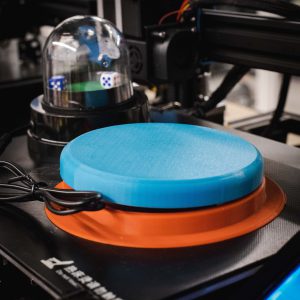
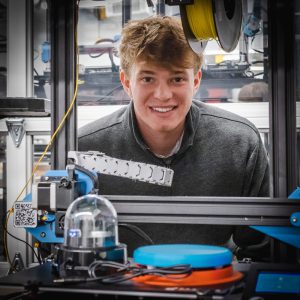
CUW engineering major Lucas Kearney recently helped to design an adaptive button for 3D printing within Concordia’s Makerspace. The button came at the request of Penfield Children’s Center, a nonprofit early education, health, and wellness center that offers services and family programming to more than 1,400 Milwaukee-area children annually. Penfield gifted the completed buttons to children attending their annual holiday party last Saturday.

What is an adaptive toy or device?

Adaptive toys or devices are every day items modified to accommodate a disability or fit a specific therapeutic need. The adaptive button that Kearney designed, for example, is a larger version of a tabletop push button that can be easily navigated by a child with disabilities or developmental delays. The button contains a connector that can then be plugged into an auxiliary jack to trigger a toy or device.

While adaptive toys have proven successful within the therapeutic realm, they often come with a hefty price tag. Vladimir Bjelic, a speech-language pathologist who works at Penfield, says an adaptive toy can cost anywhere from 200 percent to 300 percent more than a non-adaptive toy. Penfield has been able to reduce the price of the adaptive toys they use at their center by partnering with local school groups to have “build days.”  

Concordia’s 3D printing contributions could help further reduce costs for Penfield in the future. The buttons CUW printed cost between $1-$6 per unit, compared to the $40-$100 cost Penfield had been paying. The buttons were the first venture between Concordia and Penfield. However, Bjelic says he is eager to explore more partnership opportunities in the future. 

3D printing for therapeutic needs

Concordia’s Makerspace hosts the largest collection of 3D printers of any nonprofit organization in the state. As such, it has tremendous capacity to serve the community. In 2020, Concordia notably put its inventory to good use by printing much-needed PPE amid the coronavirus pandemic.

Since then, Assistant Professor of Computer Science Yiming Liao, who oversees the space, has expanded the lab’s applications. He has partnered with faculty from Concordia’s School of Health Professions to design and print other adaptive equipment for clients of the PT/OT Community Clinic, including an adaptive video game controller and an adaptive hair braiding tool.

Launching industrial engineering

Concordia announced last November its plans to launch two bachelor’s degrees in engineering. In July, the university hired Dr. Subha Kumpaty to helm the new programs. While the programs’ scheduled start isn’t until next fall, some students already decided to commit to the major.

Kearney, who helped design the adaptive button for Penfield, is a freshman at CUW from Tinley Park, Illinois. As a high schooler, Kearney knew his eventual career track would involve something in the medical or engineering fields. When Concordia’s Head Baseball Coach Eddy Morgan recruited him to play for the Falcons, Kearney decided on CUW, even though the university didn’t have the full gamut of programs offerings he was weighing. Upon admission, he declared as a nursing major. However, he quickly switched once he learned about Concordia’s plans to launch the engineering programs.

“Thanks to Dr. Kumpaty, I’m already involved in a lot of opportunities, including an internship in the field,” Kearney said. “I’m super impressed by him. Not only does he have the brains to run a new program, but he has the expertise to understand the application of the subject in the real world.”


Want in?

Concordia University Wisconsin now offers bachelor’s degrees in chemical or industrial engineering. The programs will officially launch in fall 2024; however, applications are now being accepted for a pre-engineering track.

CUW’s engineering programs are distinct in the marketplace because they are anchored in the liberal arts and designed to prepare engineers through a Lutheran-Christian worldview. Students will hone their science, math, and technology skills for success in their vocation. And they will also deepen their people- and critical-thinking abilities to solve problems and contribute to a better world.