Author: Vanessa Lane
Pharmacy organizations: How Vinny Rotunno gets involved as a student
MBA or MSL: Comparing these two business degrees
Can I become an OT with a degree in another field?
Are you wondering if you can become an OT with a degree in another field?
Can I become an OT with a degree in another field?
If you have a bachelor’s degree in a different field but want to become an occupational therapist, you have options. In fact, your diverse educational background is an asset. Concordia University Wisconsin’s Master of Science in Occupational Therapy offers a post-baccalaureate program geared for individuals whose bachelor’s isn’t related to occupational therapy.
Concordia’s Post-Baccalaureate Track for the M.S. in Occupational Therapy
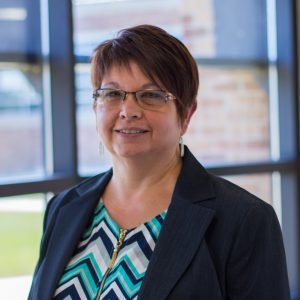
So, the answer is yes, you absolutely can become an OT with a degree in another field. Program Director Dr. Carrie Bath-Scheel states: “We can take just about any bachelor’s degree. We often see applicants whose degrees are in business, psychology, physiology, as well as other areas. We see plenty of liberal arts degrees opt for a career in occupational therapy.”
When it comes to the student’s success in the program, Dr. Bath-Scheel said this: “It doesn’t matter that they didn’t begin with occupational therapy in mind. These students have core knowledge and core experience. Furthermore, they enhance the cohort with their life experiences and diversity. Students with diverse educational backgrounds bring breadth to their cohorts. Their presence helps other students learn faster.”
Why should I consider becoming an occupational therapist after studying a different subject?
First and foremost, if you love caring for people and making a difference in your community, you should consider becoming an OT. Occupational therapists impact their communities through leadership, best practices, advocacy, and innovation. Concordia University is proud to say that we emphasize the importance of serving all clients with the best care possible. These practices and values lay the foundation for being an occupational therapist.
Your master’s program will help you gain practical skills to serve in occupational therapy. Since OTs are trained to work with individuals, groups, or broad populations, there are many ways to approach the work. Concordia’s fully accredited program uses a combination of classroom, lab, and supervised clinical experiences to help students learn the skills that make them a valuable part of a care team.
Your background in a different field is useful.
Occupational therapy provides a clear pathway to build on what you’ve already studied in another field and expand it. Additionally, OT offers you a skillset that tangibly improves the lives of other people.
You have options! Just because you don’t start in OT as a freshman doesn’t mean that you’re behind. We’re seeing a trend from hospital-based practice to much more community-based. In addition, occupational therapists are becoming more and more active in public health. If you’re going to pursue work in public health, you’ll need perspective and diverse experiences.

How could someone with more life experience use that to their benefit in OT?
Dr. Bath-Scheel commented that students with more work and life experience benefit their cohorts immensely. Also, not only do they bring their real-world experience, but they also bring their critical thinking skills and larger perspectives. Finally, Bath-Scheel said: “The more diversity we can put into a cohort, the more our students learn. Their patients will be from a variety of backgrounds and perspectives.”
Want more information?
If you want to know more about becoming an occupational therapist, you can contact the admission counselor David Hengst at 262.243.4397 or david.hengst@cuw.edu. He is equipped to answer your questions and connect you to the information you need.
Leadership masters: Why you should consider an MSL
What does a business analyst do?
Business analytics: defining this term
You’ve heard the term “business analytics” before. But, do you know what business analysts do? The word analytics refers to the science of drawing conclusions from raw data. Business analysts use data to assess processes, determine requirements, and deliver data-driven recommendations and reports to executives and stakeholders. Learn more about how these skills can enhance your understanding of data and help you add value to your work.
How do businesses use analytics?
1. Searching for trends and fine-tuning data reporting
First of all, businesses use analytics techniques that help them find trends. They’ll see performance data that they might otherwise miss. Above all, analytics helps them report more accurate data.
2. Using business analytics for efficiency
Secondly, business analytics techniques can help companies and organizations be more efficient. With solid data, organizations can create better products. Better products mean meeting people’s needs in greater ways.
CIO notes that business analysts often straddle the line between the IT and business worlds to help bridge the gaps and improve efficiency. Above all, business analytics helps organizations perform at a higher level.
How do business analysts work with data?
Business analysts begin with a strong question. A good research question sets you up to follow the Data Science Framework steps.
Here are two research questions:
- What business analytics jobs are available in Wisconsin or Michigan?
- What is the average salary?
Next, Professor John Fields demonstrates what a real business analyst would do to answer these questions. Then, Prof. Fields teaches the “OSEMN” framework, which was developed by Hilary Mason and Chris Wiggins. This framework is used globally by many people within the realm of data science. (This would include business analysts.)
Using the OSEMN Framework
“OSEMN” is an acronym based on standard procedures in data science.
- Obtain: When we look at the data, we apply the principles and techniques of data collection to locate the appropriate sources needed to answer the research question(s).
- Scrub: Often, we will need to scrub the data. This involves reviewing the data for errors, anomalies, and missing information.
- Explore: When we explore data, we perform exploratory data analysis (EDA). This involves looking for patterns and trends. Our objective is to understand the basic statistical information about the data. Then, we can determine if additional data is needed.
- Model: In order to construct a model to predict and forecast, we use statistical techniques and data science methodologies.
- Interpret: To interpret results from exploration and modeling, we use visualization techniques and a summary of recommendations and conclusions.
Business analysts must get answers to questions that organizations need. As you can see, the OSEMN framework gives business analysts the structure and direction to get the job done.
What jobs can I get with a business analytics degree?
We live in the information age. If you can work with data, you’ll have a lot of options for work.
For example, here are a few positions related to business analytics:
- Business Intelligence Analyst: Business Intelligence analysts look at data and draw business-related conclusions from it.
- Business Operations Specialist: In this role, you’d look at the processes within a company or organization. You’d become an expert in using data to improve the company’s processes.
- Marketing Research Analyst: You love to gather market data and communicate it in a way that your colleagues or customers understand.
- Data Warehousing Specialist: Your specialty would deal with the processes for storing data and developing reports.
- Management Analyst: You’d prepare the daily operations and create manuals all based on data. You’d look for areas that need to improve along the way.
Remember that these are just a few examples of what you can do as a business analyst. Don’t be discouraged if you’re not seeing the right fit job for you. If you’re able to analyze data at a high level and clearly communicate what you find, you’ll be able to use this skill set in many contexts.
Learn More
Do you want to learn more about what business analysts do? Find out more here.