Study Abroad with Paige and Ruth

Click HERE to hear from Paige and Ruth about their adventures studying abroad and why you should study abroad as well.

— Melena Weber serves as Student Editor for The Beacon. She is a junior studying Mass Communications and Hospitality & Event Business. She is the Membership Coordinator for Campus Activities Board and the Student Engagement Intern for Concordia Crew.
Uncommon Major and Minor Combinations

Concordia University Wisconsin students are choosing unique major and minor combinations to strengthen their skills and prepare for careers after graduation.

The students say these pairings help them understand how different fields connect and how broad skill sets can make them more competitive when applying for internships or fulltime roles.

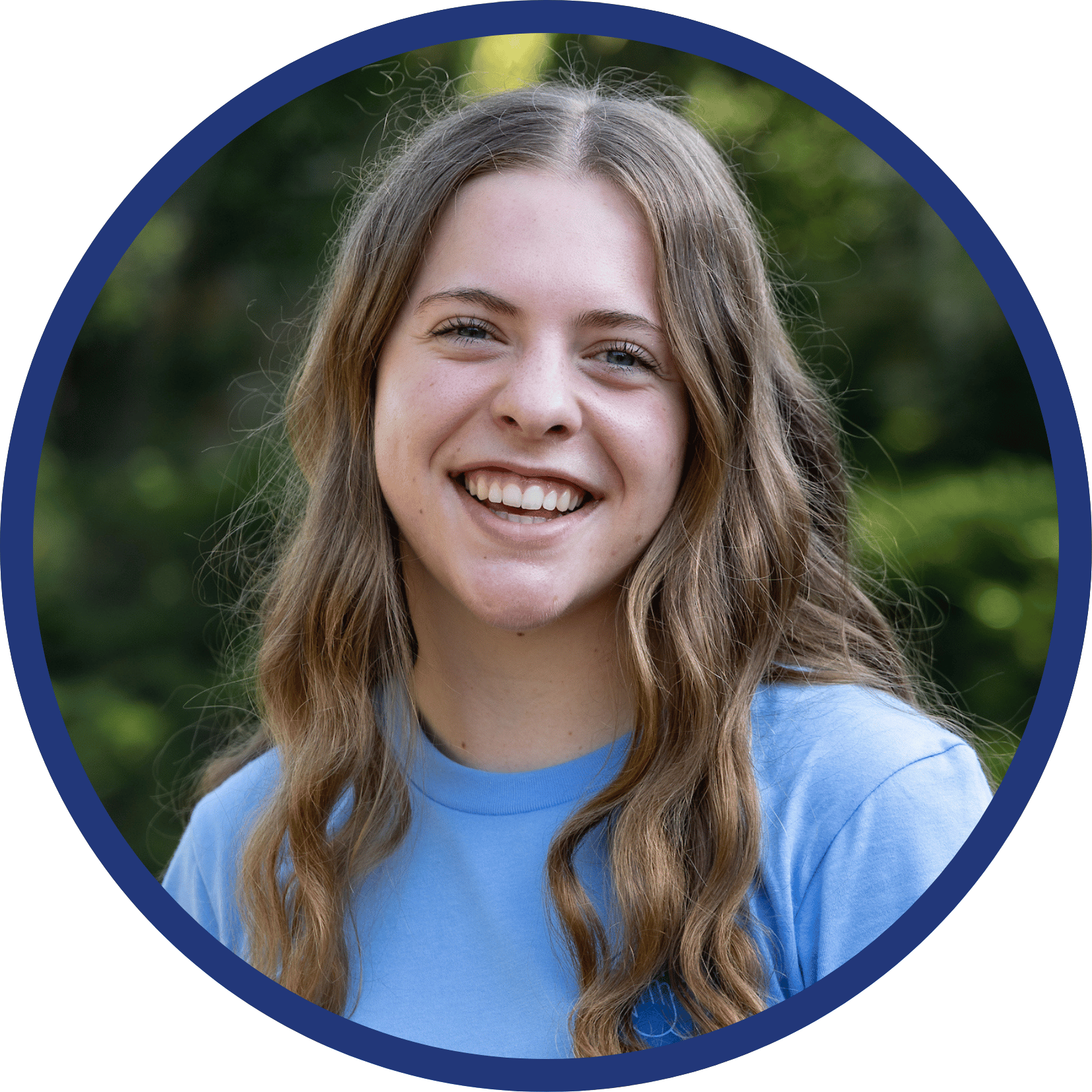
One student, Sarah Poynter, majoring in psychology and minoring in human resources said the overlap between the two areas has already helped her understand workplace dynamics. She said she frequently sees connections between what she learns in different classes.

“Personality tests for hiring, group dynamics, and creating a positive workplace culture all connect to psychology,” she said. “Understanding why people behave the way they do is really helpful for building a positive workplace.”

Student Kirsten Harrington is majoring in photography and minoring in mass communication. She said she chose photography because she loved taking pictures and capturing meaningful moments and added mass communication later on after taking a journalism class she enjoyed.

“I feel like the pairing benefits my career because it lets me learn other forms of digital media besides photography and will enhance my storytelling skills,” she said.

CUW academic advisor, Tricia Meyer agrees that these pairings can benefit students’ long term by helping them stand out to employers. She noted that students who blend fields often demonstrate initiative and adaptability.

“Blending programs helps students develop a broader tool set that employers look for,” Meyer said. “It shows they’re being thoughtful and flexible with their future career paths.”

Both students said their programs help them build strengths in more than one area, giving them confidence in finding a job post-graduation. They hope these combinations will help them secure careers where they can use their wide range of skills in real-world settings.

Looking ahead, the students plan to continue exploring how their coursework connects and how they can use that knowledge to shape meaningful career paths after graduation.

— Alexandra Princeton is a junior majoring in Mass Communications with a minor in Marketing, set to graduate in December 2026. She currently works at Baird in downtown Milwaukee and serves as Student Editor for The Beacon.

Spring Break Mission Trip in North Carolina

Concordia University Wisconsin students and staff spent their spring break serving in Newland, North Carolina, as part of disaster relief efforts following Hurricane Helene’s flooding and destruction.

This year’s annual spring break team partnered with the Lutheran Early Response Teams to help pick up trash and clear local sites in the community of Newland.

It has been 18 months since Hurricane Helene, so students had anticipated rebuilding or repairing in the local area, but instead spent their time picking up trash left in the wake of the flooding.

“The entirety of the week was essentially still cleanup. There were still a lot of places that had not been touched…there was still so much trash and litter in so many different places,” Residence Director, Mason Brown said.

As one of the trip leaders, Brown was amazed by the character of the college students to spend their break doing service.

“It definitely is encouraging to see that students are still wanting to go serve and willing to sacrifice their time, money, and their energy,” Brown said. “I think it is a testament to their character and a testament to the students we have here at Concordia.”

This was student Emma Wagner’s second trip with CUW, and she believes service brings people together.

“It’s truly like a kingdom on earth, and it’s such a beautiful thing. Everybody just wanted to serve and do the Lord’s work, and that is what made the community so close-knit,” Wagner said.

Amongst Brown’s several trips in the past, the community of Newland expressed the most gratitude he has seen in the mission field.

“This was the most gratitude I’ve ever seen out of a community while I was there. Like all we were doing was picking up trash, but they were still so grateful…it’s not about picking up trash or building a house, it’s the fact that you came and gave up your time to serve,” Brown said.

Brown and Wagner encourage all considering it to attend and serve the Lord in the mission field.

“To people who might be considering it, just do it. It is the best week of my year. You get to meet so many new people and just really experience the goodness of God’s grace,” Wagner said.

The annual spring break mission trip will take place again next year, with the location to be announced in the future.

— Melena Weber serves as Student Editor for The Beacon. She is a junior studying Mass Communications and Hospitality & Event Business. She is the Membership Coordinator for Campus Activities Board and the Student Engagement Intern for Concordia Crew.
Honoring the Life and Impact of Rev. Dr. Daniel Paavola

Rev. Dr. Daniel Paavola, who recently passed, impacted many students and staff through his kind heart and show-and-tell sermons.

According to President Ankerberg’s email, Dr. Paavola started working at Concordia in 1996. For almost three decades, he taught students and served as the chairman of the Department of Theology.

Rev. Dr. Kurt Taylor, who worked with Dr. Paavola for eight years, said Dr. Paavola is a giving person.

“He was so giving, all the way down to if there were a few of us eating lunch together. I usually don’t bring lunch, but I come in, I’d just have a bottle of water. He’d actually tear his sandwich in half and hand it to me anytime I needed something from him, he gave it,” Taylor said.

Rev. Dr. Nathan Jastram, who worked with Dr. Paavola for twenty-five years, was impressed with Paavola’s work ethic.

“Dr. Paavola is always willing to take on extra assignments to fill in any needs that the school or the church would have. Most of the rest of us have a kind of a limit on our abilities to keep adding on work and still retain sanity,” Jastram said.

Pastor Bakker, who worked with Dr. Paavola for only a few weeks, said he had a unique gift for teaching.

“He used object lessons, which really made him stand out, because very few people do that outside of children’s lessons aimed at younger people, but he showed how clearly that helps connect with people of any age. He was able to take very complex ideas that the Bible communicates and transmit them in his own voice in a way that anybody could understand. That is a real gift,” Bakker said.

According to student Rachel Pope, Dr. Paavola is someone to strive to be like.

“Kind of just finding joy in everything, even when things are hard, just constantly looking to God and thanking God and having that word of the day. He’s just such an inspiration, somebody that all of us Christians should strive to be like and live that kind of life,” Pope said.

— Kirsten Harrington is a writer for the Beacon and a junior majoring in photography and minoring in Mass Communications. She works as a student photographer, taking photos at campus events.

Symphonic Wind Ensemble Experience

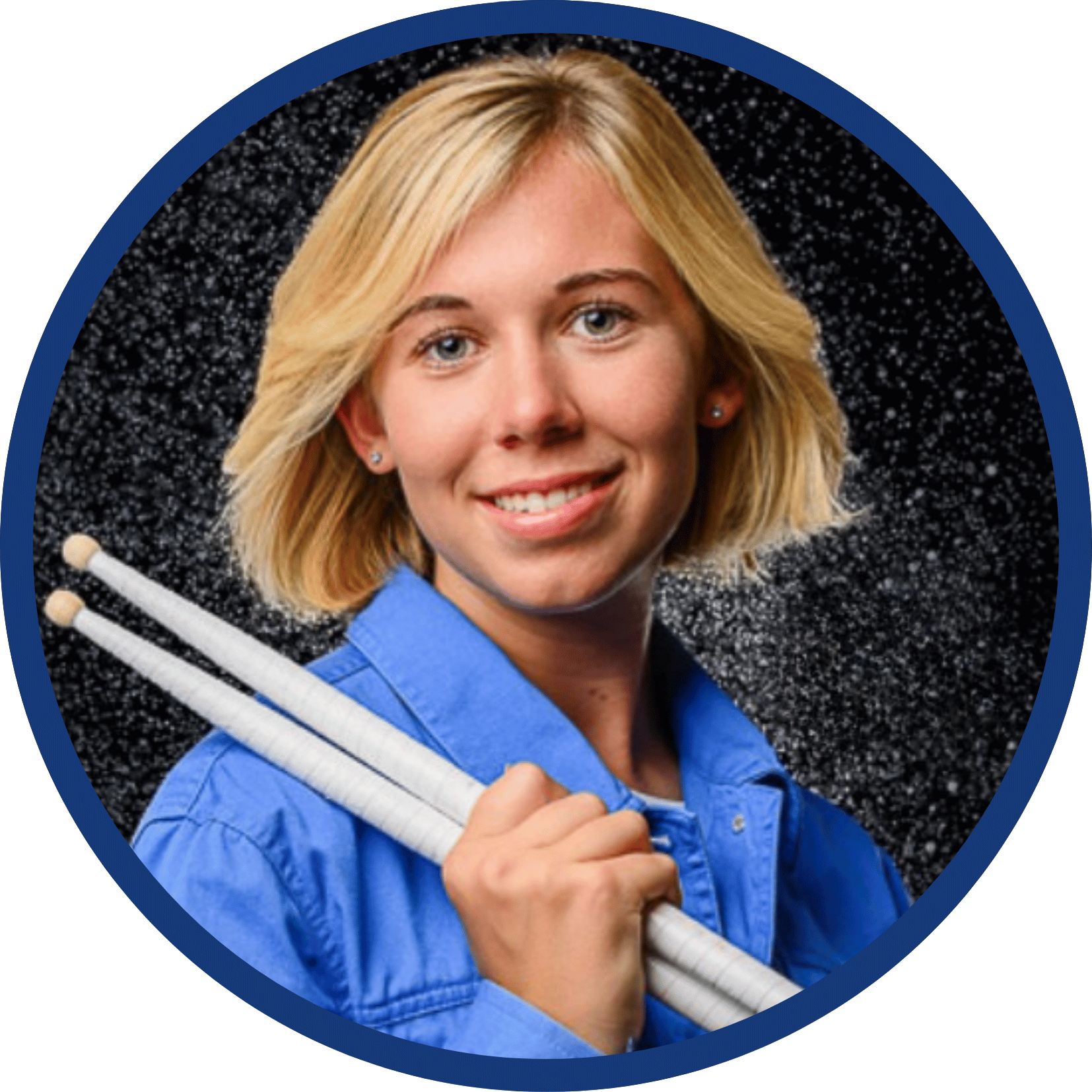
Samuel Wilkins, percussionist with the university’s Symphonic Wind Ensemble, toured in Chicago during spring break.

Dr. Louis Menchaca asked Wilkins to join the ensemble at the beginning of the spring semester. Wilkins knew joining would mean a touring road trip to Chicago, and he gladly accepted.

The 35 to 40 people in the ensemble played a “mini-tour,” consisting of wind, brass, and percussion instruments, showcasing four concerts within five days.

“That number of people provided a really full sound, especially in these small churches. We went to three different churches and then a school,” Wilkins said. “St. Peter Lutheran Church in Arlington Heights, St. John Lutheran Church in LaGrange, Illinois, another St. John Lutheran Church in Wheaton, Illinois, and then we played at Grace Lutheran Church and School in Oak Creek, Wisconsin.”

With music from Johann Sebastian Bach, Leonard Bernstein, Aretha Franklin, and a How to Train Your Dragon medley, people of all ages could enjoy their music.

“I think we had enough music that reached every single age range that we would be playing for,” Wilkins said.

Wilkins featured on several different instruments, including the drum set, timpani, snare drum, and vibraphone. According to Wilkins, transporting a vibraphone was not the easiest.

The group toured with a bus where they stored their luggage underneath and a truck that drove along with the larger instruments, including the lower brass, percussion, and music stands. 

Wilkins was thankful to have been invited along on this journey and expressed his excitement for the future of the Ensemble, with it being Dr. Menchaca’s last year before retirement.

“I enjoyed it a lot. I’m going to be coming back to Symphonic Wind Ensemble from here on out, so I would 100% do it again if I were asked,” Wilkins said.

— Erica Herzog is a writer for the Beacon and a sophomore at Concordia, majoring in Mass Communication and minoring in Law and Politics. 

Enrollment Policy Changes Impacts the School of Arts & Sciences

Beginning in the 25-26 academic year, Concordia University Wisconsin administration changed the course enrollment policy which has impacted faculty and students in the School of Arts & Sciences.

According to Chief Academic Officer Dr. Leah Dvorak, for this year and going forward, classes must have a minimum of eight students enrolled to run the course, with some exceptions made.

“The financial goal is to ensure that the university does not spend more money to offer a class than what we gain in tuition,” Dr. Dvorak said.

According to Dr. Dvorak, with the new policy, CUW aligned with other private colleges in Wisconsin, as the common minimum enrollment number to be eight.

Before 2025, classes with four to seven students ran, but with a lower pay rate for the professor.

According to an Arts & Sciences Instructor, they agreed that there are too many classes with too few students, but unstable compensation strategies have been employed for faculty.

In addition to contractual full-time pay, additional pay for full-time and pay for part-time changed to $180 per credit (eight or sixteen weeks), $540 to teach a three-credit class.

The instructor said efficiency matters for sustainable financial numbers, but pointed out the gap of implementation for pressure is on faculty overload without being properly compensated.

According to the instructor, the faculty have minimal choice in when and what they teach. The departments now have tighter schedule choices and face late cancellation notices.

Senior Illustration and Philosophy student Mandy Davila has faced course cancellations that threaten her skills for her future career.

“I signed up for Concordia to have at least 4000 level drawing under my belt, but never got past a 3000 level. These are skills that are needed for my major and for what I want to do and why I came here…I don’t get them because of the low enrollment, which was rough,” Davila said.

According to Davila, her philosophy program was also almost cancelled from low enrollment, so there was a big push for any interest to keep the program and classes running.

“If it had been dropped, I wouldn’t have been able to complete either of my majors, or I would have had to jump through even more hoops,” she said.

According to Dr. Dvorak, there are no current plans to change this policy, but faculty have faced under compensation and students face cancellations of required curriculum to graduate.

— Melena Weber serves as Student Editor for The Beacon. She is a junior studying Mass Communications and Hospitality & Event Business. She is the Membership Coordinator for Campus Activities Board and the Student Engagement Intern for Concordia Crew.
Letters to the King

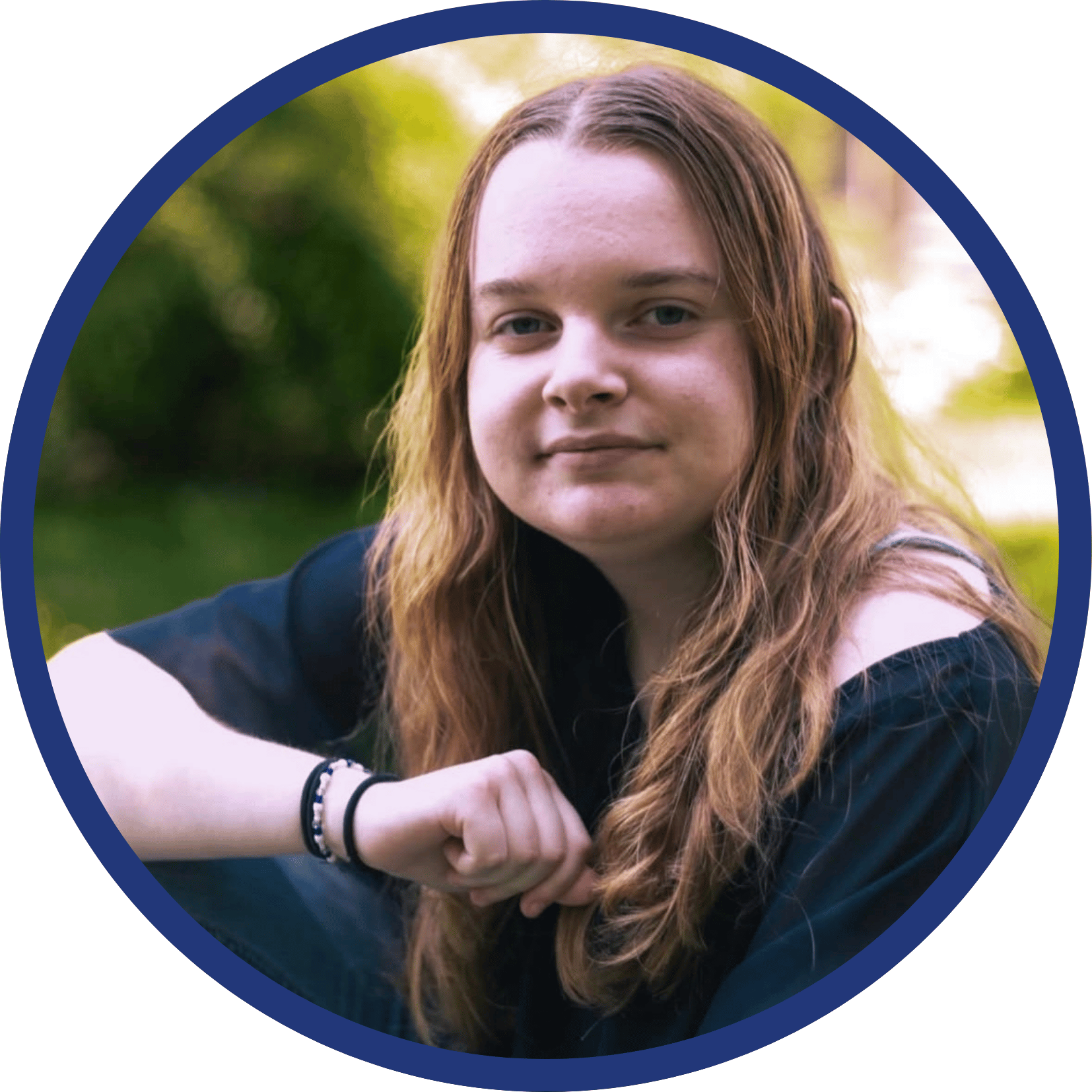
Concordia students Isaac Brashaw, Rachel Pope, and Tirzah Schmickle are excited to introduce their new Christian pop band, Letters To The King, in hopes of sharing the truth and love of Christ.

The musicians began writing their music in late summer 2024, and their debut performance was at Concordia’s Got Talent in April 2025, where they won the talent competition. The audience loved their original music, which led them to record their single “More Like You” the following summer.

With Rachel and Tirzah as lead vocalists – also playing guitar and piano – their full ensemble consists of Isaac Brashaw on electric cello, Ayden Dunst on lead guitar, and Elliot Fortuine on the drum set.

The band’s name, Letters to the King, reflects their inspiration drawn from their connection with the Lord. “We feel like a lot of our music is conversations that we have with God, and what He says to us in Scripture,” Pope said.

Their first live performance after CGT was a band opener at X-Ray Arcade, where they performed their newest song, “What is the Truth.”

The trio described it as a contrast between repetitive spiraling thoughts and the chorus of the truth of God that sets them free. “It’s an anthem against anxiety,” Schmickle said. “The chorus is meant to be a breath of fresh air.”

The group plans to continue writing songs with a full album recording this summer.

“We’re still figuring out what’s all going to go on the album, because we’re still writing, and there’s one or two songs on that album that we won’t have performed before. So, we might want to swap something out,” Pope said, “It’s kind of cool just to have that freedom.”

Catch Letters to the King at X-Ray March 16, at a CAB study and live music event April 20, or at open mic during Life Fest, from July 9th-12th.

— Erica Herzog is a writer for the Beacon and a sophomore at Concordia, majoring in Mass Communication and minoring in Law and Politics.