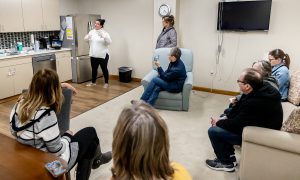
By enhancing its simulated on-campus apartment with assistive and adaptive technology, Concordia University is addressing critical gaps in support, accessibility, and independent living resources for those in Ozaukee County and beyond.
A new effort at Concordia University Wisconsin is turning the university’s on-campus simulated apartment into a vital resource for individuals in the community who could benefit from assistive technology.
Showcasing assistive technology
CUW Associate Professor of Rehabilitation Science Lois Harrison, DPT, has partnered with Rick Ziller, a double CUW alumnus who is president of Adaptive Technology Resources, Inc., to furnish the apartment in Concordia’s Interprofessional Clinic with a variety of assistive technology devices. Assistive technology includes any software or equipment that is used to increase, maintain, or improve the functional capabilities of individuals with disabilities.
Harrison first assembled a task force that included a variety of stakeholders—faculty, non-profit representatives, parents and a vendor—to identify practical, cost-effective items for Concordia to purchase. The purchase of the equipment was made possible by a grant Concordia received from the Russell and Josephine Kott Memorial Charitable Trust. Ziller, who graduated from CUW’s undergraduate rehabilitative science program in 2009 and its Master of Occupational Therapy program in 2009, then donated his time for installation and consultation.
With the addition of the devices, the apartment has now become a sort of interactive showroom that allows families, caregivers, and individuals to explore assistive technology in a realistic setting and learn how even inexpensive tech—such as Amazon Echo Dots for voice control or vibrating alarm clocks—can make a profound difference.
Examples of assistive technology in the apartment include:
- Amazon Echo Show 10 for interactive communication and control
- Smart motorized blinds for ease of use
- Bed pressure sensors for enhanced safety monitoring
- August Smart Lock Deadbolt and Keypad for secure, accessible entry
- Cabinet locks and kitchen timers tailored for individuals with executive functioning challenges
A community resource
Earlier this year, Harrison welcomed the first group of families from Ozaukee County to campus and into the space. To identify families in the area who would benefit from attendance, Harrison connected with Samantha Bear, who serves as executive director of Blossom IDD. The Cedarburg-based nonprofit supports adults and families throughout the Ozaukee and Northern Milwaukee areas who care for individuals with IDD—many of whom have transitioned or are transitioning from school-based IDD services to semi-independent living in the community.
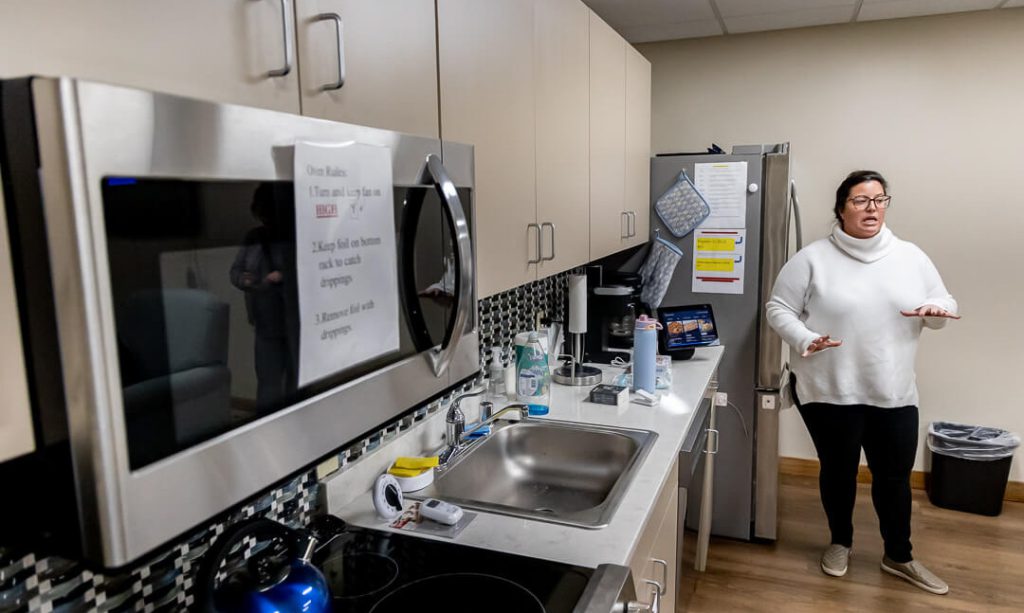
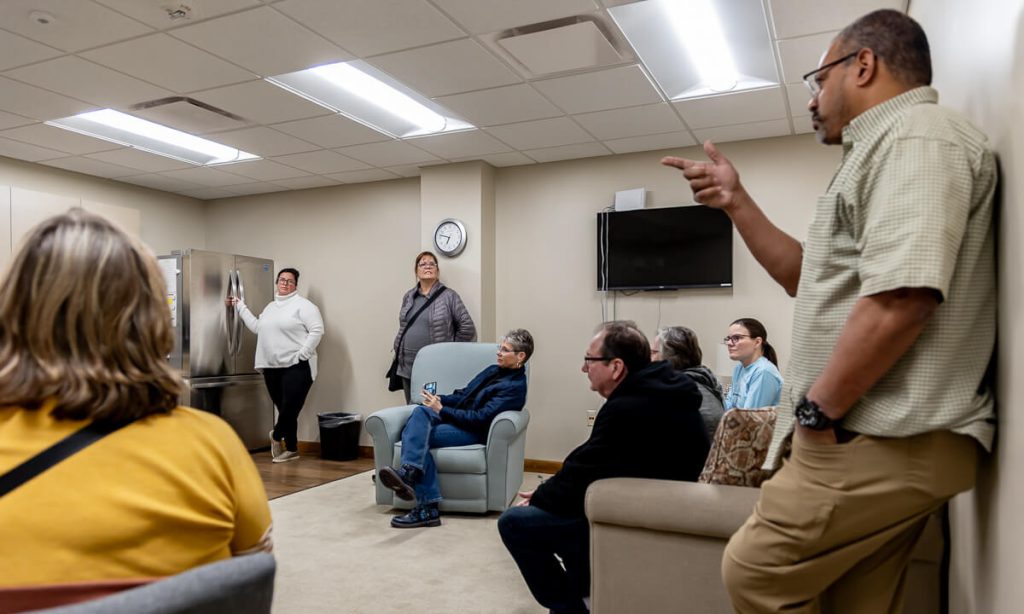
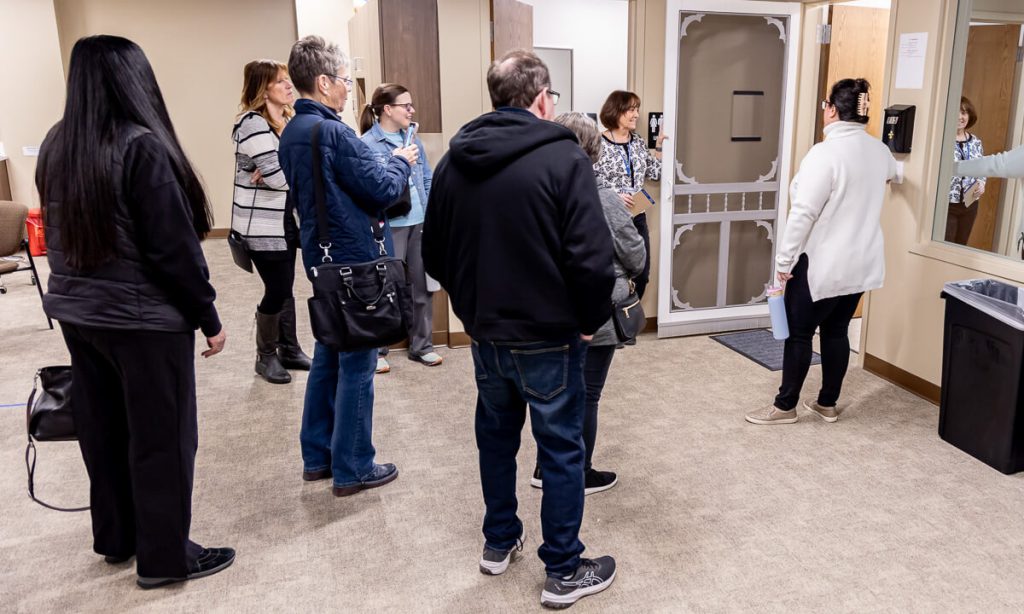
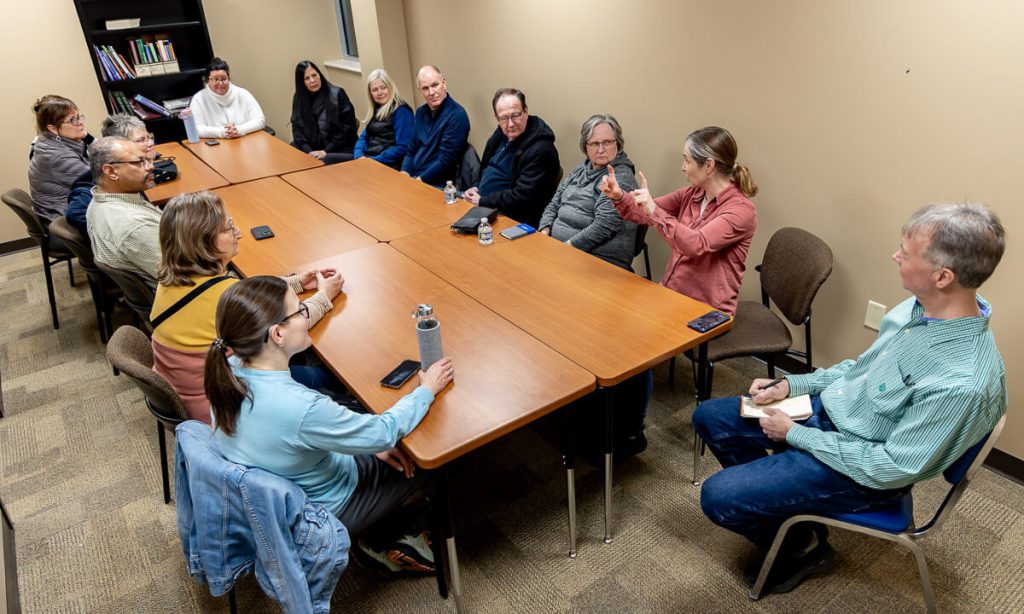
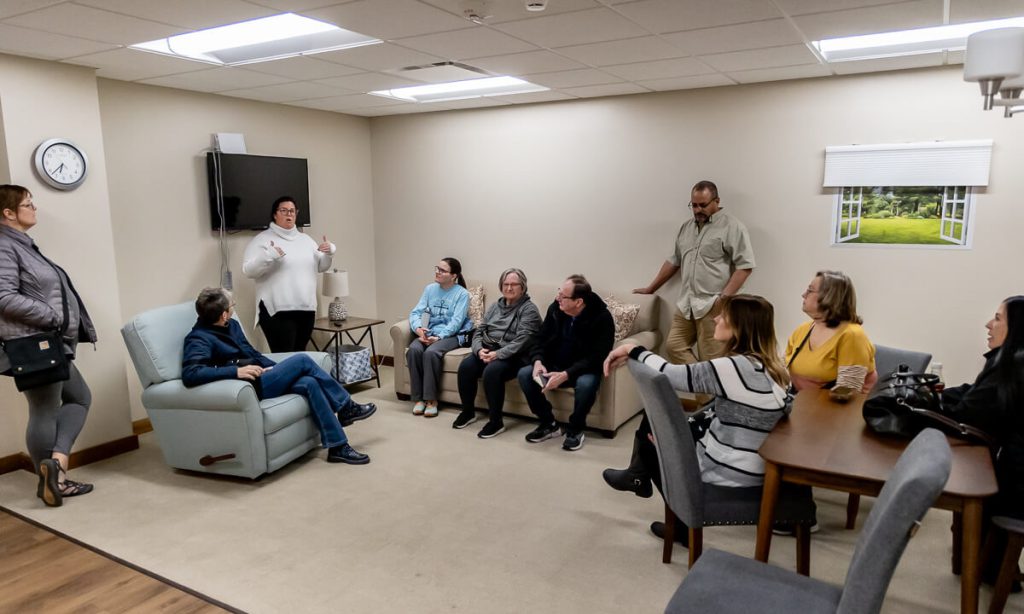
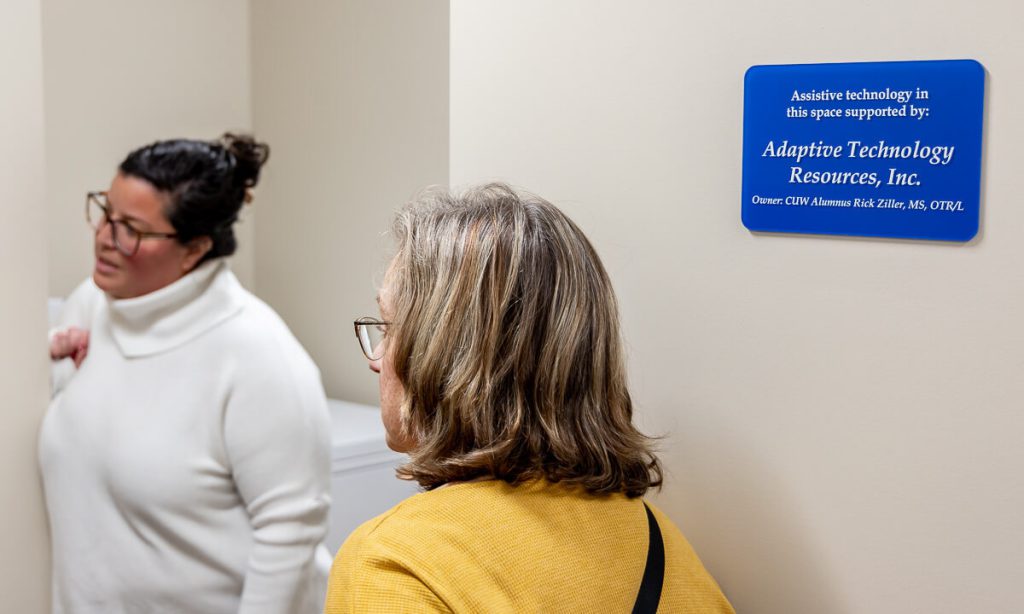
About two dozen parents and guardians from Blossom IDD’s Morning Glory parent-guardian group toured the apartment on Feb. 24 and observed various tech in action.
“These families are in this transition abyss and they’re yearning for resources,” says Bear. “Their son or daughter is five-to-10 years out of high school where they received a lot of built-in supports through the school system, and now they’re navigating things on their own. The event at Concordia triggered ideas for their loved ones, as well as ‘what else can we learn?’”
Addressing a critical need
For individuals with IDD, striving for growth often hinges on access to the right resources, something that has historically been difficult for families to navigate, explains Bear. There are options through the state’s assistive technology program, called WisTech, which is funded under the federal 21st Century Assistive Technology Act. However, these programs are sometimes difficult to navigate or might overlook quality-of-life enhancements that support executive functioning skills like time management, sequencing, or flexible thinking.
“Many families don’t even know these resources exist,” Bear says. “The biggest barrier of all is awareness.”
The model apartment at Concordia aims to bridge this knowledge gap by offering hands-on demonstrations of assistive technology.
“My vision is to have this be a free resource for nonprofit organizations in the area serving individuals with disabilities,” Harrison said. “There’s not really a community place for people to go anymore to just explore the possibilities available to them, and we want to change that.”
Want in?
Those interested in touring Concordia’s apartment and exploring its assistive technology may reach out to Lois Harrison (Lois.Harrison@cuw.edu) directly to schedule an appointment.
Rick Ziller’s Adaptive Technology Resources, Inc. conducts onsite assessments and curates customized solution packages to allow clients with unique physical and cognitive barriers to quickly and efficiently achieve their specific goals. Learn more about Adaptive Technology Resources, Inc. at adaptivetr.com.
Blossom IDD welcomes families to connect with them and learn more about their services through their website: blossomidd.org.

The purchase of Concordia’s new assistive technology was made possible by a grant from the Russell and Josephine Kott Memorial Charitable Trust.