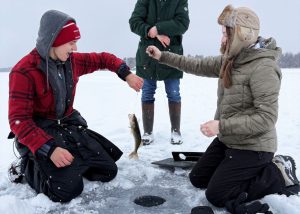
Concordia students explored a new approach to increasing omega-3 fatty acids in farm-raised fish.
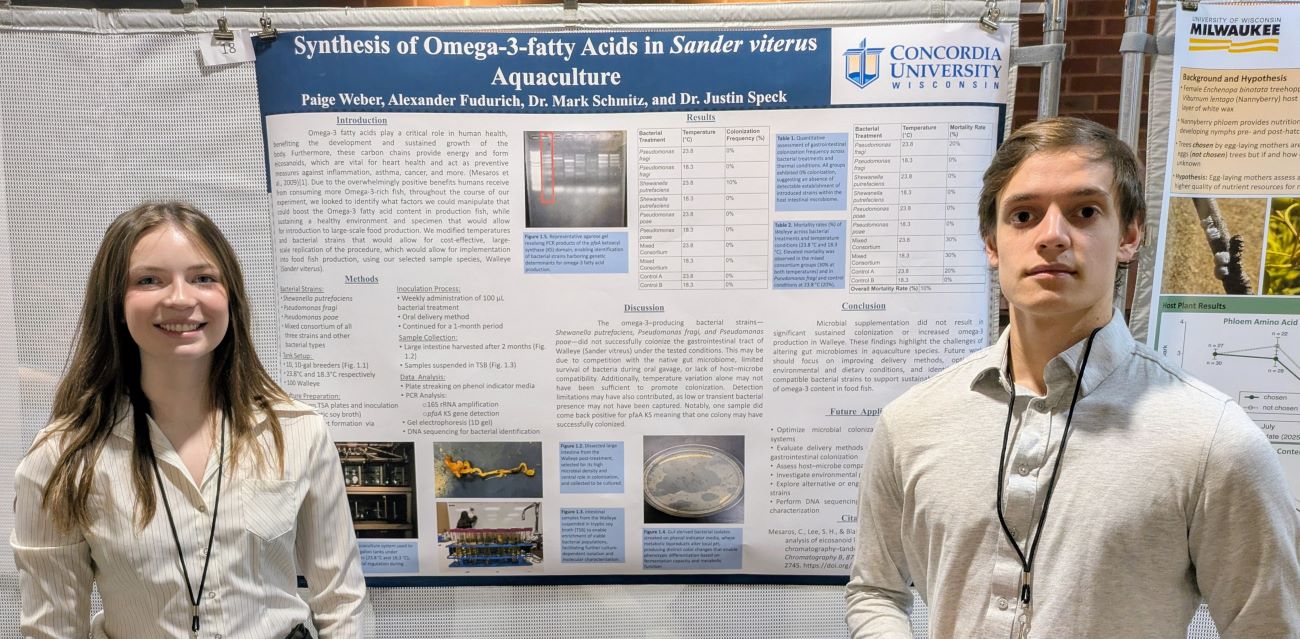
Research often begins with a question and leads to new discoveries. Earlier this spring, students Paige Weber and Alexander Furdurich presented their work at the Milwaukee Area Undergraduate Research Symposium, sharing findings focused on increasing omega-3 fatty acids in farm-raised walleye.
Omega-3 fatty acids support heart health, brain function and disease prevention. While wild-caught fish naturally contain higher levels of these nutrients, farm-raised fish often contain less because of differences in feed and production methods.
Weber and Furdurich wanted to see whether bacteria capable of producing omega-3s could help change that.
Researching a better fish
Their research examined the possibility of introducing omega-3-producing bacteria into the gut microbiome of walleye (Sander vitreus). Their goal was to determine whether the bacteria could improve the nutritional value of farmed fish while remaining practical for aquaculture operations.
Inside temperature-controlled tank environments, the students monitored a four-week inoculation period while testing different conditions for bacterial colonization. The work required patience, precision and steady observation as they evaluated how the bacteria interacted with the fish over time.
“I enjoy the opportunity to work more closely with students and watch them grow as they pursue research,” said Dr. Justin Speck, associate professor of microbiology.
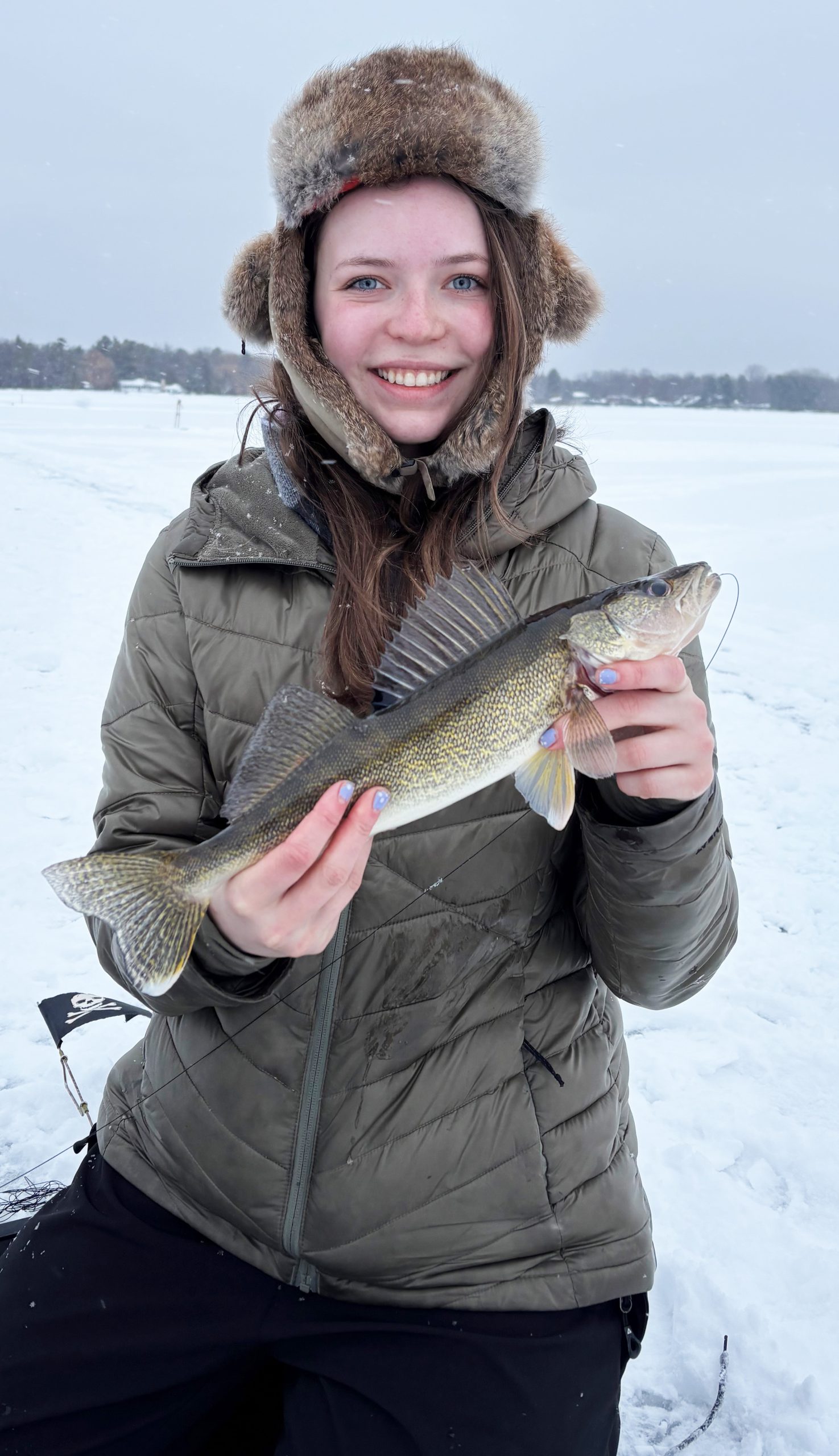
“By exploring the hidden microbial communities that shape fish health, I developed a deeper appreciation for the intricate relationships connecting environmental biology, nutrition and human well-being,” Weber said.
“It was exciting through research to get a first look at interdisciplinary biological practices. The experience not only provided a glimpse of what graduate research might hold, but also what we can do to make a difference,” Furdurich added.
Projects like this give students the opportunity to apply classroom learning in meaningful ways. Alongside faculty mentors, students participate in research connected to current challenges facing industries and communities.
Weber plans to attend medical school and continue studying biological systems connected to human health. Furdurich hopes to pursue graduate research or a career in aquaculture.
Undergraduate research remains a defining part of the Concordia experience. Students are encouraged to ask questions, test ideas and contribute to work that reaches beyond the classroom. Through projects like this, they gain experience conducting research that addresses real-world challenges.
Want in?
Concordia University Wisconsin is a Lutheran higher education community committed to helping students develop in mind, body and spirit for service to Christ in the Church and the world.