On track to becoming a surgeon, CUW student Cole Oechsner is researching bacteriophages as a possible tool against antibiotic-resistant biofilms.
Inside Concordia’s microbiology lab, Cole Oechsner is researching bacteriophages with the hope that one day they could help heal patients facing difficult bacterial infections. Bacteriophages are viruses that infect bacteria.
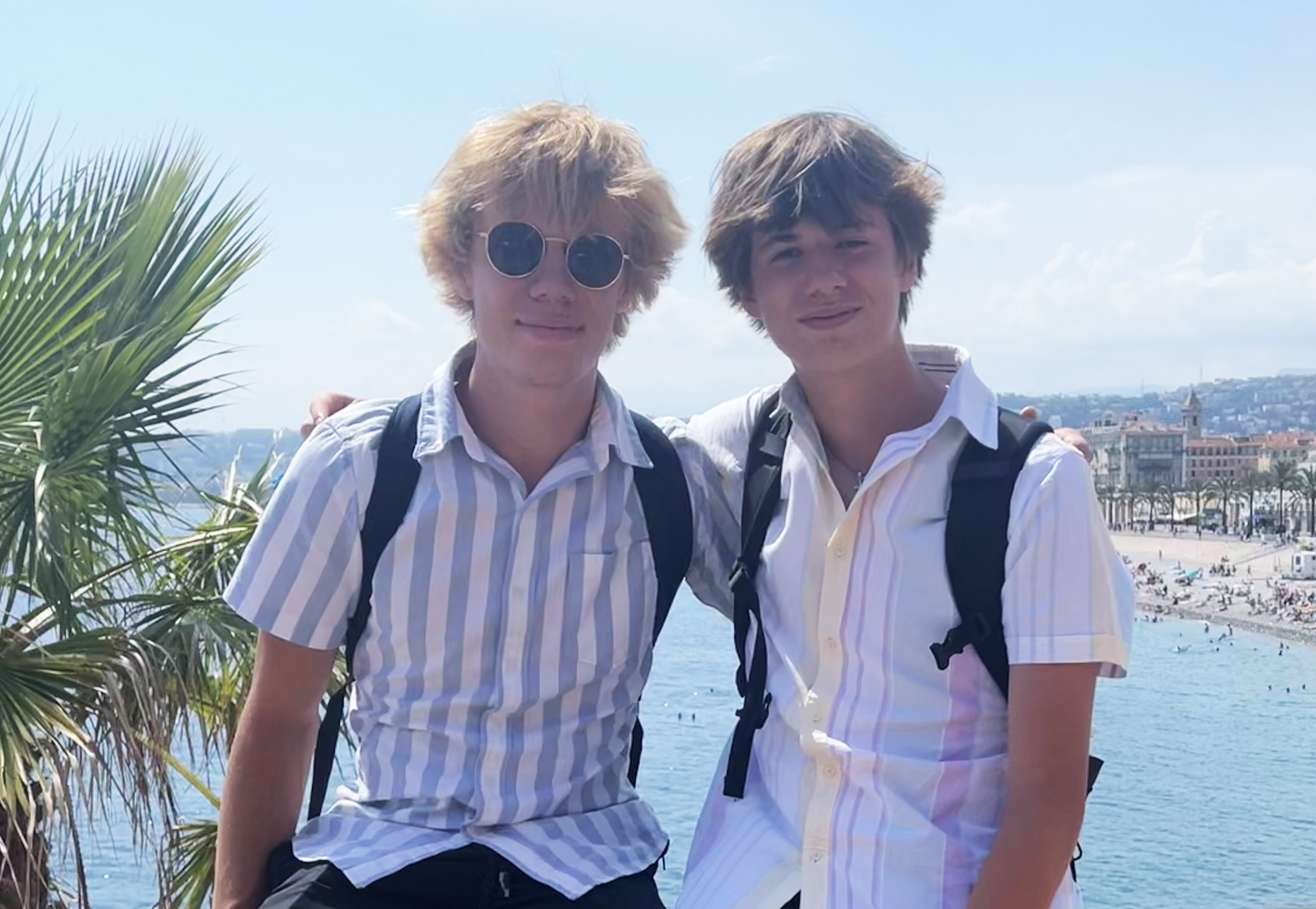
Originally studying mechanical engineering at Milwaukee School of Engineering, Oechsner believed he had chosen a practical and stable career path. But after the unexpected loss of his younger brother, Denny, his perspective shifted.
“I felt led toward healthcare,” Oechsner said. “I wanted to provide healing and serve people in that way.”
Now entering his final year as a biomedical sciences major, Oechsner is preparing for medical school while spending long hours researching in the microbiology lab. His work, conducted alongside Dr. Justin Speck, associate professor of microbiology, examines whether bacteriophages could help break down bacterial biofilms that are often resistant to antibiotics.
“Cole is a talented young man, and it was a joy to conduct research with him,” Speck said.
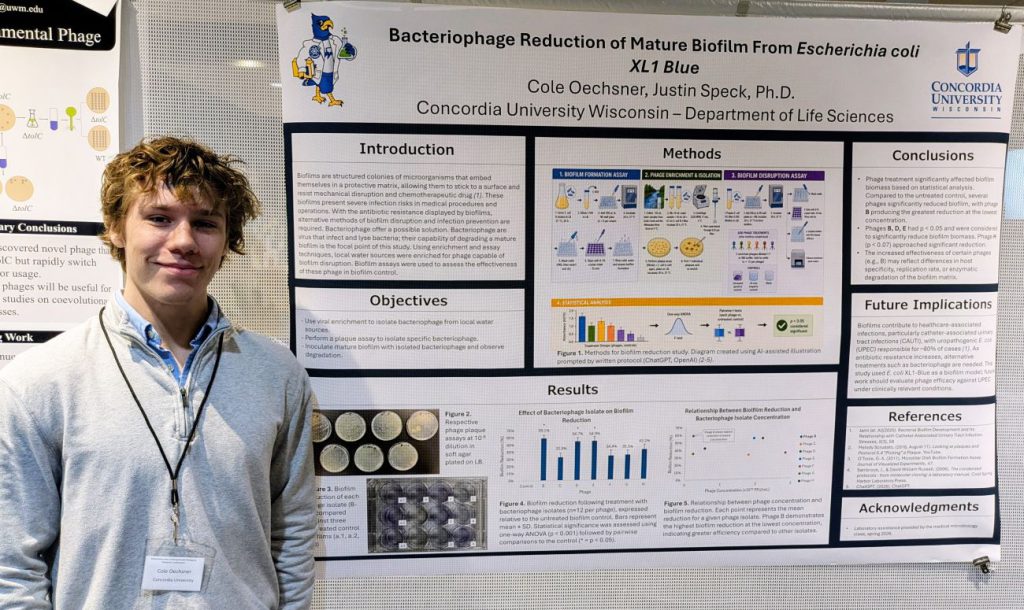
The project recently earned attention at the Milwaukee Area Undergraduate Research Symposium, where Oechsner presented findings showing that several phages collected from local waterways reduced E. coli biofilms in laboratory testing.
“As I’m going into the medical field, I’m always thinking, ‘What can I do? How can I solve this problem? How can I bring a new approach to this medical condition?’” Oechsner said.
Looking at infections differently
Biofilms are protective bacterial layers that form on surfaces such as catheters, medical implants and surgical sites. Once established, they become difficult to remove and can contribute to persistent infections.
“When bacteria form biofilms, they interlock and create this slick layer over a surface,” Oechsner explained. “Antibiotics and other forms of disruption are often ineffective.”
The challenge caught his attention during microbiology coursework with Speck. “At the same time we were learning about biofilms, we were also studying bacteriophage and how effective they are at infecting bacteria,” Oechsner said. “With antibiotic resistance becoming a growing issue in healthcare, I started wondering whether phages could help disrupt these biofilms without relying on traditional antibiotics.”
That question eventually became a semester-long undergraduate research project.
Searching for phages in Wisconsin waterways
To begin the study, Oechsner collected freshwater samples from Cedar Creek and the Milwaukee River, locations he already knew from previous microbiology work.
“The first place that came to mind to look for viruses that infect E. coli was Cedar Creek, and thankfully that’s where I found them,” he said.
Back in the microbiology lab, Oechsner used plaque assays and sterile laboratory techniques to isolate bacteriophages capable of targeting Escherichia coli strain XL1 Blue, a strain selected because it formed strong biofilms during testing.
By the end of the semester, he had identified seven phages, currently labeled Phage B through H. Three produced statistically significant reductions in biofilm growth. One, labeled “Phage B,” reduced biofilm formation by more than 59%.
“We took the project one step at a time because we didn’t know whether the bacteria would form strong enough biofilms,” Oechsner said. “We didn’t know if we would even be able to isolate the phages from the water samples. But things started falling into place.”
The research process included setbacks familiar to many scientists. “Sometimes the bacteria didn’t behave the way we needed them to,” he said. “There were days where I had to regrow cultures and repeat parts of the experiment. But that was part of the learning experience.”
Speck praised Oechsner’s dedication throughout the project. “I am impressed with his persistence and hard work in data collection,” he said.
Learning through hands-on research
The project offered more than laboratory results. It provided Oechsner with a firsthand look at how scientific research develops.
“This was the most hands-on and independent project I’ve worked on,” Oechsner said. “Dr. Speck gave me room to learn while still guiding me through protocols and helping me understand why we were doing each step.”
The experience deepened his appreciation for the research behind medical advancements. “I don’t necessarily see myself becoming a full-time researcher,” he said. “But now I have a much greater appreciation for the amount of work behind every advancement in medicine and science.”
The project also gave him an opportunity to connect with researchers outside Concordia. During the undergraduate research symposium, Oechsner presented his findings to faculty members, students and other phage researchers from across Wisconsin.
“There were a lot of questions,” he said with a laugh. “Some of them were questions I couldn’t fully answer yet, but that was exciting because it showed there’s still so much more to learn.”
The next phase for the phage
Oechsner hopes to continue the project by sequencing the genomes of the most successful phages. If the phages prove to be previously unidentified strains, they could eventually be registered and named through microbiological databases used by researchers around the world.
“If they are novel, we could register them with a microbiological society,” Oechsner said. “Then we’d really dive into how those bacteriophages disrupt the biofilm and kill off the bacteria.”
The possibility of naming a newly discovered phage also carries personal meaning for him.
“I think it would be fun to name one after my brother,” he said. “I don’t know how he’d feel about having a virus named after him, but I think it would be meaningful.”
What’s next for Oechsner?
While the possibility of contributing something new to the scientific community is exciting, Oechsner said the larger goal remains helping people.
After graduating from Concordia in spring 2027, Oechsner plans to attend medical school and pursue a career in surgery.
In addition to research, Oechsner serves on the executive board for Concordia’s pre-med club, tutors organic chemistry through Supplemental Instruction, and works at Aurora Medical Center in Grafton as a phlebotomist and laboratory technician.
“I never would have imagined myself working in healthcare when I was younger,” he said. “Now I feel completely certain this is where I’m supposed to be.”
He credits Concordia faculty and his faith for helping shape his path forward. “The professors at Concordia have been phenomenal,” Oechsner said. “I’ve learned so much from all of them. They take time to meet with me, discuss difficult topics, and really give me the environment I need to grow.”
Oechsner said his faith has also given him confidence as he prepares for a future in medicine.
“My faith allows me to relinquish those anxieties and trust that things will work out,” he said. “I feel like God guided me onto this path, and I feel like I’m doing the right thing. I trust that if I continue doing the right thing, He’ll continue opening doors.”
Want in?
Concordia University Wisconsin is a Lutheran higher education community committed to helping students develop in mind, body and spirit for service to Christ in the Church and the world.