
The alumna traveled to Italy to volunteer behind the scenes at one of the world’s largest sporting events—and left with a new perspective.
Most people dream about attending the Olympics someday. Emma Fritz (’23) found herself volunteering at one. Earlier this year, she traveled to Cortina d’Ampezzo, Italy, to serve as an event services volunteer at the Alpine Ski venue during the 2026 Winter Paralympics. She thought it would simply be an interesting experience. It became much more than that.
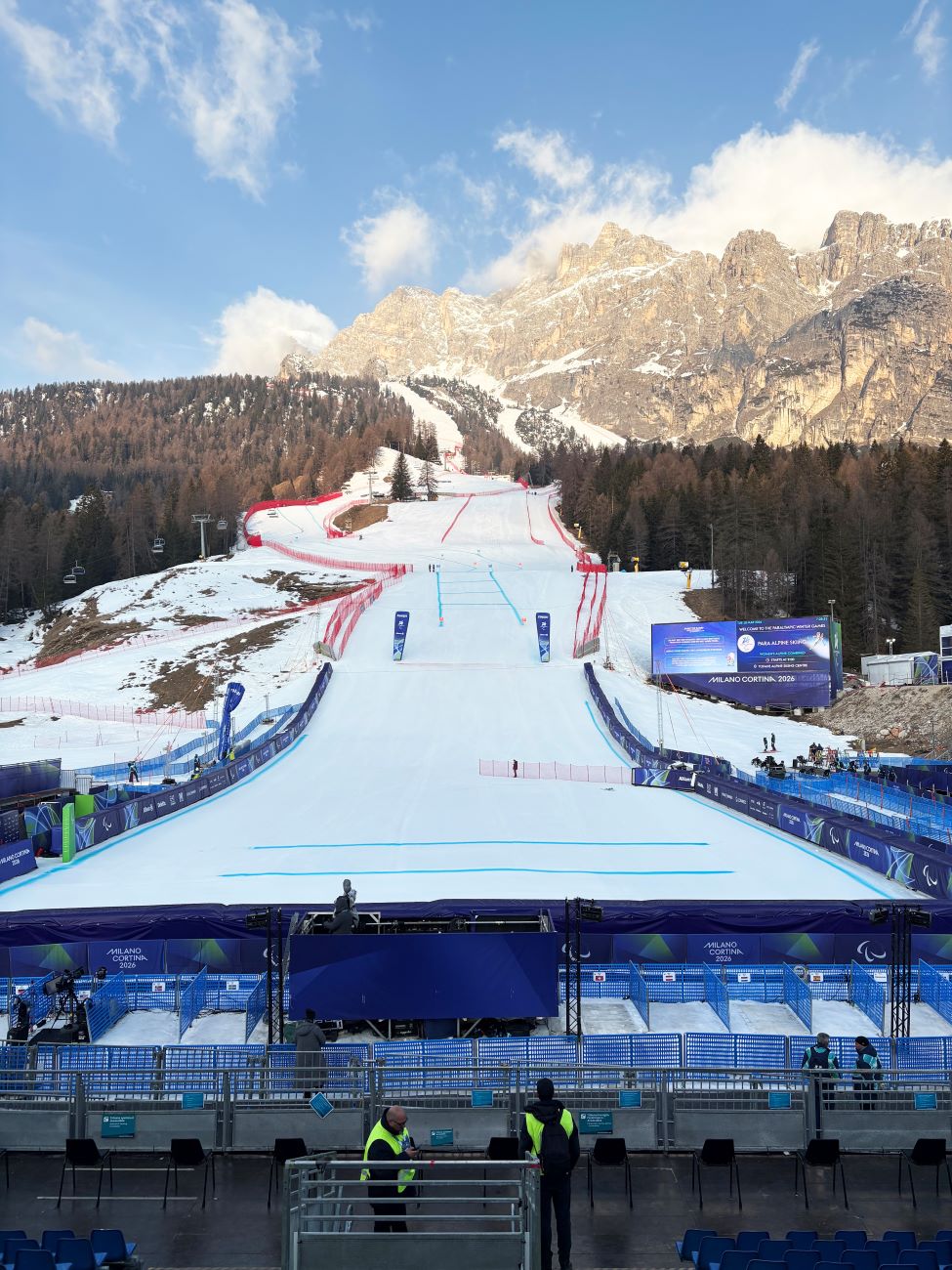
“I’m a serial try-everything-once kind of person,” Fritz said with a laugh. “I had always loved watching the Olympics, and I also love event planning, so I just wanted to see for myself what it was like.”
That willingness to try something unfamiliar has followed Fritz well beyond graduating with a degree in Entrepreneurship and Small Business Administration. It is also what led her back to Austria, where she is currently serving with Word of Life, a missionary organization supporting local churches and youth ministry efforts.
But before the mountains of southern Austria became home for nearly a year, there was another mountain waiting for her in Italy. And she almost never made it there.
A year and a half of waiting
Fritz first applied to volunteer for the Paralympics in fall 2024 after learning during the Paris Olympics that everyday people could actually help work the Games.
More than 130,000 people applied. Only about 18,000 positions were available. For months, she heard nothing.
Eventually, she was offered a reserve volunteer position. Then more waiting followed. By January 2026—less than two months before the Paralympics began—Fritz finally received confirmation that she had been selected. By then, she had accepted that it was not going to happen.
“I had already chalked it up as a loss,” Fritz said. “Then all of a sudden it was, ‘Okay, let’s get down to business.’”
At the time, Fritz was already living in Austria through her mission work, placing her only a few hours away from Cortina. She quickly figured out transportation, housing and logistics because, as she put it, “When will I ever be this close to the Olympics again?”
From CUW to the Winter Paralympics
Long before she was directing Paralympic fans through snowy walkways in Italy, Fritz was learning many of those same people skills on Concordia’s campus.
She spent three years serving as a student ambassador, helping welcome prospective students and families to CUW.
Cassandra Chmielewski, assistant director of admissions for guest experience, remembers Fritz as someone who brought energy and curiosity to every interaction.
“She was so bubbly and sweet and truly down for anything,” Chmielewski said. “She connected naturally with families on tour and was always eager to share her global perspective.”
During her senior year, she also interned with Festivals of Cedarburg, where she gained firsthand experience organizing large-scale events.
“That internship really showed me the event process from start to finish,” Fritz said. “How many moving parts are needed for something like that to run. The Olympics are just that on a much, much bigger scale.”
Fritz’s connection to Austria actually began during her time at Concordia, when she spent a semester studying abroad at the University of Applied Sciences Upper Austria in 2021. The experience left a lasting impression on her.
“That’s when I really realized the lack of Christian community there,” Fritz said. “I really wanted to come back and be involved in that somehow.”
Years later, a connection she made during that semester helped lead her back to Austria for mission work with Word of Life.
Looking back, Fritz believes Concordia gave her something just as valuable as practical skills: the confidence to keep trying new things.
“At Concordia, I was already exposed to so many new experiences,” she said. “I think that stuck with me. I’m still doing that now—still trying new things, learning lessons, learning more about myself and the world.”
Inside the “magical bubble”
Every morning during the Paralympics, Fritz reported to the workforce center at 6 a.m. on the mountain before being assigned wherever help was needed most.
Some days she worked in the stands, helping guests find their seats. Other days she assisted fans traveling to the venue via the gondola routes leading up the mountain. At times, she monitored restricted areas to ensure only accredited individuals entered secure spaces.
The assignments changed every day, but one thing didn’t. “Everyone was just happy to be there,” Fritz said.
She lived with five other volunteers from different countries during the Games, and together they started referring to Cortina as a “magical bubble.”
“It wasn’t country against country,” Fritz explained. “The whole community was celebrating all of the athletes. Everyone was there for the same reason—cheering people on and celebrating how they’d overcome obstacles.”
What stayed with her most was watching the Paralympic athletes themselves.
At first, Fritz had actually applied to volunteer for the regular Olympics. Instead, organizers placed her at the Paralympics—a decision she now says completely changed her perspective.
“Watching Olympians become faster and stronger every year is amazing,” she said. “But watching blind skiers race down a mountain is incredible. I can barely make it down a mountain as-is.”
She became especially fascinated by the vision-impaired skiing division, where athletes race alongside guides who communicate instructions through headsets while speeding down the slopes.
“They train together and form such a bond,” Fritz said. “The competitor skis right behind the seeing guide, who narrates the course in real time. It’s astonishing.”
More than anything, though, Fritz remembers the atmosphere surrounding the athletes.
“They weren’t heroes in spite of their disabilities,” she said. “They were heroes because of them.”
Faith, purpose and what comes next
Fritz’s path since graduation has hardly followed a straight line.
While attending Concordia, she studied abroad in Austria before stepping into a marketing role after graduation. Along the way, she taught herself enough German to communicate with Austrian and German fans during the Games. Despite having little prior experience working with youth groups, she made the decision to return to Austria for mission work.
And she is perfectly okay not having every detail figured out yet.
“There’s no such thing as wasted time,” Fritz said. “Even if something outside your comfort zone ends up being something you hate, or something doesn’t pan out how you expected, I still think God puts you through experiences to teach you lessons.”
That perspective continues to shape how she approaches life, faith, work and travel. Fritz currently has a goal of visiting 20 countries in her 20s. She has already reached 16.
For now, though, one experience stands above the rest. Not because of the mountain views or the international atmosphere. It’s because of the people and the shared joy. And because somewhere in the middle of one of the world’s largest sporting events, a Concordia alumna learned that serving others often leaves the greatest impact on yourself.
A pocketful of pins and stories
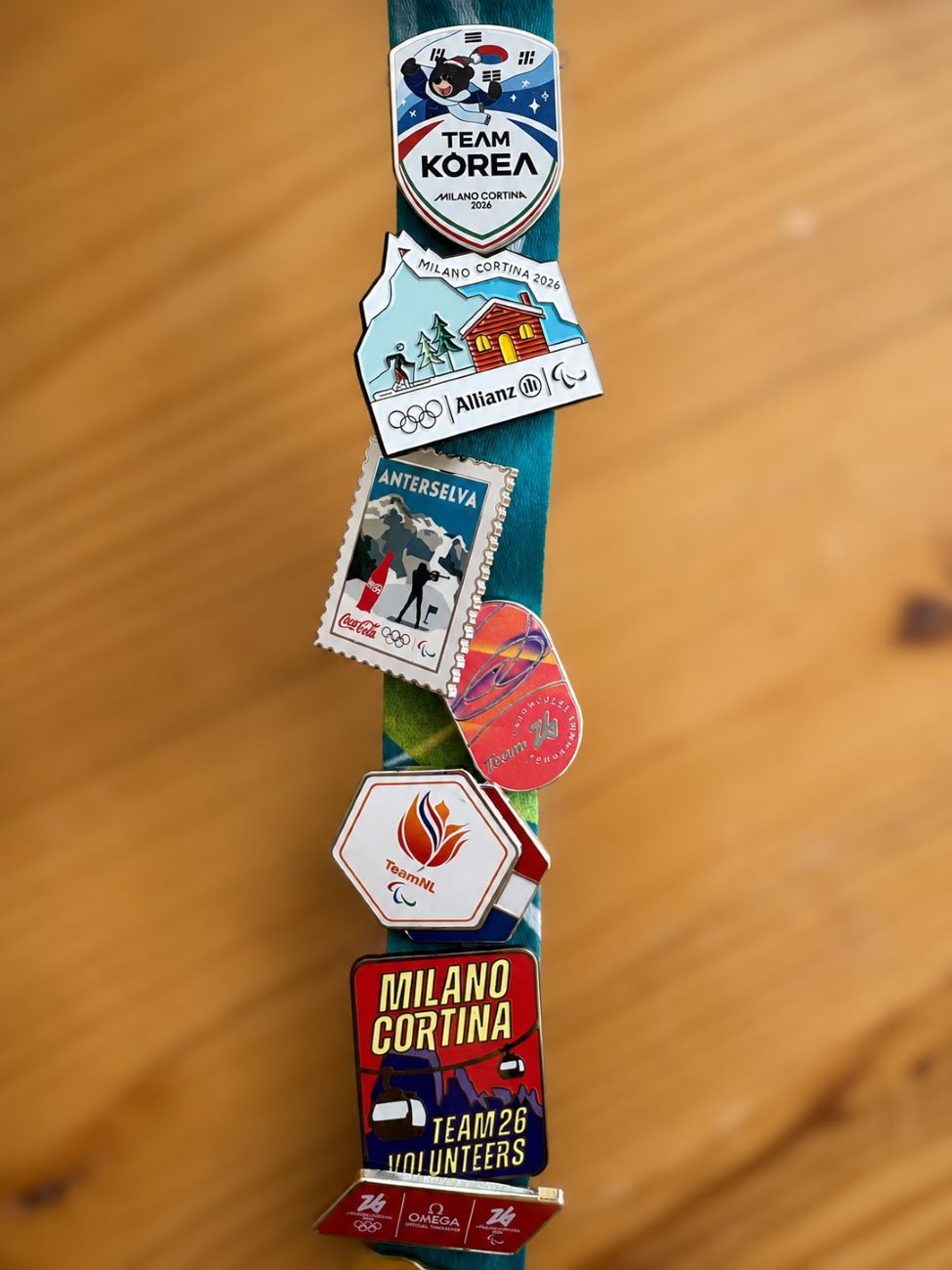
Pin trading is a long-standing Olympic and Paralympic tradition, and for Fritz, it quickly became one of the most memorable parts of the Games.
Volunteers, athletes, media members and fans exchanged small collectible pins representing countries, teams and organizations. What may seem like a simple souvenir tradition quickly became one of the easiest ways for strangers to start conversations.
“You could walk up to almost anyone and ask to trade pins,” Fritz said. “It instantly gave you something to talk about.”
By the end of the Paralympics, Fritz had collected pins from across the world, many tied to brief conversations and shared moments she still remembers. Some came from fellow volunteers. Others came from athletes or fans she met while working throughout the venue.
For Fritz, the pins became more than collectibles. They became reminders of the people she encountered inside what volunteers affectionately called the “magical bubble” of the Games.
Want in?
Concordia University Wisconsin is a Lutheran higher education community committed to helping students develop in mind, body and spirit for service to Christ in the Church and the world.