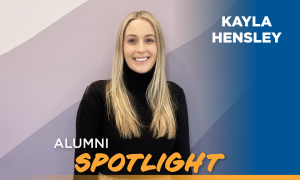
Concordia alumna Kayla Hensley advocates for patients and providers on Capitol Hill.
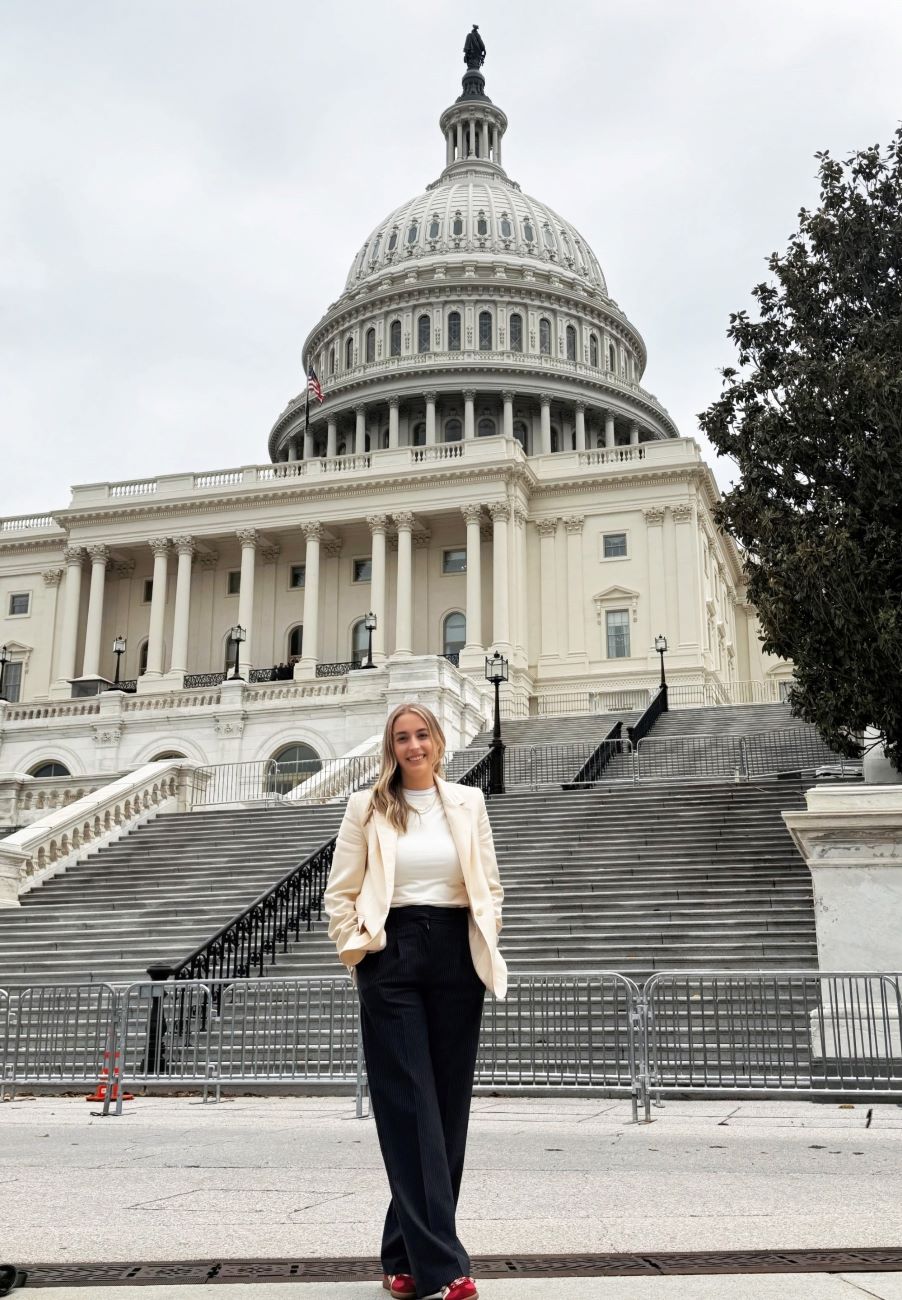
Kayla Hensley, a 2023 graduate of CUW’s Speech-Language Pathology program and current regional vice president for Continuum Therapy Partners, traveled to Washington, D.C., earlier this year as part of the National Association of Rehab Providers and Agencies (NARA) Advocacy Expert Program.
Alongside rehabilitation leaders from across the country, she met with congressional staff members and healthcare leaders to discuss issues affecting patient care, telehealth access, reimbursement policies and the future of rehabilitation professions.
The experience gave Hensley the opportunity to represent not only speech-language pathologists, but rehabilitation professionals across multiple disciplines.
“We need to build relationships with legislators so they understand how policies affect our professions, our students and our patients,” Hensley said. “They can’t make informed decisions unless healthcare professionals are part of those conversations.”
Learning to lead through advocacy
The NARA Advocacy Expert Program prepares therapy professionals for advocacy work at the state and federal levels through a yearlong initiative. Participants receive training on healthcare policy, legislation, reimbursement structures and communication strategies before meeting directly with lawmakers in Washington.
Leaders within her organization nominated Hensley for the program, and the selection committee chose her as part of the program’s second cohort.
“I was shocked and very appreciative,” she said. “Advocacy is already a large part of what therapists do every day when we advocate for patients and services. This experience took that advocacy to another level.”
During meetings on Capitol Hill, Hensley and her cohort discussed several pressing healthcare topics. One major issue involved telehealth services for therapy disciplines, including speech-language pathology, occupational therapy and physical therapy.
As current legislation stands, expanded telehealth access for some therapy services could expire in 2027 unless lawmakers take additional action.
“We talked a lot about how important telehealth is for rural communities, especially in states like Wisconsin,” Hensley said. “Some patients may have to drive hours to access care. Telehealth allows them to receive services more safely and efficiently.”
The group also addressed Medicare reimbursement reductions affecting therapy providers and the financial barriers students face while pursuing advanced healthcare degrees.
For Hensley, one of the most eye-opening parts of the experience was realizing how heavily lawmakers rely on clinicians to explain what is happening within healthcare systems.
“What stood out most was how much legislators and staffers genuinely didn’t know about what’s happening in our field,” she said. “That reinforced how important advocacy is.”
A foundation built at Concordia
Although advocacy work took Hensley to Washington, she says the foundation for that work began at Concordia.
After earning her undergraduate degree from Indiana University, Hensley moved to the Milwaukee area and worked as a hearing instrument specialist before deciding to pursue graduate school. Concordia’s smaller program and close-knit faculty support drew her in.
“I really wanted a program where I had quick access to professors and strong support systems because of how intensive clinical education is in speech-language pathology,” she said. “Concordia stood out immediately.”
Now working closely with universities and clinical placement programs across Wisconsin, Hensley says CUW students continue to impress healthcare partners.
“The feedback we consistently receive from clinical instructors is that Concordia students are very well prepared,” she said. “Their clinical education is top notch.”
“Kayla’s dedication to excellence was evident in every setting—classroom, clinic, and research—where she led with integrity and followed the data,” said Dr. Cindy Lund, CCC-SLP, C/NDT, associate professor of speech-language pathology. “What impressed me most was her readiness to do the hard, ethical thing when no one was watching; that’s the kind of clinician patients deserve.”
“As Kayla’s advisor and mentor, I saw her lead with quiet conviction—speaking up and advocating for what’s ethically right,” Lund added. “Across settings, she paired evidence with empathy, modeling the kind of advocacy-driven leadership our profession needs.”
Hensley credits several faculty members for helping shape both her educational experience and professional path, adding that the support she received at Concordia continues to this day.
“The entire program really stays connected with students long after graduation,” she said.
Looking ahead
That sense of connection and purpose continues to influence the way Hensley approaches leadership today.
“Concordia emphasizes service, leadership and vocation,” she said. “Being grounded in my faith and understanding that my work serves patients and clinicians has been really meaningful.”
Hensley plans to continue advocating throughout her career, even though advocacy is not formally included in her job title. She is especially passionate about mentoring students entering the profession and helping them understand healthcare’s clinical and policy sides.
“When students complete clinical placements within our facilities, we teach them not only clinical skills, but also how healthcare systems and regulations work,” she said. “I want students to feel confident entering the profession and understand how to advocate for themselves and their patients.”
Looking back on her experience, Hensley says the trip reinforced how much progress can begin with a single conversation.
“You don’t have to go to Washington, D.C., to advocate,” she said. “You can start within your own state, your organization, or your professional network.”
Her journey from Wisconsin to Washington reflects the growing role healthcare professionals play in shaping the future of patient care. It also highlights how CUW graduates are stepping into leadership roles far beyond the classroom.
Want in?
Concordia University Wisconsin is a Lutheran higher education community committed to helping students develop in mind, body and spirit for service to Christ in the Church and the world.