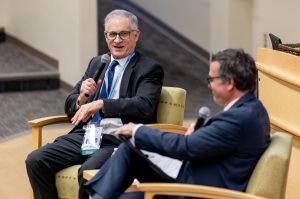
Brewers executive Rick Schlesinger reflects on leadership, resilience and building meaningful connections through sports.
When people think about Major League Baseball, they usually think about what happens between the lines: the players, the walk-off wins, packed stadiums and the moments fans remember for years. For Brewers fans, those memories often include Ryan Braun home runs, tailgating in the parking lot and the iconic Sausage Race.
For anyone considering a career in business, sports management, marketing, analytics, communications or leadership, though, professional sports offer insights that extend far beyond the field.
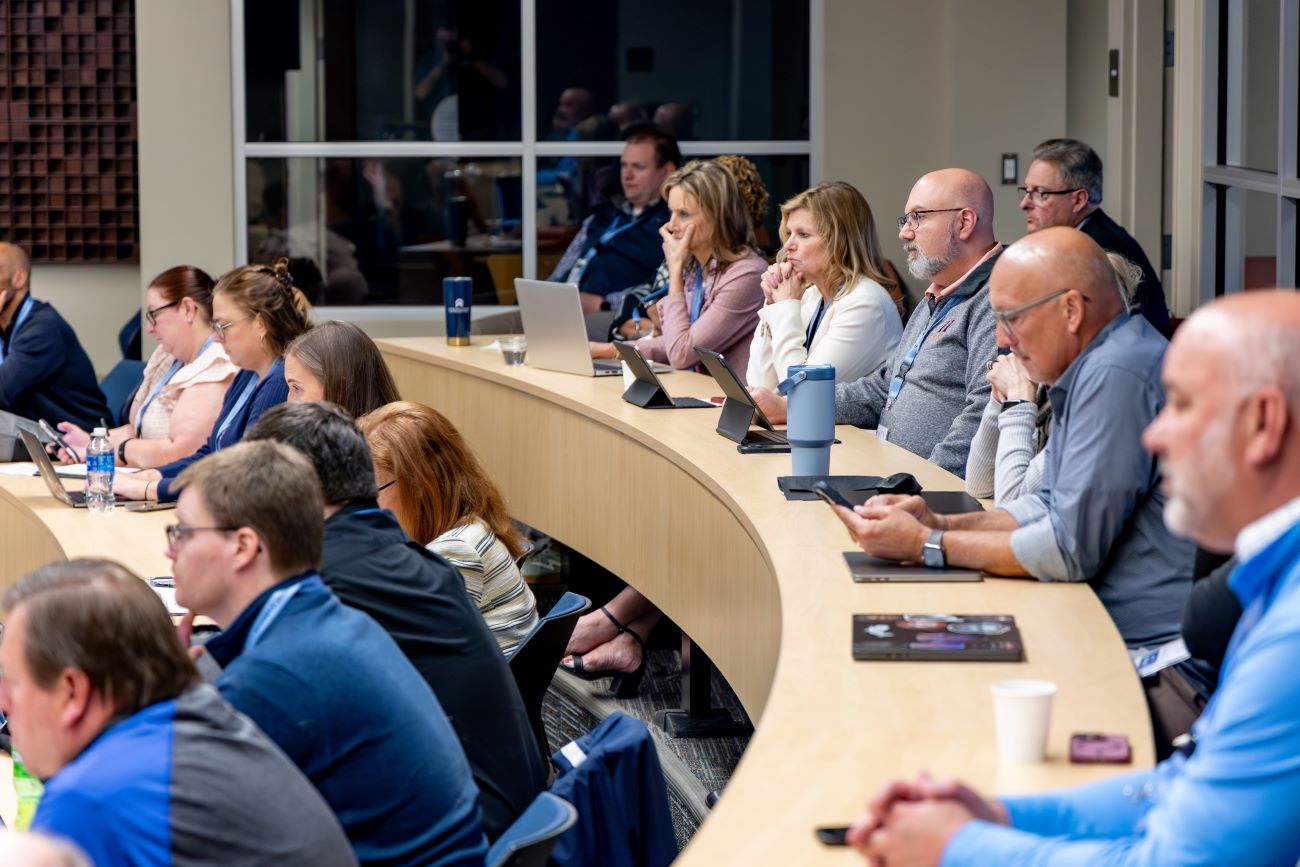
Rick Schlesinger, president of business operations for the Milwaukee Brewers, explored many of those ideas during CUW’s third annual Ignite & Inspire Leadership Conference on May 6.
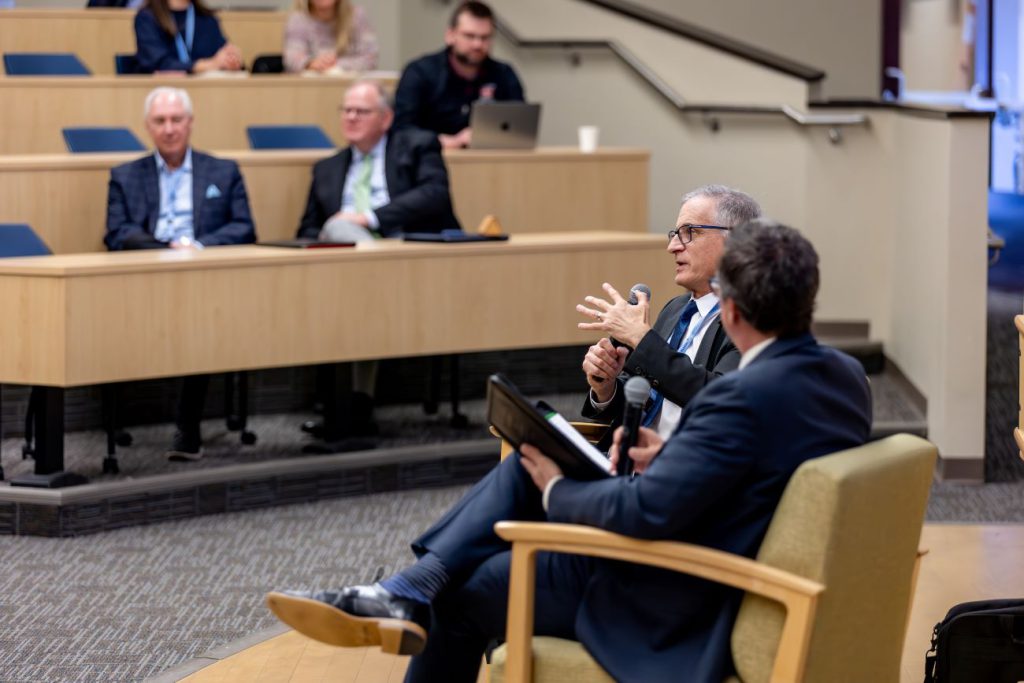
As one of the keynote speakers, Schlesinger joined Dr. Scott Niederjohn, dean of Concordia’s Batterman School of Business, for a Q&A session about leadership and the evolving business of sports.
Drawing from more than two decades with the Brewers organization, Schlesinger offered participants an inside look at managing a major sports franchise while building a career rooted in relationships, adaptability and trust.
Throughout the discussion, one theme surfaced repeatedly: Organizations succeed because of people. Whether someone is managing a baseball team, leading a classroom or beginning a career, relationships still matter most.
From Brewers fan to Brewers executive
Schlesinger’s connection to the Brewers began long before he joined the organization.
Growing up in Milwaukee, he spent countless hours watching baseball with his father and attending Brewers games after the franchise relocated from Seattle in 1970.
“I always loved the business of baseball,” Schlesinger said. “Working for the team you grew up rooting for is just the greatest honor I could have as a person and in a career.”
Although he began his career practicing law in Los Angeles, his path eventually shifted into sports through The Walt Disney Co., where he worked after leaving private practice.
For students still trying to figure out where they want to go professionally, Schlesinger’s story served as a reminder that careers rarely follow a perfectly straight line. When Disney purchased the Anaheim Angels and Mighty Ducks, Schlesinger transitioned into sports operations.
A few years later, the Brewers came calling. He returned to Wisconsin in 2003 during one of the most difficult periods in franchise history.
Leadership during difficult seasons
At the time, the Brewers were struggling both on and off the field. The team had lost 106 games the season before Schlesinger arrived.
Rather than focusing exclusively on wins and losses, he concentrated first on the organization’s employees.
“When you work for a sports team and everybody’s attacking you and the team isn’t good, it affects morale,” Schlesinger said. “My first focus was keeping employees encouraged and helping them move forward.”
That approach helped establish a culture built on trust, accountability and communication, qualities leaders will encounter in nearly every profession they pursue.
Schlesinger believes one of the most important parts of leadership is creating an environment where employees feel comfortable speaking honestly.
“I want people to feel safe criticizing decisions, including mine,” he said. “The people around me are experts in their fields, and I rely on them heavily.”
That willingness to listen has helped the Brewers navigate ownership changes, front-office transitions and evolving industry demands while maintaining stability over time.
Creating a fan experience people remember
While baseball operations receive much of the public attention, Schlesinger oversees nearly every business function connected to the Brewers, including finance, marketing, sponsorships, ticketing, broadcasting, technology, analytics and community relations.
One of the Brewers’ biggest priorities is continually improving the fan experience at American Family Field.
Over the last two decades, the team has invested heavily in stadium upgrades, including enhanced premium seating areas, new scoreboards and technology, outdoor entertainment spaces, expanded food and beverage options, and improved Wi-Fi and digital connectivity.
Schlesinger said the philosophy is simple.
“Even if the team performance fluctuates, the ballpark experience should always feel first-class,” he said.
The Brewers also work to balance revenue generation with affordability.
Unlike the NFL, which hosts a limited number of home games each season, Major League Baseball teams must fill stadiums 81 times every year.
“We want families to feel like they can come to multiple games without it becoming unaffordable,” Schlesinger said.
That commitment to accessibility remains especially important in Milwaukee, where generations of families have grown up with Brewers baseball.
“The people of Wisconsin built this ballpark,” he added. “We want them to feel like it belongs to them.”
How data is shaping the modern game
Like many industries, baseball has undergone major changes through data and analytics.
When Schlesinger joined the Brewers in 2003, analytics on the business side were still limited. Now, the organization relies heavily on data to inform decisions related to ticket pricing, marketing, sponsorships and fan engagement.
The Brewers employ a dedicated business analytics team that helps leadership make faster and more informed decisions.
Artificial intelligence is becoming part of that evolution as organizations search for better ways to understand audiences and improve experiences.
Although Schlesinger acknowledged that industries across the board are still learning how to use AI effectively, he believes the technology will improve personalization and fan engagement.
“We gather enormous amounts of data through surveys, focus groups and purchasing behavior,” he said. “AI can help us better understand different fan segments and create more customized experiences.”
Still, he emphasized that technology should support people, not replace them.
Leadership lessons you can apply now
Many of Schlesinger’s insights extended far beyond sports.
He encouraged leaders to operate with humility, make decisions without waiting for perfect information and remain grounded in strong values. For students preparing to enter internships, graduate programs or careers, those lessons felt especially relevant.
One of the biggest lessons he learned early in his career involved decision-making.
“As a lawyer, I thought I needed every single fact before making a decision,” he said. “Eventually I realized you’re never going to have 100% of the information. At some point, you have to trust your experience and move forward.”
He also stressed the importance of ethical leadership, especially in public-facing organizations.
“You have to know your values before difficult decisions arrive,” he said.
A responsibility to the community
Schlesinger repeatedly returned to the Brewers’ role within the broader Wisconsin community.
The team measures its impact through charitable giving, community outreach, educational programs and direct engagement with fans across the state.
One lesson the Brewers learned during recent stadium funding discussions was that many communities outside southeastern Wisconsin wanted stronger engagement from the franchise.
Since then, the team has expanded outreach efforts throughout the state.
“We realized we needed to be more visible in communities across Wisconsin,” Schlesinger said.
That perspective reflects Schlesinger’s belief that sports franchises can serve as civic institutions, not simply entertainment businesses.
Remembering Bob Uecker
One of the most memorable moments from the discussion came when Schlesinger reflected on legendary broadcaster Bob Uecker.
“What you saw publicly was exactly who he was privately,” Schlesinger said.
He described Uecker as authentic, generous and deeply committed to his craft.
“He treated everybody the same,” Schlesinger said. “Owners, executives, stadium workers and fans—everyone.”
Schlesinger also shared a humorous story about a four-hour dinner with Uecker during spring training, where Uecker convinced him to try frog legs for the first time.
“It was awful,” Schlesinger joked. “But Bob thought it was hilarious.”
Looking ahead
As Major League Baseball prepares for future media changes, labor negotiations and evolving technologies, Schlesinger believes adaptability will remain essential.
At the same time, Schlesinger remains optimistic about the future of the sport and the role organizations play in bringing people together.
“Baseball has never been more popular,” he said. “The game is resilient. We want people to feel connected. That’s what great organizations do.”
Want in?
Concordia University Wisconsin is a Lutheran higher education community committed to helping students develop in mind, body and spirit for service to Christ in the Church and the world.