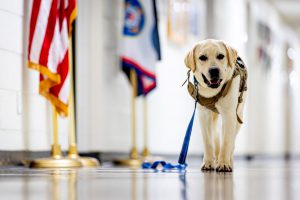
A yellow Labrador brings energy, connection and quiet support to CUW’s growing therapy dog program — while helping a fellow dog find her footing again.
At first glance, Truman fits the part. A yellow English Labrador retriever with an easygoing presence and a curious streak, he has already made himself known across campus. But his role at Concordia University Wisconsin runs deeper than friendly greetings and wagging tails. He is here with purpose — to support students, strengthen a growing program and help a fellow therapy dog continue her recovery.
Truman is the newest addition to CUW’s therapy dog program, joining Trixie in the Veteran Resource Center. His arrival was made possible by an anonymous friend of the university who believes in the impact of this work. By covering the cost of training and working with Riverside Canine Training Academy in Iowa, the donor helped expand a program that continues to meet students where they are.
For Director of Military and Veteran Services Keith Casey, bringing Truman to campus was both a practical step and a meaningful one. The program itself has grown steadily over time, beginning with a pilot dog named Gracie. That early effort revealed something important: students were not only open to the presence of therapy dogs, they were actively seeking them out.
“Trixie was our first university-owned therapy dog,” Casey said. “And now Truman is here to work alongside her.”
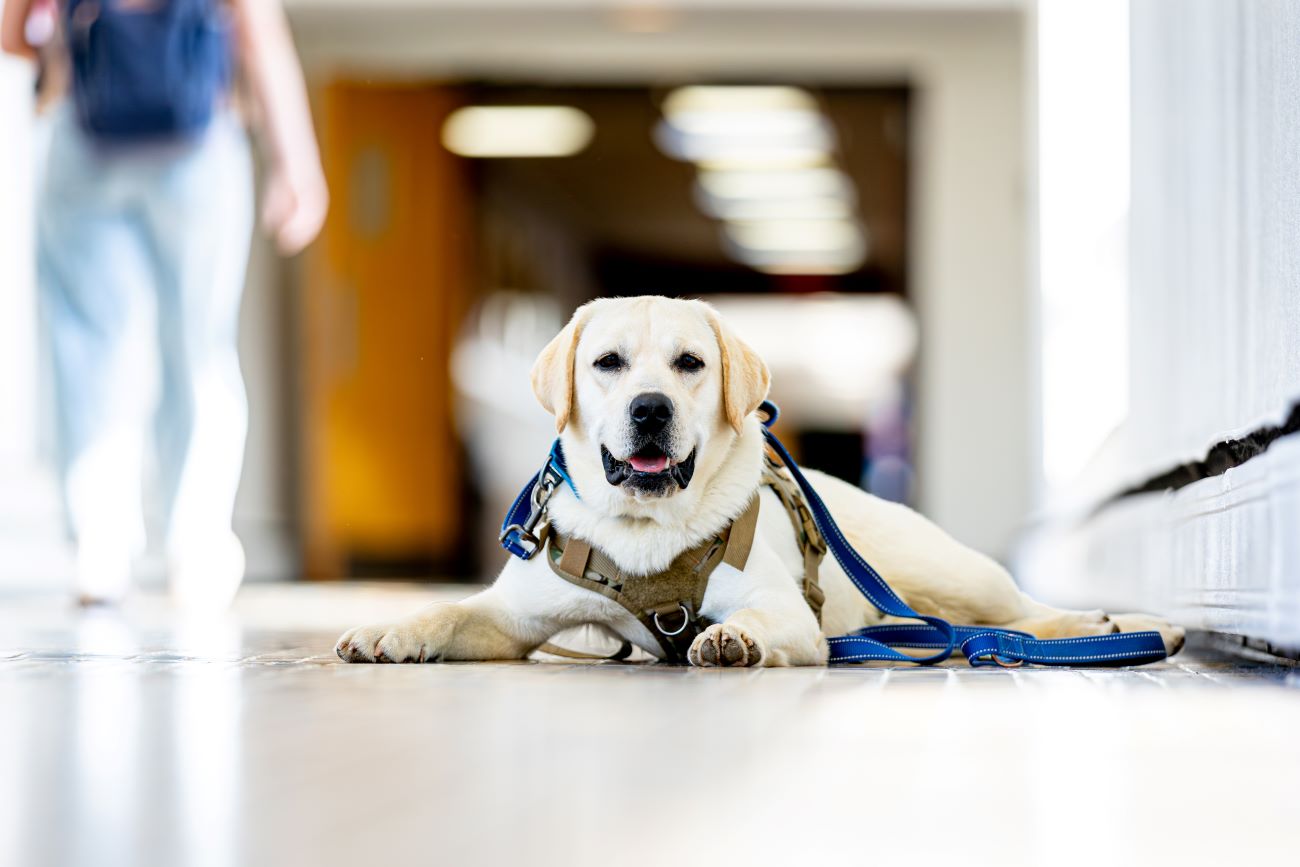
Supporting Trixie and serving students
That partnership carries added significance.
Months ago, Trixie experienced a serious medical emergency on campus. While she recovered physically, the experience changed how she responded to her surroundings. The campus environment became tied to that trauma, making social interaction more difficult than before.
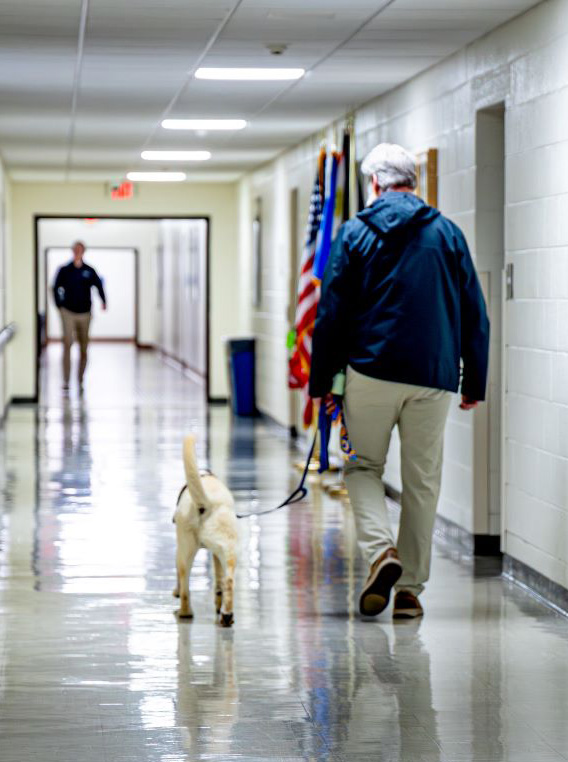
Enter Truman.
From the start, his presence has helped shift the environment — not only for students, but for Trixie herself. When Truman engages first, Trixie is more likely to follow, and over time, that shared presence is helping her grow more comfortable again.
“We’re starting to see improvement,” Casey said. “He’s helping her both at home and in her work life.”
Students are noticing that change as well, especially those who work closely with Trixie. Nia Petropoulos, Trixie’s student handler and a double major in psychology and justice and public policy with a minor in Spanish, is set to graduate in 2029 and has seen that progress up close.
“I’ve seen a decrease in Trixie’s anxiety since Truman has arrived,” Petropoulos said. “He’s helped her become more comfortable walking around and greeting people throughout the school.”
At the same time, Truman is quickly finding his place within the campus community. In just a few days, students began recognizing him by name. Whether visiting classrooms or walking through campus spaces, he brings a steady, approachable presence that invites interaction without requiring it.
A personality that connects
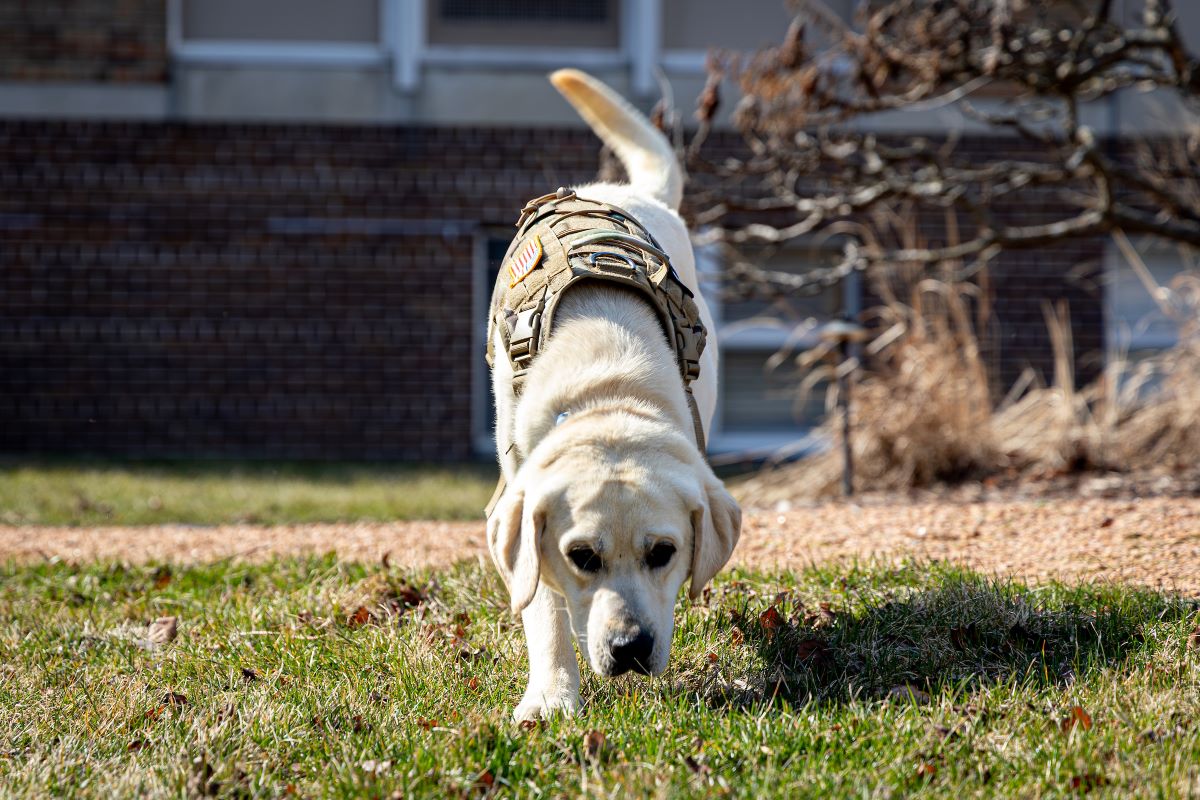
His primary student handler, Elizabeth Heerhold, a sophomore accounting major, sees that play out daily — not just in structured settings, but in ordinary moments.
“He loves eating snow. He’s very puppy-like and gets distracted easily,” Heerhold said.
Even so, she said, those same qualities do not take away from his ability to connect. “It’s amazing — he can be completely exhausted and still get up to greet people.”
Casey has noticed that instinct as well. “He slept through my class, but as soon as students came up to him afterward, he popped right up to say hi.”
That balance — restful when needed, yet responsive when someone approaches — is part of what makes a strong therapy dog. It is also something Truman is still growing into. Not yet a year old, he carries a natural curiosity about people and his surroundings, along with the playful energy that comes with it. He will celebrate his first birthday May 19.
Casey summed it up simply: “He’s a goofball.”
That lighthearted nature, however, serves a clear purpose. In spaces where stress, anxiety or transition can weigh heavily, even a brief interaction can shift the tone of someone’s day. Students — especially veterans — can spend time with Truman and Trixie throughout the week without making an appointment. Some stop in for a few minutes, while others stay longer. Either way, the space is open.
The therapy dog program reflects a broader commitment within the Concordia community. It is one piece of a larger effort to care for the whole person — supporting mental health, fostering connection and creating an environment where students feel seen and supported.
Truman is still new, and much of his routine will continue to take shape in the months ahead. What is already clear, however, is the role he is beginning to play. He shows up, he connects and, in doing so, contributes to something that extends well beyond himself.
For Trixie, for the students who stop by and for a campus that continues to invest in meaningful care, that presence matters.
CUW’s four-legged facts
- Gracie — 4-year-old black English Labrador retriever; pilot therapy dog. Handler/owner: alumna Mikayla Allsop, ’25 (marketing). Both graduated May 2025.
- Trixie — 2-year-old black English Labrador retriever; CUW’s first full-time therapy dog. Primary student handler: Antonia “Nia” Petropoulos.
- Truman — yellow English Labrador retriever, just under 1 year old; CUW’s second full-time therapy dog. Primary student handler: Elizabeth Heerhold.
- Comfort dogs — Runner (4), Sage (10) and Zoey (13, retired). Zoey was CUW’s first comfort dog; Zoey and Sage were placed through Lutheran Church Charities.
- Difference — Therapy dogs provide informal, day-to-day support across campus; comfort dogs receive more advanced training for structured care settings and higher-need situations.
Note: Visiting hours for Trixie and Truman are 9 a.m. to 3 p.m. Monday, Wednesday, Thursday and Friday.
Want in?
Concordia University Wisconsin is a Lutheran higher education community committed to helping students develop in mind, body and spirit for service to Christ in the Church and the world.