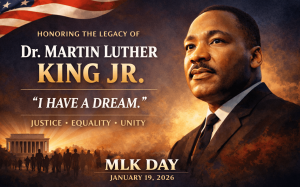
As we pause to remember the life and legacy of Dr. Martin Luther King Jr., we give thanks for his courageous witness to justice, dignity and love of neighbor.
Guided by his Christian faith, Dr. King challenged individuals and communities to seek truth, extend grace, and work faithfully toward a more just world.
In this spirit, we share two reflections from CUW faculty members, who offer thoughtful insights on faith, vocation, and what it looks like to live out Christ-centered service in our everyday lives.
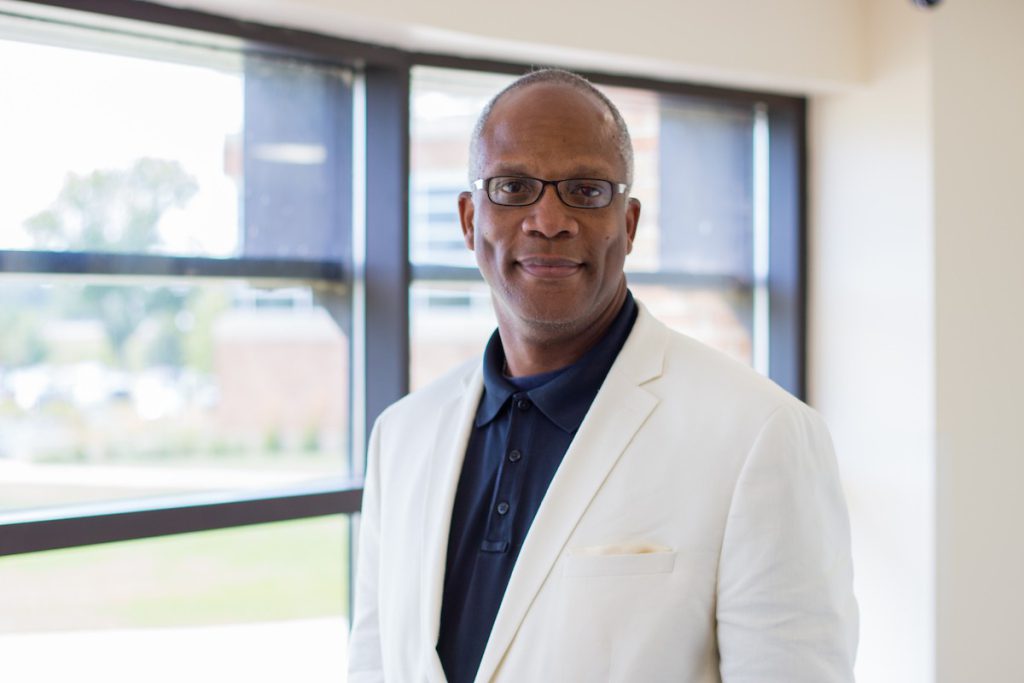
Faith That Worked, Vocation That Cost, Justice That Served
By Kenneth E. Harris Jr., PhD
Associate Professor and Department Chair
Justice and Public Policy
The Rev. Dr. Martin Luther King Jr. is often remembered as a dreamer. Before he was a dreamer, he was a pastor. Before he was a symbol, he was a servant. Before he was celebrated, he was condemned. His legacy cannot be understood without recognizing that his faith was not decorative; it was operational, as he made clear in his 1963 book, “Strength to Love.”
Rev. Dr. King’s faith did not live in stained glass. It lived in streets, jails, pulpits, courtrooms and burial grounds. His theology was not about escape from suffering, but responsibility within it. Writing from a Birmingham jail cell in 1963, he argued that injustice anywhere is a threat to justice everywhere, insisting that Christian faith must confront social sin, not merely personal morality.
This belief shaped his vocation.
Rev. Dr. King did not treat his calling as a career. He treated it as an assignment from God. Vocation, for him, was not about personal comfort or safety. It was about obedience. He understood that purpose often demands sacrifice and that leadership often requires loneliness. In his final speech, “I’ve Been to the Mountaintop,” delivered in 1968, he accepted the possibility of death because he believed he had been called to do God’s will.
Justice, in Rev. Dr. King’s vision, was not a slogan. It was structure. It was policy. It was access. It was dignity. He did not speak only about love; he spoke about voting rights, housing, labor and economic inequality. In “Stride Toward Freedom,” published in 1958, he wrote that “true peace is not merely the absence of tension; it is the presence of justice.” He understood that reconciliation without equitable treatment is theater, not transformation.
Yet, his pursuit of justice was always anchored in service.
He never argued that Black or White people deserved power over others. He argued that all people deserved power over their own lives. His work was not about dominance — it was about deliverance. Influenced by Jesus’ model of servant leadership in Mark 10:45, he believed moral courage was the highest form of leadership, a theme later emphasized by historian Clayborne Carson in “The Autobiography of Martin Luther King Jr.”
What troubles many today is not his dream — it is his discipline. Not his hope — but his insistence. Not his speeches — but his demands.
We quote Rev. Dr. King when he comforts us. We ignore him when he confronts us. But his legacy does not belong to nostalgia. It belongs to the world.
Throughout the coming days, as we attend Chapel, attend class, and interact with administration, faculty, staff and students, we must all remember that faith that does not move is not faith, vocation that does not risk is not calling, and justice that does not disrupt evil and oppression is not justice. Thus, service to Christ and the world that does not cost is not service.
Rev. Dr. King did not give us a dream to admire. He gave us work to finish. Consequently, the question is not whether we will honor his work. The question is, are we willing to continue his work?
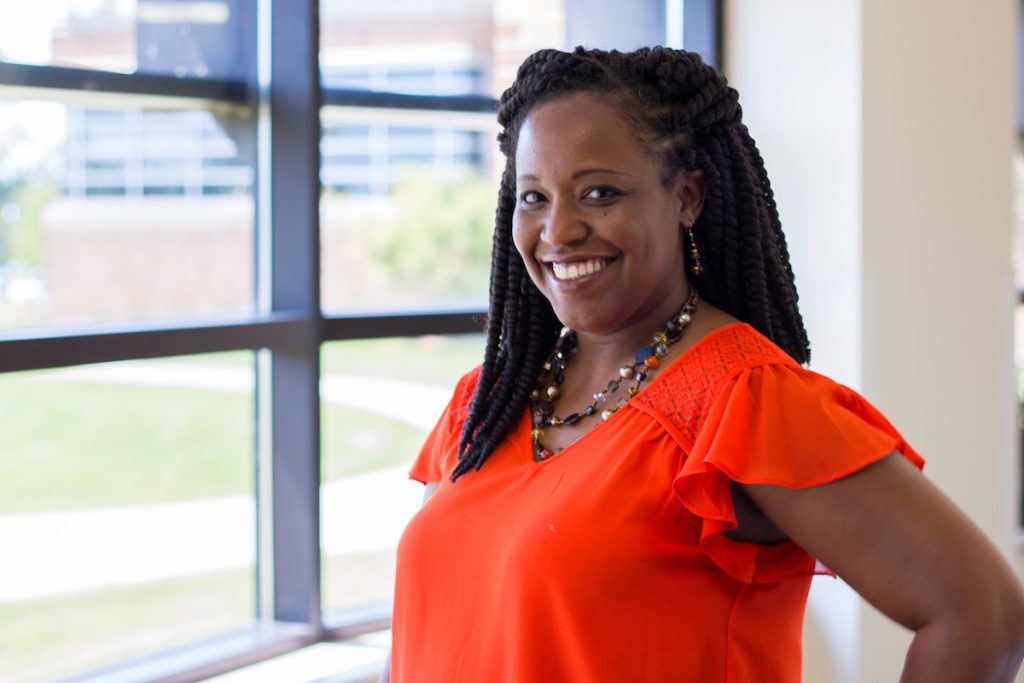
Hope, Truth, Courage and Vocational Calling in Divisive Times
By Lori Woodall-Schaufler
Professor
Theatre
“We are now faced with the fact that tomorrow is today. We are confronted with the fierce urgency of now.” Dr. King spoke these words exactly one year-to-the-date before he was assassinated, expressing his feelings of concern towards the Vietnam War.
On April 4, 1967, our nation and our world were embroiled in divisive cultural wars, bloody fighting wars, and spiritual and emotional upheaval much like today. The “urgency of now” ties into a burning question that seems to resonate throughout social media of “What can we do?” to heal political and cultural division, to stop the spread of spiritual/moral apathy, and to save our children (and ourselves) from a world that seems to be spiraling out of our control in the face of a digitized future of algorithmic bias and misinformation. The very thought and real presence of broken families, communities, churches, and systems from the heap of societal assaults on our conscience can overwhelm one to the point of silence.
What can you say or do to reverse the often-temporary absolutes one clings to for moral or cultural convenience?
Many wonder how to live faithfully when voices are loud, wounds are real, and unity feels like a distant memory or pipe dream. Trust can feel thin and truth elusive. Dr. King, much like his revolutionary 16th century namesake, Martin Luther, both shared a conviction that faithfulness means standing for truth even when it’s costly. Loving one’s neighbor is not optional, but tied to our Christian vocation to serve our neighbor in the ordinary facets of our life.
We are called to protect the vulnerable, acting for the good of others as an act of faith. Dr. King famously said, “Darkness cannot drive out darkness; only light can do that. Hate cannot drive out hate; only love can do that.” This echoes the words of Scripture: “The light shines in the darkness, and the darkness has not overcome it.” (John 1:5) We are called to love our neighbors and our enemies. Christian love is not weakness, though it can appear to be in a current culture obsessed with “winning.”
What has been “won” is our redemption through the Cross. Because of this prior love exemplified on the Cross, we can courageously love in a manner that embodies truth and rejects cruelty. We can aide a neighbor, even when it’s hard.
King cautions, “The arc of the moral universe is long, but it bends toward justice.” (1967) As a lifelong Theatre artist, I examine all characters and plots through “arcs,” placing an emphasis on the journey more so than the final destination. Arcs reflect transformation, embraced as superior to chronological order. They capture internal shifts in a way that sequence cannot. As I reflect on Dr. King’s statement, I think of how our human transformation is ever-evolving, inviting us to walk alongside one another as we navigate the complexities of our human experience.
Joy can be found in the journey, and it gives us hope. We can be hopeful that it ends in justice because, through Christ’s sacrifice, we have overcome. Our doctrine of vocation reminds us that God has placed us in specific callings as teachers, students, leaders, family, artists, scientists and neighbors, not to withdraw from the world in fear, but to serve within it with courage. Dr. King’s life reminds us not to imitate the world’s anger, nor to retreat in silence, but to use what God has given to serve in spaces, both significant and small.
Faithful witness does not have to involve shouting, but is showing up with compassion, grace and integrity, trusting that our call is deeper: shaped by the Gospel, serving in humility, committed to a truth that can only be formed by love. “For at one time you were darkness, but now you are light in the Lord. Walk as children of light.” (Ephesians 5:8–9)
Faith and action. Called and responsive. Tomorrow is Today, and we can make a difference with our love.

Answering Dr. King’s call to love our neighbor
In honor of Dr. Martin Luther King Jr., you are invited to pause, reflect and serve. On Friday, January 23, we will gather in Chapel to hear God’s Word and sing together, with gospel choir Joyful Noise, as we reflect on our Christian calling to love our neighbors in the places God has put us.
Following Chapel, you are invited to take part in a tangible opportunity to serve our neighbors through a partnership with the Milwaukee Rescue Mission. After Chapel, you may:
- Write notes of encouragement for neighbors served by the Milwaukee Rescue Mission
- Learn more about the Mission and future service opportunities
After the group from Chapel subsides, the activities will be moved to the library so that students, staff and faculty can participate throughout the day.
As Lutherans, we confess that we are saved by grace alone through faith in Christ. Freed by that Gospel, we are sent into our vocations to serve others. In simple acts, spoken words, written notes, and faithful presence, we bear witness to Christ’s love by offering comfort, hope and peace to our neighbors.
Want in?
Concordia University Wisconsin is a Lutheran higher education community committed to helping students develop in mind, body and spirit for service to Christ in the Church and the world.