
At Concordia University Wisconsin, Dr. Hina Andleeb is advancing pain treatments designed to restore function and dignity.
Chronic pain is something humans have sought to relieve for centuries, with research revealing pain management attempts as early as 1500 B.C. in Egypt. A brief look at the timeline shows that in the 1600s, opium was explored; in the 1800s, early narcotics were developed along with anesthesia using ether and chloroform; in the mid-to-late 1800s, cocaine was introduced; and by the 1900s, morphine and heroin were being used to manage pain. Today, opioids like Oxycodone and Fentanyl are being widely distributed and misused.
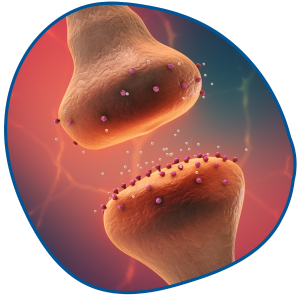
What most of these pain management drugs have in common is their overwhelming potential for addiction, which has contributed to today’s opioid crisis. According to the Centers for Disease Control and Prevention, as of 2023, roughly 24% of adults experience chronic pain, and 8.5% experience high-impact pain that limits life or work activities. That same year, the CDC reported approximately 105,000 people died from drug overdoses, with nearly 80,000 of those deaths involving opioids — an average of about 217 opioid-related deaths per day.
Pain is a fact of life. It lets us know we are alive and, at times, protects us from further harm — yet it can drastically alter our ability to live fully. A double-edged sword. Researchers at Concordia are searching for innovative approaches that address pain without creating additional long-term harm to the mind, body and spirit.
As Romans 12:2 reminds us, “Do not be conformed to this world, but be transformed by the renewal of your mind, that by testing you may discern what is the will of God, what is good and acceptable and perfect.” In that spirit of renewal, there is hope that the way we approach pain — and the opioid crisis — can also be transformed. No more meaningless deaths in a time when faith and science together can help restore the whole person.
The following Q&A with Dr. Hina Andleeb, senior research scientist in CUW’s School of Pharmacy, addresses a global public health crisis. At Concordia, currently working alongside Christopher Cunningham, Ph.D., associate professor of pharmacy science, she continues her research on advancing safer therapeutic strategies for individuals living with persistent pain.
Q&A with Dr. Hina Andleeb
1. What first drew you to pain research, and what keeps you committed to it today?
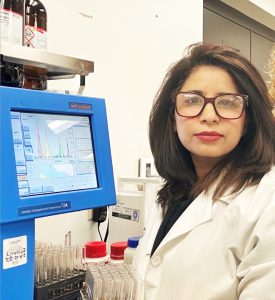
I was drawn to pain research because so many patients still rely on opioids despite profound risks: dependence, tolerance, respiratory depression, cognitive and sedative effects, and hormonal disruption with long-term use. These harms are not abstract. In 2023 alone, drug overdoses claimed more than 100,000 American lives, the majority involving opioids, and misuse remains widespread — affecting nearly 9 million people age 12 and older each year. Clinically, opioids suppress breathing and are linked to opioid-induced endocrinopathies, reinforcing the urgency for alternative therapies.
That urgency shaped my path at the University of Florida and Northeastern University, where we pursued nicotinic acetylcholine receptor (nAChR)-based strategies. Our team discovered the first-in-class small-molecule a9 nAChR selective agonists for chronic and neuropathic pain, highlighted by compound 3h. That work continues to guide my research as I focus on advancing safer alternatives for patients living with persistent pain.
2. Was there a moment when you realized this work could truly change lives?
Yes. When I first saw the biological data showing our newly developed α9-selective agonist was highly potent and acting as we hoped, I realized we had created something unprecedented. Until then, only large, toxic peptide antagonists like conotoxins and bungarotoxins existed for this receptor. No small-molecule a9 nAChR selective agonist had ever been reported.
The emotional shift came when I spoke with individuals living with chronic and neuropathic pain who had exhausted treatments and feared opioid dependence yet still had no relief. I understood then that this discovery could one day offer a safer alternative.
3. How do you stay connected to the human side of technical laboratory work?
I remember that every scientific decision affects a real patient’s quality of life. Working on a novel drug target like the α9 receptor — where almost no small-molecule literature existed — keeps that responsibility clear.
I don’t define success only by potency or a clean assay. I ask: Will this be safe? Will it avoid off-target effects? Will it preserve function rather than introduce new risks?
Conversations with clinicians and patients living with chronic pain also keep the science grounded. The goal is not only effective compounds, but ones that are safe, selective and meaningful for patients.
4. How would you describe chronic and neuropathic pain?
Chronic pain is a constant burden that drains energy, disrupts sleep and makes simple tasks overwhelming. Neuropathic pain adds burning, tingling, stabbing or electric shock sensations that can flare without warning. Even gentle touch or temperature changes can trigger discomfort. Together, they create physical suffering and emotional exhaustion, often leaving patients feeling isolated because their pain is invisible yet relentless.
5. Why are these conditions so difficult to treat?
They involve deeper nervous system changes that traditional medications were never designed to fix. Pain pathways become hypersensitive, and damaged nerves fire abnormally. NSAIDs and opioids target inflammation or broad pathways but do not address faulty nerve signaling or long-term neural rewiring. Once circuits become entrenched, pain can persist for months or years.
6. What sparked your interest in the α9 receptor?
It grew from a simple question: Can we deliver potent pain relief without opioids? The α9 nAChR sits at the crossroads of pain signaling and inflammation. For years, only toxic peptide antagonists existed — no small-molecule agonists.
Seeing our first clean selectivity data — especially APA-diEPP emerging as a lead — signaled a new therapeutic path aimed at effective, nonsedating analgesia.
7. When did you realize you were onto something new?
When our early compounds showed strong, clean α9 selectivity — greater potency, lower toxicity and minimal α7 activation — I knew we were breaking new ground. Developing the first highly potent, small-molecule α9 agonists opened a new therapeutic direction for chronic and neuropathic pain.
8. Why is avoiding motor impairment meaningful?
Many current treatments cause sedation, dizziness or impaired movement, limiting independence. Our α9-selective agonists produced strong, long-lasting pain relief in animal models without disrupting motor control. That suggests targeted action rather than broad nervous system depression — allowing the possibility of functional pain relief.
9. How hopeful are you about nonaddictive options?
Very hopeful. Our α9-selective agonists do not act on addiction-related reward pathways and show analgesic effects without sedation or motor impairment. The data suggest we are moving toward therapies that are effective and non-habit-forming.
10. How are pain, stress and inflammation connected?
Chronic pain, stress and anxiety share overlapping biological pathways. Long-lasting pain activates the stress response, raising cortisol and increasing nervous system sensitivity. Stress and anxiety amplify pain signals, creating a feedback loop.
Inflammation plays a central role. Chronic pain sensitizes nerves, and chronic stress elevates inflammatory mediators. The cholinergic anti-inflammatory pathway regulates this response, and α9-containing receptors participate in immune modulation. Targeting them may influence both pain signaling and inflammation.
Safer, nonsedating therapies are essential because treating pain without addressing emotional well-being leaves patients struggling.
Impacting lives tomorrow
After receiving a U.S. patent and earning a Best Podium Presentation Award for her novel research work, Andleeb feels hopeful that her work will one day make a profound difference.
“The opportunity to advance innovative approaches to pain and stress disorders in a collaborative, mission-driven environment excites me,” Andleeb said. “The Cunningham Laboratory’s expertise in neuropharmacology and endocannabinoid pharmacology creates a platform to explore new therapeutic mechanisms.”
For Andleeb, working within Concordia’s faith-centered environment strengthens her commitment to developing treatments that honor both scientific excellence and human dignity. With the future of pain management at the forefront of her research, she hopes to see significant progress in how chronic pain is treated over the next five to 10 years. She anticipates seeing therapies that restore function and dignity for individuals and families living with chronic pain — free from the risk of addiction.
“I see science as one of the ways God equips us to care for others. Developing new therapies allows us to live out that purpose by bringing hope and healing to those who suffer,” she said. “It would be the most meaningful impact.”
Want in?
Concordia University Wisconsin is a Lutheran higher education community committed to helping students develop in mind, body and spirit for service to Christ in the Church and the world.