“The School of &” blog series highlights the distinctive identity of Concordia University Wisconsin’s School of Arts & Sciences, where interdisciplinary connections shape learning and purpose. Each month, the series features Concordia students and alumni who have paired majors, minors and certificates in thoughtful and creative ways, showing how this approach influences both their education and their sense of calling.
These stories reveal how students connect their studies, develop their gifts, and live out their callings in service to the Church and the world. Click here to read our next story about alumnus Yannik Gruner.
A career path that spoke
Economics. Policy. Ethics. Psychology. Community health. The environment. Senior Austin Kerbs took all of his interests and created a career path that spoke to him. With a major in Environmental Studies and minors in Spanish and Economics, Kerbs is preparing for a career in urban planning, grounded in ecological responsibility and human flourishing.
“People normally associate environmental work with conservation or being a park ranger, but I wasn’t sure that was my calling,” he said. “However, I stumbled upon a career path that spoke to all my primary interests. Urban planning combines all these disciplines to solve modern problems and shape environments to benefit people and the planet.
“When researching which undergraduate degrees would serve me best,” he continued, “I landed on Environmental Studies. Through this major, I would not only study the law and policy of the environment but also the ecology and biological functions that keep the world in balance.”
Connecting disciplines
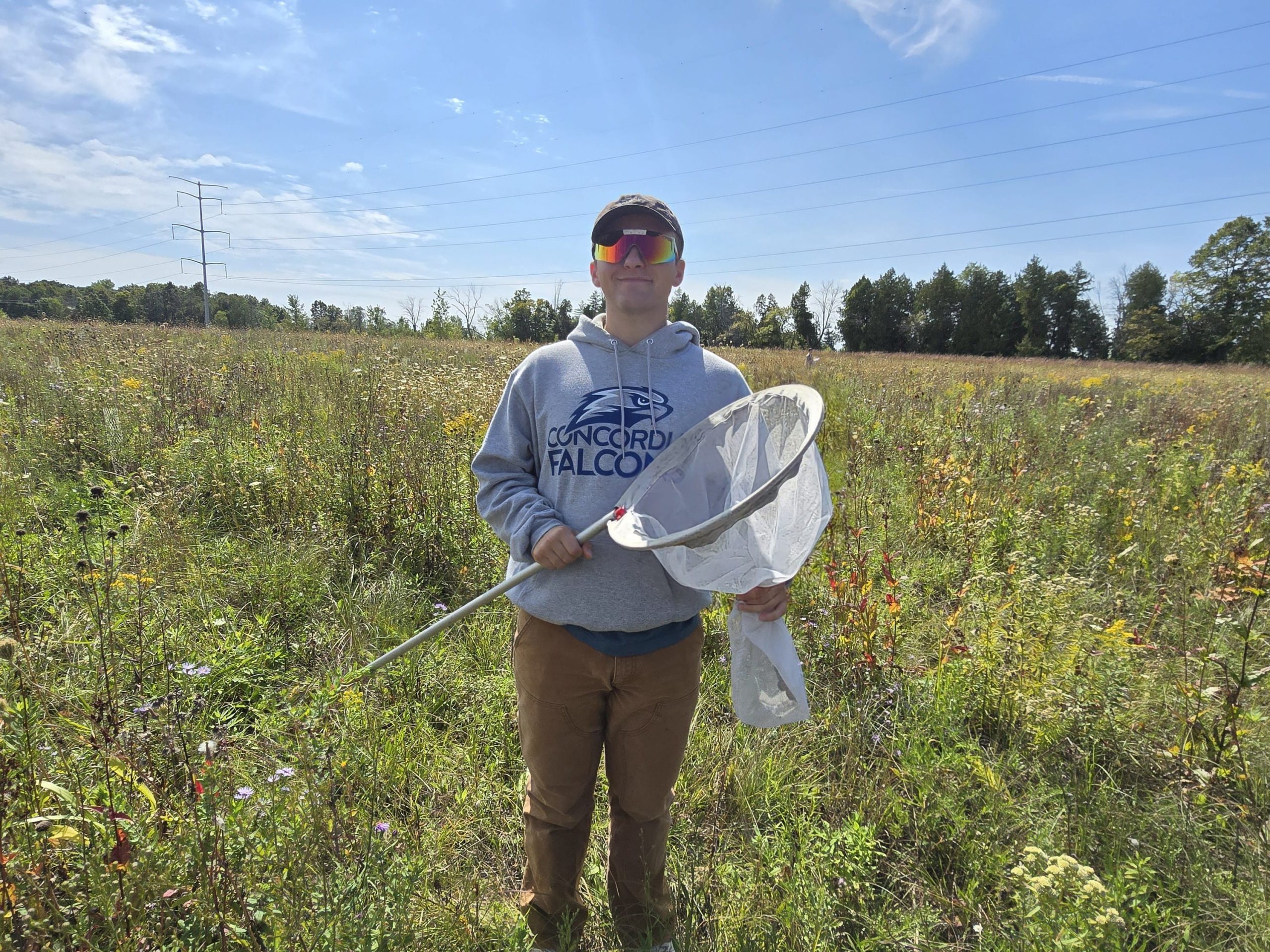
Kerbs describes his academic path as a “winding mountain trail rather than a straight boulevard.”
But, at what point did economics enter the picture for him? What made him think, “This would complement my major well?”
“The study of economics has always been a focus of my academic interest,” Kerbs explained. “In fact, urban planning is the convergence of economics, government policy, psychology, and environmental science. Economics became the natural addition to my Environmental Studies major.”
Bretta Speck, assistant professor of Environmental Science, is one of Kerbs’ instructors and has seen firsthand how his coursework in Environmental Studies and Economics complements the way he approaches class discussions and projects.
“In my ecology course, we study how plants and animals interact with each other and their environment,” Speck said. “Many of the equations used to quantify resource allocation, competition modeling, and future population dynamics are the same equations that are used in economics for nature’s human counterparts.
“When we talk about how to manage our natural resources,” she added, “Austin looks at not just the scientific side of what is best for the environment, but also thinks about the policy and economic side of how to accomplish such goals.”
Beyond the classroom
During his time at Concordia, Kerbs had an opportunity to work with the Milwaukee Metropolitan Sewerage District during an internship. There, he served in their Stormwater Management Division as a Fresh Coast Guardian. “I supported green infrastructure projects (rain gardens, bioswales, rain barrels) to manage stormwater where it lands and promoted sustainable urban development across multiple municipalities,” he said. “One of my favorite projects was working on MMSD-owned properties, identifying and maintaining native plants and removing invasive species.”
This internship enabled him to see the interconnectedness of metropolitan and rural areas, Speck said. “MMSD’s work on restoration of native plants and landscapes directly improves the water quality for the entire Milwaukee River Watershed and thus Lake Michigan. It has inspired Austin to implement some of these practices here at CUW. It’s this passion and drive that makes me know he has a promising future ahead of him.”
Creative balance

In addition to his studies, Kerbs finds time to participate in one or two of Concordia’s theatre shows each academic year. His repertoire includes “Beautiful the Musical,” “A Christmas Carol,” and “Singing in the Rain.” Last semester, he performed in “Madagascar” as Rico the Penguin. While he enjoyed performing in the production, he also saw a connection to his studies.
“‘Madagascar’ was a story about anthropomorphic animals that were sent to their native environments, despite being so far removed from these habitats that it felt foreign to them,” he explained. “The same can be true of people. Sometimes we feel foreign when returning to nature or moving to a new city. We like to set our roots in comfortable places, and change is difficult.”
He added: “Humans, like our creator, are designed to be creative beings. Very few creatures God has created have the capacity to innovate and create new things in the same way that people do. Finding a creative outlet is so important to find peace and focus in the fast-paced environment at university.”
What lies ahead
Kerbs, who hails from Appleton, Wis., plans to graduate this year. As he prepares for his next chapter, he trusts that God will provide the opportunities needed to maximize his talents, education and experience. And he doesn’t foresee an end to learning about the world, nature and economics.
“We are continually learning new things,” he said. “I want to apply the things that I learn to make the lives of people better and create a city that is a leading example for the world to follow… I do not expect to follow my plans exactly, as God has His own plan for my life. I will do my best to serve God and His people in any role that I am in.”
Want in?
Concordia University Wisconsin is a Lutheran higher education community committed to helping students develop in mind, body and spirit for service to Christ in the Church and the world.