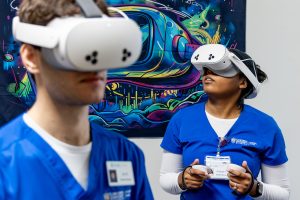
CUW’s new VR lab will help students develop practical skills, build confidence and prepare to serve others.
What if nursing students could practice caring for multiple patients, navigate difficult conversations and make critical clinical decisions before encountering those situations in a hospital?
At CUW, a new virtual reality lab will make those learning experiences possible, giving students another way to develop the skills and confidence they need for their future careers.
While nursing students will be among the primary users, the lab is designed to serve disciplines across campus, opening new possibilities for hands-on learning through immersive technology, artificial intelligence and realistic simulations.
More than a technological advancement, the lab represents another way CUW is preparing students to put their knowledge into practice and serve others with competence and compassion.
Preparing nurses for real-world decisions
For nursing students, clinical experiences are an essential part of their education. Working alongside health care professionals in real clinical settings allows students to apply classroom knowledge, develop critical thinking skills and learn to care for patients.
Virtual reality offers an additional layer of preparation.
“VR provides multi-patient access to specifically practice assessments, delegation, prioritization, and communication. These are key aspects of nursing that maximize patient safety and the care provided to them,” said Tina Gaffney, CUW’s simulation and VR center director, psychiatric wellness coordinator and nursing instructor.
Through virtual simulations, students can practice managing multiple patients and determining which needs require their immediate attention. They can also work through decisions about delegating responsibilities, communicating with patients and coordinating care.
These are skills that can be challenging to practice extensively during traditional clinical rotations, where students generally focus on providing bedside care to individual patients.
The lab will use clinical simulation scenarios from Wolters Kluwer, a company whose educational programs are already familiar to CUW nursing students. Faculty and staff will guide students through preparation and reflection sessions before and after each simulation, helping them evaluate their decisions and identify opportunities for improvement.
Unlike real clinical encounters, virtual scenarios can be repeated, giving students additional opportunities to practice, learn from mistakes and strengthen their clinical judgment in a controlled environment.
Gaffney believes this additional preparation will help bridge the gap between nursing education and the demands of professional practice.
“VR will test these concepts further for the students to be more practice ready at graduation,” she said.
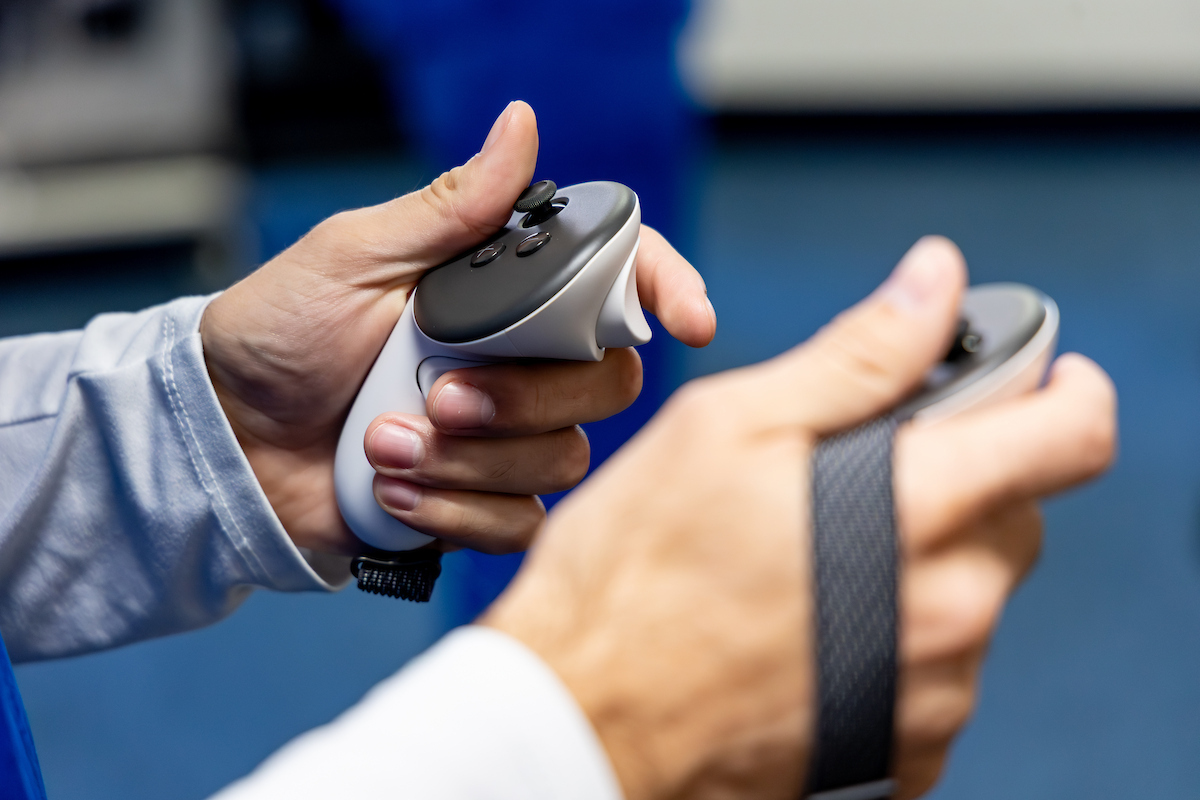
Combining clinical skills with compassionate care
Although VR introduces new technology into nursing education, the ultimate goal remains deeply human: preparing nurses to care for people.
At CUW, nursing education emphasizes treating the whole person, recognizing that physical health is only one part of a patient’s well-being.
“At Concordia in nursing we educate on caring for the patient mind, body, and spirit,” Gaffney said. That approach reflects CUW’s Christian mission.
Nursing students learn to consider the physical, psychological, social, spiritual and financial factors that can influence a person’s health. Understanding those circumstances helps future nurses develop care plans that address individual needs while respecting the realities of each patient’s life.
Virtual reality, particularly when combined with AI, creates opportunities to practice those important interpersonal skills.
Students could encounter virtual patients facing complex health challenges, work through sensitive conversations and explore how their responses influence patient care. Such experiences can help them develop not only sound clinical judgment but also the communication skills and compassion essential to the nursing profession.
“We have to show compassion for each person individually and make care plans that fit into their needs and are attainable with their lives in the community,” Gaffney said.
By providing opportunities to practice those conversations, the lab can help students become more comfortable responding to patients with different needs and circumstances.
A resource for learning across campus
Although nursing will be a major focus, the new VR lab has the potential to benefit students throughout Concordia.
Gaffney said the lab will be available to nursing students at every level, from undergraduate education through the upcoming certified registered nurse anesthetist (CRNA) program. Faculty in occupational therapy, social work, psychology and pharmacy have also expressed interest in exploring its applications.
For students preparing to enter professions that involve direct interaction with patients or clients, the technology could offer valuable opportunities to practice communication, assessment and decision-making.
For example, students may be able to rehearse challenging conversations with people living with dementia or those with mental health conditions. Pharmacy students could practice patient education and sensitive discussions, while students in other disciplines could explore scenarios relevant to their future professional responsibilities.
AI-powered interactions are especially promising because they could allow students to practice responding to a range of situations in a simulated environment.
“It really comes down to practice, practice, practice – with VR being another tool for students to become practice ready in whatever field they are going to be using their degree in moving forward,” Gaffney said.
Looking ahead: The future of immersive learning
While the new lab offers exciting possibilities today, advances in technology could make immersive learning even more accessible in the years ahead.
Dr. Michael Litman, professor and chair of computer science, program director for the master’s programs in computer science and artificial intelligence, and co-founder of Concordia’s AI & Quantum Innovation Lab, sees virtual reality evolving into experiences that blend digital information with the physical world.
“I think VR is going to become more immersive with less hardware moving forward,” Litman said.
As headsets become lighter and more comfortable, augmented reality (AR) could allow students to interact with virtual elements while remaining present in their actual surroundings.
Rather than entering a completely virtual environment, students could one day practice skills using digital objects and scenarios integrated into familiar classrooms and shared learning spaces.
Litman envisions a future in which students can practice together without relying on physical training materials for every exercise, potentially reducing waste while creating new opportunities for collaboration.
He also sees significant possibilities in the convergence of AI, robotics and other emerging technologies, particularly in health care.
These advances could eventually help health care professionals perform complex procedures with greater precision while retaining the human judgment essential to patient care.
For Concordia students, learning to engage thoughtfully with emerging technologies may become an increasingly important part of professional preparation.
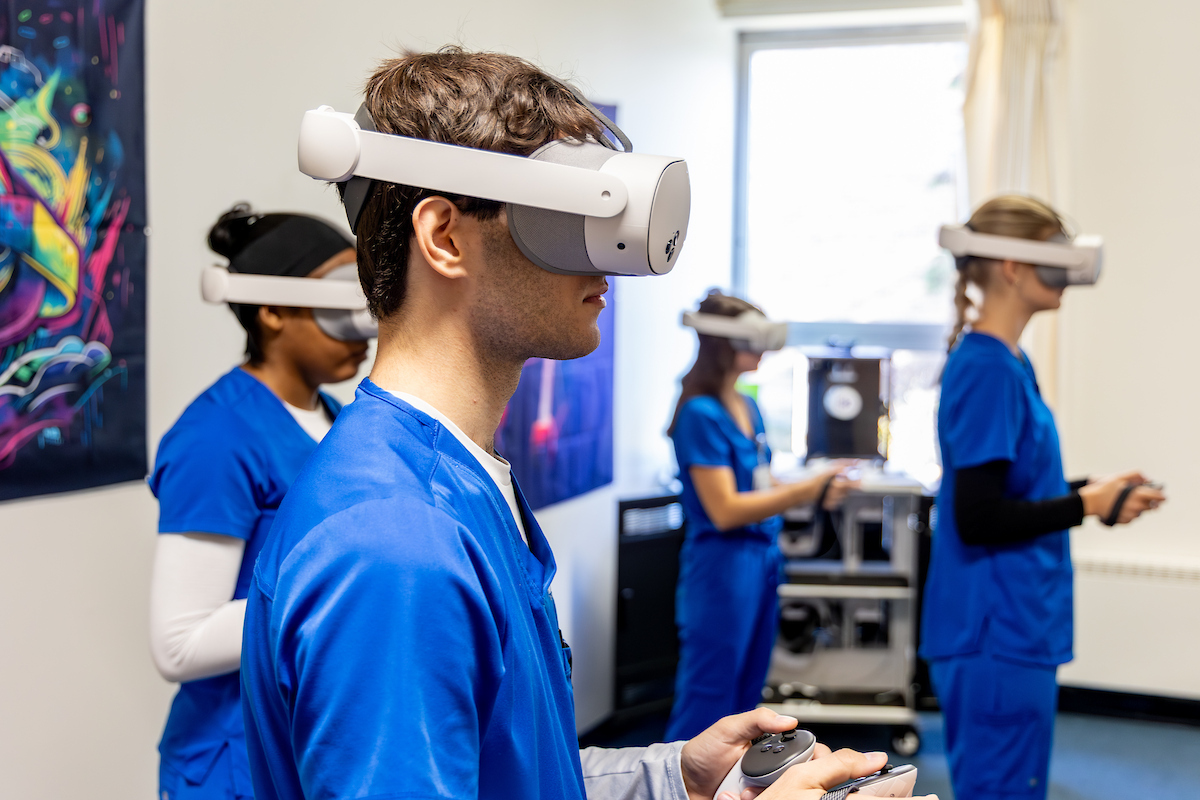
Innovation with a purpose
As Concordia explores the possibilities of virtual reality, the new lab reflects a commitment to combining innovative education with meaningful service.
For nursing students, that means more opportunities to practice making decisions, communicating with patients and coordinating compassionate care. For students across campus, it offers a new environment to develop professional skills and prepare for real-world challenges.
And for faculty, it creates opportunities to explore new approaches to teaching that connect classroom knowledge with practical experience.
Gaffney hopes the technology will ultimately help students develop the confidence and critical thinking skills needed to serve patients as individuals.
“We can really challenge them to critically think through what they will need to do as a nurse, who is expected to often play many roles, while giving patients that individual whole person-centered care required,” she said.
At Concordia, the technology may be new, but the purpose behind it is familiar: equipping students with the knowledge, skills and compassion to make a difference in the lives of others.
Note: CUW nursing has a story to tell through the students, faculty, alumni and experiences shaping the next generation of compassionate, skilled nurses. As we look ahead to the completion of our expanded nursing wing, we will showcase the strength of our program, the people behind its success and the opportunities this new space will create. Each feature will explore how nursing education brings together academic excellence, hands-on learning, faith and a commitment to serving others.
Want in?
Concordia University Wisconsin is a Lutheran higher education community committed to helping students develop in mind, body and spirit for service to Christ in the Church and the world.