Abigail (Abbey) Proctor is mastering a second language to better serve God’s creation.
Abbey Proctor spends her days serving both people and animals through the many roles she holds inside and outside CUW’s walls. A native of Pleasant Prairie, Proctor was homeschooled and began taking classes at Concordia as a dual credit student during 10th grade. By the time she graduated from high school, she was already halfway toward earning a Spanish minor. Learning another language not only became a bridge into college life, but also a way to support the people around her.
A heart for people and campus life
As a CUW student ambassador, Proctor is known for her ability to connect with others, especially through her growing proficiency in Spanish. For Proctor, the role is about helping prospective students and their families feel comfortable on campus, whether she is interpreting conversations for Spanish-speaking parents or answering questions about meal plans, student organizations and campus life.
“You can communicate with so many people that you never would have been able to talk with before.” Proctor said.
Being an ambassador is perhaps her favorite role and the one she has held the longest.
“It has been such a fulfilling role for me, even if I only get to see them for half of a day while they’re visiting,” she said. “It’s especially meaningful to show the parts of campus that I love and help students picture themselves here.”
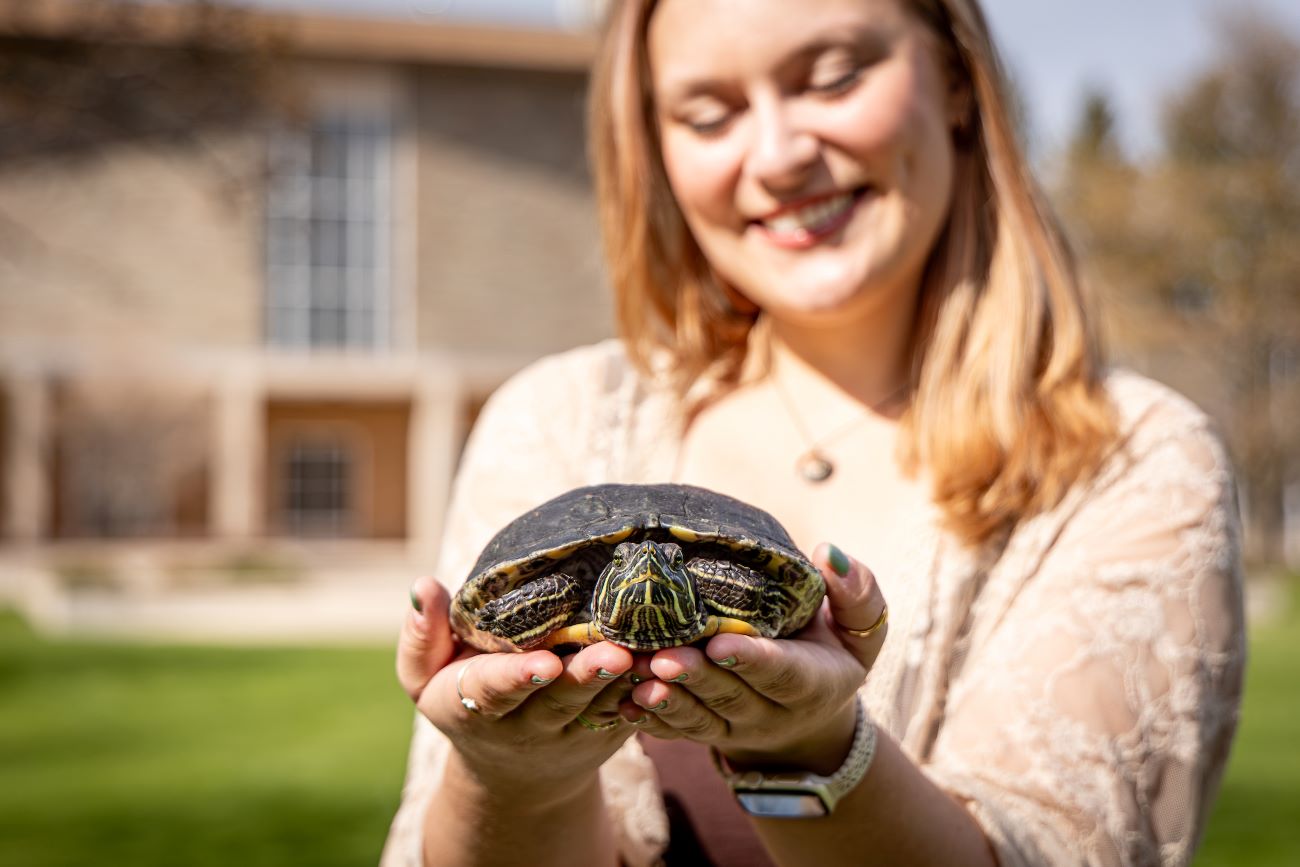
As a student worker in the Concordia Center for Environmental Stewardship, Proctor also cares for the center’s animals. She serves as the primary caretaker for Ralph, the CCES’s resident red-eared slider turtle.
“I’ll take her out of her tank and let her walk around while I’m doing feedings, and she kind of follows me,” Proctor said.
She also serves as secretary of the Sustainability Club, a newer student organization focused on encouraging environmental stewardship across campus. The group has hosted tree-planting events, participated in bird banding—a technique used to study individual birds—and worked with Concordia’s greenhouse.
Proctor believes students from all academic programs can benefit from spending time outdoors and engaging with nature.
“So any way we can promote a good thing,” she said.
A lifelong calling rooted in compassion
Beyond campus, Proctor spends much of her time working with horses, a childhood passion that continues to shape her future as she pursues a career as an equine veterinarian.
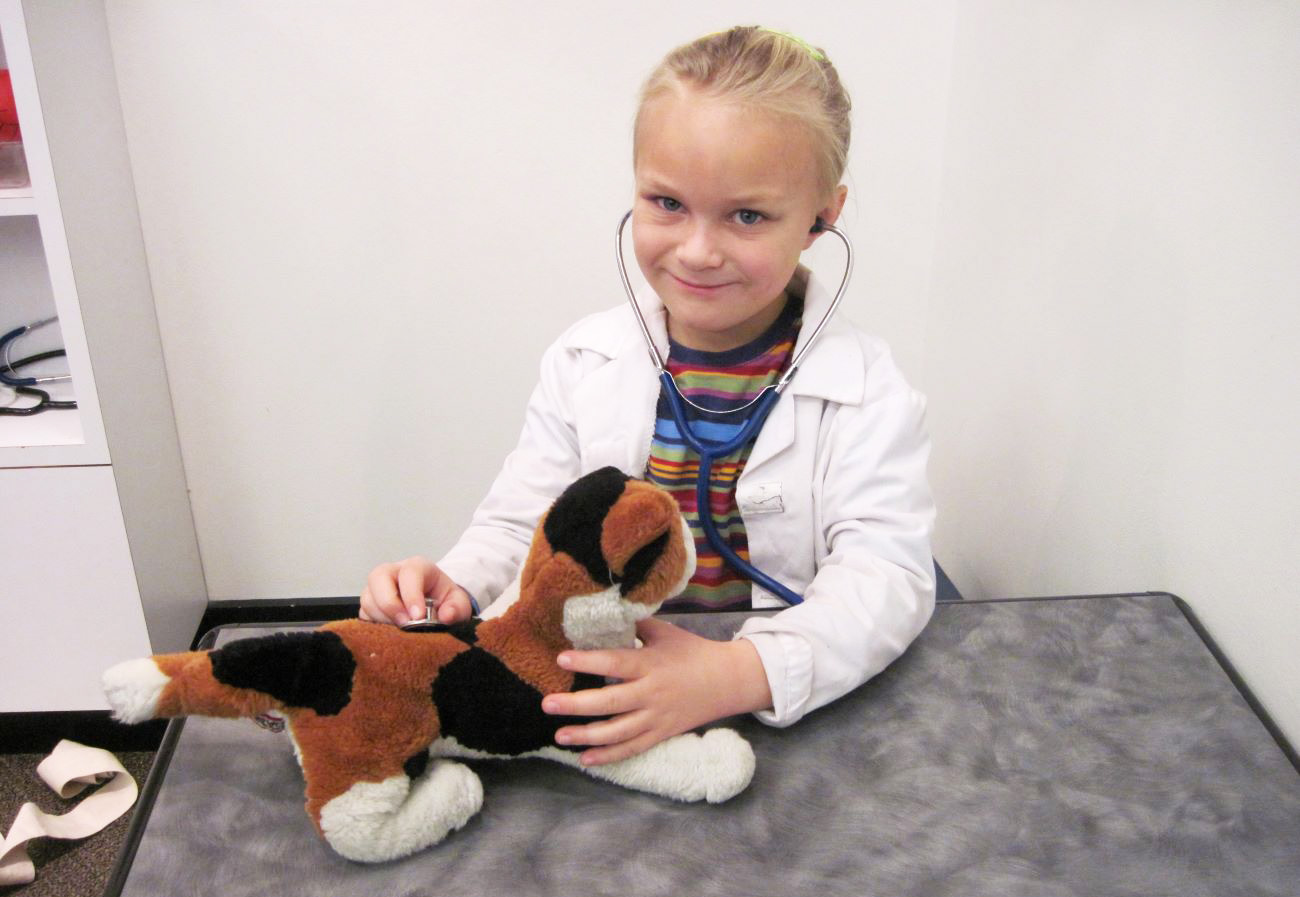
Some of her earliest memories trace back to preschool days at the Schlitz Audubon Nature Center. She fondly remembers being that “dirty kid” covered head to toe in mud. Throughout her youth, she attended classes there, participated in 4-H, and spent time at Riveredge Nature Center.
Those experiences outdoors and around animals helped foster her passion for veterinary medicine.
“I think going through those programs really sparked an interest in learning anything I can about nature—whether that’s plants or animals,” Proctor said. “And then, as far as veterinary science goes, I became really fascinated with anatomy and physiology in different animal species, along with my own love of pets and horses.”
One of her responsibilities outside the classroom is providing hoof care for horses. As a natural hoof care practitioner, she has built a small client base in the Kenosha area where she trims horse hooves on weekends.
This summer, she accepted a new position as a seasonal animal care technician at the Wisconsin Humane Society. In this role, she will provide animals with daily care and enrichment, safe handling and clean housing, and assist the veterinary and behavior teams when specialized care is needed.
“What I’m looking forward to most about the job is getting the chance to see a different side of animal care while showing compassion and love to animals in need of a home.”
A calling tested in the field
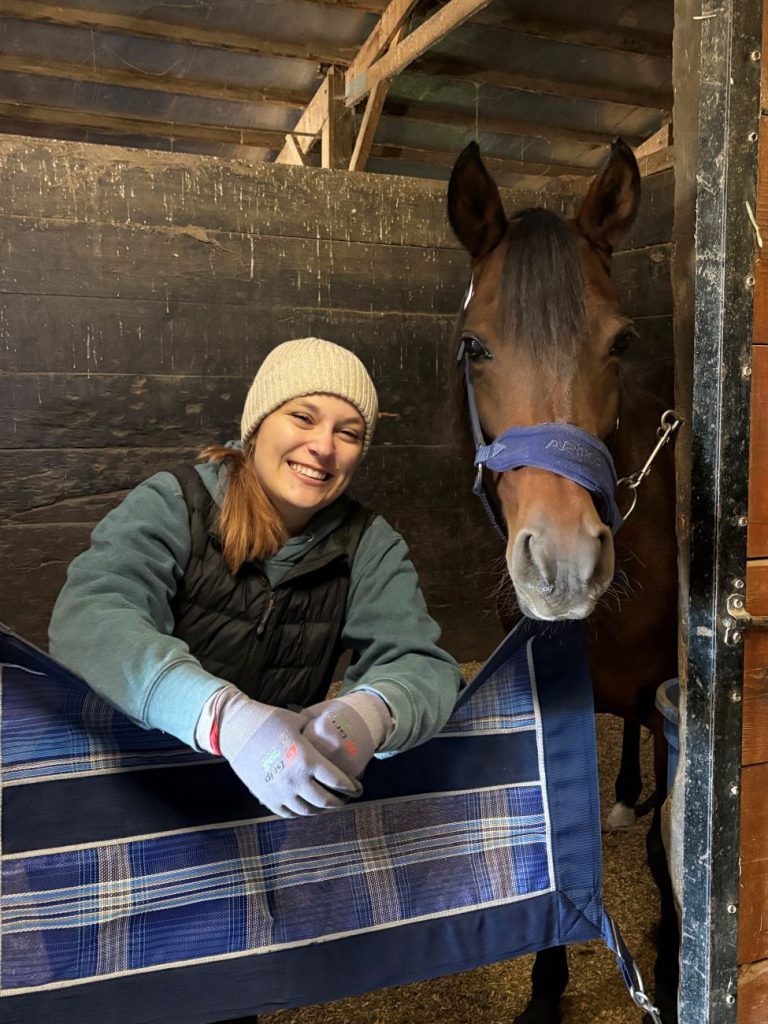
“It’s my stress outlet,” Proctor said. “I get to go home and sometimes wrestle with horses while trying to take care of their feet. It’s definitely very fulfilling work.”
She has also spent the last two summers working with veterinary clinics. During one summer as a full-time equine veterinary assistant, Proctor remembers helping during an emergency involving a horse that had severely injured its hip on a fence.
While assisting with the suturing procedure, she also helped bridge communication between the veterinary team and the horse’s Spanish-speaking family.
“It was a little stressful being right on the spot and having to come up with medical terms,” she said. “Sometimes I had to take out my phone and look them up. But it was fun to put my brain to work in that situation, knowing I was helping make the process smoother and ultimately helping the horse.”
Though the situation was intense, Proctor’s ability to speak Spanish helped the family better understand the care their horse was receiving.
A holistic combination
According to Proctor, veterinary schools are looking for more than a high GPA. They want students who are well-rounded and able to connect with others in meaningful ways.
“They want to know — can you communicate? What are your people skills like?” Proctor said. “Admissions has helped me a lot with that, especially finding common ground with different people.”
Veterinary schools also want students who can apply what they learn in the classroom to a field that continues to evolve through new research and technology.
“So I’m learning not only the traditional knowledge from chemistry and biology, but also the bigger picture—how it connects to real life and even to faith,” she said. “That’s been a really meaningful part of my experience here. Understanding that what I’m studying, like a chemical equation in organic chemistry, isn’t just something on paper. It could be the formula for a drug I’ll prescribe in the future.”
Concordia is helping her build an academic foundation that reaches far beyond the classroom. The experiences are preparing her mind, body and spirit for a vocation caring for animals and the people connected to them.
“She is diligent, capable and strongly committed to this career path,” said Michael E. Young, professor and chair of Life and Earth Sciences. “While the majority of students only do what is required to graduate, Abbey was genuinely excited about a wide range of ‘extra’ classes available to her.”
A final note
Proctor strongly encourages students to pursue a well-rounded college experience, especially when it comes to learning another language.
“From what I’ve heard, it’s a nationwide trend—fewer students are choosing to study foreign languages,” Proctor said. “But I’ve really tried to advocate for keeping it, because it’s so valuable.”
Students with even the slightest interest in learning a language should pursue it, she said.
“It’s not only fun, but it allows you to communicate with so many more people. You never know how you might be able to help someone—or how they might help you.”
Want in?
Concordia University Wisconsin is a Lutheran higher education community committed to helping students develop in mind, body and spirit for service to Christ in the Church and the world.