
Introducing a more affordable, efficient route into high-demand helping professions.
Psychology is one of Concordia University Wisconsin’s highly sought-after majors—attracting students with a passion for people and a desire to support mental, emotional and community well-being. Now, CUW is responding to student interest and national workforce needs with a newly approved Psychology Pre-Graduate Scholar Pathway, launching fall 2026.
This Pre-Graduate Scholar Pathway enables psychology and applied psychology students to complete their major program coursework in three years, then take up to 12 graduate credits during their fourth year. These graduate credits will count toward one of CUW’s master’s programs in counseling or social work.
“The graduate and undergraduate faculty worked closely to create a pathway that would set students up for career success,” said Rachel Pickett, PhD, department chair and professor of psychology. “Many students go on to master’s programs directly after completing their bachelor’s degree.”
Meeting a growing national demand for mental health professionals
The timing couldn’t be more urgent. The U.S. continues to experience a significant shortage of mental health providers, and organizations like the American Psychological Association and U.S. Department of Labor project strong, long-term growth in:
- Clinical mental health counseling
- Social work
- Behavioral intervention roles
“We’re still seeing a major demand for people in psychology and social work,” Pickett noted. “These are fields that require human interaction. They’re not likely to be replaced by AI. Communities need real people—professionals who can support them.”
By shortening the path to licensure-required master’s degrees, CUW is helping address workforce gaps while empowering students to start meaningful careers sooner.
How the Pre-Graduate Scholar Pathway works
The innovative design of the pathway keeps everything in CUW’s traditional psychology and applied psychology curriculums intact—nothing is removed or watered down.
“It’s the exact same degree,” Pickett emphasized. “Students still get the research experience, the practicum, the service opportunities… everything our psychology graduates are known for.”
The difference lies solely in timing:
- Years 1–3: Students complete the full psychology or applied psychology major coursework.
- Year 4: Students remain undergraduates but take foundational graduate courses in their chosen track (12 credits):
- Clinical Mental Health Counseling
- Social Work
These graduate courses later transfer directly into the corresponding CUW master’s program.
Who thrives in this Pre-Graduate Scholar Pathway model
This pathway isn’t designed for every student—but it’s a perfect fit for those who are:
- Motivated, organized and self-disciplined
- Confident in pursuing a graduate degree in a helping profession
- Ready for an accelerated academic pace
- Seeking a faster and more cost-effective route to licensure
“The students best suited for this are driven,” Pickett said. “They know they want a master’s degree. They take initiative. They’re on top of their scheduling and requirements.”
Students don’t need to choose their specific graduate track immediately; they can explore their interests and decide among the prescribed options as late as year three.
Financial benefits: Start your career sooner and save money
One of the most compelling reasons to consider the Pre-Graduate Scholar Pathway is the potential savings in tuition, time and overall debt.
Students still complete a full 120-credit bachelor’s degree—while the graduate courses are taken in year four:
- Reduce the total cost of the master’s program
- Shorten the overall time to degree completion
- Allow students to enter the workforce a full year earlier
“Students are shaving off a full year of time and cost,” Pickett explained. “By entering the workforce sooner, and taking fewer total semesters of graduate tuition, they’re in a better financial place long term.”
For careers that begin in community agencies, schools, clinics, or nonprofit spaces, this earlier start can make a meaningful impact on financial stability.
Strengthening readiness and professional confidence
Despite the condensed timeline, students continue to benefit from every hallmark of CUW’s education:
- Independent research projects
- Practicum or field work experiences
- Service-learning each semester
- Direct interaction with community and national leaders in the field
- Support from undergraduate and graduate faculty teams
“Our students are already very competitive for graduate school,” Pickett shared. “This pathway keeps everything that makes our program strong—it just moves motivated students through more efficiently.”
Student experience: What it looks like in real life
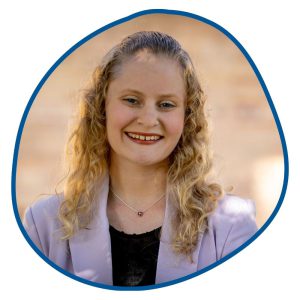
Kaylee McCarty, BA psychology ’25, professional counseling (CMHC) Class of 2027
“When I first toured Concordia, I knew I wanted to be here. I’ve always loved small schools, and CUW made me feel like a person—not just another number on a class roster. During my undergraduate years, I majored in psychology, earned minors in athletic coaching and social science, completed the compassionate care certificate, and stayed active through SGA, Psych Club and the women’s golf team. When it came time to choose a graduate program, I felt an unmistakable pull to stay at Concordia and continue my education in a place that had already shaped me so deeply.”
Kaylee is now pursuing her Master of Science in professional counseling on the clinical mental health counseling track, with plans to graduate in May 2027.
“I chose counseling because I want to help the children of tomorrow. Since 2019, I’ve lived with multiple chronic conditions—that journey changed me. God has given me the ability to be strong, compassionate and patient—qualities I want to use to support children and adolescents who are navigating their own long-term health struggles. Recovery can take time. It can be frustrating. I want to be someone who understands that firsthand and can walk alongside them.”
CUW offers a Christ-centered education, preparing students for service. The psychology department emphasizes a biblical worldview of human nature, providing students a strong foundation that they can continue to build on in one of our graduate programs—which Kaylee is doing.
Her lived experience has shaped not only her calling, but also how she understands the national need for mental health professionals.
“There is a huge need for counselors right now, especially professionals who bring different experiences to their work. Clients deserve to find someone they connect with—someone who makes them feel safe enough to grow.”
Although Kaylee hadn’t encountered the newly announced Pre-Graduate Scholar Pathway during her own enrollment, she sees value in making clear, advanced routes available for motivated students like herself.
Begin your career in counseling or social work sooner
Whether your calling lies in helping children navigate school, supporting individuals through mental health challenges, or advocating for families and communities, CUW’s Pre-Graduate Scholar Pathway in psychology or applied psychology helps you begin that journey with greater efficiency—and without sacrificing depth or quality.
If you’re a motivated student with a heart for service, this is your opportunity to start making a difference sooner.
Want in?
Concordia University Wisconsin is a Lutheran higher education community committed to helping students develop in mind, body and spirit for service to Christ in the Church and the world. Christ’s example of treating all people with compassion, respect, and understanding is at the heart of the Psychology Department’s mission. In our programs you will be empowered to use your God-given talents and the skills and knowledge you gain from Psychology or Applied Psychology courses to become actively involved in serving others through various Christian vocations.