
Healthcare is evolving rapidly, and nurses are key. Earning an MSN empowers nurses to expand their impact, step into leadership, and confidently meet growing demands.
1. Meeting the Moment: Why an MSN Matters Now
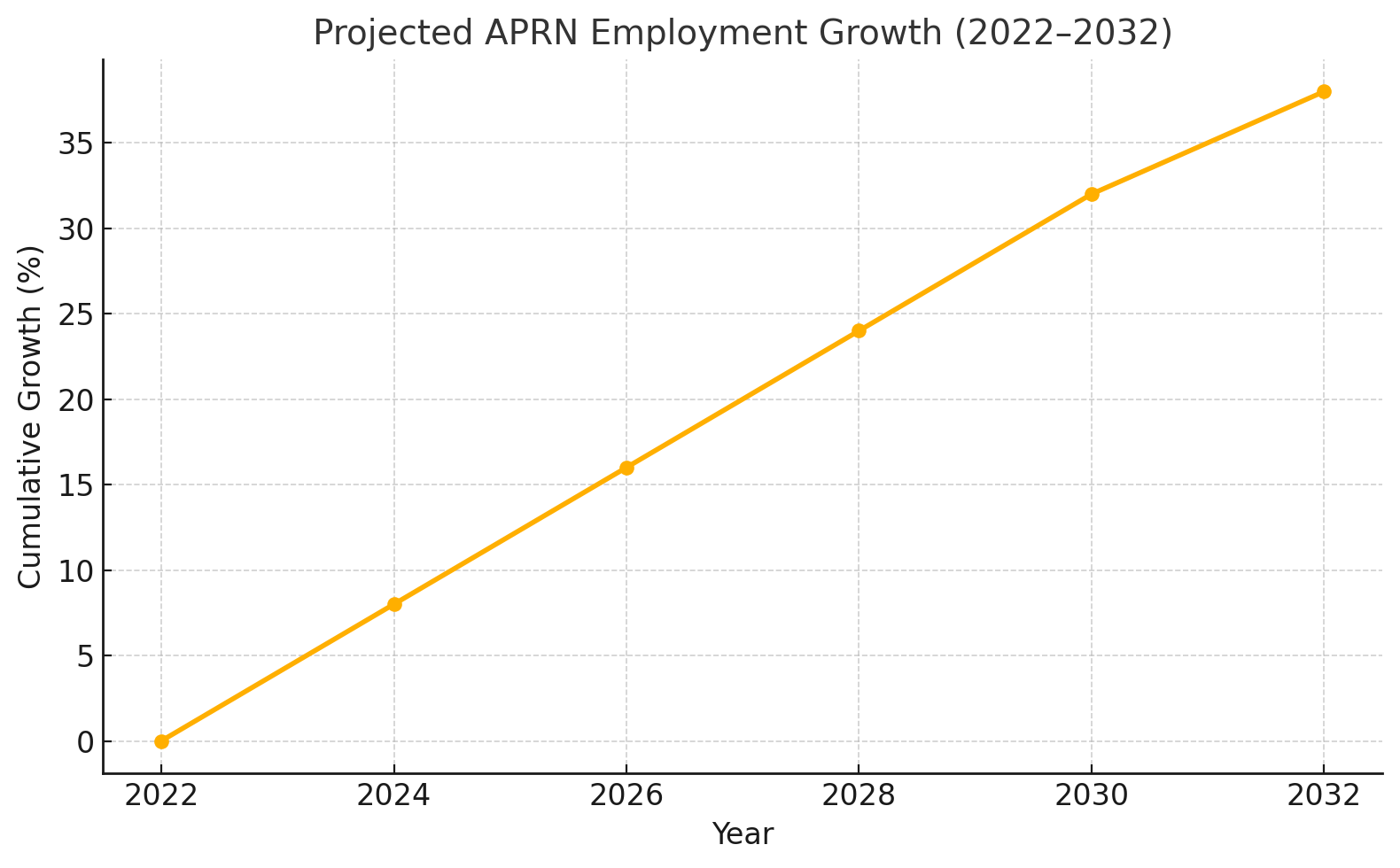
The healthcare landscape is transforming rapidly. Emerging technologies, an aging population, and a nationwide nursing shortage have created both challenges and opportunities. According to the U.S. Bureau of Labor Statistics, employment for advanced practice registered nurses (APRNs) is projected to grow 38% through 2032—far faster than the average for all occupations.
That surge represents more than job growth—it’s a call to leadership. Nurses with an MSN are positioned not only to fill these essential roles but to help shape what comes next in patient care. They serve as innovators, educators, and advocates for more equitable and effective health systems.
2. Advancing Skills, Expanding Influence
An MSN transforms experienced caregivers into strategic leaders. The curriculum extends beyond clinical expertise to integrate leadership, healthcare informatics, evidence-based practice, and policy development.
Graduates of online MSN programs are equipped to:
- Lead patient care units or clinical departments.
- Implement quality and safety initiatives across systems.
- Champion technology adoption, from telehealth to AI-assisted diagnostics.
- Mentor future nurses or design curriculum as nursing educators.
In short, the degree shifts nurses from providing care to directing the future of care, bridging compassion with leadership and innovation.
3. Career Growth and Compensation
For most nurses, the motivation begins with service, but career advancement and financial stability are meaningful rewards as well. The median annual salary for nurse practitioners now exceeds $128,000, with top earners surpassing $160,000 depending on specialization and region.
An online MSN degree opens the door to specialized and influential roles, such as:
- Nurse Practitioner (NP): Providing primary or specialty care.
- Clinical Nurse Leader (CNL): Coordinating evidence-based improvements.
- Nurse Educator: Teaching and shaping the next generation of caregivers.
- Nursing Administrator: Managing teams, budgets, and organizational outcomes.
Each role offers greater autonomy, purpose, and professional fulfillment—proof that advanced education benefits both nurse and patient.
4. A Win-Win for Healthcare Partners
Hospitals and healthcare organizations also thrive when nurses pursue advanced degrees. MSN-prepared nurses bring leadership, data literacy, and a systems-level understanding that elevate both care quality and team performance.
Employers consistently report benefits such as:
- Improved outcomes through evidence-based leadership.
- Higher retention and satisfaction among empowered nursing staff.
- Stronger pipelines for internal leadership succession.
In essence, supporting nurses in earning an MSN strengthens the entire care system—building a workforce that leads with integrity, insight and compassion.
5. Flexibility That Fits Today’s Nurses
Concordia University Wisconsin understands the balance nurses must maintain—between patient care, family, and personal growth. That’s why CUW’s online MSN program is designed specifically for working professionals, offering:
- Online and hybrid learning formats for maximum flexibility.
- Multiple specialization tracks aligned with real-world needs.
- A faith-based community where students are known, supported, and valued.
At CUW, students don’t just learn—they’re equipped to lead with integrity. It’s an environment where education nurtures the whole person: mind, body and spirit, consistent with CUW’s mission to prepare servant leaders who live out their calling in the world.
6. The ROI of an MSN: Purpose and Impact
While an MSN offers strong financial potential, the true return on investment runs deeper. Graduates often describe the experience as a transformation—from nurse to leader, and from career to calling.
MSN-prepared nurses step forward with renewed clarity of purpose. They gain the confidence to lead initiatives that enhance patient safety, promote health equity, and elevate their colleagues. Their impact is not only clinical but deeply personal, improving lives, mentoring others, and serving communities with integrity.
This is the essence of an MSN: a credential with heart—where skill meets calling, and leadership is rooted in service.
Lead the Change in Healthcare
The future of healthcare depends on compassionate, well-equipped leaders. An online MSN degree isn’t just another credential; it’s preparation for meaningful impact.
At Concordia University Wisconsin, nurses grow in skill, faith, and purpose—ready to meet today’s healthcare challenges with excellence, empathy and grace.
? FAQ
How long does it take to earn an MSN?
Most programs, including CUW’s, can be completed in 2–3 years, depending on prior education and pace.
Can I work while earning my MSN?
Yes. CUW’s online and hybrid options are intentionally designed for working nurses balancing career and life.
What are the top MSN specializations?
Common tracks include Family Nurse Practitioner, Adult/Gero PC NP, Clinical Nurse Researcher.
Why choose a faith-based MSN program?
Because leadership in healthcare is about both skill and heart. CUW integrates Christian values into every aspect of learning, preparing nurses to serve with compassion and integrity.
Your skills, your compassion, your faith — they’re exactly what healthcare needs right now.
? Step forward with purpose through Concordia University Wisconsin’s online MSN program and become the leader you’re called to be. CUW has also announced the launch of a new Direct Entry Master of Science in Nursing (DE-MSN) program, click link for more information.