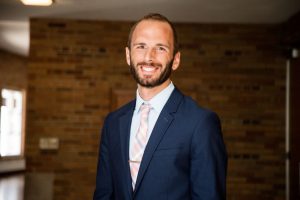
Concordia University Wisconsin’s Department of Physical Therapy is celebrating a major research milestone — and building momentum for what comes next.
The first externally-funded study from Dr. Kevin Gries’s integrative physiology lab has been published in the American Journal of Physiology–Endocrinology and Metabolism, and the American Heart Association (AHA) has awarded the project an additional year of funding.
Together, the publication and grant extension mark a significant achievement for Gries and highlight Concordia’s growing research presence in exercise science and health physiology.
Why this research matters
Most people understand that regular exercise supports good health. What is less understood is how even brief periods of inactivity affect the body — especially when exercise resumes.
Gries and his research team set out to answer a deceptively simple question: How does a single day of reduced physical activity change the body’s metabolic and molecular response to exercise the following day?
“We wanted to understand whether short-term inactivity could blunt the benefits of exercise — and the answer is yes,” Gries said.
This question has important implications for health, fitness, aging, and chronic disease. Emerging evidence suggests that short-term inactivity can disrupt many of the beneficial adaptations typically triggered by exercise, even in otherwise healthy individuals.
How the study was conducted
Using a rigorous crossover study design, researchers asked healthy adults to complete two exercise trials:
- After a normal activity day of greater than 8,500 steps
- After a reduced activity day of less than 5,000 steps
After each day, participants completed 60 minutes of aerobic exercise at 65 percent effort – a standard exercise bout. To understand what was happening inside the body, the research team conducted an unusually comprehensive analysis, including:
- Skeletal muscle biopsies before and four hours after exercise
- RNA sequencing of the biopsied skeletal muscle to measure changes in more than 20,000 genes
- Metabolic gas measurements during exercise
- Blood samples to track key metabolic markers during exercise and recovery
This level of molecular and metabolic analysis is rarely conducted at small institutions. The grant funding allowed CUW to expand its research capabilities through the purchase of point-of-care blood analyzers and specialized equipment for skeletal muscle biopsies — a technique new to CUW and uncommon in academic settings.
Key findings
The study revealed that even one day of reduced activity significantly altered how the body responded to exercise.
Muscle responses were dramatically different:
At rest, nine genes related to metabolism differed after a low-activity day, which suggests that one day of inactivity already changed skeletal muscle. During exercise, however, inactivity altered the expression of 1,403 genes, compared to 793 genes after a normal activity day. The differences between these gene changes were linked to inflammation, metabolism, immune responses and cell cycle regulation.
Fuel use shifted toward carbohydrates:
After a low-activity day, participants burned more carbohydrates and less fat during exercise, indicating reduced metabolic efficiency.
Blood lipid levels increased:
After a single day of inactivity, triglycerides were higher throughout exercise and recovery — an early marker associated with increased metabolic disease risk.
Fuel substrates within the skeletal muscle changed:
A single day of inactivity caused the muscle to have the fuel source (metabolites) similar to those of older adults or people with obesity.
These findings showed that walking more than 8,500 steps per day produced a meaningfully different exercise response than walking fewer than 5,000 steps, even when structured exercise was the same.
A clear takeaway: movement outside exercise matters
Gries’s findings reinforce a simple but powerful message: you cannot exercise your way out of being sedentary.
Formal exercise remains essential, but daily movement — standing up, walking regularly, and reducing prolonged sitting — is equally important. Even small changes, such as taking a five-minute walk every hour, can help support healthier physiological responses.
“This research shows we need to think beyond exercise alone,” Gries said. “Daily activity matters just as much as structured workouts. Small changes — like taking a short walk every hour — can make a meaningful difference.”
A team effort with student involvement
The project depended on the dedication of a strong research team, including Concordia students who gained hands-on experience in participant testing, muscle biopsy preparation, and data collection.
“Working on this project gave me meaningful exposure to the rigor behind high-quality research and strengthened my confidence working in research environments.”
— Jonathan Baranowski, pharmacy student involved in the project
Contributing researchers included Joseph McGraw, Emily Goetz-Sutinen, Jessica Grimm, Jonathan Baranowski (pharmacy student), and Mark Berres (faculty member at the University of Wisconsin–Madison). Their involvement reflects CUW’s commitment to high-impact, experiential learning and advanced research training for students.
“It was an honor and privilege to collaborate with Dr. Kevin Gries on this study,” said Joe McGraw, a pharmaceutical science professor in the School of Pharmacy. “The impact of exercise on chronic illness cannot be understated. Exercise often surpasses drugs for chronic illness prevention and treatment outcomes. The important work of exercise physiologists like Dr. Gries continues to highlight these findings. As we seek to optimize health and longevity, I look forward to future collaborations with him.”
Grant success and what comes next
The original two-year AHA grant totaled $154,000 and concluded at the end of 2025. Due to the project’s success, the American Heart Association awarded an additional year of funding — nearly $74,000—to extend the research into 2026.
“The one-year extension of Dr. Gries’s prestigious American Heart Association grant is a testament to his ability to execute high-level science at our university,” McGraw said. “The ability, commitment and perseverance necessary to accomplish this work by Dr. Gries and his team cannot be understated.”
Grant funding has also supported professional development, allowing Gries to present findings at national and international conferences, including the American College of Sports Medicine meetings in Boston and Atlanta, the Mitochondrial Physiological Society conference in Copenhagen, and the Integrative Physiology of Exercise conference at Penn State.
Looking ahead, Gries plans to investigate how aging affects exercise response biology, and whether changes are driven by aging itself or by declining physical activity levels over time.
“Understanding whether changes in exercise response are due to aging or inactivity is the next critical question,” Gries said. “This research opens the door to rethinking how we approach physical activity guidelines across the lifespan.”
About Dr. Kevin Gries
Gries is an assistant professor of physical therapy whose research focuses on exercise physiology, skeletal muscle biology, metabolic health, and the molecular adaptations to activity and inactivity. His work supports Concordia’s mission to advance health science research while equipping students to understand the human body from whole-body performance down to cellular function.
Read the full study
“A Single Day of Reduced Activity Alters the Next Day’s Transcriptomic and Metabolic Exercise Response” in the American Journal of Physiology–Endocrinology and Metabolism.
Student Alexis Mader contributed to this article.
Want in?
Concordia University Wisconsin is a Lutheran higher education community committed to helping students develop in mind, body and spirit for service to Christ in the Church and the world.