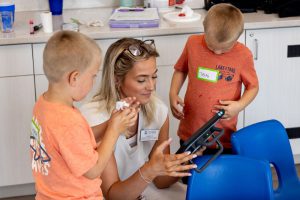
For the second summer, Dr. Heather Pauly, CUW’s assistant professor of speech-language pathology, hosted a social group for youth with speech and language impairments. Participants were separated into similar age peer groups to socialize with each other under the guided instruction of graduate students.
Augmentative and Alternative Communication (AAC) is a blend of electronic devices and low-tech options, like picture boards and sign language, which are used to assist individuals with speech and language impairments. The AAC devices help people express themselves, understand others, and fully participate in activities. This summer was the second time Dr. Heather Pauly successfully introduced a social skills group surrounding AAC at CUW that was open to the community and also part of the Master’s in Speech-Language Pathology curriculum.
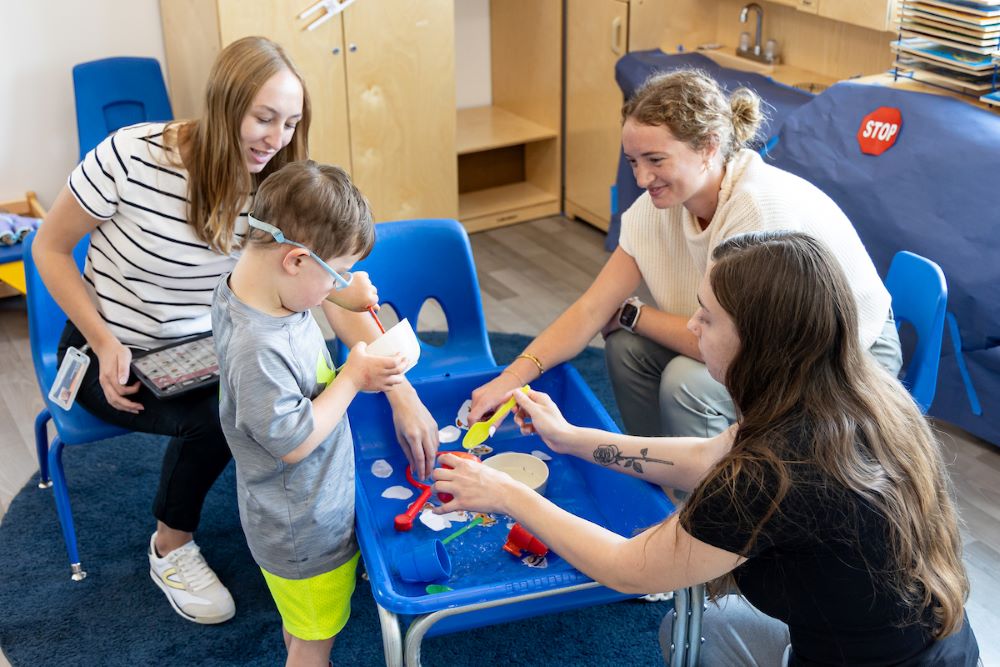
As part of an eight-week class on theory, evidence, and practice around AAC, students (course SLP 5600) like Delaney King are given the opportunity for hands-on, real-world experience that also benefits community participants and their caregivers. She is pursuing this master’s degree because she wants to help others holistically.
“My faith motivates and guides the reasons behind why I do what I do,” says King. “I think AAC is a really important tool, as it makes communication more accessible for those who may not be able to verbally communicate.” King believes that using AAC devices doesn’t take away from spoken language, sign language, or other forms of communication, but rather enhances the user’s overall communication abilities.
The catalyst: the community
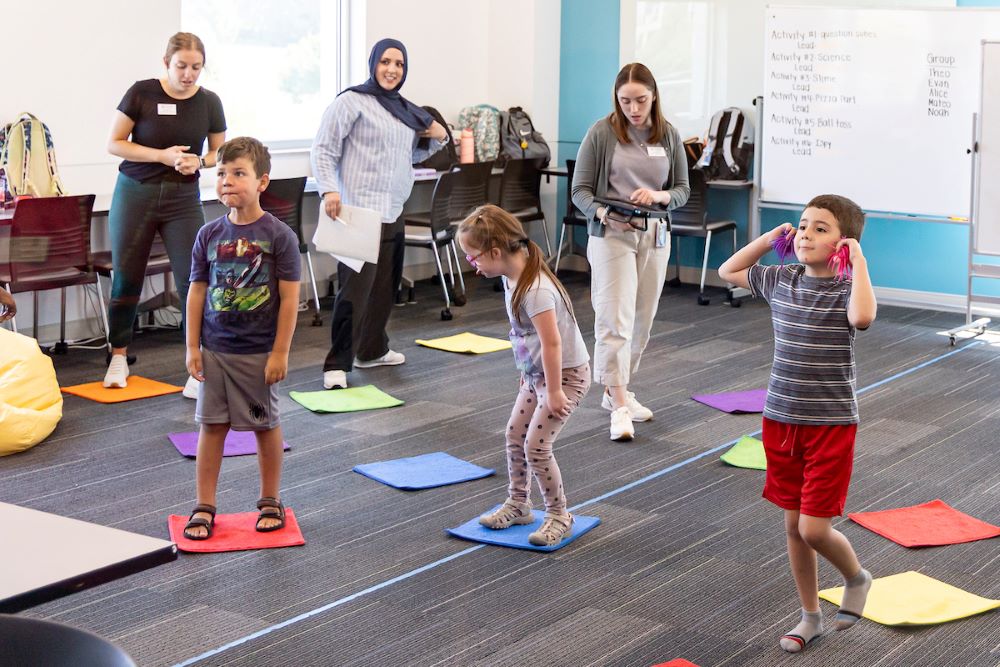
So how did the AAC Social Group come to fruition? At the Ozaukee County Resource Fair in 2022, caregivers were asking as to whether the SLP program at Concordia had any groups for AAC users. Pauly says that changing the program schedule to teach the AAC course in summer allowed them to meet this community need. So starting last year, Pauly collaborated with Dr. Erin Regis-Bailey, the clinical education director, to get this project operational.
“In speech-language pathology education, we feel that it is important to have both theoretical and practical training, particularly with AAC, which seems daunting due to the ever-changing technology,” says Pauly. “Once we put the idea together, it came to fruition within four months, which was possible by sticking within the confines of an existing course.”
Pauly has done extensive research on the importance of these groups globally. Her findings allowed her to create a suitable and structured day program that consists of grouping youth appropriately and offering engaging activities. She employed her experience from the Chatter Matters Communication Camp at UW-Whitewater—an overnight camp for children using AAC—in which she visited in 2024, to set the bar high at CUW. She was impressed at the generosity of the educational leaders there that offered her ideas and resources.
“The group is possible because of the community support, my department, and collaborations with SLPs from other institutions involved with Chatter Matters.”
Reaping the rewards
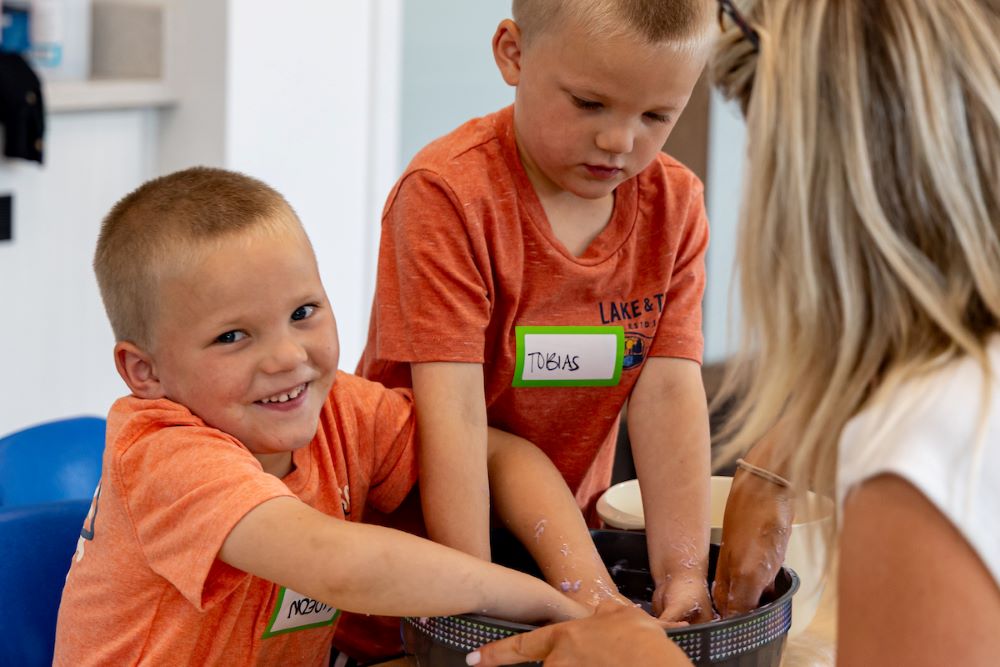
These groups allow AAC users to socialize in a low pressure setting with others that use similar forms of communication. Meanwhile, parents and caregivers were gathered in a separate area of the Robert W. Plaster Free Enterprise Center in order to network and socialize while their youth engaged.
Abigail Novak (mother of the two twins photographed above, Gideon and Tobias) attended this group for the first time. However, her sons, who are diagnosed with childhood apraxia of speech and expressive language disorder, use CUW’s Speech, Language & Hearing clinic frequently for individual speech therapy.
Both boys have had their own AAC devices for over a year now, but struggle with using them to socialize. “They are still learning to use their devices, especially in social settings, which is why this camp [group] was so important,” highlights Novak. Novak did research on devices prior to purchasing the iPads with the TouchChat app. “They were getting so frustrated from not being able to tell us what they wanted and needed,” she confirms.
After the group, Novak noticed her sons were more confident and proud to have had the opportunity to learn new things about these devices, as well as use them socially. The only con for Novak was that this group was only offered two days.
Justin Wienke, parent and physical therapist, agrees with Novak saying that sessions were limited and that ” … there is a critical niche need for these camps for the Milwaukee area Special Needs community.” He hopes to have more opportunities like this for his 11-year-old daughter Caroline to participate in and would love to come back to CUW.
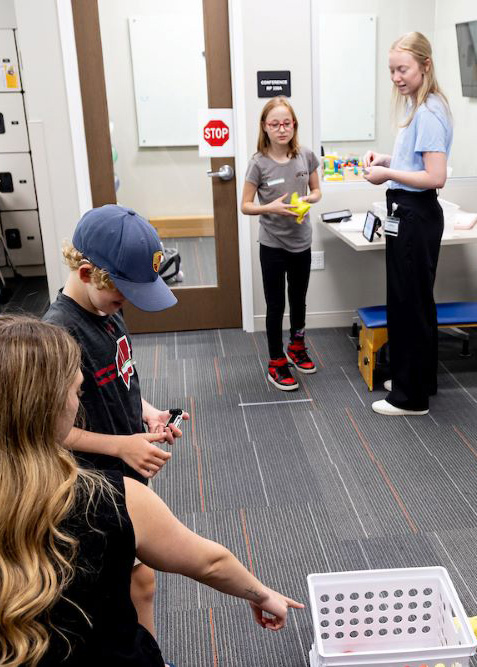
After group, Caroline gave her father a big grin when asked if she enjoyed it, expressing that she wanted to do more “speech camp.” Caroline is diagnosed with Bainbridge-Ropers Syndrome & Autism Spectrum Disorder. She uses a program called TouchChat on an iPad system called “WEGO” from Talk to Me Technologies. “Caroline’s AAC device has become a critical resource for her daily living much like a Jedi Knight’s lightsaber—if you are familiar with Star Wars.”
However, although verbal speech is still her preferred (fastest) form of communication, Caroline usually experiences a noticeable boost in device use after similar opportunities. “Again, any time Caroline gets to practice communication in a fun, social setting—particularly one where AAC device use is normalized amongst other device users—she is highly motivated and has a blast.”
As an SLP student instructor, King notices that AAC users and their families may feel isolated from others who are similar to them and may not know other AAC users. “The social group helps to bring these individuals together,” she says.
Sometimes in the school system, according to Pauly, there may only be one student in a grade that is using AAC, which leads to very little socialization opportunities making groups like this vital.
A sidenote
Pauly sees these groups as part of her calling here at the University. She quotes a Bible verse, Matthew 25:40, which reads: “The King will reply, ‘Truly I tell you, whatever you did for one of the least of these brothers and sisters of mine, you did for me.'”
She continues, “We are not all equal in human form, we have varied strengths and weaknesses, and these groups are a step toward equity (in which some people need different support than others) for a group (AAC users) whose voices are rarely heard or valued. Through these groups, our SLP students are learning to serve the body of Christ in the world.”
This year there was a representative from an AAC company present to support parents with device trouble shooting, as well as offer ideas for how to integrate AAC use into the home. Many parents/caregivers inquired afterwards on whether or not CUW will offer future opportunities for their children to attend similar events, preferably on a regular basis, displaying the high need in our community.
Fun fact:
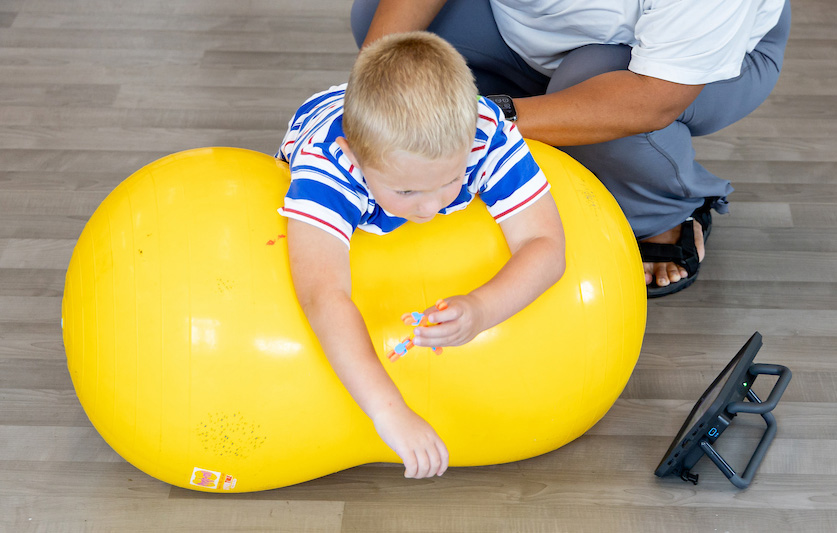
The qualitative and survey data collected as part of these groups led to two presentations, a write up, and also inspired an instructor at Marquette to run groups during the summer of 2025. Higher education is often siloed, but in this example, Pauly collaborated with a former SLP instructor at UW-Whitewater, an SLP professor at Viterbo, and encouraged the new groups at Marquette.
“We are all better together.” – Dr. Heather Pauly
Interested in learning more about SLP, read “How to become a speech pathologist.”
Want in?
Concordia University Wisconsin is a Lutheran higher education community committed to helping students develop in mind, body, and spirit for service to Christ in the Church and the world. People who would like to get children or young adults involved for next summer (ages 4-23ish) can email heather.pauly@cuw.edu.
In order to obtain a master’s degree in speech-language pathology, a bachelor’s degree in communication sciences and disorders (or equivalent from another school) is required. Concordia offers the undergraduate and graduate degree programs, and a one-year leveling program for students with a non-speech bachelor’s degree, needed to prepare learners to graduate as competent practitioners. Learn more about our programs by clicking below.