
An annual service project focused on removing invasive buckthorn and restoring the wooded areas of Concordia’s Mequon campus.
This year’s buckthorn removal effort, organized by Concordia’s Center for Environmental Stewardship (CCES), focused on wooded areas affected by the emerald ash borer on the north end of campus. The invasive beetle has left many dead trees in its wake, creating ideal conditions for buckthorn to spread. Left unchecked, the shrub can overwhelm native plants and make future restoration efforts difficult.
Forest invaders
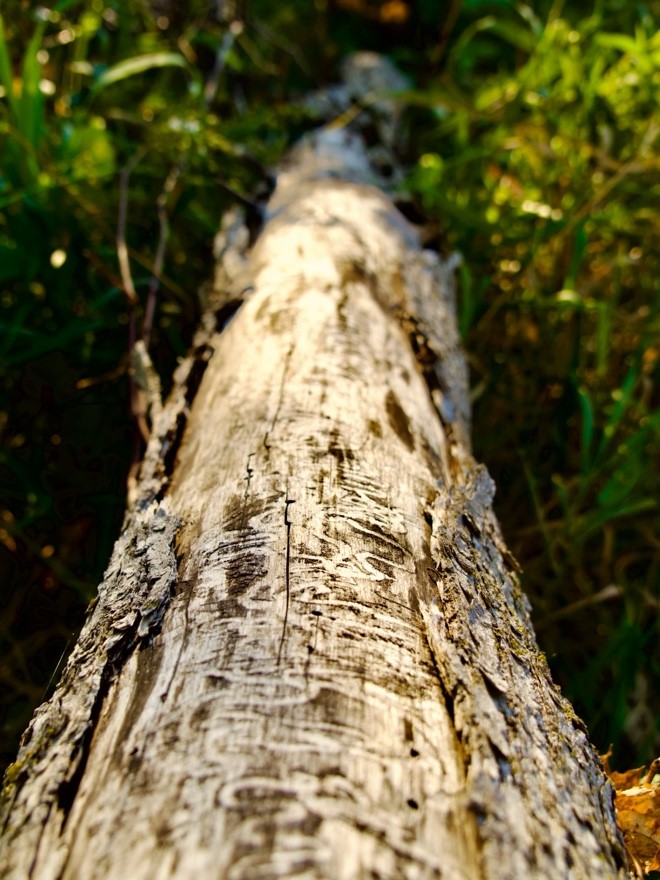
Invasive species are organisms introduced to environments where they do not naturally live. They tend to spread quickly and cause ecological harm. The takeover of CUW’s forest was a team effort carried out by two invasive species: the emerald ash borer beetle, which cleared out many trees, and buckthorn, a shrub that quickly spreads to fill open soil.
The emerald ash borer, a native of northeast Asia, was first spotted in the United States in 2002. Since then, it has spread across the eastern half of the country, affecting 38 states and killing hundreds of millions of ash trees, according to the U.S. Department of Agriculture.
Adult beetles lay their eggs in crevices of ash tree bark. Once the eggs hatch, the larvae burrow inward. As they grow, they tunnel beneath the bark, leaving distinct trails that become visible as the dying tree loses its bark. These dead trees pose a risk to people and property when they fall. They also leave gaps in the forest where buckthorn can take root.
This shrub is quite an effective invasive species, adaptable to a wide variety of ecosystems and equipped with features that allow it to crowd out native organisms.
Buckthorn is allelopathic, meaning its roots release chemical compounds into the soil that inhibit the growth of nearby plants. By forming dense thickets, it outcompetes them for soil space and nutrients.
Birds eat buckthorn berries and spread the seeds through their droppings. According to Bretta Speck, PhD, assistant professor of environmental science, these seeds can remain viable for up to six years. As a result, new saplings often sprout around the stumps of buckthorn plants that were previously removed.
Continual monitoring can help ensure that dormant seeds do not later revive the buckthorn population.
Students in action
Three years ago, the CCES began an annual effort to remove buckthorn from overrun areas on CUW property. This year, volunteers focused on the entrance to the All-American cross-country loop and paths behind the softball field.
The week before the project, students in Drs. Justin and Bretta Speck’s botany classes learned to identify buckthorn and marked shrubs for removal. Both professors joined the volunteers on project day to guide those who were new to the work.
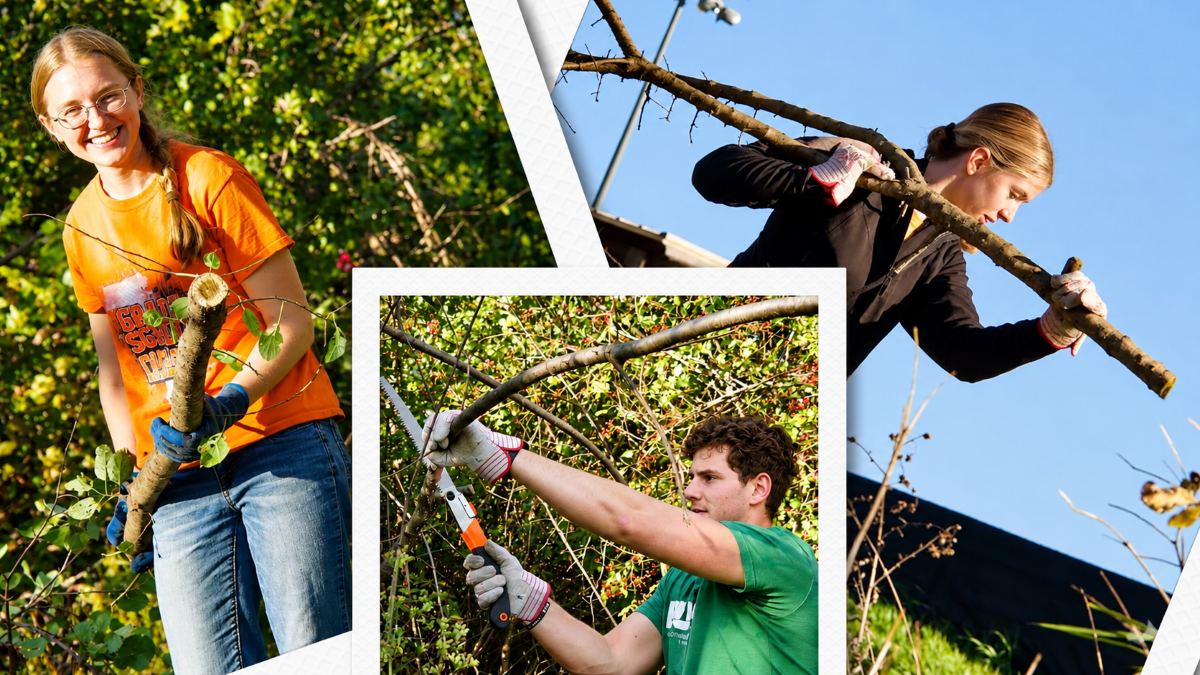
Armed with long-handled loppers, hand saws and herbicide daubers, volunteers set out to clear the marked areas. Cutting down buckthorn shrubs, which can grow to the size of small trees, was straightforward but required some muscle power.
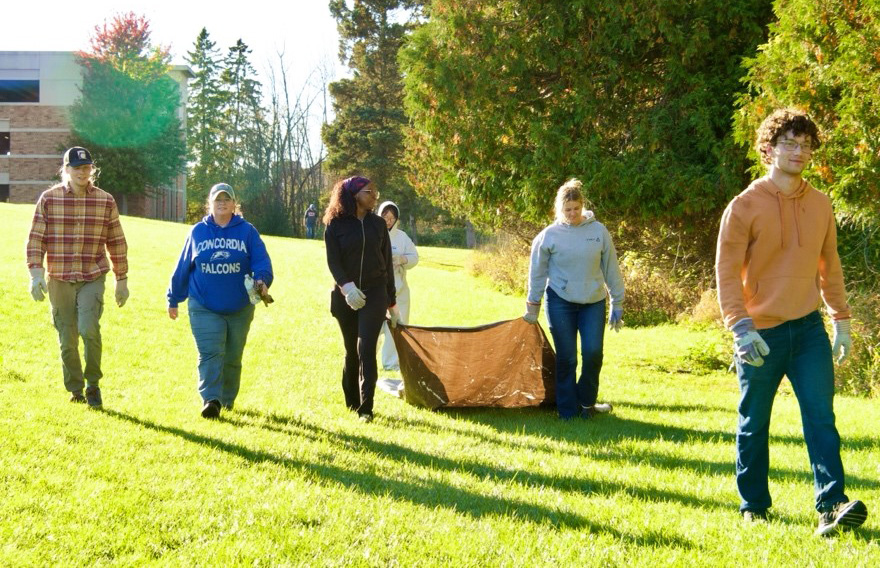
Students used loppers to remove higher branches before cutting through thicker stumps with hand saws. Others dragged branches onto the walking path, sometimes struggling to untangle them from grapevine, another invasive plant. Small groups collected branches in tarps and hauled them to a waste pile.
Collecting the branches took the most time, but volunteers worked together to keep the pile growing, one load at a time.
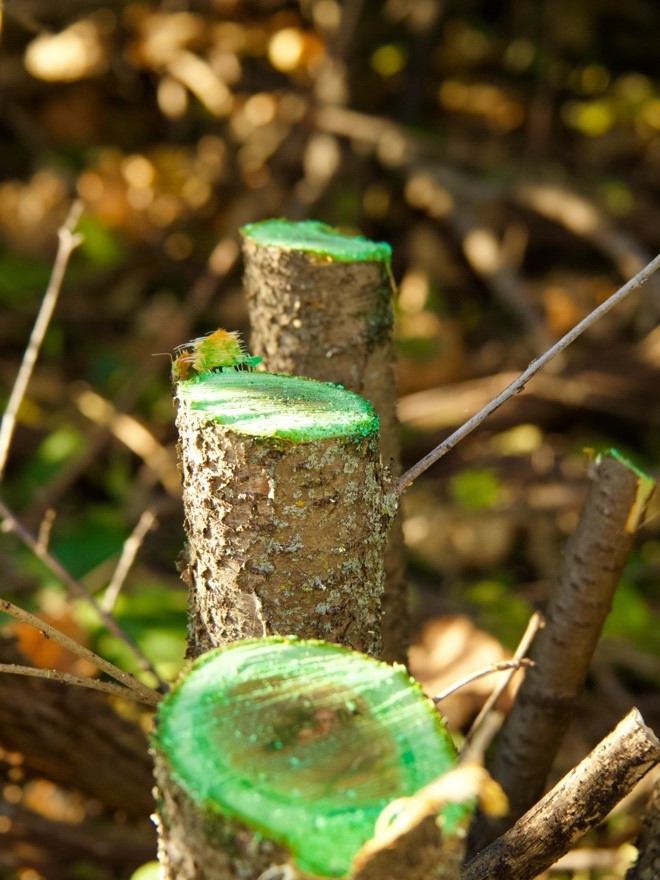
Once students cleared the branches, they cut the remaining stumps to about an inch above soil level. They then applied glyphosate to the exposed surfaces. The herbicide travels through the plant’s vascular system to its roots, killing the plant and preventing new shoots from emerging.
Looking ahead
The work in CUW’s woods does not end with one afternoon of cutting. Knowing that viable buckthorn seeds remain in the soil, follow-up work in these areas and others will be important. The annual project gives students and staff a chance to directly give back to the university by caring for the environment that surrounds it.
Removing invasive species will give native plants an opportunity to repopulate the woods, restoring them to a more balanced and even more beautiful state. The day’s work was both a rewarding service project for volunteers and a contribution to the long-term health of their campus.
Written by Abbey Proctor, biology major
Want in?
Concordia University Wisconsin is a Lutheran higher education community committed to helping students develop in mind, body and spirit for service to Christ in the Church and the world.