
This past summer, CUW students joined the fight against one of medicine’s greatest challenges.
Antibiotic resistance is one of the biggest medical challenges of our time. While many undergraduates only read about it in textbooks, CUW students are tackling the problem head-on. They’re contributing to real discoveries and presenting their work at a global scientific conference.
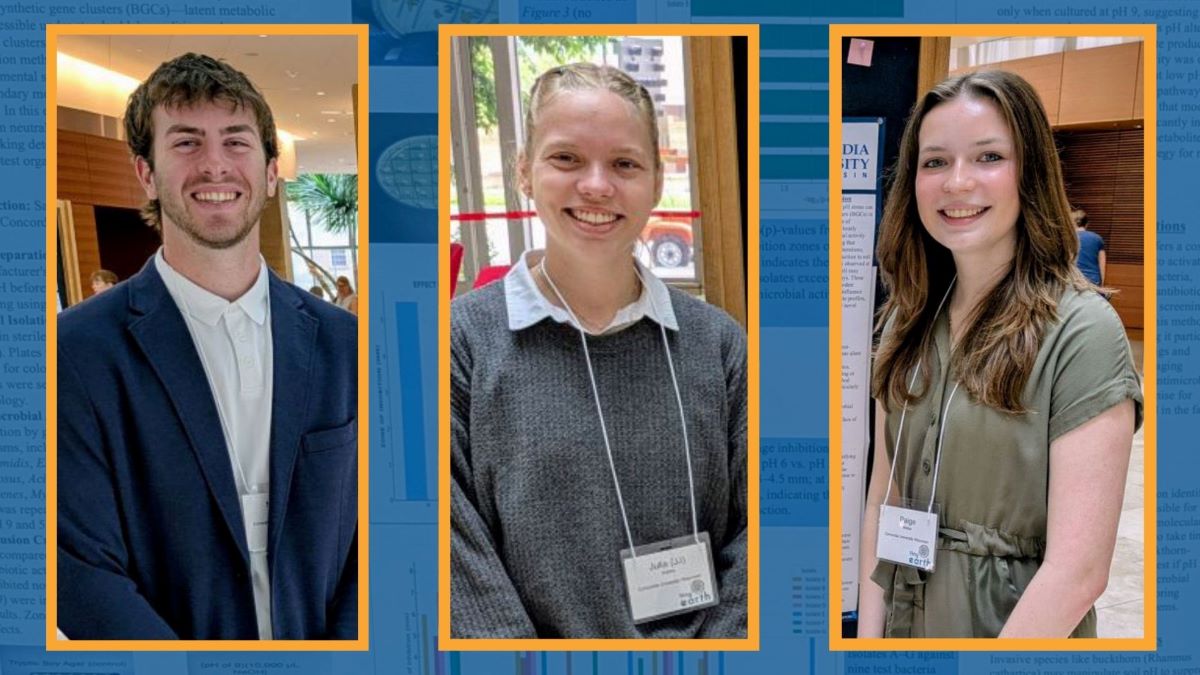
Concordia students Nikolai Nawracaj, JJ Hatton, and Paige Weber joined researchers from around the world at the Tiny Earth Summer Symposium at the University of Wisconsin–Madison. Their mission? To search for new antibiotics that could one day save lives.
Real Research. Real Impact.
In the natural world, bacteria are constantly battling each other for survival. Some produce special compounds, called secondary metabolites, that inhibit the growth of other microbes. These compounds can become the basis for new antibiotics.
Concordia students stepped into this global research effort with a creative twist: instead of only searching for bacteria that already produce antibiotics, they tested new ways to induce microbes into producing unique secondary metabolites.
- Nikolai Nawracaj tested the effects of melatonin, a human hormone, and heavy metal stress on the production of inhibitory metabolites. He discovered multiple bacterial strains that showed antibiotic activity under these altered environments.
- JJ Hatton grew soil bacteria under conditions that mimic the human body, such as reduced oxygen and body temperature. She discovered that several microbes only produced inhibitory compounds under these stress conditions.
- Paige Weber studied how acidic stress affects microbial behavior. She discovered that while acidic environments shut down antimicrobial activity, basic conditions enhanced it for many strains.
Each project reflects the kind of hands-on discovery that sets Concordia apart. Students don’t just learn about science—they do science.
Preparing for your future
Undergraduate research at Concordia is more than a résumé builder. It’s a transformative experience that equips students for the next step, whether that’s medical school, graduate studies, or careers in healthcare and science.
As Paige explains, “Research shapes how I think—whereas presenting shapes how I speak—both of which have molded me into the pre-professional I’ve always aspired to become.”
Your journey can start here. At Concordia, you’ll find faculty mentors ready to guide you in exploring research across diverse fields—from cancer studies to microbiology. You won’t have to wait until graduate school to make an impact.
Want in?
Concordia University Wisconsin is a Lutheran higher education community committed to helping students develop in mind, body, and spirit for service to Christ in the Church and the world. Biomedical Science has a relentlessly human focus, preparing students for careers in medicine and medical research. A degree in Biology provides a solid foundation across the life sciences and prepares students to pursue medical, veterinary, or graduate research programs.